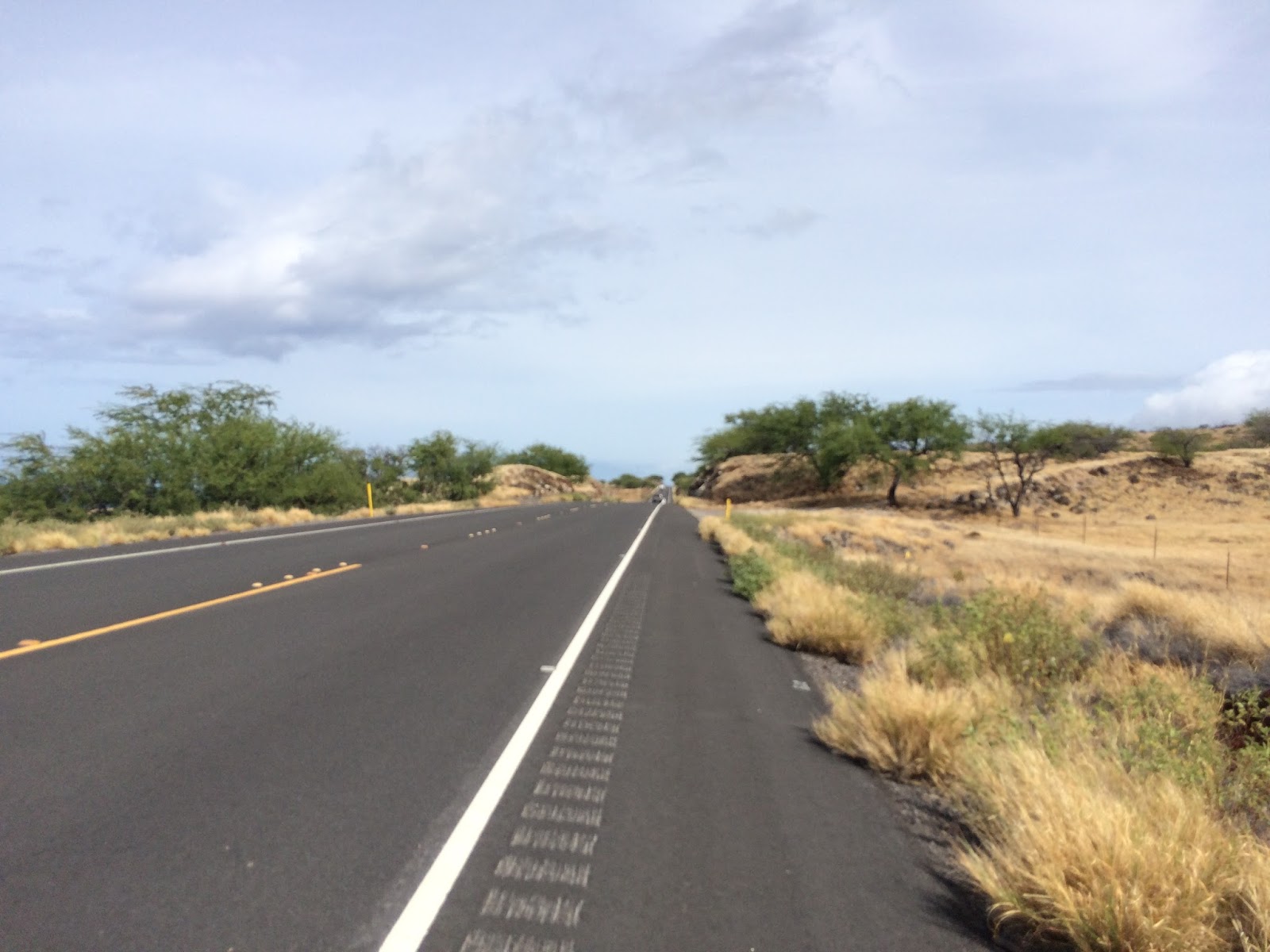
While on our long "foundation" building ride this morning, we made good use of our time on our bikes by enjoying the mountain views on top of Cedar's Head.
As we were climbing the 6-miles to the top of the mountain, I couldn't help but think about my progress as a swimmer, turned runner, turned triathlete, turned cyclist. Although my love for swimming has not gone away, I absolutely love riding my bike.
And now that we live in beautiful, bike-friendly Greenville, SC we love riding our bikes even more! We leave from our doorstep on the Westend of downtown and in less than 7 miles we can climb Paris Mountain and in 45 minutes we are on challenging roads and hilly terrain on beautiful country roads.
There was a time, not too long ago a few years ago, that I was not very skilled on my bike. By no means, am I an expert now but my riding skills have improved dramatically over the last few years and I owe it all to Karel helping me learn how to be a better cyclist.
So I thought that I would share a few tips that have helped me not only race better but also train smarter.
Switchbacks
Not every race (or training session) will have switchbacks and unless you are i
n Pyrénées, they probably won't look like this (above) BUT it is important that you know how to properly bike up hills that require turning corners. In my racing experience, athletes often get thrown off with gearing (or struggle) on an unexpected incline turn as well as turns that are not well-viewed.
When riding switchbacks or turns on an incline it is important to know where you should be positioning yourself so that you are in the least steepest grade possible.
When the road turns to the right, you want to be closest to the middle. You want to always be on the outside of the turn So imagine the trees are on your right yellow line is to your left. If the road is turning to the right, you want to ride yourself away from the trees. Certainly be careful, watch for cars and in races, do not cross the yellow line or get in the way of other riders.
Now the opposite situation, if the road is turning to the left, yellow line is to your left and trees to the right, you will want to ride yourself toward the trees as this is the least steep grade when it comes to how the road pitches up.
Climbing position

Sitting or....

Standing?
We get this question a lot and certainly it depends on the climb and the rider size, as well as what you are most comfortable with. It's funny that I picked these two pictures because typically I am the one out of my saddle when I climb and Karel is sitting, however, we both sit AND stand.
Every climb is different so my suggestion is to practice. Learn how you prefer to climb on different grades. The ultimate goal is to climb in a way that allows you to keep a smooth cadence and conserve your energy. The opportunity for you to stay aero while "climbing" will likely only come if there are rollers in that you can gain momentum from a previous climb and comfortably work your way up another climb. Another situation, a very low grade climbg. Otherwise, if a climb is long or steep, sit up and stretch your hip flexors and focus on a very fluid pedal stroke.
The reason why it is advantageous to sit up while climbing is because your natural position when climbing is to scoot back a little on the saddle (as oppose to being on the middle/nose of the saddle while in aero). This position you have placed yourself in while climbing in a seated position allows you to open the hip angle and you have more power.
For athletes who feel comfortable out of the saddle (or when the road pitches up rather steep or on punchy climbs when getting out of the saddle is an easy way to get over the top), keep in mind that it does take more energy to climb standing. But standing stretches the body (ex. legs/back) and takes you out of your seated position. Therefore, it is good to get out of the saddle every now and then while climbing. Focus on all parts of the pedal stroke while standing although you may find yourself more powerful on the top of your stroke as you push down on the pedals. You will also find yourself rocking your handlebars a little as you move your arms side to side to help move your front wheel up the climb. You need good core and lower back as well as upper body strength to be a good climber and this is very true if riding out of the saddle. Typically, shorter or lighter athletes are good climbers out of the saddle but also those who have great quad strength may prefer coming out of the saddle here or there while climbing. This is not a rule, just a generalization.
If sitting, the most important thing to remember is a very smooth pedal stroke. To help increase your cadence while climbing, I recommend single-leg drills on the trainer (sitting up) to help you train your legs to be engaged on all parts of the pedal stroke. We typically do 3-5 rounds of each leg, 30-60 sec single leg drills (clipping out the foot that is not being used) to not only become more aware of any"dead" spots in the pedal stroke (typically at the top) but also to strengthen the glutes and hamstrings.
It took me a while to get my cadence higher on the bike on flat roads so as you can imagine, it took a very long time to increase it while climbing.....and I'm still working on it.
You never have to just sit or just stand when you climb so be sure you are focusing on being comfortable. Every rider will have his/her own style of climbing but to conserve energy, try to keep the upper body relaxed without a lot of rocking back and forth while sitting. You want your arms very relaxed on your bars while the legs do the work to move your forward.
Practice sitting and standing when you ride outside on hills so you can get more comfortable on different grades.
Shifting and gearing

When athletes (or race directors) talk about a climbing cassette, you will want to have a 12-27 or 11-28 (it should end with 27 or 28) cassette on your bike. The reason for a climbing cassette is so you can have easier gears.You will also see that some athletes prefer a compact crankset which is another option for relatively smaller chainrings.
If you are riding on any course that is not flat (in other words, the road goes up and down), a climbing cassette is a great affordable investment and if you are not comfortable changing your own cassette, just have your LBS (local bike shop) do it for you (you can typically buy one there as well).
Speaking of your cassette, it is extremely important that you know how to shift your gears properly. This is probably the easiest thing you can work on every time you ride outside but a common error of athletes on race day (does a dropped chain come to mind? Don't worry, it happens to us all at times...even with a chain catcher.).
When it comes to shifting your gears, you will find that your comfortable gear of course will differ depending on the terrain grade. Although it is absolutely possible to climb in your big chain ring, the focus should be on keeping your cadence as comfortably high as possible for a smooth pedal stroke. Therefore, most efficient riders will be changing from big to small, small to big, throughout the ride to keep that nice steady cadence. As pictured above, if you have electronic shifting, it is simply a button to press on your aero bars or base bars to change your gears. This allows the rider to keep his/her hands on the base bars when climbing or aero bars on rolling hills and still be able shift. You can also shift while standing out of the saddle when you have electronic shifting. Now when I talk shifting, I am not just referring to big and small chain rings but also all the gears you have on your cassette.
You must avoid your chain crossing (and your chain being dropped),. If you are on the big chain ring and you keep shifting up, there is more force on the chain and the chain is crossing. This is not good. Don't wait to shift from big to small chain ring until the last moment. You need to be sure you are in a gear that allows you comfortable shift big to small, small to big without noticing a big difference in your pedal stroke.
As an easy suggestion, be sure your chain is somewhere near the middle (not to the extreme top or bottom) of the cassette before shifting from big to small/small to big.
An efficient rider will likely change his/her gears a lot during racing/training to keep that nice steady cadence. Sometimes, I try to shift and realize I am already in the smallest gear while climbing and I wish I had just one more gear! Always a let down.
As you become a more skilled rider, you will become a more efficient rider. And when you ride efficiently, you train more consistently. Ultimately you become stronger, faster and more powerful.
So while you are out there enjoying the climbs, a few more things to remember:
-While descending, NEVER break during a turn. Gently break before the turn and then let it go. You can not control your wheels while breaking in a turn and this is setting you up for a risky, dangerous situation while going downhill or even on flat roads
-While descending, look ahead. Be sure to become familiar with new roads before bombing a descend (unless you are Karel) so you are aware of any bumps, ditches, sharp turns, etc. This is extremely important when it comes to improving your confidence before a race.
-Practice fueling while climbing/descending. It is much safer to fuel up a climb than down a steep, technical climb as you need to pay attention when you descend. However, some descends are "easy" and provide a great opportunity to fuel/hydrate And when I say fuel, this is liquid nutrition. You need to practice staying hydrated while climbing and that means grabbing a bottle from your cages while climbing. There is a significant amount of energy being used while climbing so you don't want to go 10,20,40 minutes on a climb without fueling or hydrating. Since there is so much blood being used by the muscles, liquid nutrition will digest much easier than solid food. However, if heading out for a long ride in the mountains, I recommend to bring a sport bar to nibble on as you may get hungry on the descends and you are using a lot more energy compared to flat roads. But for race day, I recommend to rely on liquid nutrition as your primary source of fuel (a little solid food here or there is perfectly fine).
-Don't dread the climbs. What goes up, must come down. The more practice you have climbing and descending, the more comfortable you will be on your bike. I am not telling you that it will be easy to climb (or race on hilly courses) but you may learn to enjoy the suffering on the way up and the fun on the way down.