We’d love to hear from you.

We welcome your thoughts, experiences, comments, suggestions, questions or personal stories. If you don't hear from us right away, please note that your email is very important to us. We will do our best to respond with 24 hours.


Greenville, SC

Trimarni is place where athletes and fitness enthusiasts receive motivation, inspiration, education, counseling and coaching in the areas of nutrition, fitness, health, sport nutrition, training and life.

We emphasize a real food diet and our coaching philosophy is simple: Train hard, recover harder. No junk miles but instead, respect for your amazing body. Every time you move your body you do so with a purpose. Our services are designed with your goals in mind so that you can live an active and healthy, balanced lifestyle.

Blog

When life gives you a detour

Marni Sumbal, MS, RD


On Saturday morning, before heading out for a 3.5 hour brick workout with Karel and Thomas, I came across a quote that spoke loudly to me. It read, "Good things fall apart so that better things can fall together." 

I think any athlete would agree that sports can be so exciting and fulfilling and also cruel and disappointing. But it's through the setbacks and failures that we develop a stronger and better appreciation for when things go well.

Although the sadness of not competing in the Ironman 70.3 World Championship hit me hard for a few days, my mind was ready to move on once the cuts and bruises on my face finally healed. Setbacks are normal and I believe that you can only gain experience, wisdom and gratitude by going through the hard times. Tough times make you stronger!

If you have recently experienced a setback in your athletic journey, I give you permission to be upset, frustrated and disappointed. Negative emotions are normal but make sure to not to blame others or yourself. Process what happened, reflect and learn from it and then, when you are ready, it's time to move on. Don't be afraid to talk to a professional (sport/clinical psychologist) if you find yourself depressed or angry (especially for an extended period of time) because of your recent setback. Talking through your thoughts and emotions can be very therapeutic.

To move on from my recent setback, I needed to return back to my normal work and training routine (after getting permission from my doctor to resume back normal training). Having my routine back, seeing familiar faces and being in my home environment really helped me move on from the missed race.

After much discussion with Karel, I knew that I couldn't end my season with a DNS at my big race of the season. To be honest, I have felt a little bit empty without closure to my 2017 race season. I feel like something was taken away from me and I had no say in the matter and now I want another chance to race. After all my doc appointments and labs came back normal and I got the OK to race again, Karel helped me organize my thoughts after I physically and mentally recovered from my blackout and I have finally selected another race for my schedule (which I will announce later this week, just to remove any extra pressure off myself as I am naturally competitive and love to race and share my race experiences with others).

Since my accident appeared to be blood pressure related, likely vasovagal syncope, I would like to describe my missed race as a detour in my athletic journey. Setbacks are bound to happen to us all and when you experience a setback, you have two options: See it as a road closed sign and give up on your journey OR take the detour route.

I am embracing my detour in life and moving on. Thanks to many positive messages, emails and texts, I will grow and learn from this recent experience and I look forward to new and exciting experiences and opportunities with my body.


IM 70.3 World Championship - race recap (Karel)

Marni Sumbal, MS, RD


With Ironman Chattanooga in just two weeks, I was a little nervous about how Karel would manage his effort at the IM 70.3 WC as he is no stranger to giving a hard effort when he races. But I could tell from his attitude, especially after what happened to me on Saturday, that he was not going to take any risks and he was going to give a good effort, without leaving it all out there. Never has Karel raced a half Ironman just two weeks before an Ironman but there's a first for everything. 

I set my alarm for 4am and slooooowly, got myself out of bed. Karel went through his normal pre-race routine of coffee (espresso), bathroom, food (for this race it was oatmeal + granola + almond butter + frozen raspberries) and then a short jog outside to help him move everything through his system. Karel also sipped on a scoop of OSMO pre load in water before we left the house.

At 5:15am, we headed down to the race venue. Although I was still bummed about not racing on Saturday, I was excited to use my tapered and fueled body to cheer for Karel. I just love watching Karel race and I was also excited to spectate our athlete Alvaro for his first 70.3 World Championship.

After Karel pumped up his tires and placed his 3 bottles of sport nutrition (2 bottles with Levelen, 1 bottle with INFINIT) and Garmin on his bike, we walked back to the car for Karel to relax. With Karel being in the 3rd wave (Pros, then PC athletes and then Male 40-44), Karel had enough time to not feel rushed but at the same time, the early morning went by quickly before it was time for Karel to head back down to the water.

Prior to walking to the water, Karel did another jog warm-up to get his system going. Around 6:30a, we walked down to Ross's Landing, where we stood around until Karel walked over to the corral for the start of his wave. 


Al getting ready for his first 70.3 WC but playing it smart as he also has IM Chatty approaching. 

Karel was a little worried about not being able to get into the water before the race as his pre-race swim has been a ritual for him to get a good feel of the water and to adjust the wetsuit but I brought a bottle of water for him to pour inside of his wetsuit so that he could avoid the "sucking" feeling of the wetsuit being tight on the chest when he entered the water. Karel received his swim cap after entering the corral and lined up in the sub 30 minute group of men in his AG. 


It was awesome to see the pros go off and then the PC athletes and before we knew it, Karel was in the water (still loving the Ironman tracker app!). With this being a rolling wave start, a small group of athletes dove (or jumped) into the water every 15 seconds. 


After wishing Karel good luck and to have a great race, it was time for my spectating duties to begin! 

It was fun to have so many Trimarnis out on the sidelines to cheer - including Kona, the furry spectator. Campy stayed back at our rental house so that I could put all my energy into Karel. 


I couldn't believe it when my phone chimed to let me know that Karel was out of the water in 30 minutes! I was thinking that Karel would be happy with sub 34 minutes but I knew he would be thrilled with his 30 minute swim. Karel said that the current didn't feel too strong in either direction but he was certainly swimming faster (per his Garmin) on the way back to the swim exit. Karel was surprised that he felt so good in the water and even more shocked that he was passing athletes as soon as he dove into the water. What a great confidence booster, especially since Karel has been working so hard on his swim for many years. 


Since my athlete Meredith was spectating on Saturday, she knew all the hot spots for us to go in order to see the athletes on the course. After we saw Al, we waited a few more minutes for Karel. We caught Karel after he grabbed his blue bike gear bag and ran up the ramp to the changing area and quickly after, we sprinted our way to the bike out area to catch Karel get on his bike. As Karel was running to his bike, he took in 1 Enervitene cheerpack. 


It was impressive to watch Karel do his first ever flying mount on his bike and naturally, he looked like he had been doing it all his life. I guess being a former cyclist has it's benefits - anything on the bike feels/looks natural. 


Cheering squad!
There wasn't a lot of waiting around after Karel got on his bike because I wanted to watch the professional men run up the hill as they started their run. I walked to my car to grab a snack (PBJ sandwich and a yogurt) and then walked to the hill under the blue wooden bridge. 


While we watched the pros, I was keeping track of Karel on the tracker and I was really impressed with the bike ride that he was having. In most of Karel's races, his back is his limiter as it tends to tighten up as he pushes, which keeps him from riding the race that he is capable of riding. Although he had some back tightness in the last 10 miles of the ride, Karel felt really good on this bike course. He told me later on that he just loved this bike course and it was just perfect for him as it suited his riding style. There were lots of opportunities for Karel to sit up and get out of the saddle and other places to use his skills. In addition to his liquid sport nutrition, Karel had a pack of Skratch chews, 3 HOT SHOTS (in a squeezable flask) and an Enervitene cheerpack. He did not grab any other water or nutrition on the course. Since the first chunk of the bike course is very similar to what we ride on in Greenville, SC, Karel was really happy out on his bike, which made racing a lot of fun for him. The weather was cool in the morning but just perfect for the 56 mile bike ride. Karel never felt too hot or cold.

After Karel got off his bike, his running legs came to him rather quickly and he settled into a rhythm for the first out and back section out of the transition. I was shocked to see Karel in 14th place off the bike and I couldn't wait to share this information with him when I saw him. Although a part of me was worried about telling him that he was close to being in the top 10 of his age group because I didn't want him to dig too deep, I knew that Karel would process the information and be smart with his race effort. Somehow, Karel always knows how to put together a great race. 


We gave Karel a big cheer as we saw him run up the hill and he looked calm and in control. After the race, Karel told me that he just loved the run course and he felt great all day. Since our terrain includes lots of hills where we run, Karel put himself into a familiar environment and just settled into a strong effort, without taking any risks or digging too deep. 


As I saw Karel finish up loop one of two after crossing the bridge I noticed on the tracker that he was moving up in his age group. Although there were some faster guys in the top 5, I was feeling confident that Karel could move into the top 10 - which would be a huge accomplishment, seeing that there were over 400 guys in his age group. 


Karel was running super steady and it was impressive to track him throughout the 13.1 mile run. With every mile as the race went on, it seemed like Karel was getting stronger and faster. Since Karel was saving one extra gear throughout the race, he put it into that extra gear just for the last 3 miles. Because of the wave/rolling start, Karel was not sure where he was in his age group but that really wasn't a focus for him as he was racing. His goal was to put together a solid race to build confidence for IM Chattanooga in two weeks.

For sport nutrition, Karel used Precision Hydration 1500 (in two flasks) and 2 Enervitene cheerpacks (in 1 flask) throughout the race. He wanted to use LEVELEN on the run but because Karel was not able to access his gear bags on race morning, he used the Precision Hydration instead. Karel did not use any coke/red bull on the course as he felt energized all day.  He felt very comfortable out on the course (temperature wise) and only used water to sip on and cool his neck a few times throughout the run. 


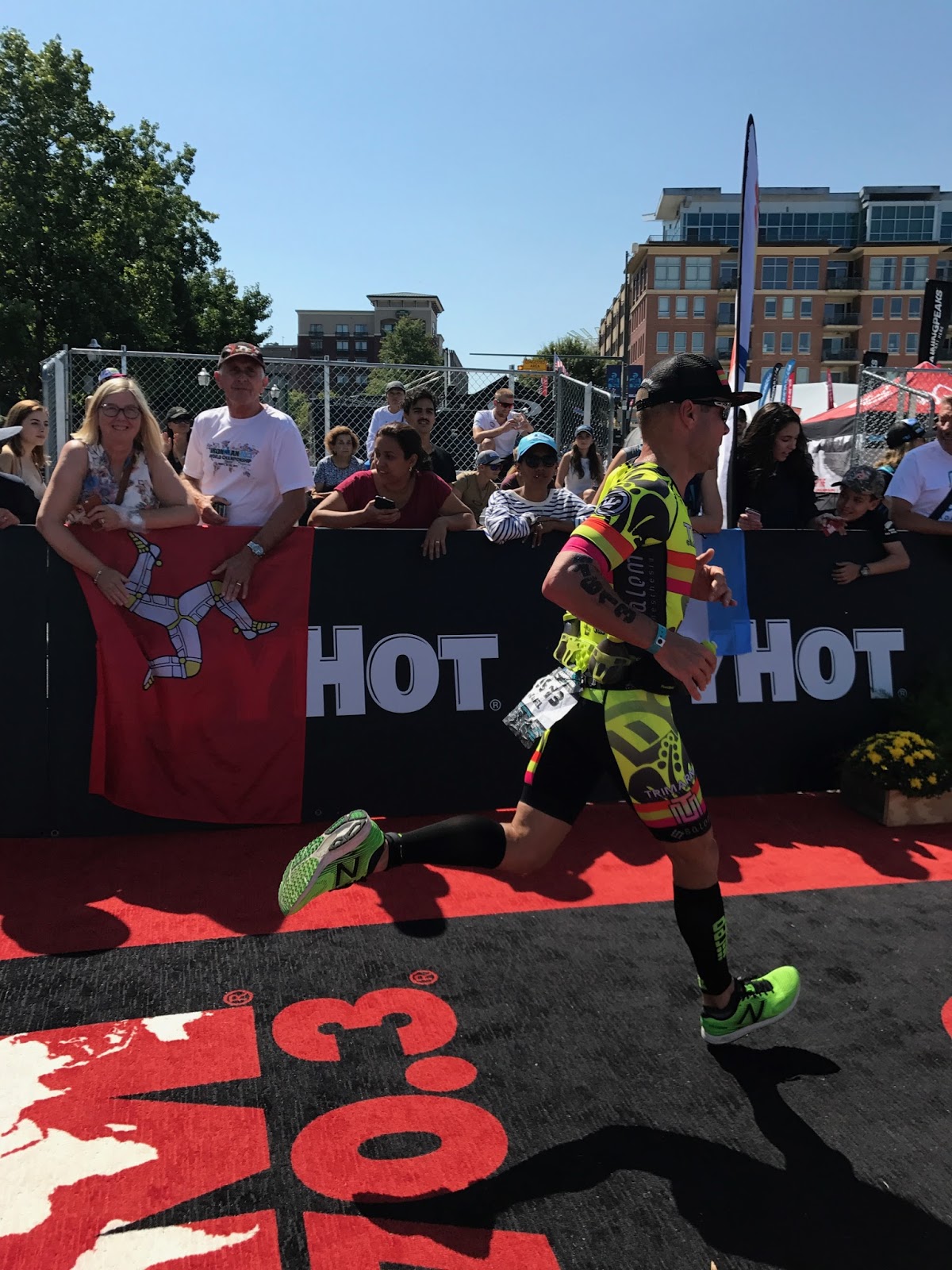
With Al being just a few miles behind Karel, we secured a great spot at the finish line to watch Karel (and then Al) run down the magical red carpet and across the finish line. A few guys went by and finally, there was Karel. 


In typically Karel fashion, he was running strong. Later I told Karel that he was less than 30 seconds away from 6th place! He joked "oh man, maybe I should have ran harder."


After we met up with Karel, he looked really good. Not too beat up and walking semi-normally. I told him about his 8th place finish and he couldn't believe it. He was in shock that he was 8th in his AG, especially on a day when he felt in control and so good all day. Karel felt like not having any pressure on himself to perform well and not digging too deep really helped him pace the race and put together one of his best half Ironman performances. 


For the last part of Karel's race, I completely forgot about my face and the accident which kept me from racing on Saturday. I was just so happy for Karel that he had such a great day of racing. Although Karel was really sad for me that I could not race on this course, we are a team and when one of us succeeds, we both feel like winners. Teamwork makes the dream work. 


Karel had a few nice words with Jesse Thomas after the race and then we got a picture together. 


Karel wasn't interested in any food after the race so he drank a Cheribundi recovery drink that I had brought for him and about 30 minutes later, he sipped on a coke to keep his blood sugar up. It wasn't too long after Karel finished that Al crossed the finish line.


It was so much fun to share the race with Meredith, Natalie, Peggy, Leyla, Leigh Ann, my mom, Stephanie and Laura, along with others that I saw on and off the course. Thank you Stephanie G for some of these pics! 


Race Results
Swim: 30:34
T1: 3:28
Bike: 2:30.29
T2: 2:23
Run: 1:26.35
Total time: 4:33:28
8th AG (40-44)

The IM 70.3 World Championship was an incredible experience. Even though I didn't get to race, it was still one for the memory books. Since we returned home, I have had blood work, BP testing with my sport doc and an EKG with a cardiologist. Everything came back good and I am otherwise healthy, minus the scary blacking out episode that occurred on race day. The docs contributed it to getting up to fast with low blood pressure. Hopefully just a one time accident. I also received the OK to resume back normal training and permission to race again this season!

Since the race, Karel's recovery has been going well as he gears up for his last race of his season. As to be expected, he has waves of feeling good and then being tired but his recovery started just a few hours after the race when he had on his training plan to do a 90 minute EZ spin to help flush his legs.

Now that the 70.3 World Championship event is behind us, we have to get ready for another trip to Tennessee. On September 24th (two days after Karel turns 41!), it's time for Ironman Chattanooga! 

------------------------------------------


A BIG thank you to our 
2017 Trimarni sponsors and affiliates:

-Run In - for helping us with all of our running needs
-New Wave Swim Buoy - for keeping us safe and seen in the open water
-Mg12 - for helping our muscles stay relaxed
-Clif Bar - for quality ingredients in quality sport nutrition
-Cheribundi - for providing a safe, natural and delicious way to reduce inflammation
-Veronica's Health Crunch - for the most delicious hand made crunch - ever!
-Infinit - for customizable sport nutrition
-Levelen - for helping us optimize our hydration needs through sweat testing
-Hot Shot - for keeping Karel cramp-free!
-Solestar - for maximum stability, better power transmission
-Boco Gear - for helping us race in style
-Canari - for the most comfortable, functional and stylish gear
-Xterra - for the fastest wetsuit ever (so fast, Karel is now beating me in the swim!)
-Alto cycling - for enginnering the fastest race wheels
-Swamp Rabbit Inn and Lodge - for keeping our campers happy with perfect lodging options
-Salem Anesthesia - for your Trimarni support


IM 70.3 World Championship - race recap (Marni)

Marni Sumbal, MS, RD

On Friday morning, I woke up feeling excited that I only had one more sleep until race day. While I loved the idea of having women and men race on separate days, it was a little strange to think that I would not be racing with Karel, on the same day. But at the same time, I was super excited to give my best effort on race day (Saturday) and then get back out there on Sunday to cheer for Karel.

The morning started with us driving a few miles downtown so that we could get in a bike and swim workout. As we were driving to the race venue, I felt a little short of breath but I simply contributed it to nerves and my menstrual cycle (day 3). In other words, everything that I felt on Friday felt very normal to me. Once we got on our bikes, I felt much better and the excitement replaced the nerves/anxiety and I was itching to race. After our 70 minute spin on the race course, we followed it up with an open water swim. We heard the water temp had dropped and there was a good chance it would be wetsuit legal but we only brought our speedsuits/swimskins to the practice swim (wetsuits back at the rental house). Thankfully, the water felt great without a wetsuit. Karel and I swam together, one loop of the pre-race swim course (about 15-20 minutes - I didn't wear a watch). The current was not as strong as our practice swim on Wednesday and I felt very good in the water. Once we exited the water, it was time to head back to the car and then back to our rental house to eat. 


I had a delicious breakfast of potatoes, eggs and lots of fruit with yogurt. Karel headed down to the race venue without me so that he could help out his friend Roman from Czech (the one who received a rolldown slot for Kona in Karel's age group) who was getting his new Ventum. Karel needed to translate for him and help him out so as Karel was at the race venue, I relaxed with Campy and repacked my gear bags. I was a little frustrated that we could not access our gear bags on race morning, which meant that I had to fill up my hydration belt flasks on Friday to leave overnight but I didn't let it stress me out. There's no point wasting energy on things out of my control. 


My friend and athlete Natalie picked me up so that we could both go down to the bike/gear bag check-in together. Of course, Campy went along for the ride, along with Natalie's 8-month puppy Kona. It felt great having Campy with us as he keeps me calm and relaxed.

When we arrived, we met up with Karel and he was put on dog-watching duty as Natalie and I checked in our gear bags and bike. It was a cool experience to be rolling my bike into a 70.3 World Championship transition area and I was getting more and more excited to race.


After setting up our stuff, I waited for Karel to be finished with helping Roman at Ventum, which worked out great as my mom (and my athlete/friend Meredith) was soon to arrive to the race venue. We headed back to our rental house around 4pm and then it was time to relax for the rest of the evening.

Seeing that my appetite had been great all race week, it was not hard for me to eat my pre-race meal of tempeh and basmati rice - nice and simple. An hour or so later, I was feeling a little hungry so I snacked on saltine crackers, with a little peanut butter. I spent most of the evening in bed, relaxing and visualizing myself on the race course. Around 8pm, I was ready to fall asleep and surprisingly, I went to bed very quickly and slept great on the night before the race.

My plan for the morning was for my mom and I to get picked up by Natalie so that Karel could sleep in and do his own thing as he needed to get ready for his race on Sunday. I asked Karel to be on the run course to cheer me on but other than that, I didn't need to see him at the race.

When my alarm went off at 4am, I got up very quick out of bed because I didn't want to wake-up Karel. Campy was not thrilled with my early wake-up so he just stayed in bed with Karel.

After I got out of bed, I grabbed my iPad and phone and went right to the closet where I had my race outfit in a bag. Within less than a minute of getting out of bed, I bent over to get my clothes and then headed to the bathroom, which was attached to our bedroom.

I felt a little dizzy when I got up but I didn't think too much of it as my mind was in race mode and I was so focused on my pre-race routine before Natalie arrived at 5:15am.

When I went into the bathroom, I shut the door to the bedroom so that I wouldn't wake up Karel and sat on the toilet to go t  the bathroom. I started to feel the same dizziness from a minute earlier as I was emptying my bladder. After I washed my hands, I rinsed off my face, hoping that the cold water would wake me up.

After washing my face, I don't remember what happened next as it was around 4:10am when I woke up, realizing that I was on the kitchen floor, just outside of the bathroom, flat down on the ground.

As I woke up from my blackout, still laying flat down on the ground, I wasn't fully with it so my immediate reaction was "I am very tired but very comfortable on the floor so I will just stay here for a few minutes and sleep." I actually remember reaching for my phone and setting the alarm to wake me up at 4:15am. I didn't have the race on my mind as I was so sleepy. After setting my alarm, I felt the taste of blood in my mouth and touched the inside of my lip and didn't understand why I had blood inside of my mouth.  I didn't put together the pieces that I was not in bed and was on the kitchen floor with a bloody lip but because I was so tired, I convinced myself that I needed a little more sleep and I was totally cool with sleeping on the floor (apparently, at the time it felt as comfy as a mattress).

Around 4:14am, before my alarm went off, I felt like I had enough energy to stand up. I slowly got up and walked to the bathroom to check out my face. Since the light was on in the bathroom, I immediately saw my face and well, it did not look good. The inside of my lip was sliced open, I had bruises on the left side of my face and the top of my nose was cut. I was starting to slowly comprehend what had happened but because this had never happened before, I was still so confused about the situation.

I opened the door to the bedroom and woke-up Karel by telling him "Ummm, Karel, I think we have a problem. I fainted and hit my face on the floor." I felt so bad for waking up Karel but he was so scared about what had just happened to me and felt so upset that he didn't get up with me to help me out when I blacked out.

I made my way back in bed as I was so exhausted and I couldn't help but think about the race that I had dedicated my entire year to, was about to start in 3 hours. Karel immediately called Natalie to tell her not to pick me up and that I would not be racing. To be honest, even though I was upset why this had to happen on this day, I was so exhausted and my face felt like I was punched in the face, that the thought of racing wasn't very appealing.

I laid in bed until 5am and at that point, Karel wanted me to get something in my belly. I wasn't sure how eating or drinking would work with my busted lip but I gathered some energy and headed to the kitchen to drink a glass of OJ along with a waffle with syrup. Since this was part of my pre-race meal, I started to think that maybe I could still race. I was still so upset about the situation and a big part of me still wanted to race. I texted Natalie not to tell the officials that I wasn't racing yet, even though Karel told her earlier that there was no way that I was racing. After eating/drinking, I still felt so tired and empty and after much discussion with Karel, we decided that racing was not a smart idea. Something was wrong with my body and no race was worth compromising my health even more so that it was already compromised.

I made my way to the couch with my iPad and turned on the live broadcast of the Pro female race. Even though I was not racing, I still wanted to watch the race. I was dealing with a lot of waves of emotions, especially after I told our athletes/team and on my Trimarni page that I would not be racing. There were some tears and my heart ached at the situation that I was put in as I couldn't help but think "Why on this day??"

Karel was so shocked by the situation and he did not want to leave me but by 8:30am or so, I told him to go out on his bike and get in his pre-race warm-up. Although Karel managed to spin his legs, his head was not in the right place and he was so sad for me as he was confident that I would have a great race and that this course was just perfect for me. Karel felt so bad for me as we spent the morning together on the couch, watching the race and tracking Trimarni athletes Natalie and Stephanie, along with some of our other female friends who were racing.

Saturday morning was one of the most scariest and hardest days that I have ever experienced as a triathlete. I have never missed the start of a race before in my 11 years of endurance racing and never in my wildest dreams would have imagined that this would be how I would miss the start of a race. Although part of me was trying to put together the pieces as to why this happened - was it low blood volume related to my menstrual cycle, low blood pressure or something else - I couldn't stop saying to Karel "I should be racing right now." It was a sad and frustrating morning and as the day went on, it became more and more difficult to handle.

Around 2pm, I felt like I was ready to get out of the house as I was feeling almost back to normal (besides feeling like I was punched in the face) so I headed down to the race venue with Karel, my mom and Campy as it was time for Karel to check-in his bike. Karel was not in his normal race mode due to my fall in the morning but there was no way that I would let him miss his race as I needed him to race for the both of us.

As I walked to the transition area, tears started to flow into my eyes as I saw the many female age groupers walking around with their finisher medals. I didn't think I would be so emotional but it was very hard to process the fact that I had just missed out on the race that I had dedicated my entire season to. As I was picking up my bike and unused gear bags, I ran into several of my friends who had raced and had to explain the situation of me not racing over and over again. Although it was tough to hear myself say that I didn't race, somehow, talking about my fall and hearing the reactions from others who were concerned about me, was very therapeutic. Although I was still grieving about not racing, I knew I had made the right decision not to race as I am a huge proponent of health first, performance second. As the day went on, I started to physically feel a lot better (although tired all day). By evening, I was so exhausted, mentally and physically and I was quick to fall asleep.....but not quick to get out of bed on Sunday morning.

I want to thank everyone who texted, emailed and commented to me on social media. It means so much. I am not one who likes to make excuses or talk about my problems but it really helped to share my story and to hear from so many of you who have experienced something similar or expressed your sympathy.


Now that I feel completely back to normal (ego is healed and my face is healing), I have already started my process of trying to figure out what happened by getting blood work done on Monday, seeing my sport doc on Tues and today, I will see a cardiologist. I am hoping that there is nothing underlying going on and it's either blood pressure related (freak accident) or related to my fluctuating hormones/menstrual cycle (ex. blood volume/blood pressure). If you know me, I am very passionate about the sport of triathlon. This sport means so much to me and I really don't want my season to end like this. So far, everything is coming back normal so if the cardiologist doesn't find anything serious/alarming, I should have the OK by my doc that I can get another race on my calendar to finish out my season. I'll be sure to keep you updated on my health but in the mean time, I have Karel's race report to write and it's a good one!!


5 tips to help you move on from a bad race

Marni Sumbal, MS, RD


Sometimes you will be able to address something specific that negatively affected your race performance and other times, you may have done everything right in training, yet on race day, the results were what you hoped for. When things do not go your way on race day, you are presented with a unique opportunity to learn about yourself as an athlete.

Here are few tips to help you learn from a race that did not go as you had planned.

  1. Reflect: If you constantly dwell on what should have/could have happened, you will never accept what you need to change or be able to move on. If you went into your race healthy, injury free and fit, you may see your race as a failure if you did not meet your predicted race outcome or feel a certain way on race day. For other athletes, who may have experience a setback, inconsistent training or a challenge in the training journey, you may find yourself unappreciative for your current abilities, considering all that you have been through in the past. Regardless if you started or finished your race, reflect on your season as a whole instead of focusing on just one race. Once you reflect with an open mind, discuss your thoughts, concerns and areas of improvement with your coach. Talking is healing and therapeutic. It's ok to grieve and to be upset. Don't let a bad race fill you with self-­doubt. Assess and then use your last performance as motivation for your next training block as you believe in your ability to succeed and learn that racing is much more than a finishing time - and sometimes the success doesn't come from finishing but simply getting to the start line.
  2. Don't rush recovery -­ It's very typical for athletes to feel the need to jump right back into training (or register for another race) in an effort to re­do what didn't go well in the previous race. There may be some good in this if a health issue (that is now resolved) set you back or you are unable to finish a race due to a mechanical/gear issue or bad weather cancels your race and you want to use your accumulated fitness. But always put your health first and if you do not get the results that you wanted, be respectful to your body after the race for you need to recover from the physical and emotional stress on your body. What you do after a race determines how well you will perform in your next race. A DNS, DNF or bad race teaches you to celebrate the good races. During your recovery, work on your confidence and self belief to ensure that you come back to training with excitement and appreciation for what your body can do.
  3. Don't take it out on your body ­- It's very easy to get mad at your body if it doesn't perform like you wanted or if it lets you down before or during a race. Accept that not every race will be a "great race". As an athlete, it's not a guarantee that you will always get to the finish, let alone the start line. Racing is a puzzle with many pieces contributing to your race day performance. What you do before the race can be just as important as what you do on race day. Not always do the pieces of the puzzle need to be tightly in place for you to perform well but be sure all the pieces of the puzzle are in front of you, so that you don't hope for a good result but instead, set yourself up for success. And if something happens before or during the race, discuss with a professional who can help you figure out what went wrong.
  4. Keep your eyes on your short and long term goals ­- Sometimes you have to change the plan but never change the goals. When a race doesn't go as planned, let your post race feelings bring intense motivation and commitment to mastering your training, mental strength, skills and nutrition/fueling for your next race. Consider your season as a whole and don't just look at your season as "one race". With a global approach to your season, make every race count but don't count on performing amazingly well at every race. Set small, meaningful goals to reach along the way to help you acknowledge that your training is working for you. Don't just focus on the metrics or race outcome but consider little things, that perhaps you once were unable to do (or never thought to do) before or on race day.  The body is an amazing thing and it puts up with a lot to help you do incredible things with it.
  5. Manage expectations ­ - No matter the race priority or what happens on race day, your race doesn't define you as an athlete. When you can manage your expectations, you can easily navigate through the obstacles that arise on race day. No race can be planned for as your body has to perform under the circumstances that it is given. A good or bad race can often be decided by the weather, competition and course, your health and not necessarily by your current level of fitness or how hard you trained to prepare. To help you enjoy your developmental journey, avoid comparing yourself to other athletes or a past version of yourself. Make no assumptions for race day and understand that racing is more about the process than the outcome. Your finishing time does not define you as an athlete. Throughout your athletic career/hobby, there will be many ups and downs in training and on race day. Some races will go amazingly well and some races will be hard to forget. Just because you don't meet a time or place goal, didn't start or didn't finish, don't assume that your race was a failure. In other words, instead of seeing a race as either "good" or "bad", consider a new definition that helps you learn from race to race and to find success in every race experience. A disappointing race can leave you with a mix of uncomfortable feelings but you have it within you to effectively move forward with confidence that no matter what happens on race day, you can make the most of every situation and learn something from every experience. 

Ironman 70.3 World Championship - quick recap

Marni Sumbal, MS, RD


Life can be interesting.

There are many times in life when we can plan, prepare and perform. Times like these make life easy and fun. And then there are times when life throws you a curve ball and you can't help but think "this sucks."

As a lifelong athlete, I have experienced a lot of success in sport but I have also learned many important life skills and lessons. The hardest lessons are often the most valuable ones, as it's never easy to overcome obstacles and to manage a setback.

This weekend was filled with highs and lows. As much as I wish I could be writing two race reports from the Ironman 70.3 World Championship, I can only write Karel's race recap and not my own.

As you may have heard on social media, on Saturday morning (race day for me), a few minutes after my 4am alarm went off, I blacked out and ended up on the kitchen floor. My face took a good beating and since this has never happened before, it was very scary. I was alone when I got out of bed so when I woke up from my accident, it was hard to tell Karel that something was wrong as I knew he would be very worried and scared. Karel was quick to tell me that I was not going to race. I agreed with him but to be honest, the decision included some tears. I've dedicated my entire season to this race and since we arrived on Tuesday, every day made me more and more excited to race on this tough course with so many fit and strong female athletes. I felt in great shape, my mind was mentally committed and to be honest, I was just telling Karel how healthy and strong I feel going into this race. And then comes that curveball, out of the blue.  

I've always believed that a setback paves that way to a comeback. Unfair situations help us grow into the person that we are destined to become. Without a setback, we wouldn't learn about our health, our strengths, our weaknesses, etc. But more importantly, when an opportunity is stolen from you, that emptiness that you feel, typically filled with sadness and heartache, eventually becomes full again with a good or better feeling.

Like with most things in life, time heals. Although a part of me will continue to grieve for the loss of not participating in my first IM 70.3 World Championship, I am thankful for all of the kind words and support from Trimarni followers, my Trimarni athletes/teammates, my family and most importantly, Karel.


Although physically I was feeling back to normal a few hours after I fainted, I was still devastated that I was not able to race. Picking up my bike and my gear bags on Saturday afternoon was tough - tougher than I imagined it would be. But, I could not have been more thankful that I had Karel's race to watch on Sunday. I just love watching Karel race and being out there with Trimarni athletes Natalie and Stephanie (who raced on Sat) and also watching Trimarni athlete Al on the course, along with my spectating buddies Meredith, Peggy, my mom, Leigh Ann, Leyla and Laura, and running into some familiar faces, was exactly what I needed. I needed to surround myself with others, smile, laught and watch the sport that I am so passionate about. I was happy to be out on the course - even if it was just on the sidelines.

As for Karel's race - what a race it was! Karel raced very smart and although he did not take it easy, he did not dig deep or take any risks as he has Ironman Chattanooga in 2 weeks, which is a very important race for him. Well, this strategy of racing smart and pacing well paid off as Karel put together an unbelievable performance, placing him 8th in his age group (40-44) out of 403 athletes (and less than 30 seconds away from 6th place!). Karel looked comfortable, in control and confident all day, on a course that suited his strengths.

I'll be writing more about the race weekend but for now, here are Karel's race stats: 

                                      
Swim: 30:34
T1: 3:28
Bike: 2:30.29
T2: 2:23
Run: 1:26.35

Total time: 4:33:28
8th AG (40-44)


Hello from Chattanooga!

Marni Sumbal, MS, RD


Travel
After an early morning bike/run workout (~90 minutes) and a massage, it was time to pack up the car and head off to Chatty!
We left on Tuesday morning to drive 4.5 hours up and over to Chattanooga (through Knoxville). For our first time to Chatty, the drive was scenic and we had little traffic. The only negative to our drive was the pouring rain that lasted the last 3 hours of our drive. Thankfully, we made it to our rental house safely, around 5pm. Campy is joining us for our trip because he does a great job of keeping us both calm and stress-free on race week.

Nutrition
To make it easy for us, I did some grocery shopping and a lot of meal prep on Monday before we left. Although we have a kitchen at our rental house, I wanted to avoid the hassle of grocery shopping when we arrived and then making food each day. Having a stocked fridge as soon as we arrived was a great thing and it made it easy to get to bed early for a good night of sleep on Tuesday evening. We won't be eating out during our time in Chatty before the race so all meals and snacks will be in our control and we will stick to our normal daily diet and pre-race diet as we both know what foods work best for us. We have lots of food for snacks (ex. fruit, yogurt, pita chips, raisins, chocolate) and meals (potatoes, eggs, chicken for Karel, tempeh for me, waffles, croissants, bread, soup, rice, cheese, OJ, milk, hardboiled eggs, eggs, pizza, Kefir, nut butter, syrup, etc.) so eating is familiar and easy to accomplish every day.

Wednesday
For our first official day in Chatty, we drove the 5.5 miles down to the race venue/village with our bike and swim gear for a longish morning workout. Our athlete Natalie met us at the swim. I really looked forward to getting in the water and experiencing the changing current. The water temperature felt great in my swimskin and I enjoyed the challenge of navigating the current, especially with it to my side or swimming against the current. After the swim, I was a little chilly (as the air temp was in the 60's) but I reminded myself that on race day, I would warm up fast. Plus, I wanted to practice in my same gear as race day (one piece tri suit and same sport bra) to feel comfortable swimming with sleeves and a swimskin, in the case that it is not wetsuit legal (which I am hoping for).
After the swim, we all got ready for a 2ish hour bike on the course. I was really looking forward to getting on the course and experiencing "the climb". Although I had a rough few weeks around the time I was racing Lake Logan half Ironman, my legs have really come around and I am itching to push hard and race. I took it rather easy on the climb to save my legs a bit for Saturday and wanted to soak in the view before I am laser focused on race day. After "the climb", there was another long section of rolling hills, with about 4 big kickers. I couldn't help but think "am I in Greenville?" as the terrain is very familiar to me and reminds me of our normal routes in Greenville (just with less farm animals but I did manage to say hi to a few horses and saved a baby turtle). We covered the first 18 miles of the course (and warmed up nicely) and then turned around to head back to the venue.
Natalie and I checked in and picked up our bag and we briefly checked out the expo as we were all ready for some food.
As for the rest of the day, it included eating, laying around and relaxing. Campy had a little playdate with Natalie's dog Kona which was fun to see Campy (who is 10) play with an 8-month puppy.
It was early to bed and we slept great (about 9 hours).

Thursday
After previewing the swim venue and some of the bike, I was anxious to get out on the run course. Around 8am, we parked near the village and met Natalie for an early morning spin. It was rather cold out (in the upper 50's) but it warmed up nicely as the morning went on. Like the bike course, the run was marked with arrows so it was easy to find our way around (although we did get turned around a few times). Like I was told, the course is hilly but once again, it reminded me of my terrain in Greenville and the type of run course that I love to run on in my races. As we covered the course, I couldn't help but think "this is going to be a tough run" and then I followed that thought with "I am so excited to run two loops on this!" Karel keeps telling me that this course could not be better designed for me as it is very challenging and requires great strength, smart skills and resilience over speed so Karel's confidence in me is getting me very excited to race. And the weather couldn't be more perfect for race day.
After we biked the run course, we went for a shake out run. Karel ran by himself and Natalie and I did 15 minutes out and 15 minutes back on the run course, just nice and easy, all conversational pace. The course, although very challenging, is also very pretty. I imagine that the course will be lined with spectators in certain areas of the course, which will be great for an energy boost on race day.
After the morning workout, Natalie and I strolled through the expo and merchandise tent as Karel checked in for the race. Around 11:30am, we left the venue, headed to Wholefoods for a few items and then made it back to our rental house around 12:30pm. The rest of the day included eating, a little work on the computer and in a few hours, I will enjoy my pre-race pizza and then we will head downtown for the mandatory pre-race athlete meeting at 8pm.

I am getting super excited to race and I can't help but think back to my previous training and all the hard work that went into the preparation for this race. Years of experience and a season of athletic development to get to where I am right now. No matter the outcome, I feel excited, healthy, fit and confident and I am looking forward to the opportunity to race my competition in the 35-39 age group and give my best, with what I am given on race day.

Here are some pictures from the last few days:


Karel's new Wacaco nanopresso. Now he can enjoy an espresso when we travel. 


Road trip from one mountain view to another. 


Snack for the car. 


Room with a view. 


Recovery coach says it's time for a nap. 


My go-to pre-workout meal. 


We have arrived!


Time to preview some of the bike course. 


Riding to "the climb"


Up I go! 


What a view of Rock City Waterfall near the top of the climb. 


Turtle saved. 


Potty stop - well hydrated and fueled after 2.5 hours of riding on Wednesday. 


Campy loves his new race tee. Thank you Natalie! 


All checked in! 


Love the race theme - An adventure for your soul. 


Hand written drawing from a local school kid. 


Two lap dogs. One is 12 lbs and the other is 40.
Yummy dinner. 


Thank you Hot Shot for our goodies!


Exploring the run course. 


View from the run course. 


Over the bridge on the run course. 


Over another bridge on the run course. 


Must stop for a high five. 


More from the run course. 


Conversational pace run makes it OK to stop for pictures (coach approved). 


Back to athlete check-in for Karel. 


Race week tradition - love Mojo bars (all flavors)!


It's official! 


So much signage around the city. 


Someone couldn't wait to eat. 


Post workout meal - Icelandic yogurt, french brioch bread (cinnamon and cheese) and lots of fruit. 


Trail Angels podcast interview - talking all things nutrition

Marni Sumbal, MS, RD


A few months ago, I received an email from Vanessa who produces a weekly podcast, Trail Angels for an organization called The Project Athena Foundation. Before emailing back, I went to the website and immediately I responded - YES, I would love to be on your podcast.

I just love connecting with athletes, especially female athletes. It's always a great honor to provide nutrition and training advice in an effort to be of help in the journey of another athlete. And ever since my dad passed away from cancer (May 2014), I have become even more passionate about inspiring other athletes and fitness enthusiasts to pursue athletic dreams and goals and to never ever waste a day of life.

For a little more information about this amazing foundation:

The Project Athena Foundation is a 501c3 non-profit foundation dedicated to helping women survivors of medical or other traumatic setbacks achieve their adventurous dreams.
At Project Athena, we provide travel expenses, coaching, equipment, and most importantly, the encouragement and inspiration needed to help these strong, amazing women make that life-affirming transition from Survivor to Athlete.

“It’s not about trying to get back to what you were,” explains Project Athena Founder and World Champion Adventure Racer, Robyn Benincasa. “It’s about trying to be the best of what you’re capable of today, this minute. The most gratifying thing is the moment when you see someone realize they’re going to make it, when you see the fear disappear and they realize how awesome they truly are!”

We currently offer six yearly adventures that provide mental and physical challenges in a non-competitive environment. The goal is to have something to look forward to, a goal set to accomplish, and surround yourself with like-minded people. At Project Athena, it’s all about teamwork and being a part of the family.

Apply to today to join us as an Athena, if you are a survivor of a medical setback, OR register for an event as a Fundraising God or Goddess to show your support for a great cause!

Trail Angels is a podcast that launched in November of 2016 on Apple  iTunes and Stitcher. This podcast is dedicated to those with an adventurous spirit and an undeniable attitude. No matter what setbacks you have had in your life, you can still be a world class adventurer and Trail Angels will be your guide. Hosts Robyn Benincasa, Amanda Webb and Vanessa Spiller will share with you a unique experience, adventurous story, training tips and so much more. 
For more on my podcast interview: 
On this episode, we are thrilled to interview Marni Sumbal, a board-certified sports dietitian who specializes in fueling endurance athletes. Marni shares her story of becoming a dietitian and a treasure trove of tips for hydration, nutrition, and workouts. You’ll also hear why it’s important to maintain your confidence, and practical ways to do so. Marni’s wisdom isn’t just for endurance athletes–it’s for everyone who wants to improve their performance and take their fitness to the next level.
In the podcast, I discuss the following: 
  • My story of becoming a dietitian.
  • Why it’s important to stick with the basics of nutrition in endurance sports.
  • Why I focus on changing a person’s daily diet first.
  • The importance of making quality nutrition choices.
  • My criteria for nutrition products that she recommends.
  • The biggest challenges for women involved in endurance sports.
  • Tips for staying hydrated both throughout the day and during a workout.
  • The performance fuels that I recommend.
  • Why there is no such thing as a bad training session or a bad workout.
  • My advice for someone preparing for an race or adventure.
I hope you enjoy the podcast. Thank you for listening. 

For the podcast interview: Click HERE

Hello race week!

Marni Sumbal, MS, RD


Back in October, after we returned home from the Ironman World Championship, Karel and I sat down and talked about the 2017 season. With so many races to choose from, the first step on deciding our race schedule was to establish our 2017 season goals. Our races would be our road map and our big season goal would be the final destination.

Karel's big goal is still to qualify for the 2018 Ironman World Championship at Ironman Chattanooga. Although he received a slot to IM Kona for this year at Ironman Lake Placid, he let that slot roll down as that was not in his road map for this season. My goal was to qualify for the 2017 Ironman 70.3 World Championship and to peak my fitness for my big race on September 9th, 2017. I planned on qualifying for the 70.3 WC at Ironman 70.3 St. George but I surprised myself when I won my age group (35-39) at Ironman 70.3 Florida back in April and earned my slot to the 70.3 WC. I was delighted to also win my age group at IM 70.3 St. George but even more excited to let my slot roll down to another deserving female athlete. 

Now that it's race week, I have an opportunity to reflect back on the season and what a season it has been. As I go into the Ironman 70.3 World Championship event, I couldn't be more grateful to have this opportunity to be a participant in this spectacle of an event.  My body is healthy and strong and I am excited to race with so many amazing females (age group and professional) on Saturday and then be a spectator for Karel and the age group male and professional athletes on Sunday. 

I am actually a little sad that this will end my 2017 triathlon season as I don't feel quite ready to stop the structured training and racing. 

The focus for this season was to become more comfortable and confident with the 70.3 distance. Even though I have raced many half distance triathlons over the past 11 years since I started endurance triathlon racing/training, they have always been included in a season of Ironman distance racing.  It's been incredible to see what my body has been able to accomplish in training and in racing this season but I know that my strength is in the Ironman distance. But this forced break from Ironman distance racing has allowed me to embrace and explore a different style of training for my body and to take different risks in half Ironman distance training. 

While I will go into this race with confidence and belief in my ability, I recognize that there will be a lot of very strong and fast girls out there in my age group. Fast has always been a word that I don't often use in my vocabulary as the Ironman distance is where I excel and I seem to be great at not slowing down (due to a combination of knowing how to pace the IM distance, understanding how to fuel/hydrate for the IM distance and good mental skills). I have never considered myself a "fast" athlete but on Saturday, I get the opportunity to race as "fast" as I can for 70.3 miles, on a very tough course, and that excites me. I love that I finally have this opportunity to leave it all out on the course, take some risks and challenge myself as faster athletes help me bring the best out of my body.

Race week, I'm so glad you are finally here!

2017 Trimarni Advanced Greenville Training Camp - Photos Day 3 & 4

Marni Sumbal, MS, RD


We knew day 3 of camp would be tough for our campers, physically and mentally. But we couldn't resist giving them a challenging and scenic route to finish off 4 consecutive days of Greenville riding. Many of the campers enjoyed the challenge of getting to the top of Caesar's head (7 mile climb) but the hills were unforgiving as we made our way into the Dupont Forest, in NC. Our riding is not easy here but it is never boring, the cars are friendly to cyclists and you get endless views of nature. I have never been happier riding my bike than in Greenville and I feel so lucky that I can call it my home.

The 87- mile bike route that Karel planned (with over 10,000 feet of climbing, with elevation correction) was sure to stretch comfort zones but with great team spirit, our campers did not complain and they toughed it out until the end.

Joey managed to capture some amazing shots of our journey on two wheels. I don't know how she did it as she not only made sure that we were all safe by driving behind us but she managed to always be at our SAG stop, before we needed her, stocked with drinks, snacks and water...and her contagious, friendly smile.

On Sunday, the last day of camp, we headed to Lake Summit for a long run on the gravel trail, followed by an open water swim. Although the cooler temps were welcoming, our campers were carrying around a lot of residual fatigue. But once again they impressed us and they all gave their best effort for the run and swim workouts, which made another quality day of training to conclude 4.5 amazing days of swim/bike/run in Greenville, SC.

Enjoy the pics! 


2017 Trimarni Advanced Greenville Training Camp - Photos Day 1 & 2

Marni Sumbal, MS, RD


With a photo, you can capture a moment in time and have it with you forever. A picture doesn't quiet capture every moment but it does change the way that you see things. I love pictures because they document important moments in time.

We are thankful for our camp photographer (and SAG support) Joey for taking most of these amazing shots of our athletes in action at our recent training camp. Not only do these pictures show our athletes working hard but they also showcase our amazingly beautiful Greenville. Enjoy!


2017 Trimarni Advanced Greenville Training Camp Recap

Marni Sumbal, MS, RD


The other morning I saw a Furman student with a t-shirt that read "I love you Greenville." I NEED that shirt.

I am so in love with where we live and I just love to show it off. With this being our 4th (and last) camp of 2017, we wanted to make sure that our 14 advanced campers left with a lot of great memories of Greenville, SC.

Knowing that our campers came to Greenville in great physical shape (many of them gearing up for Ironman Chattanooga, IM 70.3 World Championship and IMKona), we wanted to challenge everyone with specific workouts that would require focus, skills, determination and commitment, not to mention the ability to to stretch the comfort zone.

After the conclusion of camp, I received an email from one of our campers/athletes and the last line read "Camp made me realize that I need and can handle more challenges. Stepping out of your comfort zone is not all rainbows and butterflies but it's not always tears and frustration either." 

I really appreciated her thoughts about camp because many athletes avoid the unknown out of fear and worry. Yes, we live in an area that is extremely hilly, which makes for difficult cycling and running routes but in a group environment with two experience coaches, we knew that our campers could handle so much more than what they could accomplish alone. Plus, suffering with others is so much more fun than suffering alone!

Although our campers were fit and prepared to handle many training hours (and feet of elevation gain) over 4.5 days, we still wanted to include education and skill instruction throughout camp. From our experience, athletes can be very fit in a familiar environment or on a treadmill/trainer but when placed outside, in an unfamiliar setting, the skills don't match the fitness and thus athletes feel frustrated that they can't perform to their physical abilities. By seeing our campers in action, we were able to prescribe specific workouts to match the education that we provided them. By the end of camp, our campers had improved skills to match their fitness and they can all return home more confident to handle future challenges and obstacles.

We could not have asked for better weather and the slightly cooler temps certainly helped with workout execution. Our campers did an exceptional job with mastering daily and workout nutrition (pre, during and post) and everyone came with an open mind to learn and to apply new information, in a new setting, with new friends. The attitude around camp was always "can do" and it was amazing to once again, see all of the campers support and work together so that nobody felt excluded or too slow.

Our campers put in a lot of time, energy and miles over 4.5 days. Being able to check out of life for a few days made for quality training with distractions or interruptions. Their only daily pressure was to show up on time and daily responsibilities included eating, training and sleeping. What a great life, even if for just 4.5 days.

We want to give a huge thank you to our Trimarni sponsors who provided swag for our training camp, along with Wendy at the Swamp Rabbit Lodge for providing the perfect location for our campers. And thank you Joey for being the best SAG support!

Xterra Wetsuits - wetsuit bag and hanger
Cheribundi - regular and protein drink
Clif Nutrition - products (bars, gels, hydration)
Infinit Nutrition - Speed sport drink
Hot Shot - product
Boco Gear - Trimarni camp hat
Oobe - Trimarni camp t-shirt
Veronica's Health Crunch - yummy crunch
Mg12 - bath salt, roll on and balm


For those who want the full stats of camp, here you go!
(All distances are approximate and varied from camper to camper depending on the workout. All workouts had a specific set and focus, all with coaches supervision.)

Wednesday: 
70 min social ride - ~15.5 miles, 970 feet of climbing

Thursday: 
90 min AM swim - ~3900 yards
90 min AM track - ~8 miles
2 hour PM ride - ~33 miles, 2100 feet of climbing

Friday: 
4 hour AM ride - ~70 miles, 5100 feet of climbing
35 min AM hill run - ~4.5 miles, 340 feet of climbing
60 min PM swim - ~3100 yards

Saturday: 
5.5-6 hour AM ride - ~89 miles, 10,624 feet of climbing
25 min AM brick run - ~3 miles, 100 feet of climbing

Sunday: 1:45 hr AM trail run - ~12-13 miles, 200 feet of climbing
25 min AM open water swim - ~1500 yards


TOTAL: 

~18 hours of training (in 4.5 days)~8500 yards swimming
~207.5 miles riding
~28.5 miles running~19,934 total elevation gain (bike and run)


Stay tuned....I'll be sharing some pictures from camp in my next blog post. 


Podcast: Mental Toughness & Race Day Management With Karel

Marni Sumbal, MS, RD


As I mentioned in a previous blog post, Karel had his mind set on a top performance at Ironman Lake Placid. Sadly, a bad sickness (flu) knocked him off his routine and also compromised his recovery after a big peak week of training, just 2 weeks before the race. There was a lot of doubt and uncertainty during the sickness but with exceptional mental toughness and good race day management, Karel was able to put together a podium-finish race that required a lot of tools and tricks to help him get to the finish line.

Although Karel had no control over the longevity of the sickness, he had control over his mind and that is what helped he achieve greatness on race day.


In a recent Intelligent Racer podcast interview, Karel and Adam have a very insightful conversation on how to mentally manage the Ironman race and how to overcome difficult race day situations with visualization and a positive, proactive and ego-free mindset. Knowing that every athlete will likely have an obstacle to overcome before or during an important race and that the long distance triathlon requires exceptional mental strength, we hope that you find this podcast helpful and informative as mental toughness is not limited to elite or professional athletes. Athletes of all levels can use the mental skills that Karel used during Ironman Lake Placid to get to that next level or to accomplish something that is within your capability, even when you think it's not possible.

It's time for another Trimarni Greenville camp!!

Marni Sumbal, MS, RD


Karel and I love training camps. It's crazy to think that this will be our 4th training camp in 2017! And sadly, this our last camp for the year. But not to worry if you are interested in attending a future Trimarni camp because we already have our dates for 2018! You can check them out here.

If you haven't put on a triathlon camp before, it requires a lot of hard work, planning and attention. I often feel like an event planner for several months leading up to the camp and then I feel like a race director (worrying about everyone and hoping everything goes smoothly) for the duration of the camp.

But when the camp comes to a close and I can finally relax, I find great relief that our campers have made improvements, mentally, physically and nutritionally, while building confidence with their skills and in the end, all of the planning was well worth it. 

The hands on experience is extremely valuable at our camps as we can see athletes in action and provide immediate feedback on how to train and race better/smarter. We also find group training, in a new environment, so beneficial for athletes as you can always give a little more with others, than what you can give when you are alone.

Considering that all age-group athletes have other responsibilities in life to balance alongside training, a training camp allows you to wake up and have no additional responsibilities except to train, eat and sleep. Although many triathletes try to stay present during workouts and squeeze in the training without distractions, it's very difficult to turn off your parent, work or regular life responsibilities.

Triathlon training requires a lot of discipline, alongside a very organized life. Strict schedules, for months at a time, can often leave you overwhelmed and exhausted. Every athlete, regardless of fitness level, deserves a break from life, so that you can focus on doing something amazing with your body. And because a triathlon camp typically lasts between 3-5, you can gain so much in a short amount of time to help you get more out of your training, in your home environment, when you are always time-crunched and in a rush to get things done. 

For the upcoming campers who will be attending the 2017 Trimarni Greenville Advanced camp, here's what they can expect to gain over 4.5 packed days:
  1. No distractions - The focus of our camp is triathlon training. Therefore, we minimize the distractions and keep the attention on skills, nutrition, sleep and of course, training, all in an effort to help our campers create success at their upcoming triathlon events. There's no doubting that leaving the pressures of life, even for just a few days, can help an athlete make a significant amount of athletic progress, all while learning new skills and tools for better training.

                       
  2. Learning - At our camps, we provide a great amount of education so that the focus is not on accumulating training miles but making each training mile count. In addition to the education, Karel and I are always alongside our athletes - either on the pool deck, on our bikes or side-by-side when running. We don't believe in sending our athletes off to workout on their own but instead, "coaching" our athletes in every training session. We want our athletes to learn as much as they can at camp so that they can apply good training habits/strategies in their home environment. Karel and I put our own training on hold as we make Trimarni camp all about our athletes.

                           
  3. Group training - For most triathletes, tight schedules and inflexible life demands require a lot of solo training. Our training camps offer the perfect environment for group training where no athlete feels too slow or excluded. We specifically plan routes that cater to the abilities of our athletes and provide workouts that will help each athlete gain something special from each training session. By the end of camp, our athletes have created new friendships and have an extra dose of motivation to bring home, all thanks to the group training environment at camp. I really do believe that group training brings out the best in an athlete as you can train with like-minded individuals who "get you".

                           
  4. Confidence and skills - The best way to improve your skills and confidence is to train in an environment that is safe and slightly unfamiliar/uncomfortable. With the right instruction, you can learn how to break bad habits that have been keeping you from making progress. Greenville offers beautiful scenery and safe roads but the terrain is not easy, specifically for cycling. Our challenging terrain provides our campers with ample opportunities to learn, practice skills and gain confidence. There's no point completing workouts if you are not doing things well - the focus of training is self improvement and personal development.

                             
  5. Fun! - I believe that if you want to improve as a triathlete, you have to be dedicated, consistent and patient but you also have to have a lot of fun. Seeing that performance improvements take time, you need to have fun along the way, all while keeping your body in good health. Being able to call yourself a triathlete is a gift and it should not be taken for granted. Training should not be a chore, but it should be something that you want to do because it enriches your life and keeps you happy and well.

On to the next adventure....

Marni Sumbal, MS, RD


Do you feel like you are living your life to the fullest?


Watching the jaw-dropping eclipse yesterday (can we do this every month??) reminded me how important it is to take part in the many life experiences that bring meaning to your life. There is so much to enjoy in life and far too many people are stuck inside, staring at the computer, watching life pass by, because they are too exhausted or busy to enjoy it.

My dad always taught to me to never take a day for granted and to live each day to the fullest. 


When you take advantage of a new adventure, whether it's watching the eclipse, hiking up a mountain, training for a new sport, traveling, changing jobs or trying something new, you grow, you learn and you make life more meaningful.

If you feel that something in life needs to change, I encourage you to step away from what is comfortable and familiar to you (ex. the same life routine, the same job that doesn't make you happy or the same workout or eating routine) and start seizing the day by planning a new adventure in your life. Yes, it will be scary at first but it may be oh-so-worth-it.

If you have recently found yourself just rolling through the motions of life, feeling as if life is flying by, it's time to disrupt your same-old routine by planning a fun, exciting and special new adventure.

  • What's that one special thing in life that would make you excited to get up in the morning? 
  • How can you become the best version of yourself? 
  • What makes you feel so lucky that you are part of this amazing thing called life? 

  • Where will your next new adventure take you in your life?


    Changing up the views

    Marni Sumbal, MS, RD


    Prior to moving to Greenville, SC in May 2014, we spent many years in Jacksonville, FL, training on the same running and cycling routes, week after week, month after month, year after year. We would often struggle with motivation as we had few options to change up the training scenery and we always wished we had new roads to explore and new views to enjoy to help spice up our training.

    Well, everything changed when we moved to Greenville, SC. Not only was our move a refreshing nature-filled change as we traded the beach for the mountains but we have no shortage of safe biking and running routes to explore. And here we are, over 3 years later and we are still discovering new routes. 


    On Saturday, Karel and I ventured out on our bikes for an specific interval set that included 6 x 5 min efforts (building in sets of 2 to very strong) w/ 3 minute EZ spin between. My ride was only 3 hours whereas Karel rode a bit longer than me as he is preparing for IM Chatty. We needed a flatter road (which is hard to find where we live) to after our warm-up (~55 minutes) we found a new road and explored it for our intervals. 


    The road was just perfect and it was so refreshing to ride on a quiet road for our build intervals. Like usual, if any cars passed us, they moved over the yellow line and allowed us plenty of room to ride safe, without worry. Oh how I love riding in Greenville. 

    After the ride, I rode home by myself as Karel carried on with his ride and finished off my workout on the treadmill with 6 x 5 min strong efforts w/ 2 min rest between. I choose the treadmill because I needed a controlled environment to find my rhythm. Since we live in a very hilly area, our treadmill was the perfect option. Karel finished off his workout on the treadmill with a run and then finished off his day of training with a PM run. 


    On Sunday morning, I was so excited to check out the Lake Summit 9-mile running Loop with Karel. We have heard so many great comments about this gravel trail, wrapping around Lake Summit in Tuxedo, NC and we finally made our way to this trail, which is only 26 miles away from us. We aren't use to driving to a place to ride or run but this was so worth it and we will absolutely be back again. 


    The trail had a nice mix of terrain with most of the run on the packed gravel trail. Although Karel and I started together, we each did our own thing for this 9-mile loop. 


    I just love running off road and the miles went by so quickly as I was soaking in the views and loving this new running route. 


    My workout included a 40 minute smooth endurance warm-up, which allowed me to soak in the views and snap some pictures. Then I went into a 20-minute strong effort, followed by nice and EZ running to finish off the loop. 


    After the run, we took a nice dip in the lake (~1000 meters) to finish off our morning of training.

    I'm a firm believer that changing up the training environment, whether it's finding a new route, traveling to a new location, participating in a training camp or training with others, is a great way to boost motivation and to add an extra bit of excitement to your training. If you find yourself tired of the same old routes/views, over and over again, it's time to explore something new. Training is tough but it should also be fun.  Make sure to enjoy nature as you get outside and enjoy the views! 

    Traveling tips for the perfect race-cation

    Marni Sumbal, MS, RD


    Enjoying the sunset in St. Croix.

    Although I consider myself a competitive triathlete, triathlon is an outlet, a stress reliever and an opportunity for me to have my “me” time. Triathlon is much more than the hobby that keeps me healthy and active but it provides me with valuable life experiences. For me, one of my most favorite things about triathlon is having the opportunity to combine traveling and racing - two things that enrich my life. Traveling to a race, although a bit stressful and expensive, can be a fun and exciting experience, filling you with lots of great memories in your triathlon journey and showing you different places and faces. 


    Feeling cheesy in route to Madison, Wisconsin. 

    When planning your next race-cation, there are a few important considerations that you need to take into consideration to help you minimize the stress and oh-$h!t situations (let's get real here, traveling is not easy-breezy).

    My tips below are not requirements but rather suggestions based on our experiences as athletes and as coaches so that you can have the best race-cation experience possible and most importantly, put all your training to good use come race day.


    Just lounging around in Mont Tremblant, Canada. 

    1. Don't wait to register for your race until the last minute. Not only will you risk your key race selling out but you will likely pay more for waiting until the last minute to register. The earlier you register for a race, the earlier you can start planning for you race. More so, registering for a race commits you to the upcoming journey so you can mentally and physically start preparing.
    2. Before you register for a race, do your research about the requirements traveling to your race venue (ex. international) as well as projected costs for flights, hotel, etc. Signing up for a race may be inexpensive but the costs can add-up quickly when you factor in the lodging and travel.
    3. Don't wait to book your lodging! I can't tell you how many athletes wait until a few weeks out to book a place to stay for a race that they registered for 6-12 months in advance. Not only do you risk having limited options near the race venue but you will likely overpay due to your last minute booking. Keep in mind that most places let you cancel (without losing any money) in advance so do yourself a favor and book your lodging as soon as you register for a race. This also goes for rental cars. Flights, however, may increase/decrease in price over the year so you may need to wait until ~3 months out to book an affordable flight.
    4. For triathletes - review the guidelines for flying with your bike and call the airline ahead of time, letting them know that you will have your bike (at least 2 weeks in advance). Be mindful of the weight limits when flying international versus domestic as well as the price fees for different airlines. Always print out the important details of flying with your special item, just in case you need to help the gate agent with your precious item (your bike is actually a special item - not a oversized item). Other options for traveling with your bike include BikeFlights and Tribike transport. If you plan to fly with your bike, make sure your rental car can accommodate your bike, luggage, you and any other people in the car.
    5. We all love having our support team at the race but it's important to weigh the pros and cons of traveling with your family versus traveling alone (or with a training buddy or just your significant other/spouse). Race day should be all about you and that includes the time that you need to dedicate to yourself leading up to the race, as you get in the zone and take care of what needs to get done for you to have a great race. For an athlete, the days leading up to a race include a lot of exercising, resting and eating with little time for exploring and entertaining. Post race should be all about your family so consider the best way for you to deliver yourself to a great race day performance and still show your family how much you appreciate their support.
    6. Traveling to a race can be costly and this brings a lot of stress. But consider the many ways that you can cut down on costs or save money for your upcoming event. Reduce the extra spending on eating out or buying alcohol or put away $50-$100 from every paycheck into your upcoming "race-cation" fund. While staying close to your race venue (within walking distance) may reduce the need to have a rental car or pay for parking, you can't put a price on a stress-free race experience. Spending a little more money on a place that meets your needs close to the race venue may provide you with a great race experience versus saving $50-$200 by staying 20-30+ minutes away. Another way to reduce stress and to cut back on extra spending is to book a place to stay with a kitchen. You can prepare all your meals in your home environment and avoid overpaying for food or eating unfamiliar food. There are many ways to reduce the costs when traveling (like sharing a big house or a hotel room) but this requires you to plan well in advance. Above all - pay for the things that will help you race better.
    7. Be sure to arrive early to your race. You'd be surprised how quickly the 48 hours goes before a half or full distance Ironman. Although it may feel like you are just waiting around for the race to start on the day before a race, it's important that you arrive to the race fresh and not exhausted from your travels. We suggest to give yourself at least 3-4 days to settle into your race environment so that you can take care of your workouts, food and anything else that needs to be done before the big day. Seeing that your big race was months in the making, don't put yourself at a competitive disadvantage by arriving the day or two before the race and feeling rushed, overwhelmed and exhausted.
    8. Keep yourself on a schedule in the 72 hours before the race. The earlier you arrive to your race, the easier it is to develop and maintain a routine leading into your race. Consider the new time zone as it relates to sleep, traveling as it relates to digestion, where you will eat, where and when you will do your pre-race workouts and anything else that needs to be on your schedule. You put a lot of work to prepare for your race so don't jeopardize your performance by trying to squeeze in too much in the 48 hours before your race.
    9. Avoid the freak-out moments by planning ahead. Whereas you may not run into any issues if you are traveling to a running race, a triathlon event requires a lot of gear and equipment. Always bring more than what you need and consider what could go wrong so that you have a plan B.
    10. Stick to what works for you. It's easy to deviate from your plan and to start changing up what worked for you - training, nutrition, gear. Avoid the impulse gear and food buys or changing up your race day nutrition in the last minute. While it's good to keep your ears open for suggestions and tips, don't assume that the advice from someone else will work for you. Trust your own plan and have confidence in what worked for you throughout your season. 

    Aloha!

    Who's ready to travel???!!!


    Avoid late-season training burnout

    Marni Sumbal, MS, RD


    Since starting my 2017 back in November, my motivation for training is still high and I am itching to race my last race of the season, the IM 70.3 World Championship, in just 24 days! I'm actually getting a little sad that my 2017 season is coming to an end. Although I look forward to the fall, when I have the opportunity to exercise without structure and enjoy our amazing fall weather, I really do love training with a purpose and being in the race environment. But with a close to one season comes the start of another season and I can't wait to make my return back to Ironman distance racing after this 2-year intentional break from training for the 140.6 mile distance. Ironman Austria and Ironman Wisconsin will make Ironman #12 and #13 for me in 2018!

    Although it's normal to experience motivational highs and lows throughout a season, there can be a great risk for burnout when you have been training hard for a long period of time, in preparation for an important event. Typically, the symptoms occur gradually as you can't seem to find the motivation that you once had to train and you notice a loss of enjoyment for training. Not to mention, you may also be struggling with injuries, health issues or a change in mood. You may even say to yourself "I can't wait to get this race over with".

    The interesting thing about burnout is that it's not always predictable. Life, work and family stress can increase the risk for burnout. You can also feel burned out when you are injured, sick or feeling a plateau in fitness.

    Although we all know that athletic success requires hard work and embracing "the grind" (there will be some workouts that brighten your day and others that suck the energy out of you) but if you don't love training, you won't experience the results that you are capable of achieving.

    I've been lucky that I have never lost my enjoyment for the sport of triathlon and thankfully, for many years, my body has given me some incredible results without a health or injury-related setback. Since my first Ironman back in 2006, I still love the sport as much as I did when I was introduced to the swimbikerun, multisport lifestyle. But the joy and passion that I get from training and racing does not come from one of placement or time, but self-improvement. And over the years, I've always made the conscious effort to adjust my training so that I can safely integrate training into my life, without it compromising my health or well-being. Today, I've become smarter, wiser and more experienced as an endurance triathlete (and coach) and I've learned a few effective strategies that have helped me avoid late season burnout.

    1. Avoid just checking off your workouts and simply going through the motions. If you feel obligated to train but gain little enjoyment or satisfaction from completing your workouts, you need a specific purpose or focus for why you are training, which will help you get more out of every training session.
    2. If you feel physically and emotionally exhausted, training may not be to blame but it's likely the first thing that gets removed when life feels overwhelming. Exercise is a great way to improve your mood so don't scratch your workout just because life is stressful. Give yourself permission to move blood, participating in an exercise that makes you feel good, for 20-30 minutes. You will likely feel more calm and relaxed after the workout is finished.
    3. Change up your routine if your daily grind is becoming monotonous. Go somewhere new and exciting to train, join a group or invite a training partner to join you or take a few days off from structure. Sometimes a mind/body recharge is exactly what you need.
    4. Join a group or participate in a camp for motivation. There's nothing more inspiring that training with others, in a new environment, especially when they can keep you accountable to an effort and likely bring a bit more out of your body than what you can do alone.
    5. Eat enough! If your caloric intake is not adequate and you are skimping on your sport nutrition, there's a good chance that you are sabotaging your health and performance as your body can't keep up with the workouts. Take some time away from training so that you can kick-start your appetite (or organize the diet) so that you can meet your energy needs.
    6. Remind yourself of your goals. Sure, it may be a long season and you may be looking forward to a break but what got you excited to train for your upcoming race? Since you can't control the future, make sure your goals help you stay motivated with your training journey/process.
    7. Remove the pressure on yourself that you have to get faster. Far too many burnout stories stem from an athlete pushing through fatigue, restricting the diet in order to make race weight, being extreme with the lifestyle or working out at any cost in order to boost performance or to feel more physically prepared for race day. Added pressure brings stress and anxiety but it also induces a constant state of stress for your body when you push beyond your physical capabilities.
    8. Get your sleep! Sleep is an amazing recovery tool but when you fall short on sleep or try to function in life with restless sleep, it's easy to feel run down and to lose motivation when your body no longer works to your expectations. Try to get to bed earlier and allow yourself a few days to wake-up without an alarm so that your body can get the sleep it deserves.
    9. No structure workouts are in order! Sometimes you need a break from structure. Go out and just go for a run without a watch, ride your bike for fun (and stop at the local coffee shop) or do an open water swim and enjoy the freedom of not following a black line. Or, do nothing related to your sport without guilt.
    10. More is not better. Don't let your sport control your life. If you have found yourself in a training rut, grinding away the miles and feeling an intense amount of guilt if you miss a workout or don't hit your expected watts or paces, it's time to put things into perspective. Your sport is your hobby and training is a way to keep you in great health - physically and mentally. Take a step back and figure out a strategy of doing less so that you can get more out of your hobby. 
    Your sport likely requires a lot of time and energy and when motivation is high, it's easy to be all-in. But when you feel like your sport is taking over your life, controlling how you live, the constant stress of your training demands may be giving you little time to physically and mentally rest and recover.

    It is important to respect your body and keep your body and mind in great health. No matter what race is on your horizon, remember that training should be fun and it should make you a better person.

     If you are feeling overwhelmed, constantly fatigue and noticing a loss of enjoyment for your sport, it's time to change your relationship with your training regime/sport and adjust your perspective so that you can finish off your season with the same joy and excitement as when you started your season. 

    Banana chocolate chip muffins

    Marni Sumbal, MS, RD


    I don't know how it happened (since I am known to be a monkey when it comes to banana) but somehow we ended up with 4 extremely ripe bananas on our counter last week. Since the bananas were too ripe for my liking and I don't like to waste food, I decided to make banana muffins - with a chocolate twist.

    This recipe was super easy and quick and you likely have all of the ingredients at home. So the next time you find yourself with 4 spotty brown bananas, be sure to refer back to this recipe so that you can yum over your delicious homemade chocolate chip muffins. Enjoy!


    INGREDIENTS
    • 4 medium-sized ripe bananas
    • 1/4 cup melted butter (cooled)
    • 1/4 cup applesauce
    • 1 egg
    • 1 tsp vanilla
    • 1/2 cup shredded carrots
    • 1 tsp baking soda
    • 1 1/2 cup all purpose flour
    • 3/4 cup Ghirardelli chocolate premium baking chips 60% cacao bittersweet chocolate
    • 1/4 cup chopped walnuts

    DIRECTIONS
    1. Preheat oven to 350 degrees. 
    2. Grease your muffin tin
    3. Peel bananas and place them in a big mixing bowl with the melted butter and applesauce. Small together with a fork. 
    4. Add the egg, vanilla and carrots and blend/mix until the mixture is creamy and smooth and evenly combined. 
    5. Add salt and baking soda and stir. 
    6. Add flour, chocolate chips and walnuts and mix until combined. Don't overmix. 
    7. Pour until muffin tins until 1/2-3/4th full. 
    8. Bake 18-20 minutes or until toothpick pulls out clean. 
    9. Enjoy!


    Why your sport nutrition product is not working for you.

    Marni Sumbal, MS, RD


    As a sport dietitian, I receive a variety of sport nutrition products from companies to test out for taste, effectiveness and practicality. So guess who also gets to try out all types of sport nutrition products - Karel! Because Karel and I are firm believers in the effectiveness of sport nutrition products in training and racing, we have no trouble consuming safe, well-formulated, reputable engineered products to optimize our performance. Additionally, we don't just use sport nutrition for performance reasons but we also use sport nutrition products for health reasons, as fueling/hydrating your body properly during training and racing can protect your immune system and will keep your body functioning well during training/racing stress.

    I remember not too long ago, having a conversation with Karel as he was reminiscing from his teenage cycling days, when he was racing at a national level in Europe.

    Check out this stud...


    Karel was telling me all about all of the sport nutrition products back in the day and well, he didn't have much of a choice. There was one product that he had access to and it was called Iso (Isotonic). And at that time, it tasted horrible. Karel had to choke it down because it tasted so nasty. But he had no other options and he was told that it would help his performance so he did what any other performance-minded athlete would do - he drank the powdered drink during training and racing because he believed it would make him a better cyclist. 

    Today, sport nutrition has come very far. We have all types of sport nutrition products and most of them taste pleasantly good and many use real food ingredients. Despite plenty of research demonstrating the effectiveness of consuming carbohydrates, fluids and electrolytes, in the proper concentration, during training and racing to delay fatigue, improve perceived effort and minimize excessive dehydration, athletes continue to struggle with the usage of sport nutrition products and sadly, there are still many athletes who refuse to consume sport nutrition products in training and racing because they feel they don't need it. 

    For the purpose of this blog post, I'm assuming that most athletes understand the importance of consuming sport nutrition products during training and racing but there's a common struggle when it comes to the application of sport nutrition. In other words, just because you are consuming a sport nutrition product, this doesn't mean it is actually working for you.

    To assist in your sport nutrition journey, I have a few reasons why your sport nutrition products may not be working for you so that you can make the necessary changes in your diet/fueling regime to help your body achieve athletic excellence. 

    Gastric emptying
    Just because you are consuming a sport nutrition product, this doesn't mean that the ingested beverage/product is being emptied from the stomach and absorbed in the small intestines. If you struggle with rapid fatigue, dizziness, dehydration, nausea, bloating, gas, abdominal cramping or low blood sugar, there's a good chance that the product(s) you are consuming is not being emptied from the stomach efficiently. Here are some reasons that could be affecting gastric emptying: 
    • Relying on a straw-based hydration system (sucking fluids) versus a bottle (squeezing the liquid into your mouth). The later is highly encouraged to optimize gastric emptying. 
    • Not drinking on a schedule - increased volume in the gut increases the rate of gastric emptying. 
    • Consuming too much energy density (high osmolality or high calorie), either from overconcentrated drinks (ex. multi-hour calorie bottles), a variety of sport nutrition products (ex. solid food, sport drink powder, gummies/chews, real food, etc.) or taking in a bolus of nutrition all at once without adequate water/sodium. 
    • Trying to fuel for an intensity/duration that is greater than what the body can digest and absorb per minute/hour. Less is more when it comes to caloric consumption to optimize gastric emptying but this also means that pacing is critical. 
    • Not planning stops to refill bottles can cause sport nutrition rationing, and then overconsumption of calories/water when you stop. Plan your stop before you need to stop. 
    • Poor skills when consuming sport nutrition when exercising (ex. bike handling skills or drinking from a flask in a hydration belt).
    • What you eat in the hours before a workout as well as the day before can affect digestion and gastric emptying, which may also prevent you from keeping up with your sport nutrition intake, regularly and comfortably, during training/racing. 
    Flavor and consistency
    You don't have to love your sport nutrition products but you do have to like them enough to tolerate them during training and racing. Taste bud fatigue is a common issue for athletes as it's easy to get tired of consuming the same flavor of a sport drink, workout after workout, or hour after hour, in training and on race day. But this doesn't mean to ditch sport nutrition the moment you get burnt out from the taste. Here are some reasons that could be affecting the flavor and consistency of your sport drink: 
    • Environmental conditions (ex. hot and humid temps) can make it difficult to consume sport nutrition products as your body will crave cold and light-tasting beverages over a thick, warm, factory-concocted drink. However, this doesn't mean to forgo your sport nutrition beverage and choose water instead. Make sure to bring water along with you in addition to your sport drinks, to use for cooling the body and for rinsing out the mouth (give your mouth a swish of water after sipping sport nutrition). Get comfortable drinking warmish fluids, especially if you are training for a long distance event - don't be a picky athlete as warm nutrition is better than no nutrition and yes, your nutrition will get warm during long training/racing. Certainly, when you can plan for cool sport nutrition drinks, those will be easier to tolerate. 
    • Try out and vary your flavors/products. The more variety you bring to your sport nutrition products, the less likely you will get burnt out (and the more comfortable you will be with having a plan B product in training and on race day). 
    • Avoid adding protein, caffeine, aminos and other extra ingredients to your sport drink if you are sensitive to different tastes/consistencies. Aim for the most basic ingredients - carbohydrates, electrolytes, water. 
    • Add in the occasional a tummy satisfier that compliments the sweetness of your sport drink. Lemon, spearmint, chocolate or peanut butter flavored solid food can excite your taste buds, making it easier for you to stay up with your well-formulated sport drinks. 
    • Not every natural flavor will appeal to you. Whereas you may love the flavor orange in one product, you may dislike the type of natural flavoring in another product.
    Mindset
    If you are scared to consume sport nutrition products because you've been told to avoid all processed food or you you worry about the calories or sugar or you once had a bad experience with sport nutrition products in training or on race day in the past, there's a good chance that you have forbidden the usage of sport nutrition products in training and racing or you are trying to keep sport nutrition consumption to a minimum. Here are some reasons why your mind is keeping sport nutrition products from working for you: 
    • Your brain has a direct effect on the stomach. If you find yourself bloated, with an upset stomach or psyching yourself out when you consume sport nutrition, there's a good chance that intestinal distress is the cause or product of diet-based anxiety or stress. Work through your relationship with sport nutrition so that you can learn to appreciate and tolerate sport nutrition during training and racing. 
    • The reason why sport nutrition products are processed is because companies have come up with a way to make it easy for you to consume the nutrients/energy that you need, easily, regularly and safely during training and racing. If you are putting well-formulated sport nutrition products in the same category as a candy bar, you are overlooking the ingredient component of what makes sport nutrition products designed for athletes. 
    • Most athletes that I work with who express a constant struggle with sport nutrition, typically come from a place of not using sport nutrition products properly. Either the type of product, timing of product consumption or quantity was off, making the athlete believe that no type of sport nutrition product will work. Sport nutrition is a science and not all products are created equal. To optimize the efficacy of sport nutrition, the product must contain an appropriate amount of carbohydrates and electrolytes per amount of fluid (water) to empty from the gut and to support the needs of the body. You need to like the taste and consistency and you need to have the right mindset, knowing how to use the product and you have to use it regularly. This requires some trial and error and trust in the process but most athletes can learn to tolerate sport nutrition during training and racing but need some education and assistance from a sport dietitian who understands sport nutrition products. 
    • It's not just about sport nutrition. No amount of sport nutrition will help you optimize performance if your daily diet does not provide a solid foundation of calories, macro and micronutrients. Although it's common for many athletes to overconsume sport nutrition on race day and underconsume in training (thus never properly training the gut or building confidence with nutrition, not to mention sabotaging fitness in training from not using sport nutrition appropriately), many athletes struggle with sport nutrition during training because the daily diet is not well balanced or planned. This brings added confusion to sport nutrition because the daily diet is the culprit of training/racing related issues, not sport nutrition products. 
    Other
    I like this category because after you investigate all of the possible reasons why your sport nutrition product is not working for you and you just can't seem to identify the clear answer, this is when you can say "I can't blame everything on nutrition". Sometimes, your sport nutrition product won't work for you and there will be no clear answer why. But then again, it may not be the product causing the issue. Here are some other reasons why you can't blame everything on your sport nutrition product:
    -Stress
    -Poor diet/gut health
    -Restless sleep
    -Anxiety/nervousness
    -Intensity/effort of the workout
    -Overeating/undereating
    -Fatigue/exhaustion
    -Medications
    -Antibiotics
    -Excessive caffeine consumption
    -Constipation
    -Hormones
    -Dehydration
    -Weather
    -Terrain
    -Just an off-day

    I hope that you found this information beneficial and hopefully you better understand why your sport nutrition product is not working for you and how to make some easy fixes. For additional help, I highly recommend to reach out to a board certified sport dietitian for personalized assistance, who advocates the use of sport nutrition products and specializes in your sport. 

    Feeling flat post race - embrace the recovery

    Marni Sumbal, MS, RD


    It felt so good to be back on my tri bike for a structured training session with Karel on Saturday. It took a full week for my legs to feel full again after the Lake Logan half Ironman as I was left with a "flat" feeling in my legs for several days post race.

    Here's how my week of training went after the race:

    Sunday - AM 90 min EZ road bike spin on the Swamp Rabbit Trail w/ my friend Meredith
    Monday - PM 90 min EZ road bike spin on the Swamp Rabbit Trail w/ Karel
    Tues - AM 3000 yard interval swim w/ Karel, PM 30 min outside EZ run with Karel
    Wed - Day off (private camper in town)
    Thurs - AM 90 min skill focused ride on tri bike (private camper in town)
    Friday - AM 40 min treadmill run
    Sat - AM 3.5 hour ride w/ a 20 min strong effort at 2 hours followed by a 30 min treadmill run w/ a 20 sec surge every 5 minutes.
    Sun - AM 11 mile long run w/ a 6-mile interval run on the track. Late afternoon 2800 yard interval swim.

    With my big season race approaching in just 4 weeks, it was critically important that I was respectful of my body during the recovery of this race. Although my muscles felt recovered by Wednesday, I was sleeping great, eating well and my motivation was high to get back into training, come Thursday, I could tell that my legs were still empty. They just didn't have that "pop" that I was hoping for.
    Because the recovery from this half Ironman was a bit longer than what I have experienced in the past, I contributed it to my big training load at Lake Placid and then going into Lake Logan a bit fatigued. Although this was all planned, the unknown was how long it would take me to recover from the half Ironman. 


    After a race, most athletes are eager to get back into training because the endorphins are flowing and the excitement of racing brings a lot of motivation to work on weaknesses and improve strengths. While this can be viewed as a positive, it is important to respect the recovery process as feeling "flat" is one of the worst scenarios to push through if you are seeking performance gains. Because most athletes will be able to tell when muscle soreness has subsided (you no longer feel the ache in certain body parts), it is important to be mindful of the "flat" feeling that is often ignored after you ease back into training. Because it's natural to have waves of high and low energy when you are progressing through your development, we must embrace that you will be low in energy following a race but the goal of recovery is to regain the energy that was used during your race so that you can continue to build fitness going into your next race. If you ask your body to push through the "flat" feeling soon after a race and it's likely that you will dig yourself a deep hole that will be tough to get out of - in other words, you may end up overtraining, getting injured or feeling stale and burnt-out for the rest of your season. 

    Here are some of my tips to help you embrace the recovery phase and to be overcome the flat feeling post race:
    1. Don't rush back into training by being strict with your training. While it's important to exercise to help with blood flow, don't put too much pressure on yourself that you have to be diligent with checking off your workouts. Adjust workouts so that they assist with recovery.
    2. Don't worry about losing fitness by not rushing back into training. You'll gain fitness when you let your body properly recovery so that you can push hard again.
    3. Don't be hard on your body. Avoid the tendency to rush back into training because you worry about gaining weight or because you feel "fat". At the same time, don't restrict food just because you are not training as hard/long. Respect your body during recovery by focusing on a balanced diet to help with recovery.
    4. Prioritize sleep to help with recovery. While you may be use to sleeping 6-7 hours per night, your body may need 9-10 hours to help your body heal from the damage that occurred on race day. Don't sacrifice sleep for an early morning "recovery" workout.
    5. Resist the temptation to train in a group setting as this may cause you to push harder than you should during the recovery process.
    6. Continue to use sport nutrition during your workouts, as well as fueling before/after your workouts as this will help protect your immune system.
    7. Don't isolate yourself from things that make you happy, like friends, family, pets and your children. Get outside and surround yourself with people who make you feel happy, healthy, alive and energetic.
    8. Focus on a feeling, not a metric. While you can use power, speed and heart rate to give you some awareness of what your body can do in the moment, you will know when your body can or can't push through a given effort. Certainly, if form is compromised, don't push through fatigue.
    9. Address other contributing factors that may be affecting your post race "flat" feeling, like hormones, poor sleep, poor appetite, life/work stress or a difficult race experience.
    Although pushing through fatigue can help boost performance, it's important to be strategic with the timing of when you train when tired. Understanding that a race will deplete your energy levels and will compromise your muscular and cardio system, not to mention the added stress on your hormones and bones as you are asking your body to give its best, the goal of training is to improve your fitness so that you can perform on race day. Embrace the recovery and respect your body so that you can stay healthy and well, as you train hard, throughout the season.