We welcome your thoughts, experiences, comments, suggestions, questions or personal stories. If you don't hear from us right away, please note that your email is very important to us. We will do our best to respond with 24 hours.
Trimarni is place where athletes and fitness enthusiasts receive motivation, inspiration, education, counseling and coaching in the areas of nutrition, fitness, health, sport nutrition, training and life.
We emphasize a real food diet and our coaching philosophy is simple: Train hard, recover harder. No junk miles but instead, respect for your amazing body. Every time you move your body you do so with a purpose. Our services are designed with your goals in mind so that you can live an active and healthy, balanced lifestyle.
Yesterday we drove 2.5 hours (one-way) to watch my favorite comedian, @natebargatze, perform in Evans, GA. We laughed for 2 hours. If you don't know who Nate is, check out his two Netflix specials, his Amazon prime special and his Washington's Dream skit on SNL.
We left early for the 7pm show so that we could have dinner in Evans. We love different cuisines and I was excited to find an Indian restaurant called Namaste Indian Street food.
Prior to ordering, I asked myself "What do I want and what do I need?"
🍴I needed a satiating meal that would leave me satisfied for the next 4.5 hours (show + drive home). 🍴I needed a meal that would allow me to focus on the show and not feel hungry or lethargic. 🍴I needed a meal that would leave me feeling comfortable during 4.5 hours of sitting.
🍴I wanted a meal that felt nutritious. I've done very little intentional exercise this week (30 minutes of swimming yesterday) to let my body fully recover from a massive season of training and racing. 🍴I wanted a meal that would make my taste buds happy. 🍴I wanted a meal that I've never had before. 🍴I wanted a meal that reflected the local cuisine.
We shared a basket of garlic Naan and regular Naan and a mango lassi sweet drink. I ordered the ragada veg patties. Karel had the chicken biriyani. The food was incredible. I could not stop wowing over the different spices, flavors and textures.
Karel's dish
My dish
As a Board Certified Sports Dietitian and endurance triathlete, I believe that you are the expert of your body. Rather than relying on an external sense of what you should or shouldn't eat (ex. diet, food rules, body image, etc.), eating should be a satisfying, enjoyable and empowering experience based on what you need and what you want.
In late September, we registered for Clash Daytona half distance on December 3rd. It seemed like a great idea when the weather was warm and we were on a high from XTRI ICON and IM Chattanooga. However, come November, we started to feel the effects of racing every month since January (14 races for me and 14+ for Karel). However, we looked forward to escaping the colder weather and spending a few days in Florida with our athletes.
Karel has the disc wheels inside the car to put on when we arrive.
We traveled to Daytona on Thursday. We left around 7:30am and made the 7+ hour trip to Daytona. Karel drove most of the way. I drove ~2 hours through Jacksonville (where we used to live for 6 years). We had Honza (our athlete from Czech) visiting us and sharing the car ride with us. Our friends/athlete Alvi and Yannick left an hour after us. Yannick recently had surgery to fix his collarbone after a bike crash so we invited him to stay with us to enjoy a change of scenery and warmer weather.
We arrived a bit before 4pm and after unloading the car, we did a ~30 minute run. I didn't feel good running after sitting for 7 hours in the car but I really enjoyed the humidity and warm air.
Our Airbnb was amazing. A huge kitchen, backyard pool and lots of space. It was also really quiet and the beds were super comfy. We stayed ~5 miles from the Daytona Speedway. After our run, we picked up Chiptole (ordered online for quick pick up) and ate dinner at the Airbnb. Honza (and his daughter, who drove up from Miami, where she plays Volleyball in college) got some groceries while we ate.
On Friday we drove to Target (across from the Speedway) to start our recon ride. Sara, Alvi, Karel and I rode ~30 miles of the race course. The ride was pretty eventful as we were on a highway type road so cars and trucks were flying by at 80 mph. I got a flat tire after running over a nail and Alvi also got a flat tire. Nearly 2 hours later, we finally ended up (safely) back at our cars and drove back to our Airbnb (and skipped our brick run).
Here's a video explaining how Karel fixed my tire with the dyna plug and CO2 after it flatted due to a nail.
We ate some food at our Airbnb and then drove to the Speedway to pick up our packet and then do the practice swim.
I'm loving my new bike :)
The water was a chilly 63 degree. The lake is man-made and the water is controlled to prevent bacteria/algae from growing. We got into the water a little after 2pm (practice swim was 1-3pm) and we swim ~1500 meters. We couldn't swim the entire course but did several shorter loops.
After the swim, we stopped by a local bike shop and then picked up pizza from Guiseppess. It was delicious.
We ran into an old friend from Jacksonville who is now working at the bike shop. He took this picture of us. So nice to see you Kent! In the evening, Karel fixed my wheel by installing a new tubeless tire with sealant.
On Saturday, Karel and I went for our shake out ride around the neighborhood streets. This was a familiar scene for him as this is how he used to warmup for his cycling events back in the days. We rode ~50 minutes and did a few 1/2 mile efforts on a quiet stretch of road. As soon as we started the ride, Karel realized his shifting battery was completely dead so he had to ride only in the small chain ring.
After the ride we went for a run. I felt a little better than I did on Thursday but not peppy. I ran ~10 minutes. Karel ended up running ~3 miles as he was undecided if he would wear his Nikes or his new pair - New Balance Fuel Cell (which is what I've been wearing for 4+ years). He ended up going with the New Balance.
After the run, I ate breakfast. The rest of the day was pretty chill. I watched Youtube/TV, got my bottles and gear ready (which was relatively easy compared to XTRI and Ironman events) and bottled up my energy for race day. We laid down in bed around 7pm and went to bed close to 8pm.
We woke up around 4:15am. I was excited to race. I didn't feel any nerves but rather, a lot of energy to get the race started. I had my typical pre race meal of bagel w/ PB, syrup and banana. Karel had oatmeal. It was nice having our bikes with us overnight and being able to bring them on race morning. One less thing to do on Saturday and less stress on race morning.
We arrived to the venue a little before 6am. It was an easy 15 minute drive. There was a little traffic getting through the speedway to parking. After parking and setting up our transition area, we spent the next 20 minutes stretching and getting ourselves ready for the race.
I used a small plastic bag for my flasks, sunglasses and hat to carry out of transition and to put those items on as I was running.
Race Gear:
ROKA WOMEN'S MAVERICK X2 WETSUIT
Rudy Project The Wing
Bont triathlon shoes
Compress Sport R2V2 compression sleeves
Compress Sport Pro Racing Socks v4.0 Ultralight Run High
I loved seeing some familiar faces (like our athletes) as well as having Alvi, Honza and Yannick there. There was so much positive energy around us. I was really excited to get the race started.
After the race, we went back to our Airbnb to cool off in the pool and then shower.
We returned around 2:30pm for the 3pm awards. The awards were moved indoors due to an afternoon rain shower.
Dear body, With only a few more days until Clash Daytona half distance (my last race of the year), I wanted to take the time to thank you for an incredible year of training and racing. You let me participate in 13 events over the past eleven months. From mountain biking and gravel racing to off-road triathlon to 70.3 and finishing off with two XTRI events, you allowed me to step out of my comfort zone, utilize a wide range of mental skills and test my strength and endurance. You let me push myself in a variety of ways and it was an honor to share each experience with you.
With nine of my 13 events taking over 5 hours to complete, I never take for granted what you allow me to do, mentally and physically. My love for you is not for a look or image but for the life that you allow me to live.
I know for you to take care of me, I must take care of you. I promise to never deny you energy or nutrients in order to look a certain way or for performance gains. I promise to aloways give you the nourishment and fuel you need in order to grow, build, think, function and perform.
Thank you for supporting me and for helping me achieve my ambitious goals. Here's to one more race of the 2023 season and for finding new limits to explore in 2024.
The holiday season is here and it's filled with family, friends and.....a lot of food.
Without a doubt, food is a significant component of every holiday. For anyone who suffers from an eating disorder or an unhealthy relationship with food and the body, this can be a challenging time of the year.
You may not realize it but the holidays may bring several triggers that could lead to disordered eating and exercising behaviors. Often times, stress, overwhelm, people pleasing, travel, toxic relationships/family members, uncomfortable conversations and finances can bring on uncomfortable feelings. In order to lessen those emotions, it's easy to resort to food restriction (or dieting).
And with restriction often comes binge eating. Overeating from time to time does not mean that you have a binge eating disorder. Fundamentally, binge eating is different from overeating.
Signs and symptoms of binge eating include:
Eating a large amount of food in a short period of time (ex. over 2 hours)
Frequent episodes of eating more than what may be considered a normal amount of food.
Binging as a way of coping with unwanted feelings, stress and anxiety.
Eating beyond fullness.
Feeling that your eating behavior is out of control.
Eating large amounts of food without being physically hungry.
Feelings of guilt, sadness, distress, worthlessness after not being able to control eating.
In our society, a lot of shame comes from eating too much whereas restriction is viewed as being good - having willpower, discipline and control. Despite stigmas and societal beliefs, binging (or overeating) isn't from lack of willpower or discipline. Binge eating is a common result of restriction. In other words, the solution to avoid binge eating is to eat more.
If you ever find yourself binge eating or over eating, there's a good chance that you are intentionally - or unintentionally - restricting your food intake. This can occur from not eating enough, skipping meals (ex. breakfast, lunch), going long hours without eating, restricting carbs, eliminating food groups or specific foods or overexercising. Your body is constantly trying to protect you. For example, to keep your body from overheating, your body will initiate sweating. When you have a fever, your body may use 'chills' to boost core temperature to kill off a virus. The body is no different when it comes to responding to restriction. If you don't eat enough early in the day (or you don't fuel well during a long workout), your body is going to beg for what it missed out on. Our biology is hardwired to protect us against starvation. And if your body has ever experienced starvation trauma, it's likely to overreact any time you undereat.
Because most people don't worry about where their next meal is coming from (10% of US households are food insecure due to low income, poverty or unemployment), if you have ever been on a diet or intentionally restricted food, this can be viewed as self-imposed starvation. And your body doesn't care if you don't have the ability or access to food or you are trying to intentionally lose weight. If your body senses an extreme caloric deficit, it's going to react by trying to protect you.
The restrict-binge cycle can not be broken with food rules or willpower. The only way to reduce the risk of binging is to stop the restriction.
Saving calories - Starving your body of calories so that you can "make room" for a large holiday meal will lead to overeating. Instead of saving your calories, see your meal as just another meal. Go into the meal feeling slightly hungry by eating well-balanced meals and snacks throughout the day, starting with a healthy breakfast. By arriving to you meal slightly hungry, you will eat in a controlled manner, making a conscious decision about what and how much you want to eat.
Get in tune with your hunger scale - Despite being born with an exceptional intutive sense of your bodies physiological needs, you may have lost the ability to detect and respond to signals of hunger and fullness. Not surprisingly, disordered eating behaviors and a restrict-binge cycle can negatively impact your ability to properly feel fullness and hunger. A hunger scale can help with eating-related decisions as you practice body awareness.
Begin eating your meal around 3-4 on the hunger scale and to finish your meal at 5 or 6. Give yourself time to chew and digest your food as the hunger scale can quickly (or slowly) change throughout the eating experience.
Stop depriving yourself - Where there is excess there is usually deprivation. Similar to a feast-or-famine cycle found in people living with food insecurity, if you forbid yourself from eating certain foods and then give yourself permission to eat when food is abundant, you may find yourself feeling out of control. This was well-documented in the well-known, unethical Minnesota Starvation Experiment. Restrictive eating only increases the desire for the forbidden foods. When these "off-limit" foods are finally available (and allowed), there's a good chance that you will overeat.
Mindful Eating - You will enjoy food the most when you are slightly hungry. Food always tastes the best on the first bite. There's a point when food no longer tastes as good as it was. By staying in tune with your eating, you can determine when you are finished eating. Eating should be a positive, joyful, comforting and feel-good experience. Aim to feel better after you eat than before you started.
Although we didn't race Ironman Cozumel, we had an incredible time on the island, sharing the experience with our athletes.
November 13th - Tuesday
We flew GSP to CZM on Tuesday the 13th. Normally, we would encourage our athletes to arrive Wed for a Sunday Ironman but with this being an international race (and a very hot and humid one), we decided to arrive a day earlier. We flew out of Greenville at 5:25am (arriving at 4am). A few weeks prior to the flight, I checked my Delta app and there was an upgrade to First Class (from the main cabin where we were sitting) for only $5! I jumped on that offer which gave us two free bags (each) up to 70 lbs. We used our TSA Pre-check to breeze through security and got a coffee in the centurion lounge at 4:30am (lounge access with Amex plat biz CC), before boarding our flight. It was a quick 35 minute flight to ATL. We had a 5 hour layover in ATL so we waited until the Delta Sky Club opened at 6:30am (lounge access with Amex Plat biz CC although I think we could have had access with our First Class tickets since it was an international flight) and spent several hours working on the computer in the lounger, while enjoying delicious food. I personally enjoy the B terminal Delta Sky Club lounge in ATL over the F terminal lounge but thankfully it wasn't too busy as the lounge is rather small compared to the B terminal. We boarded our 2.5 hour flight to Cozumel around 10:25am. We enjoyed the larger seats and extra legroom, along with the free snack box (I got a fruit and cheese box, which was delicious and Karel had a Turkey sandwich box) and free WIFI for skymiles members. The plane was an older plane with a very small TV and limited shows/movies but it was only a 2.5 hour flight. We enjoyed having three of our athletes on the flight as well. When we arrived, it took about 20 min to get through customs. We had to fill out a paper form, show our passports and then our bags were sniffed by a security dog. It took about an hour by the time we landed until we got into the taxi. I wasn't sure how the taxi process would go (there were plenty) so I went ahead and booked one online prior to our trip. I used Cozumel Tours. They were very responsive and nice in the booking process. It was $9 person + $9 per bike. It was raining when we arrived and continued to rain on and off for the next two days. Although our Airbnb was only a few miles from the airport, it wasn't a direct drive as we had to drop another athlete off as his Airbnb and with all the one way streets and tourists, it took about 20 min to get to our Airbnb. Our Airbnb was incredible - I'd call it a compound. Donna, the owner, gave us a tour and we had plenty of room for the 9 of us (plus extra beds). The location was perfect as we were within walking distance to the grocery store, race packet pickup/T2/finish line and pool. We didn't rent a car and we were fine without one as there are taxis everywhere (easy to pick one up by the ferry port). After unloading our stuff in the Airbnb, Karel built our bikes and Claire and I went to the Mega to grocery shop. Throughout the week we each made several smaller shops since we were walking with the groceries. We shared the costs of food at our house. For dinner we went to a local restaurant - El Foco. The owners had run the restaurant for over 40 years (their daughter was serving us - and her two dogs were extra cute). We enjoyed the local cuisine and I had cactus on my vegetarian tacos. Yum! Tasted like green peppers.
Pastries from the Mega grocery store.
Our Airbnb pool
We were instructed no paper in the toilets (only in the trash can), you can't drink the tap water (our Airbnb supplied us with 8 huge jugs of water and she refilled throughout the week) and you need to keep the Airbnb extra clean due to ants. I was told about the animal situation that there were a lot of stray dogs and cats. As a big animal lover, this was hard for me to see but thankfully the ones we saw didn't look like they were suffering. We fell in love with a tortie cat who was very skinny so we temporarily adopted her and fed her two packages of wet cat food every evening. We slept great the first night (we had AC) and we were excited for our first official day in Cozumel.
November 14th - Wednesday
A little before 9am, we walked to the pool (Sports Unit Independence). This was my first time walking through the streets of Cozumel and it was neat to have a close look at local life. It took ~15-20 min to walk to the pool. We paid $4 (or 60 pesos) each to access the pool. The 25 meter pool had 8 lanes (I think) and it was salt water. It was warm and felt amazing. I did a swim workout with our athletes. Karel wasn't able to join because he sliced his finger with a knife as he was cutting a zip tie off our bike case. He went for a run while we swam. I ended up swimming 3773 meters. It felt so good - I wanted to keep swimming. The pool was open 9-1pm. After getting a light snack at home, several of us went out for a bike ride around the island (one loop of the course). The 6 miles getting out of town were very busy. Although it was flat and a bit windy, it was so beautiful to see the ocean. There was a road just for bikes but for this ride, we stayed on the road so our athletes could see the entire course. It got busy again as we made our way back into town. We rode 44 miles in 2:13. It was very warm and I loved it. I brought three bottles (2 sport drink and 1 water) and it was nice to have the water to cool my body. I went through my two sport drinks bottles. After the bike, I went for a 3.5 mile run on the run course. It was very hot and humid at almost 4pm but I loved running by the water.
A few of us went to a vegan restaurant called Nutty Treesome. It was delicious.
November 15th - Thursday
Around 8am, our crew walked a little over a mile to Stingray Beach for an semi-organized open water swim. It was very choppy but it was so fun to swim in the ocean. Karel was able to tape his finger so he could swim and we did a few out and backs for 25 minutes and ~1500 yards of swimming. After the swim, our athletes each had their own training to do. Karel and I went out for a bike workout. We took advantage of the different terrain and spent a lot of time in the aerobars for our bike workout (which felt like a trainer session - just with better views). We started off through the town and biked the course but turned around before returning back to the town on the other side of the island. It was a bit more windy than the day prior. For our workout we did: ~40 min warm-up 4 x 3 min build w/ 2 min EZ 2 x 15 min HIM effort w/ 3 min EZ ~40 min IM effort 4 x 3 min build w/ 2 min EZ
It was really hard staying in aero for so long. Our legs were toasted at the end. There were several places to refill our bottles with bottled water (we stopped at Coconuts bar) along the other side of the island. We finished with 3.5 hours and 72.5 miles. I did a 20 minute/2.5 mile run off the bike. Once again it was really hot and humid. I always run with my Naked belt and 2 flasks but this time I wish I had some aid stations available to cool myself with ice. Although it felt like running in a sauna, I was loving it. I was so happy training in the hot conditions.
November 16th - Friday
Karel and I went out for a long run while our athletes had a bit of a chill day with their workouts. I ran 11.6 miles (1:33) and ran one loop of the run course. I needed to stop on the way back to buy water to refill my flasks. I included 4 x 1 mile stronger efforts on the way back but with the heat and humidity, it was difficult to pick up the pace without overheating. Karel ran 1:35 and covered 13 miles. Surprisingly, we both do really well training/racing in the heat although Karel prefers cooler conditions. I love the heat and humidity.
After the run, we did a quick shower and change and walked to the pool for a short recovery swim. It felt so good to loosen out for 2400 yards.
In the afternoon we watched the athlete briefing on YouTube as well as some past videos from IM Cozumel. It was good for our athletes to familiarize themselves with the course now that they were at the venue.
Our adopted tortie cat that we fed every night. Two packets of Whiskas.
At 5:30pm we had our team pizza party and course talk. I ordered pizza from Rolandi's (although it has a new name). When I went back to pick up the pizzas around 5:00pm, I realized the pizzas were small so when I picked up the pizza, I had to order another order for 10 pizzas total. Karel and I enjoyed sitting by the ocean in the restaurant as we waited for the pizza. It as worth the wait as the pizza was delicious.
November 17th - Saturday
With only one more day until the race, our athletes did their assigned pre-race warm-up and got their stuff ready for the race. Because the swim start/T1 is ~6 miles away, the athletes used a taxi to transport their bikes and gear bags to the transition area. Karel and I went for our long ride around 9:30am. Although our last race of the season (Clash Daytona) is a half distance, we wanted to take advantage of the nice weather and plenty of time in our aerobars with a longer ride. We reversed the course so that we didn't have to ride through the busy streets of the town. We were surprised all week to not see more athletes on the back side of the bike course. It was a lot more windy today for our ride. We took our time warming up for ~1:40. We stopped outside of the transition area to refill our bottles at a small store. We then rode steady for ~35 minutes until we got on the bike path to start our intervals. We did 2 x 30 minutes as (4 min steady, 1 min strong). It was nice having the intervals to break up the effort. We rode 43 minutes between the intervals as IM effort. We did the two 30 min intervals into the wind and used the IM effort as active recovery in the tailwind. We stopped shortly after the last interval at the last store on the backside of the island before turning left to head back to town. We refilled our bottles and made our way back to our place. We rode 4:34 and 92 miles. After the ride, Karel went out for a short run (30 minutes/4 miles) but I wanted to go a bit longer. I did 1:07/8 miles and ran a loop of the run course. I started the run around 3 so it was very hot and humid but I wanted to experience the run as if I was racing as I knew this would give me a better understanding of what my athletes were going to experience and I'd be able to give them better nutrition/hydration and pacing advice. I was pretty proud of myself for completing that run. I could have used a bit more water for cooling but I was thankful to have my two flaks of nutrition on me. For fueling during my workouts in Cozumel I used: Swims - Skratch orange flavor Runs - Never Second C30 berry Bikes - Infinit Fructose 90g
Karel and I went out to eat after our workout. We ate at Rock N Java Cozumel Carribean bar and grill. The veggie burger was so good. And the fries hit the spot. We also got chips and gauc, which was delicious.
Sparkling water lemonade w/ lime.
Feeding our island kitty
It was nice to hang with our athletes in the evening as they were relaxing before going to bed.
November 19th - Sunday Race day!
4:30am group pic!
We woke up at 4am and Karel drove the athletes (Ashley and Zach had a rental SUV) to the race start at 4:30am. We waited and waited for the athletes to start and eventually we heard the race was delayed due to water conditions (wavy) and then eventually it was cancelled. The athletes started in a time trial setting from T1 with their bike stuff. We were relieved when they finally started the race, over 2 hours later (~9am). We walked a few blocks on the bike course in the middle of the town to watch the athletes come in for their first loop. It was awesome to see the pros and all the age groupers. We were able to give all of our 7 athletes a big cheer.
Our good friend Katie was there supporting her friend and it was fun to hang out. I was so excited to introduce her to our neighbor Chihuahua (4 months old) across the street from where we were staying. After seeing our athletes on their 2nd loop, we made our way to the start of the run to watch the pros exit T2. We then spent the next 6+ hours on the run course, cheering for our athletes. Although the race was delayed, the positive was that the sun was setting as our athletes were on their 2nd or 3rd loop of the run, which made for a little more tolerable conditions. Karel and I were able to find a restaurant to eat on the run course so we could cheer for our athletes as they were racing.
I love this pic that I took of Sebi. This was his last pro race of his career.
We ate at the Thirsty Cougar. The burger wasn't as good as the one from the day before but it was still good. We became obsessed with the sparkling water lemonade that was offered at all the restaurants. So freshing.
Karel got ice cream at Flamingo Ice Cream Bar. We don't recommend - it was overly priced and a very small portion.
We watched all our athletes finish and the finish line was incredible. We loved the local music and all the spectators cheering for the athletes. It was nearing 11pm when we made our way back to the Airbnb. We chatted with our athletes to hear about their race and nearing midnight, we went to bed. Here are some of my favorite race day pics.
Bags of water instead of cups of water.
Marek
Sara
Ashley
Diane
Zach
Ashley
Claire
Kevin
Sara
Diane
Claire
Zach
Claire, Diane and Zach
Ashley
Ashley and Zach
November 20th - Monday
Karel and I were pretty tired and sore from spectating all day so we went to the pool for an easy swim. However, because it was a holiday (Mexican Revolution Day), the pool was closed. We walked toward the ocean and decided to meet some of our athletes who went to Money Bar Beach Club for snorkeling. There is a small beach area that you can enter the water for free, or you can sit at a table (or beach chair) if ordering drinks/food. We took a taxi instead of walking the 3 miles to get there. The water was super clear and we saw a lot of fish. Karel and I ended up swimming ~2000 yards while also looking at all the fish. There were some tiny jellyfish but thankfully they didn't sting too bad - more like a little itch.
After our time in the ocean, we all ate lunch at the restaurant before heading back to the Airbnb to start packing up. We did our laundry at the corner Lavendaria. We went to the awards ceremony at Senior Frogs at 5:30pm. It was chaotic and crazy. With people already there eating (likely getting a table well in advance), athletes and family had to find a place to stand inside the restaurant. It was hot and crowded. Although the award ceremony was special, it would have been better to have the awards in a more open and more spacious location.
Sara - 1st 45-49 Diane - 2nd 55-59 And Kevin - 2nd 65-69
4th place Tri club award
November 21st - Tuesday
I went for a swim with our athlete Claire around 9am (~2700 meters). The pool was a bit more quiet compared to race week. I was sad leaving this incredible outdoor pool. After the swim, I went for a run. It was really hot and I found this run to be a challenge. I ran 53 minutes, 6.7 miles. I decided to run the other direction from the race course to change up the scenery. I saw several Iguanas as I was running. Claire ordered us a Taxi van from the Ferry port area to pick us up at 11:45am. Even though our flight wasn't until 3:20pm, I wasn't sure how busy the small airport would be and from our experience in Kona, I thought getting their early would be less stressful. Thankfully, no line and we were able to quickly check in. Actually, we did have to wait but only for the Delta staff to turn on their computers to start checking people in. Security was quick as well. Around 12:30pm, we went into the VIP lounge with our Priority Pass/Amex plat Bix membership (and since we can have a guest, we took Claire in with us). We enjoyed some snacks and water while working on the computer. Claire left for her flight a little after 1pm and we left the lounge to board our flight around 2:25pm.
The flight to ATL was uneventful. We had a long layover in ATL (almost 6 hours) and since I used the Mobile Passport Control app (it's free), we breezed through customs with almost no wait. Our plan was to inquire about doing the Global Entry Interview upon arrival (we have been conditionally approved for a few months but haven't been able to get an interview appointment). After exiting customs (before leaving the area to get our bags) we asked about getting an interview and he said it would be ~90 minutes. We decided to wait and after 90 minutes and a 10 min interview, we were approved for our global entry. We got our bags and bikes, dropped them off again, went through security and then took the plane train to terminal B. We spent the next 3 hours in the Delta Sky Club. We were super hungry and it was so nice to have an assortment of delicious fresh food to enjoy while working on the computer. It was a very late night. We arrived to Greenville around 11:55pm and made it home just before 1am. It was so good to reunite with our furry crew.
Speaking of furries, here are some pics of my new Cozumel friends.
Nothing says vacation like a warm tropical island with ocean views. I thought we were going to Cozumel to spectate our athletes at the Ironman and to train in a beautiful location but we left with so much gratitude and joy.
I've had the opportunity to travel to several countries and places around the world but the places that I enjoy the most are the ones that I visit for a race. When visiting an international destination for a triathlon or bike event, I get to see so much more than simply visiting for a vacation.
When we travel, we usually stay in Airbnb's. This allows us to have plenty of space, with a kitchen to prepare our own food. Because of this, we are required to shop at the local grocery store - which is always an interesting experience. And when it comes to cooking or meal prep, we are forced to use whatever kitchen gadgets are in our Airbnb. When we have a rental car, we must drive like the locals, learning the road signs, laws and etiquette. Sometimes we have AC, sometimes we have a washer. Often times, we don't. Sometimes we have fast internet speed, sometimes it is very very slow or non existent.
Traveling can be an eye-opening experience to how others live, but only if you allow for the opportunity to live like a local.
During our week-stay in Cozumel, we shared an Airbnb with our 7 athletes. There were specific rules in our Airbnb like turning off the AC when you leave. Cleaning up every crumb because of ants. Always locking the front gate. Never drink from the tap water. Taking the trash out daily to the bin outside. Only flush what comes out of your body down the toilet (no toilet paper). We didn't have a microwave so cooking/boiling water was a bit slow in the morning. We were also limited to plugs for appliances. But we loved it all because it allowed us to live like a local. We didn't have a car so we walked everywhere (or took a taxi). We made several trips to the grocery for food and it was always fun to find different and similar food options. Some of the showers did not have hot water, which was fine after spending all day outside in 80+ F degree weather and high humidity. We experienced flooding due to the rain. We felt extremely safe walking around the island.
Cozumel is not a country but a municipality in the State of Quintana Roo, Mexico. But if you only stay at the resort, travel via ferry or cruise or visit the beaches or touristy spots, you may consider it to be a well-established vacation destination. Although we had several comforts of home (we slept amazingly well), it was apparent that we take for granted things like water, electricity and sanitation services.
Here are a few things I learned from our 7-day stay in Cozumel:
Life can exist without "necessary" items - dishawasher, garbage disposal, Amazon prime, microwave, washing machine, Starbucks.
It's easy to take for granted "necessary" items - clean accessible water and food, medical care, safe working conditions, shelter and education.
People who have very little are often happier than those who have a lot. Far too many people align life around materialism. Your worth is not based on your money or profession.
The poor are frequently stigmatized and blamed for their poverty as it is a matter of laziness or irresponsibility. Most immigrants have a very strong work ethic. This is largely driven by necessity.
Be mindful what you complain about. A little more gratefulness goes a long way.
Learn to live a simple life. Appreciate what you have.
The human body functions the best at a stable temperature of around 97.7-98.6°F Thermoregulation is the maintenance of internal core body temperature by balancing heat generation with heat loss.
When I was participating in XTRI ICON in Livigno, Italy on September 1st, I experienced symptoms of hypothermia after the swim portion of the race. The air temperature was 32 degrees F and the water temperature was 52 degrees F. Although I had on a thermal swim cap, gloves and booties, my gloves filled up with water and I was forced to remove them. Spending almost an hour to cover 3.8K caused my body temperature to drop - I was losing heat faster than I could produce it. After I exited the water, I was shivering uncontrollably. The brain recognized that my body temperature had dropped and it made me shiver - producing heat through muscle activity. Thankfully, Karel and a few others athletes helped me out by getting me out of my wet clothes, putting on dry clothes (and lots of layer) and making me drink warm tea. and after almost 30 minutes, I was able to continue with the race. Thankfully, my body allowed me to perform for over 14 more hours.
Hypothermia is extremely scary. And so is hyperthermia. Unfortunantly, athletes often overlook the risks of exercising in the heat, all in the name of performance. Whereas many athletes are afraid of getting too cold, some athletes don't have the same fears in hot conditions.
Hyperthermia is the opposite of hypothermia. It's an abnormally high body temperature - or overheating. Hyperthermia occurs when your body absorbs or generates more heat than it can release.
Heat is produced as a byproduct of metabolism (any reaction that occurs in the human body). However, the body is very inefficient during exercise. You lose ~75% of energy as heat from the working muscles. And for that heat to removed from the body, it can be lost through the processes of conduction, convection, radiation and evaporation. Evaporation is the primary method of losing heat from sweating.
It is well known that exercising in the heat induces thermoregulatory and other physiological strain, negatively impacting the endurance performance and physical health. When exercising in the heat, skin blood flow and sweat rate increase to allow for heat dissipation. Sustaining adequate hydration is essential for proper body functioning in the heat. Otherwise, there is great risk for dehydration and experiencing a heat illness. And dehydration will further exacerbate thermal and cardio strain.
Although fluid intake, sodium and carbohydrate are very important during endurance exercise in the heat, athletes tend to make the following mistake.....
Consuming an excessive amount of fluid, sodium and carbohydrates while/as the body is overheating.
If your body is overheating because your muscles are creating too much heat in order to move you forward, there's a great risk for GI issues, fatigue and heat stress. Reduced blood flow to the intestines during exercise is one of the primary contributors to GI symptoms. GI issues are exacerbated when the body is unable to regulate body temperature and when dehydrated. Because blood is diverted from the gut and to the working muscles, the lack of blood flow in the gut slows gastric emptying. As a result, the delivery of nutrients and fluids to the muscles gets delayed (which brings on early fatigue) and may cause gut discomfort (and many other uncomfortable side effects). Reduced blood flow to the intestines may also contribute to increased permeability of the gut wall, which may trigger an inflammatory response resulting in prolonged GI distress.
In other words, if your body is creating too much heat because of your effort, fatigue or poor economy, no amount of extra nutrition, sodium or fluids on top of what your body can actually digest and absorb (which at this point may be minimal) will help your body perform better in the heat.
Instead, to optimize performance in the heat, you need to focus on ways to reduce internal heat build up. This will require reducing your effort, including more stop/walk breaks throughout the race, being disciplined to not overconsume products beyond what you've trained your gut to tolerate and to pay attention to the warning signs of heat stress.
I purchased my Ventum in 2018, a few weeks before participating in IMWI. I struggled to feel confident on my Trek tri bike and I instantly fell in love with the Ventum. It handled extremely well, like a road bike. I felt much more comfortable descending and in the wind. After winning my age group at IMWI, I have had many amazing race experiences with my Ventum. In 2019 I raced IM 70.3 Haines City, IM 70.3 Chattanooga, IM Whistler and the Ironman World Championship in Kona, Hawaii. In 2020, despite a season of cancelled events due to COVID, I was able to participate in some different events, like a local TT, Olympic distance race and a 3-day, 340+ mile Xtreme triathlon from one coast of Florida to the other.
2021 was a breakthrough year for me. I really saw some huge gains in my cycling fitness. On race day, I saw speeds that I had never seen before and after leading (or near the top of) my age group in the swim, I was able to put together solid bike/run performances. After IM 70.3 Florida, I was 3rd overall female at IM 70.3 Chattanooga and 2nd overall female at IM 70.3 Virginia Blue Ridge, just two weeks later. At IMLP, I won my age group and was 3rd overall female. Although I got Covid a few weeks prior to worlds, I managed to place 11th at the IM 70.3 World Championship in St. George.
And then there was 2022. At the age of 40, I had one of my best seasons ever. 5th AG at the IM World Championship in St. George, Utah. Two weeks later, 2nd AG at IM 70.3 Chattanooga. Two weeks later, 1st AG at IM 70.3 Virginia Blue Ridge. And then in July, 1st AG and 2nd overall female at IM Lake Placid. Interestingly, I rarely rode my Ventum before the IM World Championship as I was spending much of my time on the mountain bike, road bike or gravel bike. But come race day, I loved racing on my Ventum.
This year, I only raced twice on my Ventum (IM 70.3 Blue Ridge, 2nd AG and XTRI Canadaman, 2nd overall female) but I continued to see improvements with my bike fitness.
Over the past 5 years I have seen tremendous improvements with my triathlon and cycling fitness. The Ventum isn't a popular (or visually appealing) bike but it has worked really well for me. My bike fit has evolved over the years and Karel has done a great job keeping my bike in tip-top condition and always focusing on how I can get the most out of my bike fit for aerodynamics, comfort and speed.
The Ventum did not work for Karel. He found himself getting slower, struggling with back pain (no matter how many different bike fit positions he tried) and just overall, unhappy on the bike. He didn't even use the stock handlebars as he wanted to adjust the position of the front end to help take some pressure off his back. He didn't want to invest into another triathlon bike as his focus has been on off-road racing for the past few years so he tolerated the Ventum in 2022 at the IM World Championship in St. George and at IM Lake Placid.
Because Karel has the opportunity to work on so many different bikes with all of his RETUL bike fits, pre-race and maintenance bike tune-ups and helping our athletes find their ideal bike (within their budget), he had a few "top" bikes on his list if he was to get a new triathlon bike. A few weeks before 2023 IM Chattanooga (which he was going to do on his Ventum), he found a Cervelo on Ebay that met his criteria (he's extremely picky with bike and bike part purchases and he would never purchase anything used but this bike checked all the boxes for Karel). In typical Karel fashion, he completely took the bike apart, down to the frame, and rebuilt it with the parts and bolts that he wanted.
He has never been happier on a tri bike. Not only did he suprise himself with no back pain at IM Chattanooga, but he was able to go 8:59 (sub 9 hours for the first time, at age 47) and put together an incredibly strong race. He thought his "fast" days were behind him but the Cervelo showed him that he still loves to race on a tri bike.
Although we were not planning on getting me a new tri bike anytime soon, after qualifying for the XTRI World Championship at Norseman for 2024, we knew it was time for me to get a bike with the current technology, especially disc breaks (Norseman weather can be rainy and cold and with over 10,000 feet elevation gain, those disc breaks will be critical to my safety).
At 5 feet "tall" finding a tri bike is challenging for me but in the current bike market that has limited inventory, it's been a real challenge. After weeks of researching different bikes and companies, Karel came across a size 48 Cervelo from Excel Sports. After sleeping on it for a few nights, we decided to purchase it.
When it arrived last week, Karel was quick to undress it down to a frame and build it into the perfect bike for me. Karel is a perfectionist when it comes to building bikes and he thinks about the practicality, aerodynamics, weight and safety of every part.
On Saturday afternoon, I got fitted by Karel and on Sunday, I took the bike for its maiden voyage. I'm excited to share more pics, videos and updates on the bike throughout the 2024 season.
For those interested in the details, Karel provided the specs of his build of my new bike:
Aerobars: Profile Design 43 ASC Carbon extensions, Drag2Zero arm cups, Profile UCM computer mount (not using their brackets, just using 2 zip ties).
Bottle cage adapters: Wolf Tooth B-Rad adapter (this allows you to put the cage in a different position), 70mm long screws with 4 nuts (this secures the cage to the B-Rad adapter and also securea the bolts at specific height to the Cervelo bracket). These long screws allows the bottle to sit up high and brings the arm cups closer together for better (more narrow) aerodynamic position of the arms.
Tires: Continental GP5000 S TR 25mm Tubeless set up
Crank: Rotor Aldhu 24 155mm with Rotor Inspider power meter and Rotor aero chainrings 53x39
Pedals: Look Keo Carbon Blade
Saddle - Dash Strike Carbon
To do list: Kogel Aero Oversized Derailleur Cage with pulleys and Kogel Ceramic Bottom Bracket. Replace all the bolts for titanium bolts (some are already replaced).
There's two things that go really well together - fall and trail running.
Over the past few years, I've fallen in love with running off road. I really enjoy being in nature, shutting off my mind and feeling myself getting stronger with every run. Although I still run on the road throughout the fall/winter/spring, I try to incorporate trail running into my weekly training routine. We have several great off-road options, from Dupont to Paris Mountain to the cross country trails around Furman University.
On Saturday, Karel and I participated in our first local trail run - the Paris Mountain 16K Trail race. It was a small event but we used it as a great training opportunity. Although we reconned the course last weekend, I missed a turn early in the race and ended up running .6 miles extra. I was upset about this as I wanted to push myself in the race so after I realized my mistake, I found myself needing to pass a lot of people on a technical section that required a lot of walking. I was still enjoying myself but it wasn't how I invisioned the day going. But that's off-road racing - there are always obstacles to overcome. Karel wasn't able to keep up with the fast guys at the front but he ended up 5th overall in 1:20. I finished around 1:50. It was a great training day and we got to see several familiar faces. The course had around 1400 feet elevation so it made for a really tough morning run.
As I was running, I was thinking about all the reasons why I love trail running.
When trail running, focus is key. Rocks, roots, uneven surfaces, water crossings, fallen trees. Although some trails are easy to navigate, some can be very technical. I love the decision making that is involved in running (and riding) off road.
Finding the right pair of trail shoes is very important. Karel and I purchased our trail shoes from Run In and after trying on several different types, we are currently running in: Karel - Nike Ultrafly Trail Marni - React Pegasus Trail 4 SE Trail
Also, bringing along your own water and fuel is key as you have to be self-sufficient when you are out alone in nature. Karel wears the same hydration belt that he wears in triathlon. I wear a hydration pack. Karel - PYFK Running Belt Hydration Waist Pack Marni - USWE Pace 2 hydration vest
When I run off road, I don't wear sunglasses. However, when I ride off road, I wear photochromic lenses in my glasses so that the lense changes in dark vs. light conditions.
Because of the uneven footing, jumping, quick changes in direction and sometimes slipping on a rock or root, you need full-body tension at all times. While the legs are doing a lot of the work to move you forward, a strong core is key. Good stability with the core, lower body and of course, the ankles is also important.
The miles go by a lot slower off road than on the road. But the cardio system works just as hard (if not harder). I find that I am building endurance during a high intensity workout every time I run off road.
The first year of incorporating trail running into my routine left me with a lot of niggles. But overtime, all of my supporting ligaments, tendons and muscles got stronger. As a result, I find myself able to recover a lot quicker from off-road running compared to a really hard road run.
When running on the road, it's easy to have one style of running. Off road requires every part of your body to work - calves, glutes, quads, arms and feet. It also requires a lot more hoping (kinda like plyometrics) and a very quick running cadence.
I think one of the reasons why I often find myself getting off course or lost during off-road races is the complexity of running off road. My brain is working so quickly to focus on the ground under me, controlling what my body is doing and where I want to go ahead of me. This constant decision making means that if I zone out for a split second, I can easily fall or miss a turn. But that is also what I love so much about running (and riding) off road - you have to be so alert.
If you have the opportunity to run off road, keep it fun. Try not to get frustrated. Trail running is not easy and it's very easy to find yourself struggling, falling, feeling uncomfortable or finding it difficult to navigate the terrain. It's ok to walk, stop and enjoy the scenery. It doesn't have to (and shouldn't) feel like road running. It's a different sport to road running and it's a lot of fun.
I'm not talking about moldy or spoiled produce but instead, foods that bring on intense anxiety or guilt.
In eating disorder treatment, "fear food" is the terminology used to identify foods that are avoided in the diet due to fear. The reason why a certain food (or food group) becomes forbidden can be developed for many reasons. These "bad" foods are typically associated with loss of control or weight gain. These foods are typically high in calories, fat, carbs or sugar. If you've ever been on a diet, you understand the use of food rules for a sense of control.
Whereas safe or "good" foods can be comfortably consumed anytime, forbidden foods bring on anxiety or distress and if consumed, may cause restriction, bingeing, purging or excessive exercising.
With the holiday season quickly approaching, this can be a difficult time if you are struggling with your relationship with food and/or your body. Different types (and excessive amounts) of food can bring on a variety of concerns.
Before learning the strategies to overcome forbidden foods, it's important to understand why you've developed fear of specific foods.
Diet culture has distorted nutrition information. Nutrition misinformation adds fuel to forbidden foods. Although forbidden foods are highly individual, they are heavily influenced by diet culture. There's no reason to develop a fear around pasta unless you have celiac or a gluten intolerance.
Foods such as breads, cookies and potatoes are feared due to their carbohydrate or sugar content. Butter, dressings, dips and oil are feared due to their fat and calorie content. While it's ok not to enjoy certain foods and to say "no thank you", if you find yourself canceling plans to avoid certain foods, needing to compulsively exercise to "make up" for foods eaten, or the presence of certain foods trigger extreme anxiety, judgement or guilt, these are signs that forbidden foods are negatively impacting your emotional and physical health.
Forbidden foods often cause a vicious cycle or restriction, cravings, giving in/binging, guilt/anxiety/shame and then restriction. This is why embracing a wide variety of foods (yep - even those you consider "bad" for you) is a critical step in fostering a healthier relationship with food.
Here are a few tips to help make peace with forbidden foods.
Gradual exposure - pair one of your forbidden foods (ex. Reese's Cup or cookie) with a "good" food, like apple slices. This allows you to desensitize yourself to the anxiety with your "bad" food as you learn to eat all foods in a controlled and mindful manner.
Practice eating more mindfully. Try this exercise to help you become more present around forbidden foods.
Address your emotions - make space for feelings of anxiety, uneasiness or fear. Understand where the feelings are coming from and address why they are so strong right now. If the thought of having ice cream or chips in the house fills you with anxiety, learn to recognize those feelings so that certain foods don't hold power over you.
Create a structured, well-balanced diet - if you are undereating in the morning, your body/brain will crave sugar in the afternoon. If you skip lunch, you will likely overeat at dinner. If you are constantly avoiding carbohydrates throughout the day, high-carb foods will become irresistible in the evening. Set yourself up for success with a well-planned diet so that you are eating balanced meals and snacks (and not restricting on any key macronutrients) throughout the day.
It's been almost two months since I competed in XTRI ICON in Livigno, Italy.
Here's a video that I made, capturing the highlights of the day.
It feels so long ago but the memories are still sharp in my mind. I really enjoyed writing my race recap and sharing my thoughts from the race. I thought it would be fun to share some of the behind the scenes details from my training, my gear and equipment, how I paced the event and Karel's role throughout my 16 hour race. Here's a video that we put together. Enjoy!
I'm still feeling the positive energy from this past weekend. For the first time in the history, the biggest triathlon stage in Kailua-Kona hosted the first dedicated women’s VinFast IRONMAN World Championship race (the men's race was on September 10th in Nice, France). In a world where women are much less represented in sports media than men, the spotlight exclusively shined on female age group and professional triathletes for the entire Ironman World Championship coverage. And not suprising (because I know how strong and powerful female athletes can be), every athlete who entered the water at the women’s 2023 Ironman World Championship exited before the swim cutoff time and 97% of age-group women who started the race finished it!
When I participated in my first Ironman World Championship in 2007 at the age of 25 years, the event had 1800 participants - and there were just under 500 women! In 2019, for my 5th Ironman World Championship, 663 females finished the race out of 2258 participants. The sport of long distance triathlon has really grown and it is great to see so many more women competing, however there is still work to be done to get more women in the sport. Interestingly, when I did Ironman Austria in 2014, there were 2621 competitors but only 375 women. When I did XTRI Icon, there were 120 participants and only 10 women (all of which finished). Like any sport, representation matters. Having the spotlight only on the women is the biggest way to grow the sport from a female participation perspective. But not just that, having female coaches, female experts, female commentators, female-owned companies also gives credibility to women. Interestingly, almost every professional female athlete has a male coach except Laura Siddal and Lauren Brandon, who are coached by the amazing Julie Dibens, so we still have some work to do in that area. We don't need female experts only at female athletes. They deserve to be at all events to show that women are just as capable as men.
But I'm not surprised by the stats from the day. I love coaching all genders, but I really love coaching female athletes. Female athletes are primed for success because of a strong work ethic, they are creative, have good time-management skills, are determined and thrive on competition (sometimes with other athletes but often within themselves). Plus, female athletes tend to show better endurance, stamina, resiliency and decision making - which helps in long distance racing.
But what I think brings out the best in female athletes is women supporting other women. I see our athletes motivating and encouraging one another to own their "athlete" status - even as an amateur who also balances family/career. I see our female athletes inspiring others to set goals, go after big dreams and to never give up. Being involved in a sport like triathlon has show so many female athletes that they are capable of so much more than they ever imagined. And that belief and confidence comes from having people around you that believe in you and that can show you that anything is possible. Female athletes have so much potential and a strong community creates an atmosphere for growth so that every athlete can be the best she/they can be.
No matter what sport you are in, you deserve to feel heard, supported and part of a community.
Get to know the Trimarni athletes who recently raced in the Ironman World Championship.
On October 7th we celebrated a big milestone in Campy's incredible life. He turned 16 years old.
As we enter the final chapter of his life, our daily routine revolves around caring for him - and we wouldn't want it any other way. Campy has given us so much unconditional love, laughter and joy and it is our pleasure to make sure he is living comfortably in his golden years.
Throughout Campy's life, we always told him that "today is another lottery winning day." We always felt like Campy loved life and we wanted to make sure he was living every day to the fullest. During his younger years, he had a lot of energy. We took him everywhere. He loved new adventures, new places and new experiences. Campy was living his best life from a very early age. We took advantage of his love for travel, nature and being with us.
Campy doesnt have the energy that he used to have. His eyes are cloudy, he doesn't hear well and he is always in a diaper. His golden fur has turned white. Outside adventures in new places are scary because he doesn't see or hear his surroundings. He has become extremely picky with food and he struggles with symptoms of dementia on a daily basis. He used to be so spunky, energetic and opinionated but now he sleeps a lot. It's been really hard to see him slow down but I'm so thankful that he still loves to go on walks around our neighborhood. Now that Campy is in his "retirement" life, he can rest as much as he needs. I'd like to think that he has lots of memories of a life well-lived.
For most humans, retirment is viewed as the time to start enjoying life. It's the time when you can finally check things off your bucket list, take the vacations you always dreamed of and focus more on self-care, friends, family and hobbies. It's the time in your life that you can finally do the things you have always wanted to do and start enjoying life.
Unfortunantely, it doesn't always work out that way. We all know someone who waited too long to start enjoying life and due to an accident/cancer/health issue, they didn't see tomorrow.
Tomorrow is never promised. All we can guarantee is today.
Since the day we adopted Campy, he taught us to live in the present moment. Even though I'm still trying to fill up Campy's memory book of life, I'm so thankful that we didn't wait to "live." I look back at all the trips, adventures and memories that we had together when he was younger. We never took a day for granted.
I encourage you to do the same. Don't wait to live a more fulfilled and meaningful life.
“Today is the tomorrow you were promised yesterday.” — Shaun Tan
If you are interested in a delicious Instant Pot Vegetarian Chili, check out this recipe from Joey HERE.
I was in a good place mentally and physically when starting the bike. Having Karel there with me helped a lot as I had been with my own thoughts for the past 10+ hours. I could not have asked for a better start to this run as the scenery was beautiful. We were surrounded by mountains, rocks, a flowing creek and the paved road turned into a non-technical trail. Since the first 2.5 miles were slightly downhill, I found my rhythm pretty quickly. Karel carried my USWE hydration pack (minus the hydration) to hold packets of Never Second C30 powder, sport nutrition and an extra flask filled with powder). He wore his hydration belt w/ a bottle and I had my Naked belt w/ 2 flasks (each filled with 1 scoop Never Second C30 berry). We learned a lot from Canadaman and we had a few strategies for this run: Run whenever I could. Let Karel carry stuff so I don’t have to.
In ICON, Karel was allowed to run in front of me and he could also run just ahead to refill my bottles at the aid stations. Every XTRI race is different with support crew so we asked about this in advance.
The first five miles went by really quickly. I loved the up and down of the trail and I was really enjoying the scenery. Karel would run ahead of me and tell me where to run if we were going over rocks/water. Karel had ran this section a few days prior so it also helped that he knew this part of the run course. There were two steep hills that we walked. As we approached the lake, I found myself passing a few guys. This never happens to me in a race (I’m usually being passed on the run) but I was feeling really good.
Although the XTRI run portion lasts a lot longer than a standard Ironman and includes a lot more elevation and terrain changes, I find it much more fun. I really like the variety of terrain and how you don’t have to be fast to have a good run. You need to be strategic with walking and running, you have to have good off-road skills, you need good fueling/hydration and you need to be good at managing fatigue.
Once we got on to the paved trail just outside of the town of Livigno, I enjoyed seeing all the people, families and dogs out on a sunny and comfortable Sunday afternoon. I had no concept of time but I was starting the run at 4pm. I didn’t know all of the course but I did study the course enough to know where the road vs. off road sections were.
The next 2.8 miles were familiar to me as I had ran on this trail a few times prior to the race. While the scenery was beautiful, it wasn’t my favorite part of the run as it felt long. Plus it was very windy and the wind was at our face. The air temp felt good, it was in the 50’s and partly cloudy but super windy. It helped to have Karel run in front of me but this section was really tough. The first aid station was at 7.5 miles and Honza was there with a few items if we needed anything. As I was running, Karel jogged slightly ahead to refill one of my flasks with water (it had powder in it). He would always keep one flask filled with just powder to make our stops quick and efficient. When I got to the aid station, I would grab water from a cup, take a few sips then continue running. Karel would run and catch up to me. This strategy worked really well so that I didn’t spend too long at the aid station. I never looked at my watch for paces or total time but every now and then I would look at it to see if I was getting closer to the next mile which helped me mentally as a way to “check” things off throughout the race.
I really enjoyed the next 3.6 miles. This brought us to the next aid station but it was all on trail. It was a bit rooty and there were some steep sections which required walking but every time I could run, I would. The next aid station was quick and it was nice to see Honza again as he would give us smiles and cheers. I was still passing guys which was shocking.
Karel was fantastic. He would encourage me to run anytime I could and we would power walk up the steep climbs. He continued to navigate me so that all I had to do was run and focus on where I was landing. I wore New Balance Fuel Cell running shoes since I knew that the trails were not too technical. I liked that the tongue of the shoe was stitched into the shoe which prevented the top part of the shoe from moving on the even terrain. This helped keep my feet secure and stable. Although I don’t train in these shoes off road, I was confident in wearing these during the race (especially since there were several miles of road running).
Miles 11.3 – 14 were tough. I had side stiches that forced me to walk several times. I also felt a sudden drop in my energy. We were still running into head wind and the trail was much more exposed. There were steep uphills and steep downhills and we were at the furthest point of the course. Mentally and physically this was a tough section. Karel also carried a flask of coke so I had a few sips here and there but my main focus was trying to work through my side stiches so I could run more comfortably. Once I got to the mile 14 aid station (same one as mile 11.3 – it was a loop) I felt a bit better but I was starting to get more sore and tired. My quads were speaking to me and my upper back was also tired from all the power walking and running. It did help to feel the wind at our back so that was a nice boost.
Throughout the run we saw cows, horses, goats, chickens and dogs. But my favorite part was running by a restaurant at the far end of the course and seeing a black kitten. SO cute. The kitten arched its back in the typically black cat Halloween pose and then when Karel went up to it, the kitten was happy to have a rub. I wanted to pet the kitten but I also didn’t want to stop so I was happy that Karel stopped to pet it.
Miles 14-18 were challenging. A lot more hiking on very steep hills. I also started to feel a little cooler so I put on my gloves. I was happy that I had a shirt instead of a tank. The defeating part was knowing that we were on the same trail that we would take to the finish, but heading in the other direction. In other words, we were high up on the mountain, only to descend down and then climb up again. This part of the course was also more technical with bridges over water. I hadn’t thought much about my position but I was holding 2nd place and no other female was in sight. I was still passing guys thanks to being persistent with running or power walking.
There was a strict cut off of reaching T3 by 9pm in order to climb the final section to earn a white finisher shirt so that was my priority. It took me 3.5 hours to reach mile 18 (7:30pm). I had covered 1270 feet elevation gain so far but I felt like the race was only beginning.
As we were running toward the building where T3 was located, Karel and I talked about what we would do in T3. We decided that we would keep our running shoes on and not change to trail shoes. Karel would carry my backpack and I would keep my hydration belt on. I would also use my hiking sticks.
As I ran into the building, we got our backpacks from someone and sat down on a bench to grab what we needed before the last part of the race. In XTRI events, there is a T3 (transition three) which is where you are required to have someone with you for the remainder of the race. Karel was allowed to do the entire run with me but he had to be with me for the remainder of the race.
Our T3 was 6.5 minutes and during that time, I was announced as the 2nd female and I was interviewed by the female announcer. I told her that I feel like I am only half way and I have a lot left in the race.
My legs were getting really tired and I knew the rest of the course would be challenging. Although I was running slowly, I was still running. Karel carried my backpack which helped a lot. We ran 1.8 miles through the town of Livigno and it was so much fun getting cheers from people at restaurants and walking around the town. It was nearing 8pm so it was starting to get darker out. There was a DJ announcer in the town and that gave me a big boost as he announced that I was the 2nd female (in Italian). I was high fiving some kids and taking in all the positive energy. It gave me a big boost. Although the course was really well marked, we thought we missed the turn in the town which had us worried but all was ok.
When we made the turn from the paved road in town and on to the grass, Karel handed me my hiking poles and we started power walking. This section was hard. It was on a grass field and very steep (over 16%). We climbed over 500 feet in .6 miles. The next 1.75 miles were tough as it was on a packed gravel road. I loved running past some cows w/ bells on their neck. At this point, I was getting really tired so Karel would grab my bottle from my belt (or use his bottle) and put it in my mouth to drink. He was making all the decisions for me at this point as I was really struggling. Every part of my body was tired and sore and each step forward was painful. But anytime we could run, even if just for a few steps, we would move our feet quickly forward. And I was still passing athletes.
When we got to the last aid station (~22 miles), Honza was there (he ran up the hill by T3). He told Karel something in Czech and had a very concerned look on his face. I was taking a few sips of water when Karel told me “Marni, the girl behind you is only 5 minutes and we need to go.”
Ugh, not again. In Canadaman I was passed with ½ mile to go and finished 2nd female. I told Karel that I didn’t not come this far to get third.
At this point, we 2.74 miles to the finish line and 2400 feet to climb. With our headlamps as our only way to guide us up the dark ski mountain, we were on a mission. I kept looking over my shoulder to see if I could see any other headlamps but it hurt so badly to turn my head as my shoulders and neck were so sore. There were several people ahead of us on the mountain so we made it a game to see if we could catch the next set of headlamps. Karel’s headlamp stopped working for some reason but he was fine without it as he was right there next to me keeping me going. I probably could have drank/fueled more in this section but everything was getting hard. I was thankful I hadn’t had any stomach issues during this race (I peed once on the run in the bushes so 4 times throughout the race).
I met a guy from Canada (a friend of a friend) and he kept me going as we were getting close to the finish. Although we were walking, my effort felt the same as if I was running. The only difference is that each mile was taking double the time versus running. The grade was steep, averaging over 16% and very little relief. But if the gravel road went down just a bit, I would jog. The hiking poles really helped as I could use my upper body to help me walk faster.
I could hear the music at the finish and the lights became brighter at the top of the ski lift. I had watched videos of the ICON finish line and knew there was a short steep rocky climb to the finish but when I saw the finish, I told Karel “I don’t think I can get up that.” Now my greatest worry was actually reaching the finish.
Our new Canadian friend let us go ahead for the finish since he knew I was racing for 2nd. I was still worried I was going to be caught but it felt impossible to gather the strength to get up this crazy steep and rocky climb. The finish line was deserving of this ICONic event. It took me 4 minutes to climb .1 mile but I finally made it to the finish. Every finisher could lift the finisher tape and I had barely enough strength to lift it over my head. I fell to the ground completely exhausted.
The announcer said I was the 2nd female and I felt so much relief. I was so thankful for Honza for his cheers and support. Karel was amazing. I could not have done this without him. I get to do the “fun” part but he has to be there on the sidelines all day, taking care of me. We worked so well together as a team and it was so special to share this with him, especially to share the last 5 hours with him.
I passed 20 guys on the run and had the 19th fastest run. I didn’t run fast but I ran when I could. And I worked so hard on the final mountain. It took me an hour to cover the last 2.74 miles (22.3 min/mile pace average) and I was able to extend my lead from 5 minutes to almost 25 minutes in the last few miles.
I was 55 minutes behind Nina (who won the race) but I felt like I had won on the day. I was so proud of what I was able to overcome, what my body was able to conquer and the strength of my mind.
I hobbled my way inside the building and after changing into some dry clothes, I had some soup and hot chocolate. It was cold on the top of the mountain at 9000 feet.
I finished the race around 9:35pm. It was a very long day. Around 10:30pm we made our way down the mountain on the chair lift and then I walked back to the hotel while Karel drove Honza back to his place.
I found my limits at ICON but I was able to push beyond them. Every XTRI event offers 2 male and female slots (top two athletes) for the XTRI World Championship in Norseman. I received the 2nd slot. Going into this race I told myself that I would not accept my slot to Norseman for 2024 as I felt I wasn’t ready for the difficulty of that event. But after talking with some people who did Norseman and Icon and discussing things over with Karel, we decided that now is the time. I accepted my slot and I’ll be going to Norway to compete in Norseman in August 2024.
I was the only US finisher and one of the 5 ladies who reached the top and earned a white finisher shirt. Ten ladies finished the race out of 100+ competitors.
123
mile bike - 9:24:59 (9:12.12 riding time)
15276 feet elevation gain, 5 mountain passes
Forcola Pass (10.2 miles, 1634 feet, 52 minutes)
It didn’t take long for me to warm up as once I
got out of the town of Livigno, I started to climb the first mountain pass. The
grade was gentle but it was a noticeable climb for 10 miles. My legs were tired
and I didn’t feel like my normal self so I just focused on trying to find a
good rhythm. The grade averaged around 3-5% which is one of my favorite climbing
grades so that helped as nothing was steep. The support cars are not allowed to
pace the athletes so Karel and I had a strategy that he would drive up next to
me, I would tell him what I needed/wanted and then he would find a good place
to stop to give me what I needed. Support crews also can not give aid while
moving in the car, the car has to be stopped. Anytime I needed a drink or food,
Karel would give it to me on an uphill (because it’s easier for him to run next
to me and hand me items). If I needed to pee or change clothes, he would find a
good place for me to stop next to the car. I have a lot of experience riding in
cold conditions because I ride outside year round in Greenville. Even though the
temp was in the mid 30’s for this first climb, I felt comfortable with my
clothing options. Karel and I discussed that I can not go into this race with
placement goals as I needed to stay focused on the process but it was a bit
discouraging to know I was the last female on the course and nearly the last
athlete starting the bike. Although my legs didn’t feel great, I found myself
passing athletes on the first climb, which gave me an encouraging boost. Although getting hypothermia was not ideal, I do think that taking that extra time in the transition to warm up after the swim helped me on the bike so that I didn't overbike. I later heard that several athletes biked really hard to start in order to try to warmup after the swim.
I
studied the bike course map in detail the day before the race. I looked at
strava files from previous competitors and I also wrote down on paper how long
each climb and descend was to get even more familiar with the course. Along
with having the Epic Ride Weather app, I felt very prepared with my clothing
choices, nutrition and pacing. This course really suited me as it was either
climbing or descending. You either go up or down with very little flat.
After a quick 2.5 mile descend into Switzerland, it was time to climb the
Bernina Pass.
Bernina
Pass (2 miles, 826 feet, 18 minutes 32 seconds)
Although this climb was a little steeper than the previous pass (and much shorter), I felt so much
better. My legs were awake, and I felt like I had more energy in my body. My
goal was to drink 1 x 26 ounce bottle of 320 calories INFINIT fructose every 75
minutes (with the cold weather, my fluid needs were different than in warm
weather) and to try to get in some type of solid food, gel or chew every 30-45
minutes for extra calories. I had practiced a lot in long rides/events with a
variety of sport nutrition options and the Never Second gels, Clif bar Crunchy
Peanut Butter, Maurten bar and Never Second bar and Power Bar chews were my
favorite in terms of texture, consistency, taste and effectiveness (good
digestion). Karel wanted me to try the KetoneAid KE4 Pro Ketone Ester Drink
throughout the race (he felt like it really worked for him in Breck Epic) so
that was the only new thing I tried/used in ICON. I also took 3-4 Gu Aminos every now and then (Karel would hand them to me and I would wash down with my drink).
After this second climb, it was time to make the long descend by St. Moritz and
into Zernez. Participating in the 2022 Haute Route Alps gave me a lot of
experience regarding riding through small towns, managing the cars (and other
cyclists) on the road and understanding the nature of the climbs and descends
in Alps/dolomites. Although there are cars on these narrow roads and technical descends, the riding in Europe is very different than in the US in that cars expect cyclists and the cars work together to keep the cyclists safe. It was a beautiful and fun 29 mile, 1hr and 9 minute gradual
descend (averaging 25.4 mph). I was really happy to have the aerobars on my
road bike to change the position and to be able to be more aero while descending
almost 2900 feet. I passed several more athletes, including a few females. The
other support cars were really supportive and after a few hours, I began to
notice similar support crew vehicles (and athletes). At 2:09 into the ride, I
stopped to pee and to change my gloves. It was 45 degrees when I stopped and I
wasn’t overheating so I kept my layers on. I love riding with my buff in cold
weather as it really helps me stay warm during descends. I had a sip of the disgusting
ketons during my stop (and nearly gagged, blah!) and had a bite of banana.
Karel was very organized with the stops and always had a selection of clothing
and nutrition for me to choose from and he always had extra bottles of
nutrition and water ready for me.
Fuorn
Pass (13 miles, 1696 feet, 1hr 11 minutes)
I felt like my energy level was stable. I was feeling stronger as the ride went
on. The sun was shining and I felt warm. I continued to pass athletes on the
climbs. There were many times when I was riding by myself without any
cars/athletes in sight but the course was really well marked with signs.
Although I had the course on my Garmin, it doesn’t really work internationally
with turns but it does show the climbs that you are on and I really like seeing
how much longer I have with each climb. I never focused on my speed or power or
total time but just focused on each climb and trying to manage my effort for
steady riding. I continued to focus on my fueling and drinking on the climbs
but even more so on the descends when it was easier to take in solid food. We
had to obey all rules of the road which meant stopping at any lights. We were
notified about a construction area (which there were several along the route)
that had a light for one way traffic. There was also a short section of gravel.
This stop felt like forever but it was only a few minutes. I used that time to take
a few bites of a bar.
The weather was getting nicer and it was in the 50s. I had been riding for almost
4 hours and I was feeling great. I felt like the miles were going by really
quickly thanks to all the descending. Now it was time for another 61 minute,
22.6 mile gradual 4159 feet descend to the lowest elevation on the course at
around 3000 feet. There was a lot of traffic in the small town before the Stelvio
pass. Large buses were going through the tiny streets and villages so I had to
do a lot of slowing down. I ended up riding on the sidewalk for a block becauses of all the stopped cars. There were volunteers at the major intersections to
tell us which way to go but other than that, we had to follow all rules of the
road.
By
the time I reached the start of the iconic Stelvio Pass, I had covered 80 miles
in 4:46 (17.2 mph) and accumulated 5744 feet. In my mind, this was “half way” and
I was ready for the 2nd half of the bike course. I was so excited to
climb Stelvio and to experience the epic 48 switchbacks.
Karel had the car parked on the side of the road so that I could take off some
layers. It was in the mid 60’s and it felt amazing. I kept my toe covers on the
entire ride (just didn’t feel like taking them off) but took off my jacket, ear
covers, gloves and buff. I went pee behind the car, had a swig of Ketones and a few sips of
coke and water and then started the climb on Stelvio. Throughout the ride, I also nibbled on a few pieces of banana (typically when I stopped). I
only had 1 bottle of sport drink on my bike so that I didn’t carry too much weight. Even when Karel handed me a bottle of water or coke, it only had ~8-16 ounces in it so that I wasn't carrying too much.
I
didn’t let the magnitude of this mountain affect me as I just focused on one
mile at a time. I was actually really excited for this climb and I feel that
positive mindset helped me for the next 2 hours. Once the signs started to count
down the switchbacks starting from 48, I focused on one switchback at a time. I
made sure to drink every ½ mile as it gave me something to focus on. I didn’t
find the grade too challenging but it was averaging around 8-11%. The scenery
was remarkable. The road was narrow and packed with cars, motorcycles and other
cyclists. Karel and Honza were limited with areas to pull off and stop but he
was able to hand me water a few times throughout the climb and switch out sport
drink bottles. It didn’t feel like I was climbing for 2 hours but I was ready
to reach the top as I was nearing 10 switchbacks to go. I enjoyed the extra momentum
out of every switchbacks. Some sections were long between switchbacks and that became
hard.
I took a selfie while riding. I couldn't resist :)
As I was nearing the top, I passed the 2nd place lady and told her good job. I couldn’t believe that I was now the 2nd place female. Although I wasn’t “racing” I felt like I had overcome so much so early on in the race and I could finally showcase my strengths. I had passed a lot of guys on the climb and and I couldn’t stop thinking about what I was doing with my body. When I reached the top of the Stelvio I had been riding for almost 7 hours, climbed over 11,000 feet and had ridden 93.7 miles. The top of the Stelvio was packed with vistors as there were several shops, restaurants and pubs. Karel and Honza managed to find a place to park and I quickly grabbed a bottle, had a few bites of a banana, grabbed a bar and put on a jacket and gloves before the descend. Karel told me that I was in 2nd place but not to let that change how I was racing. There was still a lot left in the race. Even though it was in the 60’s, descending while a little sweaty can be chilly.
I really wanted a picture with the Stelvio sign but there were lots of people around so Karel got a quick picture and then I continued on. As I was putting on my jacket, the 2nd place girl kept riding so now I was third.
The
11 mile descend to Bormio was steep, fast and a little technical with long straights
and tight switchbacks. Although I had gone through several tunnels throughout
the event, there was a one way tunnel that Karel warned me about and the light
to wait for your turn took several minutes. Thankfully I got lucky and made the
green light through the tunnel. My hands/arms got really tired descending for
30 minutes so I was relieved when I got to a flatter section (~3 miles) and
could rest in the aero bars.
At 110 miles, I stopped by the car and gave Karel my jacket, grabbed two bottles
of sport drink, took a shot of ketones (blah!) and made my way to the last
climb. This was the last time I would see Karel until T2 as he wanted to make
sure he was there ready for me and also he needed to get ready to run the
marathon with me.
Karel warned me about the last pass that it was
challenging. The gradient was around 8% and it was also very windy. Throughout every
climb, I focused on a steady sustainable effort. But for this climb, it was hard
to find the right effort as I could feel that I was getting tired and I also
needed to conserve energy for the run. I feel like I was able to ride well (I
continued to pass a few more guys) and I also repassed the 2nd place
girl (Anastasiia). Her support crew/partner was very nice and he would always cheer
for me. I
knew that Nina (who won the female race) was a strong cyclist so I wasn’t
focused on catching her throughout the race. She won the event in 2022 but I
also know that anything can happen in XTRI events. Even though it was a competition/race, I felt like everyone was supportive
of one another. Athletes weren’t really talking throughout the race as everyone
was focused on their own effort. Once I reached the top of the climb, I started
to get my mind prepared for the run. I had reconned the last few miles of the
bike so that really helped to know what was left before the transition. It was
a quick 3 mile descend before I rolled into T2 and met Honza and Karel in the
parking lot.
T2 was in a different place than T1. T2 was in Trepalle, a little village
around 6600 feet just outside of Livigno (which sits at 6000 feet).
I
got off my bike and handed it to Honza, who collected my bike and gear bag
(with all my bike stuff) as the support crew is responsible of taking
everything outside of transition as soon as the athlete leaves. In Canadaman,
Karel was my support crew for everything so it was super helpful to have Honza.
This also allowed Karel to run with me for as much as I wanted throughout the
run (it’s mandatory to have a support member run with you at T3, which is mile
18 until the finish). I wanted Karel to run the entire marathon with me as I
wanted his company and I also felt like he could help me be more strategic with
my fueling and aid stations. In this race, there were aid stations every 3
miles (after 6 miles) but only with coke, water, pie (yep!)and gels.
I really had to pee in the last few miles but there was only one restroom (in
the building outside of T2) so I had to hold it until I exited T2.
I did a complete change out of my bibs, base layer, jersey and sports bra and
put on tri shorts, a fresh sports bra and tech shirt. I had a tank as an option
but since it was really windy and getting cooler, I opted for the tech shirt.
One of my running flasks leaked in my bag so some of my items were wet but
Karel did his best to dry things off. I put on my Naked run belt with two
flasks and put my GSP transponder in my belt. Apparently, my transponder hadn’t
been working all day which left several people worried. After leaving
transition, I went to the bathroom and was able to have a small BM and pee but, no
stomach issues which was great. I had never eaten so much on the bike before. In a regular IM, I only consume liquid calories ~360-400 calories per hour. But in this race, I took in so much! Karel went pee as well and I stretched out my
feet as they were really tired.
My transition was 7 minutes and I had the 34th fastest bike (out of 113 bike finishers) and I was the 39th athlete out of T2. I had passed 53 athletes on the bike course.
I was actually looking forward to the marathon
and running/hiking/joging the next 5 hours and 5000 feet with Karel.
Although ICON was only my 2nd XTRI event, I’ve learned that a
lot of preparation is needed going into the event (much more so than a normal
Ironman). I checked in for the race on Wednesday (race on Friday). Karel (my
support) had to be there with me. We checked in our mandatory T3 bags which had
to be left with the staff until race day. Inside, each bag was required to have;
headlamp, shirt, pants, gloves, hat, waterproof jacket with hood. On Thursday
we attended the mandatory English race briefing at 4pm. We were notified that
the swim would be shortened from 2.4 miles to 1.8 miles due the combination of
the air and water temperature.
I was extremely nervous on Thursday. Karel suggested that we swim at the pool as
that is a happy place for me. He was right, I felt so good swimming and it
relieved a lot After a 33 minute, ~2200 yard feel good swim at the aquatic
center (long course meters), Karel and I went for a short ride to spin the
legs. I wanted to see the first part of the bike course so we rode 4 miles
(slight uphill) and then turned around. As for the rest of the day, I packed my
T1 and T2 bags for the event. The race provided athletes with very nice large zipper
bags (black and white) to use for the race. We also received two shirts (tank
and shirt) for the support crew, a bib number for the support crew, banquet tickets,
a shirt and a large poster with my name and bib number on it to put inside the
support crew vehicle.
I prepared 6 bottles, each with INFINIT fructose (some with grape flavor and
some with fruit punch flavor). I also prepared a few 10-ounce flasks for the
run (each with Never Second C30 berry). I prepared a gel flask with 2 Never
Second gels in it and had a bag of other sport nutrition. Karel bought some coke,
water, pretzels and bananas at the grocery store (along with food for him and
Honza to eat throughout their long day of supporting me). I had a variety of
clothing options for the bike and run. I went through all the bags with Karel
and he loaded the car with everything so that I could rest.
I didn’t sleep well (as to be expected). I laid in bed from 6:30-7pm and tried
to fall asleep around 8pm. It took me over 2 hours to fall asleep as my mind
wouldn’t shut off about the race. Once I finally went to sleep, I slept well.
When my alarm went off at 3:30am, I woke up feeling rested.
Starting a triathlon at 5am is still an adjustment for me but I feel a bit of
relief when I wake up in the morning and know that the day is finally here. Karel and I went downstairs to the restaurant
for breakfast. We were joined by two other athletes (one female and one male)
in the seating area. I could feel the nervous energy. The hotel staff got up
super early to prepare food and coffee for us. I had a pop tart, banana and
yogurt, cup of coffee and water.
After I ate, I went upstairs to change into my swimsuit and put on my warmest
pants and hoodie, along with gloves, a hat and warm socks. Karel put my bike in
the car and we left the hotel around 4:15am. We drove a few miles to the aquagrande
parking lot (pool across from the lake) to park. I walked my bike to the transition
area by the lake. There were a few fire pits by the lake and a few lights but otherwise,
it was very dark out. The lake was pitch dark. My bike was inspected (front and
back lights were required) and I dropped off my bike on the rank in my spot
(number 11).
After dropping off my bike, I picked up my chip and GSP transponder outside of the aquagrande building. I went inside the aquagrande center and went to the bathroom one last time.
There was no line for the women’s restroom seeing that there were only 10 women
competitors. (out of ~112). I put on my swimskin for an added layer, then
booties and then my ROKA wetsuit. Karel helped me put on Vaseline as well as
AMP lotion. I put on my thermal cap, ICON swim cap and gloves. I made the
decision before the race to put my gloves on under my wetsuit (as that is what
I had practiced in the recon swim on Wed) but last minute I changed it and had
the gloves over my wetsuit. It was a mix for how to wear the gloves (I was
looking around) so I wasn’t sure what to do. It was my fault for not practicing
with the gloves until race week. Karel inflated my buoy and we turned on the
glowsticks and then walked to the lake around 4:45am.
Karel didn’t want me to get too warm by the fire so I stood there for a minute
and then made my way to the transition area when we were all called in there
for the race start. We then walked toward the water with the sound similar to
heart beats pounding from the speakers. The energy was intense. This was really
about to happen.
My mind was calm and I was ready to get this race started. The air temperature
was 32 degrees. The water temperature was 53 degrees. My greatest worry was the
cold water as I know that would be my greatest struggle. But I was here to test
my limits and to discover my capabilities.
I liked the in-water start as it gave me a chance to acclimate to the water and splash some water down my wetsuit and get my face wet. I didn't love the feeling of the thermal cap around my chin but I didn't mind it. I love my booties keeping my feet warm.
When the race started at 5am, I took my time settling into a rhythm. I knew I
needed to take my time easing into an effort. It was a bit chaotic with the
mass start but it settled out after a few minutes. But suddenly I found my gloves
filled with water. I thought I would be fine but they got so heavy I couldn’t
move my arm through the water. I quickly reacted and took off the gloves and put
them inside the chest of my wetsuit. The water was so cold on my hands. They
felt tingly right away. But I remained calm and thought to myself “at least you
can feel the water.” I don’t really like the glove feeling when I swim but I
knew it was necessary in these conditions. I had to keep adjusting the gloves
in my chest because it was causing some restriction around my neck. Once I got
it comfortable, I could finally settle into a rhythm. There were only 3 lighted
buoys on the course. One sighting buoy before the turn buoy (left around the
buoy) and then one more turn buoy. There was a big light on the shore. It was
so hard to gauge how far I had to keep swimming before the turn. I really
struggled with the dark conditions and cold water. I found myself by another
swimmer which was comforting. I had to keep stopping every now and then as I
needed to catch my breathe. Once I finally made the turn buoy, I was so
relieved. After the second buoy, I was so happy to finally be heading back to
the shore. I couldn’t wait to get this uncomfortable swim overwith. Even though
I love swimming and it’s a strength of mine, I feel I’m really challenged in
dark and cold conditions (thus my desire to test my limits in these XTRI
events). As I was making my way back to the shore, I started to get really
cold. My face was numb and my body was shutting down. It was getting harder to
take strokes. I was having trouble warming up because my body wouldn’t let me
swim hard. I was alone and I kept swimming into sticks which would freak me
out. I was so relieved when I finally saw the shore. I felt like I only had a
few strokes left in my body before it was ready to shut down.
Our friend/athlete Honza (from Czech) was there to help me as I walked from the
swim to the T1 tent. I was so cold I could barely move. Karel was in the tent
with all my clothes ready for a quick change but what none of us planned for is
me developing hypothermia during the swim.
I was shaking uncontrollably and so cold. As Karel dried me off and started to
take off my wetsuit, swimskin, booties, cap, goggles and swimsuit, I told him “Karel
there is no way I can do this. I am so cold.” After a few minutes, one of the
staff came over to me and asked if I was ok.
Karel said “she will be fine.”
Then a few minutes later, a female medic came over and watched me for several
minutes. Karel whispered in my ear “you need to stop shaking or else they are
not going to let you continue.” Karel was so worried about me but he was also
trying to help me. There was a competitor next to me on the bench and he
offered Karel some warming lotion for me. I was also offered warm tea so I
sipped on that as Karel tried to dress me. My body was so stiff and I felt like
my legs would cramp at any moment. Karel had such a hard time dressing me but after
a while, he got it done. I could see the other competitors dressing in the tent
and everyone looked cold. But what I noticed was that everyone was leaving and
I was still in the tent. I couldn’t think for myself so I was just sitting
there as Karel took charge and got me dressed in my layers. He even gave me his
jacket for one extra layer.
After 28 minutes (and the longest T1 in the race) and one of the last people in
the tent, I stopped shaking and was able to slowly walk to my bike. Karel
suggested that I just start riding to create some body heat and to just take my
time. Anything after this struggle was a bonus so our goal was just get on the
bike and see what happens. I walked my bike to the street, got on my bike and
started riding. Karel had my computer, course map and lights already turned on
for me.
My mind instantly focused on the bike as I knew I needed to stay present to
keep myself safe. I also needed to really focus on my fueling as I knew body expended
a lot during that cold swim and in the transition area. I had a Maurten gel
before I got on the bike to give me a little more energy before starting my
ride since it had been almost 90 minutes since I started the race.
A few miles down the road, Karel and Honza drove up next to me and asked if I
was ok. I told Karel (in the passenger seat) that I was getting warm and needed
to remove a jacket. It felt so good to finally feel somewhat warm. We made a
quick stop in a driveway just outside of the town of Livigno so I could remove Karel’s
jacket. Since I was one of the last athletes out of the transition area, I felt
a little boost every time I would see or pass another athlete.
As I started to make my way out of town and toward the first mountain pass of
the day, I thought to myself “my only goal now is to finish.”
Bike recap coming soon.
I'll also be sharing a future video discussing my nutrition, gear, equipment and training for each discipline.
Karel turned 47 on Friday. For the past 17 years, I make sure to show Karel how much he is loved and appreciated on his birthday. Karel is struggling with the idea of getting older as it's also a reminder of the passing of time. But the wonderful thing about a birthday is to see how far we've come, to celebrate achievements and to look ahead to future milestones.
Over the past year, Karel has completed a 5-day gravel stage race, a 6-day mountain bike stage race, two Xterra triathlons and several 6+ hour bike events. Despite getting older, he can still celebrate doing something for the first time.
On Sunday, Karel completed his 17th Ironman in Chattanooga, TN. His last road triathlon was 14 months ago.
He went into the race with zero expectations, a great amount of endurance, experience and strength and the excitement of the unknown. Throughout the race, I gave Karel updates on his age group and overall status. With a fast swim current, he completed the 2.4 mile swim in 38 minutes. He was a bit rusty in transition one (5 minutes). He had so much fun on his new bike (Cervelo P5) which he bought a few weeks ago. For the first time in many years, he didn't have any back pain while riding. He was able to push the bike to his current fitness potential and feel like he was actually racing. Karel found himself near the front of the 116 mile, ~5000 feet elevation gain bike course as he remained in the top ten overall and leading his age group (45-49) by a few minutes for 4 hours and 56 minutes. After a speedy ~3 min transition 2, Karel set off on the run. Because of his off-road focus over the past two years, Karel has felt like his road running fitness has declined over the years. But with no expectations, he used his experience to manage the warm conditions (80's F), focused on fueling/hydrating to keep his body functioning well and kept a clear and present mind. Three hours and 16 minutes later, Karel moved his way up in the overall leaderboard and extended his age group lead. I didn't want to overwhelm Karel with numbers but instead, my support during the race was all about helping him stay focused on what he could control. The outcome would take care of itself by managing the important details.
As Karel ran down the finishing line chute, he couldn't believe what he heard and saw. Not only did he place 5th overall male and 1st in his age group but he went under 9 hours in an Ironman....by three seconds!! His total time was 8:59.57. A dream goal that eludes several male long distance triathletes and one that Karel has wanted to achieve for many years. He thought this goal was no longer a reality due to his age, his struggles with his back and finding a passion for off-road racing but the no expectations mindset worked.
A dream come true.
We often remind our athletes that no expectations = no disappointments. The intense pressure, anxiety and stress that athletes feel going into a race often comes from having expectations.
Disappointment happens when hopes, goals, beliefs, assumptions aren’t achieved. As we have learned through failure and defeat, you can go into a race fit, healthy and prepared but that doesn't mean that you will perform well. Expectations are projections into the future and sport doesn’t have guarantees.
Expectations are using/thinking the word “should” when it comes to metrics, places or feelings. Expectations are believing that to have a great race, everything needs to go smoothly. Expectations are getting frustrated or upset when things don’t go as planned.
No expectations doesn’t mean low expectations.
Karel removed the pressure, the shoulds and the need to prove something on race day. He raced with the focus on the process and let the outcome take care of itself.
No Expectations = No Dissapointments
Here's a race recap from Karel:
"It’s been 14 months since I did a road triathlon. My last race was Ironman Lake Placid 2022 and since then, I have been enjoying different types of endurance adventures. I did a few Xterra off road triathlons, gravel and mountain bike endurance and stage races and I supported Marni in her two Xtreme triathlons. A few months ago, I decided to register for Ironman Chattanooga to see if my aging body could still do the distance. To be honest, I thought my best racing days were behind me as I've been struggling with back and hip pain for several years, and not enjoying the other not-so-fun parts of getting older like not being able to train and recover like I used to. But I still enjoy triathlon and I wanted to see how I could stack up to my younger self, and the other competitors. I had no expectations, no nerves and no specific Ironman training. I relied on my experience and went into the race curious about my current level of fitness. Although I didn’t specifically train for this Ironman, I never stopped “triathlon training." My training and racing over the past two years has been different, and in many ways, even more challenging than my traditional long course triathlon training. I knew I was fit and healthy and I was excited to race. I picked Ironman Chattanooga because of the great vibe of the town, the course, the volunteers and the city that supports this race. I also enjoy racing with our Trimarni athletes. I surprised myself with a great race, going sub 9 hrs for the first time (by three seconds) and besting my time from 2017 (when I was 2nd overall amateur). I won my age group and placed 5th overall. It was also my birthday weekend, I turned 47 on Friday and this race shows me that I can still mix it up in the overall rankings (with the young kids) and that I can still compete at the top of my age group. This course features a very fast downstream swim (which is good for weaker swimmers) but the 4 extra miles on the 5000+ feet rolling bike course, and very exposed and hilly run course in the heat and humidity can easily erase what is gained from the super fast swim. It was very toasty out there on Sunday, with no clouds in the sky. I was mentally prepared for how uncomfortable racing an Ironman can be and I was prepared to deal with the difficult moments. I always expect the low moments but never know when and how many times they will occur. I’m thankful that my body allowed me to have a strong race. I used my past experiences racing this distance and my willingness to dig deep when things get hard. Thanks Marni for the amazing support and all the athletes on our amazing Trimarni team! Thank you all!"
Over 10 hours of cycling (and over 9,000 feet elevation gain)
Around 4 hours of running
Almost 18 hours of training
As an athlete, you can gain a lot in a group training camp. You discover strengths that you didn't know that you have. You push yourself a lot more than you do when you train alone. You put yourself in new situations and scenarios and you find yourself more willing to stretch your comfort zone.
Day 1
90-minute technique focused swim - Camp gives athletes the chance to slow down and focus on the small details. We design our camps so that day 1 is always focused on technique and skills. During this swim, athletes were able to focus on a variety of drills (with pool tools like snorkel, kickboard, fins, paddles, buoy) and then apply each drill to normal swimming. This was helpful to identify which drill(s) were most effective to better (normal) swimming.
80-minute strength based run workout - A common reply after this run workout was "I can't believe how much we ran." The athletes accumulated a lot of elevation and distance in this 80-minute run workout, which included 5 loops of a 1.8 mile rolling hill course. We like to do small loops at our camps so that no one feels too fast or too slow. This allows everyone to focus on their own effort and we can keep everyone close together. We can also provide feedback to each camper and everyone can support one another. The first loop was a recon/warm up that we all ran together and the next 4 loops were strong on the rollers and then reset by the lake.
2-hour bike skills session - We are big proponents of bike handling skills. Most triathletes struggle with basic cycling skills like suddent stopping, cornering, u-turns and standing out of the saddle. Taking time to work on bike handling skills should be a priority on a weekly basis. We consider this "playtime" on the bike. Not only will mastering basic bike skills improve safety when riding outside but it also helps with faster and more confident riding. It's hard to know what to practice (and if you are doing things correctly) if you've never been taught basic bike handling skills. For this session, we helped athletes work through basic skills like suddent stopping, cornering and getting out of the saddle and then we applied those skills to real world conditions. We went to a road that had a turn after a downhill so everyone could practice taking a turn (cornering) at a high speed. We then went to a very steep downhill so athletes could practice their body position while descending. We would never take an athlete on a steep downhill without first teaching basics like sudden braking and body position while descending. Whenever you try a new skill, there can be fears and worries by doing something for the first time. A camp is a great place to try something new when you are surrounded by supportive athletes and coaches.
Thank you The Feed and Run In for providing swag for our campers.
Day 2
60-minute swim workout - This swim was all about pacing. We started off with a warmup and then prescribed the kickboard tap drill, which helped most of the campers on day 1. Swimming with others can be extremely helpful when it comes to pushing yourself and staying on track. It's easy to get distracted and as a result, you may find yourself adjusting the prescribed set (and time intervals) when you are alone. Plus, when everyone in your lane is doing the same set, everyone keeps one another accountable to the planned workout.
3 hour bike + 25 minute run - After a 2 hour break for refueling, we met at North Greenville University around noon for the afternoon session. The bike workout was "aero bar" focused, which is rare for us in Greenville due to our hilly terrain. But we found the perfect 23-mile route of rollers that allowed the campers to complete most of the miles in their aerobars. The first loop was a recon (we split into two groups, Karel leading one group and me leading the other) and then we had everyone ride their own steady effort for ~14 miles and finish with 8 minutes strong. This required focus, pacing, good fueling/hydration and a present mindset. We were thankful to have Kaley, Ruthanne and Meredith at this workout to help keep everyone together (and safe).
After the ride it was time for a run with specific intervals. The run course that we selected for the main set wasn't more than a mile but it included a short steep hill, which provided some variety to the terrain. After a 5 min warm-up, we did the main set on the out and back course, which was 4x3 min steady, 2 min reset (20 min main set). It was great to see all the athletes working hard and staying committed to the main set.
In the evening, we had our typical camp pizza party with food from D'Als. It was great to chat with our campers in a non-training setting.
Day 3
4.5 hour ride + 45 minute run
Day 3 of camp is always hard for campers as everyone is carrying around a lot of residual fatigue. This is why there is great power of a training camp. When you are part of a group training camp, you continue to show up despite the tiredness and soreness. We planned 3 "mountain" passes for our long ride, which was ~63-miles. The first climb was the Watershed (7 miles, ~900 feet elevation gain). Then Hogback mountain (4.3 miles, ~1300 feet). The last was Saluda Grade (7.7 miles, ~1300 feet). And with each climb came the opportunity to practice descending. Although this ride didn't have a big amount of miles, this ride had 6000+ feet of elevation gain. For some of our campers, this was the most elevation that they have ever climbed before. Descending was also new and unfamiliar., especially on switchbacks. But everyone arrived with a can-do attitude and showed their mental and physical strength and toughness. There was a lot of teamwork and support and everyone paid attention to keep the group organized and safe. Our sag support Kaley was incredible as she carried the extra nutrition/bottles in the cooler so that athletes could refill along the route at our designated stops. It's easy to train on familiar roads but it can be scary to ride somewhere new. Camp gives you new tools and experiences to make you a more well-rounded athlete.
After the ride, we did a long brick run. While we could have prescribed a short run after a hard, long bike, we wanted to take advantage of this opportunity for our athletes to hold one another accountable to running the entire 45 minutes off the bike. Despite tired and sore legs, everyone completed the duration of the run around North Greenville University athletic complex. We let everyone run wherever they wanted so that each person could focus on what they needed to do to find good form and rhythm off the bike. As with all our camps, we always prescribe good fueling/hydration so everyone runs with a hydration pack/belt.
We dedicated the run to former Trimarni nutrition and coached athlete and team member Sara Bard who lost her courageous battle with cancer in August. Today was her memorial service and we ran a mile in her honor.
Day 4
45-minute open water swim - We really lucked out with great weather throughout camp. The only time it rained was during our open water swim. It was raining when we drove to the lake (and arrived to the lake). Not ideal for a workout. It would have been easy to skip the swim due to the bad weather but camp gives us the excuse to show up even when conditions are not ideal. We kept with a 200 yard course (out and then back) to keep everyone together and the main set was 6 x 200's build 1-3, 4-6. Everyone worked hard during this swim and had a great workout. Open water swimming is a necessary part of being a triathlete but sadly, most triathletes don't swim in the open water enough before race day. Open water swimming can bring on a lot of panic and anxiety so the more experience, the better.
90-minute run. After 3 days of training, athletes were tired. But there was one workout left before the end of camp. We started off with a 40 minute run on a hard packed gravel road around lake summit and then did 4 x 3+ min strong hill repeaters. Originally we were only going to do 3 but camp means that everyone always has a little more in them to do one more interval. This was not an easy run but no one complained and all athletes supported and cheered on one another.
I love warm weather. I love working out in humid conditions. I love the feeling of warm air on my skin and I thrive in warm conditions. Some of my best race performances have been in hot and humid conditions.
Above is a photo of the predicted weather forecast for the XTRI ICON event that I'll be participating in tomorrow, September 1st in Livigno, Italy.
You'll notice a few things. Those temperatures are in Fahrenheit (not Celcius). The race starts at 6,000 altitude. I'll be starting the 3K (swim was shortened due to combined air and water temp) dark, cold water swim at 5am. I'll be starting the 123 mile, 9+ hour bike with 14,000+ feet of climbing in the upper 30's. The warmest it will be is 55 degrees. Then I will run a mostly off-road marathon with almost 4000 feet elevation gain, finishing at 9,000 feet.
This event will be my greatest athletic accomplishment IF I reach the finish line. But it will require a tremendous amount of physical strength, mental toughness, troubleshooting, proactive thinking, and luck.
~150 miles (2.4 mile swim, 123 mile bike, 26 mile run) ~18,000 feet elevation gain, 5 mountain passes to climb and descend, including the iconic 48 switchbacks on the Stelvio pass. Karel will be there for all 15+ hours as he is my support crew during this self-supported event. Karel will also be running the entire marathon with me (carrying as much as he can to support me nutritionally throughout the run).
These conditions scare me. I don't enjoy cold weather. Ever since I signed up for the event in December, I've had this event on my mind, especially the swim. It's kept me motivated, focused and dedicated to my training. For the past 9 months, a day hasn't gone by that I haven't thought about the difficulty of this epic event.
Growth comes from pushing the limits of what you think is possible. If you are not challenging yourself to do big, scary things, you will never know how far you can go and what you can achieve in life.
It wasn't too long ago that I was deathly afraid of descending on my bike on anything that resembled a hill. I have learned to embrace the wind while riding my tri bike, but it still makes me nervous. I've conquered a few cold water swims, despite being very uncomfortable.
A lifetime of personal growth (and discomfort) has got me to this point. Riding in the windy conditions on the big island of Kona at the Ironman World Championship (5x), swimming in the cold lake water outside of St. George, Utah, descending mountains in France in the Haute Route Alps and attempting my first Xterra off-road triathlon in Czech Republic are fresh in mind as each of these events put me in a "first ever" experience (which was scary)
With every challenge that I've faced in my personal and athletic life, I've learned that I am more capable than I give myself credit for. The limits that exist in my mind are often what hold me back. I'll be the first to admit that I am not a risk taker. I like to plan, research, strategize and practice before I attempt something new. Whether it's from a fear of failure or a fear of the uknown, I've become more comfortable taking risks.
While I feel physically prepared for XTRI ICON (well, as prepared as I could get), I've spent the last week getting my mind ready for the mental and physical suffering and struggles that I will experience during this 15+ hour adventure.
You can follow ICON XTRI on Facebook and Instagram and track me live HERE.
I hope that I can inspire you to pursue your big scary goals. Whether athletic, career or personal, don't limit yourself to what you think you can't do. I hope to inspire you to step out of your comfort zone in order to discover your physical and mental limits. And when you find your limits, dream a little bigger to see what else you are capable of achieving.
Here are a few powerful ways that can help you push yourself past your limits.
Address your limiting beliefs. It's easy to avoid doing things you don't believe are possible. It's easy to think you can't accomplish something. Your thoughts impact your actions. If you don't know your self-imposed limitations, you can't push past them.
Chase your passions. When you are passionate about something, you'll find the motivation needed to put in the work. If you don't love what you are doing, you will struggle to find the energy to step outside of your comfort zone.
Set realistic goals. If you don't know your destination, it'll be difficult to get there. While it's good to feel challenged by a goal, your goal should be somewhat realistic and attainable. It should stretch your abilities as you follow a measurable plan to get there but it should still remain possible.
Be ok to fail. Stretching your comfort zone is all about facing your fears and not being afraid of failing. Struggle is part of growth. Failure is part of success. Failure means you are trying and you are learning.
Get comfortable being uncomfortable. Anytime you do something for the first time, you will feel discomfort. If you want to challenge yourself, you need to embrace discomfort.
“The fears we don’t face don’t become our limits.”
8/29 We woke up around 6:45am to somewhat clear skies. We could see the snow on the mountains. It was cold out (upper 30's) but no rain. We were hungry for breakfast around 8am and ordered some eggs along with our "continental" food options. We then layered up for our bike ride. We had been following the Haute Route online (they just finished up the 7-day stage in the Alps which we did last year and heading to the 5-stage Dolomites next). They shorted stage 1 from Bormio to the iconic Stelvio pass due to wet and snowy conditions. Karel was planning to ride up and over Stelvio but he modified his route (but still went to the top of the Stelvio). I rode with Karel to around Tornante (~1 hour, which was mostly climbing). We were in good company as there were some UAE cyclists just ahead of us and a lot of other cyclists. Even with the cold conditions, there were so many people out riding, hiking and walking. I felt really good climbing and was reminded of all the climbing we did in the Haute Routes. I feel that event prepared me really well for what to expect for XTRI ICON (123 miles, 14,000+ feet of climbing). I got a bit cold after stopping with Karel to look at the map before he left to continue on his ride and my hands were really cold. The good thing about this ride was getting an idea of what to wear after the cold swim that starts at 5am on race day (September 1st).
I had lunch by myself around 1:40pm (it was delicious) and had Karel's lunch sent to the room for his return.
I got some work done throughout the afternoon. Karel didn't return from his bike ride almost 5pm. His 74 mile route to the top of the Stelvio and back to Livigno had 11,500 feet of elevation gain. It took him almost 7 hours to complete. It took him almost 2 hours to climb 42 switchbacks (5350 feet) over 12 miles. The crazy part is that it took him 30 minutes to descend! I will be climbing Stelvio from the other side (48 switchbacks) near the end of the ICON XTRI and then descending down the 42 switchbacks to Bormio.
Because of the snow on top of Stelvio, the roads were wet so as he was descending, the water was spraying on him, leaving him wet and cold. And the Foscagno Pass took him 90 minutes to climb 12.8 miles. Karel returned to our hotel exhausted and cold. He ate his cold lunch and then we went to the hotel spa (it's free for guests) to warm up. We sat in the warm pool with jets (not a hot tub). We also sat in the salt room, hay room and sauna. It was really relaxing.
Nearing 7pm, it was time for dinner in the hotel. We were both really tired but struggled to get a restful night of sleep. My mind was thinking about tomorrow morning - my first opportunity to experience the dark cold water of Livigno.
8/30
We woke up to my alarm at 4:45am. The ICON XTRI event offers a familiarization swim at 5:30am (race start is 5am) to experience the water conditions. I didn't know the water temp so I told myself to expect 50 degrees (which is super cold and I have never swam in anything less than 58 degrees) and anything warmer would be a bonus. This race is all about mental tricks and keeping my brain and body calm. We put on our wetsuits in our hotel room as the air temp was 33 degrees. Since I will be putting on dry clothes after the swim on race day, I wore a ROKA swimsuit and my ROKA sleeveless swimskin under my wetsuit (to barriers to keep my core warm). As we were leaving the hotel around 5:10am, we realized that the reception office was closed. Our car key was behind the front desk. Instead of driving, we went with plan B - bike. It was kinda weird, kinda fun to bike in our wetsuits and winter clothing but it was a nice way to get the blood flowing.
We arrived to the swim start at Lake Livigno (across from the Aquagranda) just before 5:30am and there were probably around 30 athletes at the swim (out of the 150 registrants). I put on a thermal cap, booties and gloves (I've only worn booties before) and clear ROKA goggles and made my way to the water. Karel got in first (he only had booties and a thermal cap) and he said the water was cold. I got in very slowly to get my breathing under control before I started swimming. Although it was cold on my face, all my thermal gear worked great. While I was still getting water in my wetsuit, in my feet and in my hands, I wasn't cold. As I started swimming, the water felt less cold and more comfortable. It was still chilly but not extreme. It was strange swimming with so much gear on my extremities. I stopped several times as it was so dark and I was focusing on the boat with a light on it but I also didn't want to run into other athletes. The dark water didn't bother me, if anything I kinda liked it.
I swam ~750 yards (to the boat and back). It was really good to have this experience to test out my gear and to check off this big uncertainty going into this race. I asked another athlete of the water temp and he told me 12.5 celcius. After we changed in the tent and rode back to our hotel (our fingers were freezing even with gloves) around 6:30am, I converted the temperature from celcius to Fahrenheit and it was 53 degrees!! The coldest water that I've ever swam in. I texted one of my friends (who is an experienced OWS) and she told me that I am now part of the <100 swim club - when you swim in conditions where the water + air temperature adds up to <100. Who knew there was such a thing!
It took a while for us to warm up in our hotel room. Around 8:30am we went to get some breakfast in the hotel. After we ate, I was so exhausted. The swim really wore me out! I struggled for the next two hours and after getting some work done, I found the energy to get outside for a 38 minute run on some of the run course (paved sections) around 10:30am. Suprisingly, I still don't feel the altitude and when I exercise, I feel really good. It's when I am sitting/laying down that I get super tired.
Karel left for a run while I was working on the computer. He decided to check out some of my run course (since he will be running all of it with me as my support crew). He ran up to T2 and then back to our hotel. It was an 18 mile, 2:33 run w/ 1800 feet elevation. He took some pictures from his run and it looks beautiful. Here are some pics from the run course that we each took.
The lake (swim venue) during the day.
We ate lunch at the hotel around 1pm and shortly, after we went to check in for the race. The race headquarters is a quick 350 meter walk from our hotel.
The requirements for this race are pretty strict. You are required to show your triathlon license (USAT). Thermal booties and swim cap are required for the swim. A change of clothes must be in the support car for the bike (if needed). The athlete and the support person must check in a bag that must be worn from T3 until the finish (last 12K) that includes a hat, gloves, long sleeve shirt, waterproof jacket w/ hood, running pants and a headlap. Because of the difficulty of this event (the bike alone will take me over 9 hours), most athletes won't be starting the 26 mile run (4000 feet elevation gain) until late afternoon. Because the last few miles of the run take us up to 9000 feet (3000 mile climb), weather can be unpredictable.
After I picked up all my stuff, we went back to the room and I started to organize all of my gear. Unlike Canadaman which was rainy and warm, this race will be cold to start but because of all the elevation gain and loss throughout the day, the weather is up and down all day which requires a lot of different clothing options. I use the Epic Weather app to help me plan my gear.
I'm hoping for a good night of sleep tonight as I know I won't sleep well on Thursday with the race starting at 5am on Friday.


.png)


.heic)


.heic)


.jpg)
.jpg)


.jpeg)
.jpeg)


.heic)


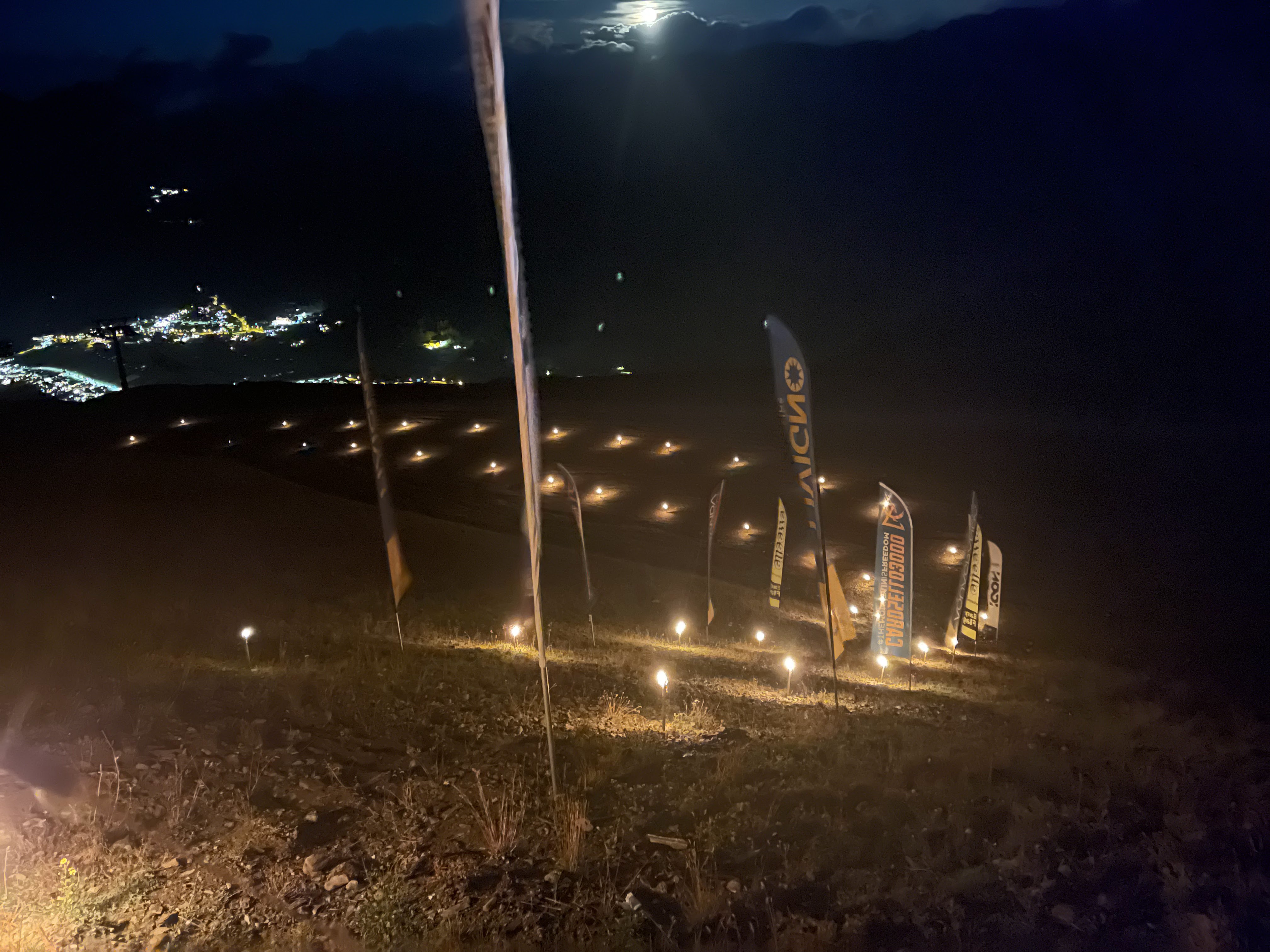


.heic)


.heic)
.jpeg)


.heic)


