We’d love to hear from you.

We welcome your thoughts, experiences, comments, suggestions, questions or personal stories. If you don't hear from us right away, please note that your email is very important to us. We will do our best to respond with 24 hours.


Greenville, SC

Trimarni is place where athletes and fitness enthusiasts receive motivation, inspiration, education, counseling and coaching in the areas of nutrition, fitness, health, sport nutrition, training and life.

We emphasize a real food diet and our coaching philosophy is simple: Train hard, recover harder. No junk miles but instead, respect for your amazing body. Every time you move your body you do so with a purpose. Our services are designed with your goals in mind so that you can live an active and healthy, balanced lifestyle.

Blog

Filtering by Tag: Training

Back To Structured Fun

Trimarni


I enjoyed a 2-week mid-season break after Ironman Lake Placid. Although I was pretty smashed for the 48 hours after the race, I bounced back pretty quickly on Wednesday. By the weekend, I was itching to get back into structured training. However, I knew that I needed to respect my body (and mind) for what it allowed me to do for 140.6 miles and give it the rejuvination that it deserved. 

My approach for my two week mid-season break was unstructured fun. Without a schedule as to what to do each day, I let my body and mind decide what it was I would do, and for how long. Aside from swimming, all exercising was kept at a low intensity and included stops as needed. 

Here's a recap of my 2-weeks of unstructured fun: 

July 25th: Ironman Lake Placid
July 26th: Walking around town
July 27th: Fly home
July 28th: Road bike (90 min, 4PM)
July 29th: Long course swim (~3700 yards, 8:13AM). 40 min run (5:40PM).
July 30th: Long course swim (~4300 yards, 9:04AM)
July 31st: Bike (~1:20, 10:11AM), Run (59 min, 11:54AM)
August 1st (private training session with an athlete): OWS (9:31AM), Bike (2:58, 11:20AM)
August 2nd: Long course swim (~4300 yards, 8:58AM), 45 min run (4:23PM)
August 3rd: Long course swim (~3900 yards, 9:11AM)
August 4th: Run (1:10, 9:40AM), Bike (1:11, 4:27PM)
August 5th: Long course swim (~4000 yard swim, 7:45AM)
August 6th: Road bike Blue Ridge Parkway (4:01, 10:39AM)
August 7th: Spectate Karel at Lake Logan Half
August 8th: Run (1:25, 10:34AM)

It was a nice mix of swim, bike, run but without any structure or routine. I made sure to keep every workout fun but without a purpose. 


With a little over four weeks left before Ironman 70.3 World Championship, I am back to structured training. My tri bike made it's appearance after 2.5 weeks in the travel bike box from Ironman Lake Placid. The focus switches from unstructured fun to purposeful fun. Although not every day is easy, I make a conscious effort to always have fun when I train. It is something I choose to do with my body and mind and the benefits extend far beyond a race day performance. 

If you have been struggling with finding the "fun" in your training, I encourage you to explore the following topics to see how you can bring yourself back to that beginners joy for training and racing. 
  • Obsession with metrics - miles completed, weekly distance, paces/watts/speed
  • Dissatisfied with body image 
  • Rigid and ritualistic with training (and eating)
  • Pressure to perform 
  • High expectations 
  • Fear of failure 
  • Inadequate recovery
  • Monotonous training
  • Isolated training
  • Dull workout environment 
  • Workouts without purpose or meaning
  • Too high volume/intensity
  • Not enough intensity
  • Training without gratitude 


It's race week for IM 70.3 FL!

Trimarni

 
2019 IM 70.3 FL 

Well, it's been a long time coming. 

It's officially race week. On Sunday morning, I will join Karel, eleven of our athletes and many other excited triathletes for the start of Ironman 70.3 Florida in Haines City, FL. 

I'll be honest with you. I've really struggled with training for an event over the past few months. The race specificity hasn't been well, specific but instead, I've been seeking ways to keep my motivation high for training. Group rides, gravel riding, master swimming and happy running has kept me super active and enjoying the triathlon lifestyle. Although I love riding my triathlon bike, it hadn't seen much action since November. Over the past week, I've made it a point to ride my bike as often as I could to get my mind into race mode. I've had a bit of ambivalence towards triathlon racing but over the past few days, I started to find myself excited to put myself into the race environment. 

After nearly 15 consecutive years of long distance triathlon racing, I've accomplished a lot. But I still love the sport too much to stop training and racing. I won't stop racing triathlon events because that is how I can connect with other triathletes - especially our team members. I love being around like-minded individuals and the community aspect is what I look forward to the most on race day. This leaves me in a bit of a confused state as I don't want to stop racing but I am craving challenges and adventures for my mind, body and soul. 

As athletes, I think very normal to feel confused by sport. The beautiful thing about sport is that it's there to teach you lessons. Not just about life but about yourself. 

If you have also felt a bit confused with your strong passion for training but a bit indifferent about racing, it's important to do some soul-searching without giving up on your first few races of the year. With a long hiatus from racing due to COVID, we haven't felt that 'high" from racing in a long time. We haven't had that reminder of why all of this training is validated and necessary. We haven't been given the opportunity to be in that place of self-discovery that gives us great meaning to life. We haven't been around like-minded people who radiate inspiration and motivation. 

The beginning of a new adventure often brings a great amount of emotions - from nervous energy to excitement. When you are in the same sport for such a long time, it's normal to forget that humbling experience of what it was like to be a beginner. It's also easy to stick with the things that you are already good at. 

Instead of giving up the sport that brings great value and meaning to your life, it may be time for a new challenge. Stay open and curious for new and different opportunities. To stave off boredom, look for a race that requires you to step outside of your comfort zone.

Don't give up on your active lifestyle.
Stay humble and curious by trying something somewhat new. 
Trying something new or different (even if it's a different triathlon course than what you are used to) can spark excitement (and a bit of good pressure) in your training and may be what you need to get out of a motivation funk. 

Weekly training update (no crashes!!!)

Trimarni


After we returned home from an eventful gravel ride, I spent the rest of Sunday licking my wounds (not figuratively). Although I discovered a small crack in my helmet, I'm thankful that I didn't have any issues with my head or neck. My arm, leg, knee and hand were uncomfortable due to the scratches and wounds but otherwise, I was grateful and thankful that nothing worse happened during my crash. Even my bike was ok! 

After the impactful crash, I knew my body needed a lot of sleep to start the recovery process so I went to bed earlier and tried to sleep as much as possible. After a somewhat productive Monday, the beautiful weather was begging me to get outside. Karel joined me for an easy spin on our road bikes and my good friend Kristen also joined us. We saw our friend Thomas on the trail and he joined us as well. It was great fun to ride together on the Swamp Rabbit Trail from Traveler's Rest to downtown Greenville. 


After we arrived downtown, Karel was ready for some ice cream so we stopped for a quick "recovery snack" at Blueberry Frog. After healing my wounds with the sweet treat, we biked back home for an easy conversational ride. It felt really good to be riding a bike again. 

As for my body, I started to heal pretty quickly. The human body is amazing. But I had a pretty deep gash in my forearm by my elbow. To ensure that it healed without complications, I stayed out of the pool all week. I really wanted to swim on Friday but I figured it would be good to give it a full week to heal. This also was good for my chest as my first crash left me with some pain in my right chest area, which had then moved to the outside of my rib cage on both sides. Thankfully, the pain becomes less with movement (running feels the best) and with each day, I was able to breath a lot better. As I sit and type this, it still hurts a bit to cough, sneeze and take in a really deep breath but overall its getting much better and my skin is healing well. 

Because I was unable to swim this week, I focused on what I could do - bike, run and strength. I also supplemented my swimming for stretch cords, straight arm planks (I can't put pressure on my forearms just yet) and core work. As for the rest of my training, I am really happy with the workouts that I was able to accomplish this week. 

Monday - 1:52/25.6 mile easy social spin
Tues - AM: 1:23 treadmill run w/ 8 x 4 min tempo w/ 2 min EZ walk/stop/jog between
PM: 1:27 bike (2700 feet of elevation gain) - 3 x 2.13 mile climbs up Paris mountain (#1 normal             cadence, #2 heavy gear, #3 high rpm) w/ recovery descend between. Karel joined me for this. 
Wednesday - AM: 1:49 trainer bike (with 8 x 6 min at 86% FTP w/ 3 min EZ between) followed by a 35 min hilly run. 
Thursday - AM: 1:10 smooth endurance run. PM: 1:15 anaerobic interval bike workout (trainer)
Friday - AM Strength. PM 2:36 steady ride on road bike (beautiful warm day, rode by myself). 
Saturday - "Repeatable" workout. 2:02 trainer bike (a set of 6 and 8 minute strong sustainable effort intervals w/ 2-3 min EZ between followed by 4 x 3 min ascending intervals). Followed by a 11.3 mile run. 
Sunday - Smooth and EZ 1:09 mile run. 


I was really proud of my body and I found myself working through a lot of planned fatigue. 

A little bit about the Saturday "repeatable" workout....
While it’s fun to do a workout for the first time or to build off a previous session, there’s a lot to gain from completing a familiar workout. And while the training leading up to the workout may change, there’s so much to gain from a session that you get to complete more than once.

Saturday was the second opportunity to work through the mental and physical challenges of this 3.5 hour workout.

Endurance sport is much more than chasing paces and watts, collecting miles and building endurance. It’s so much more than reaching a race weight. Sure, preparation requires building fitness but and endurance sport requires building mental toughness.

The capacity to endure physical discomfort and self-doubt. To make good decisions under extreme fatigue. To learn how to cope with discomfort by dissociating the mind from the body. To stay hopeful and positive when faced with adversity.

This repeatable workout isn’t so much about metrics but developing mental skills to help me overcome the physical, emotional, nutritional, psychological and environmental obstacles that will test me on race day.

When it comes to preventing burnout and maintaining joy for sport, I encourage you to seek personal growth in ways that aren’t necessarily measured by metrics.


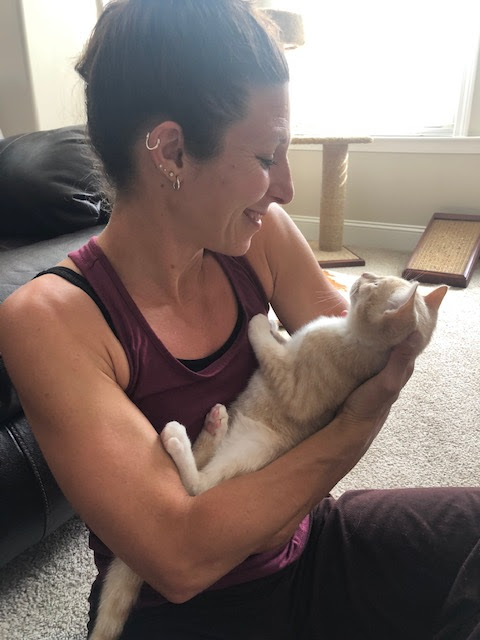
As for Sunday after my morning run, I organized the kitchen in the afternoon and then went to visit a close friend who just got a kitten after her 10-year old cat passed away. 


Karel was in Saluda, SC playing gravel bikes with our friend Alvi at the Saluda Roubaix race. Here's Karel's detailed race report via text (not G rated).......


Karel ended up 1st in the 40+ (Masters) category and 5th overall. After he arrived home in the evening, we watched the first Formula one race in Bahrain and then went to bed in excitement for our first group camp of 2021 on Wednesday! 

It's race week - we're going off-road!

Trimarni


Since December 5th, we have been extremely lucky with our weekend weather. We have been able to ride outside every Saturday morning for the past two months. Although a few of those rides were rather cold, drizzly and windy, the weather seemed to always be in our favor. 

This past weekend was a different story. On Saturday morning, it was cold and rainy. Although the trainer is always available for a weather-controlled indoor ride, I craved a change in the routine. Maybe it was meant to be. 

Instead of staring at the wall for a few hours, I decided to start my workout with 30 minutes of mobility and strength (with EC Fit On Demand) and then headed out in the light cold rain for a run on my favorite long run loop. Although I wasn't quiet sure how to dress, I found myself comfortable and happy running in the light cold rain. I listened to two triathlon podcast interviews during my run and found delight in dodging the puddles and feeling the wind in different directions as I made my way out and back on the undulating 11.5-mile loop. To keep with the theme of the weekend (changing things up), I repeated the route on Sunday for two 11.5 mile runs in 48 hours. My legs responded really well to the 2nd run and with a different shoe choice on Sunday (NB Fuelcell) versus Saturday (NB Fresh Foam), I ran much more efficiently on Sunday with a slightly faster pace and an average HR of around 8 beats less on Sunday. I'd call that a successful weekend of quality training! 

Karel and I are really excited for this weekend as we will be participating in our first race of 2021! I came across the Thomasville Clay Road Classic after searching for gravel rides in and around our area. I had just finished my first gravel ride with Karel and was instantly hooked. After showing the event page with Karel, it was an easy decision to register for the 100-mile distance. This will be our first ever gravel "race." Our assistant coach Joe will be joining us and we know of a few other people who will be participating. One of my favorite things about racing is seeing familiar faces. 

I've been asked by a few people if I am giving up triathlon racing for bike racing. My answer is always a quick no. I love the sport of triathlon - especially long distance triathlon training and racing. I love swimming, I love biking and I like running (love/hate relationship with it). But during these uncertain and unpredictable times, I find it really important to explore different racing opportunities - which means using my triathlon fitness for different racing experiences. 

Although I love swimming, biking and running, I really enjoy racing. Although it's incredibly uncomfortable at times and sometimes brings worry, frustration, anxiety and distress, race day is worth getting excited for. I love the community feel of a race, being around other like-minded individuals and escaping the stressors of life for a day (or a few hours) in order to do something that brings you excitement and joy. Competition (or participating in an event) also teaches you a lot of great lessons that you can apply to life. Every race is seen as a driving force and a form of motivation for continued improvement. 

Sport is all about what you make of it. It's all-too-easy to stay in a comfort zone and opt for what's familiar, convenient or comfortable. But with the added weight on our shoulders of whether or not a future race will happen, I believe it's really important to seek out and take advantage of the opportunities that are available to you right now. While it's important not to abandon your structured training for your future events and to also keep yourself safe during this pandemic, it can be a wonderful thing for your mind to change up the normal workout routine and to try new things. 

When looking for a race, consider your current level of fitness and skills and search for something that would slightly stretch your comfort zone. Also consider your safety as it relates to your health. Any race/event that you choose should be something that makes you nervously excited. 

Don't be afraid to step outside of what's familiar to do something that your future self will thank you for. 


Although a systematic training plan will have a certain amount of monotony to produce physiological adaptations, it’s necessary to occasionally break the monotony. Changing up the routine allows you to stay emotionally and mentally engaged. Otherwise, always going through the same motions can increase the risk of boredom and burnout.

Change the sport, change the scenery, change the route, change the isolation, change the need for familiar and comfortable. 

Don’t fear change.
Embrace it.


Weekly training recap - swim, bike, run

Trimarni


It's been a wild week (emotionally) but we are incredibly grateful for some sort of normalcy with our swim, bike, run training. 

Karel made a quick 24-hour trip to Washington, DC on Sun and returned home on Monday. A month or so ago, Karel realized that his Czech passport was going to expire this year. To renew his Czech passport, he needs to go to the Czech embassy in DC to get an updated one. The embassy scheduled him for Jan 4th at 10am so it was a quick trip there and back. Thankfully, Karel enjoyed a safe and peaceful trip, as well as a run around the historic monuments. 


It was weird to be alone for those 24-hours (well, just me and the 4 furry kids) as Karel and I spend pretty much all day, every day together. Thinking back, I think it's been several years since we have been apart for more than a day. In the late afternoon, I went on a 2-hour bike ride with mom. She really enjoys riding her bike on the country roads in our area and exploring new routes. She has really improved her skills and endurance over the past few years since she started riding (BTW - she just started riding around the age of 60 yrs!). 


Every week we attend master swimming on Tues, Thurs and Friday. It's something that I really look forward to and has been a gift in terms of keeping my passion strong for swimming. Although the aquatic center isn't as convenient as Furman (where we used to swim - before the campus was closed to the public in March and remains closed to the public), it's a beautiful pool with lots of available lanes for lap swimming. If you are ever in the area, you can swim there with a day pass of $8. There is also a therapy pool (with lap lanes), a small gym and locker rooms. 


I've been doing a lot of Individual Medley (IM - fly, back, breast, free) work at masters swim, which makes me feel strong and exhausted. I used to swim butterfly in college (200 fly) but I struggle to even finish a 50 without a lot of lactic acid build-up. But it's been fun to change up my strokes as it's been helping me achieve a better feel of the water with freestyle. 

Here's one of the workouts I did near the end of December: 
Warm up: 
300 
1:00 [vertical kick]
6 x 50 1:05 stroke
1:00 [vertical kick]
3 x 100 1:30

Main set:
2x 2 x 25 :40 mod
1 x 50 1:00 strong
3 x 25 :40 build
1 x 75 1:30 strong
4 x 25 :40 desc 1-4
1 x 100 2:00 strong
[All swims choice]

Kick set:
1 x 400 9:00

Freestyle set:
4x
1 x 300 4:00 long & strong
1 x 150 2:15 neg split
1 x 75 1:15 strong

Warm down
4 x 50 1:00

On Wednesday, Karel set out for a gravel ride near Tuxedo, NC. He rode in Dupont state recreational forest for nearly 3 hours (and followed it up with a brick run). He is loving his Ventum gravel bike, which has been a great change for him. Since he has been riding bikes for almost all of his life, changing up his cycling routine (and bike choice) has been really good to keep the motivation to ride going, especially in the colder winter months. 

I stuck to the trainer and did a specific bike workout that challenged me in all the right ways. So that I don't burn myself out from indoor riding, I am keeping with structured workouts on the trainer and anything unstructured, I take it outside for a happy, soul-fulfilling ride. 

Here's the workout: 

WU: 10 min EZ as you feel then ramp up the effort as:
3, 2.5, 2, 1 min ... go progressively harder so that the last 1 min is at sub threshold.
1.5 min EZ spin
---
FPE (fast pedal efforts):
4 x 45 sec FPE w/ 45 sec EZ in between.
4 x 30 sec FPE w/ 30 sec EZ in between
4 x 15 sec FPE w/ 15 sec EZ in between.
Go harder on the effort as the interval get less. Cadence is very high on all!
There are no additional break between the 45, 30, 15 sec interval blocks!
---
4 min EZ recovery spin
---
MS:
2 x 4 min
2 x 3 min
2 x 2 min
2 x 1 min
2 x 2 min
2 x 3 min
2 x 4 min
Odds: Big gear work under 55 rpm and solid effort (Z3)- pure strength work.
Evens: Z2/Z3 and Fast RPM over 105 rpm.
All 1 min EZ choice spin in between.
---
4 min EZ recovery spin
---
Finish with:
10 min Z2 (aerobic effort) but faster RPM 90+

CD: EZ spin

The bike workout was 1 hour and 55 minutes and I followed it up with a 27 minute run on the treadmill (with some intervals). 

I've been staying really dedicated to mobility and strength training with the EC Fit On Demand app. I am really benefiting from the movement-focused strength, which I feel has contributed to me staying injury free over the past year. 

On Saturday, Karel drove around 80 minutes away to do his first gravel group ride. He hung on for dear life as the pace was strong for the entire ride. He finished feeling satisfied and enjoyed his a$$ kicking (per his words :) The ride was 67 miles and was just under 4 hours. Because of the rain and cold on Friday, the roads were a little unsafe to ride in the early morning. Our normal group ride (GVL WBL) which normally starts at 10am was pushed back to noon. I debated about doing it but I felt like all the signs were telling me to just do my own ride. So I ventured out on my own for a solid 2.5 hours on my Ventum road bike (I haven't ridden my tri bike outside since November but I do ride a tri bike on the trainer) and followed it up with a 30-minute brick run. 


On Sunday Karel ran with our speedy athlete Yannick and they did a tough 17 mile run over Paris Mountain (the Paris Mountain 20K road race course). I did the 10K course which gave me a total of just under 11 miles and ~1400 feet (starting from our house, which is about 2 miles away from the race start). Karel's run gave him around 3800 feet elevation gain. I was thankful to have "only" completed the 10K course as it was super hilly! 

Right now I am not training with races in mind. Swimming is structured (and around 4400 yards per swim) but I find it fun and social. Running is all about frequency and staying injury free. Most of my runs are between 20-45 minutes during the week. My training is supported by prioritizing strength training and mobility. Biking is mostly happy and soul-fulfilling with a little structure on the trainer. In all, my hope is that this approach will keep me healthy (in mind, body and soul) and as we inch closer to the race season, I can begin to specify my workouts in duration and intensity. But for now, I am really enjoying my training and the fitness it is giving me to do incredible things with my body. 
During this time of uncertainty with races, I find it incredibly important to have an intention and purpose for each workout and to be willing to be flexible and try new things. 

Practical training without racing

Trimarni

In my previous blog post, I discussed the struggles that many athletes and coaches are facing during this time of cancelled races. 

Before I offer these tips, I want to remind you of a critical component of sport longevity and achieving athletic excellence. 

I've been a competitive endurance athlete for the past 14 years. I've had my share of setbacks but I have never lost my love for training. I contribute this to one thing: maintaining joy for the process and letting the outcome take care of itself.  

Many athletes experience burnout when preparing for an endurance event. The training journey rarely starts this way but when an athlete feels tremendous pressure on an outcome (race day success), the training becomes stressful, monotonous and tiresome. Although not every workout will be inherently enjoyable (improvements require hard work and stretching the comfort zone) and there are struggles in every athletic journey, maintaining joy for training is an important element of athletic development. When you experience a sense of pleasure and fun with training, you are more likely to experience an overall sense of satisfaction while staying motivated during the process. 

During a time of cancelled races, athletes are no longer training with a specific date in mind. Unlike in years past, when training would keep athletes motivated to work towards achieving optimal performance on a specific date, athletes are training in a state of uncertainty. Athletes who only know how to train with outcome-oriented goals will certainly struggle when there is no endpoint to reach a performance milestone. However, for those who truly enjoy the process of athletic development, it's a lot easier to find joy in what you are doing. I feel this is why some athletes are able to maintain focus and motivation without a race in sight. 

Even if you have joy for training, there will be struggles. For some athletes, this time has offered a period of soul-searching. Perhaps a break in structured training or stepping away from the sport is needed. We are living in a very stressful time and we are all on our own path of getting the most out of life. 

Here are some of my suggestions to help you get the most out of your training during a time of no racing: 

  • Physically and mentally, you should not feel like you are training for a race. This style of training requires great dedication, focus and emotional energy. Now is not that time. 
  • Be flexible - life is unpredictable right now, be willing to adjust without guilt or worry. 
  • Go into workouts without expectations. No expectations = no disappointments. 
  • Have a mix of structured and soul-fulfilling workouts. Around 40-60% of your weekly training volume should come from purposeful and structured workouts where you are mentally engaged and are physically prepared to execute. The remainder of your workouts should have freedom and flexibility so that you don't feel like you are showing up to an actual "workout" every day of the week. 
  • Enjoy a change in your normal workout routine. You want to look back at this time of no races and feel as if you made the most of it. 
  • Give the little details extra attention. Whereas the nature of race season typically leaves you time-crunched, exhausted and cardio-obsessed, give more attention to proper nutrition, recovery, mobility, sleep and strength training. 
  • Dial back the volume. You don't need to be completing every long workout that you are used to completing at this time in the season. 
  • Bump up the intensity. With a solid aerobic base, tissue resilience and muscular strength, spice-up your workouts with a bit of intensity. 
  • Make the focus on maintaining your fitness. Once you have a race on the calendar, you can begin to progressively build your intensity and/or volume to prepare for the race. 
  • Keep your foundation strong. Don't neglect strength training. 
  • Gift yourself mini-breaks (up to seven days) from training structure. Without races, the monotony of training can lead to burnout and staleness with training. No need to be sedentary during the break but instead, spice up your routine with different activities. 
  • Set personal workout challenges. To keep you accountable and to keep a high level of motivation and focus, having a challenging training objective is critically important right now. Whether a virtual race, a specific race distance spread over a course of a week (or weekend) or a self-defined multi-day challenge, you can experience some of the same mental and physical aspects that you would experience at a race. 
  • Socialize. While keeping yourself safe and following CDC guidelines, connecting with others is very important for your mental health. Even if just once a week, looking forward to a workout with a training partner or small group can be a welcomed gift during this time of social isolation.
  • Work on weaknesses. Be willing to step outside of your comfort zone and do the stuff that you typically push aside (or neglect) when you have a race on the schedule. 
  • Work on your nutrition/diet, relationship with food and the body and sport nutrition. You don't need a race on the schedule to improve your dietary habits and fueling/hydration regime. 
  • Communicate with your coach. Be willing to be vulnerable, open and honest with your life, emotions and needs. You have a big role in the coaching relationship - don't let your coach be a dictator. You deserve to have a voice with your training routine.
  • Do what you can. Have fun. Don't waste away your previous/current fitness. Keep setting goals. Make the most of this time of cancelled races - however that may look for you. 

Why you need to be challenged

Trimarni


As an athlete, you are constantly put into scenarios where you are challenged. Sometimes you will thrive and other times you will struggle. This isn't just on race day, but in training as well. When you experience a challenge, your level of perserverance, mental fortitude, grit and determination will be tested.

Whether a tough main set, a virtual race or a block of epic workouts, now more than ever before, it's important to find creative ways to satisfy your competitive drive.  With a strong desire to conquer the challenge that lies ahead, you will find yourself filled with nervous, positive energy - just like you would experience on race day.

As for your emotions, if you feel threatened or discouraged by a challenge, your confidence will be affected. And where does that dislike of a challenge come from? Likely from a fear of  failure. When you consider or accept a new challenge, you are also faced with the possibility of failure. Rather than seeing the opportunity in the situation, your mind may feel with thoughts on what it would be like to fail or not meet your expectations.

Gift yourself a workout challenge. You deserve to feel excitement, inspiration, courage and healthy nerves, even during stressful and difficult times. Instead of avoiding a challenge due to fear of failure, focus on what you will gain by putting yourself through a personal challenge. During a physical challenge, it's not about pass or fail. It's about having fun and seeing the challenge as something exciting, new and enriching.

As you learn to become motivated by athletic challenges, you will develop a positive reaction to difficult, uncomfortable and new scenarios. Instead of viewing challenges with fear and self-doubt, learn to rise to the challenge. By doing this in training, you'll be better prepared for the challenges that you will face on race day.

You have two ways of viewing a challenge. One is: "this is going to be so hard, there's no way I can perform well today." The other is: "I'm excited to see what I can do." Clearly, one thought is a threat (or self-doubt in abilities) and the other is viewed as a welcoming experience.

The more you can test your limits and capabilities, the more you can learn about yourself.

New challenges are opportunities to discover your incredible capabilities, strengths and areas of improvement.

How will you challenge yourself?

Training: the new normal

Trimarni


It's a little strange thinking that our first long-distance race of the season was supposed to happen this coming weekend (IM 70.3 Florida). Although I'm bummed that most of my racing season has been postponed until 2021, I am not giving up on triathlon training.

Keeping focused on long-term goals is important during this time of uncertainty. However, I'm struggling with my long-term racing goals. I've achieved so much in the sport of triathlon over the past 14 years and I feel content with all that I have accomplished. While I would still like to achieve a few big stretch goals, I am not sure what I am chasing in the sport of triathlon. Despite the uncertainty, I am still very dedicated to my training because training doesn't serve as just fitness-gaining or race readiness for me but it's how I can connect with nature, calm my mind, take care of my body and relieve stress. Plus, I love the feeling of conquering a challenging workout.

When I train, I often find myself thinking "I should be doing this" which is not the best mindset during this time of unpredictability. If you are struggling with your training motivation during this time of postponed races and questionable future race goals, here are a few tips:

  • Dedicate at least three training sessions a week to structured workouts - with specificity, intent, purpose and intervals. Consider keeping these sessions indoors to keep them in a controlled, safe environment. 
  • Dedicate the rest of your training sessions to be without structure. This doesn't mean that they are not important or don't have a purpose but use these as rejuvinating workouts to refreshen the mind, body and soul. If possible, I suggest to take these sessions outside and to enjoy yourself out in nature. If you can't get outside, make these sessions fun when you train indoors.
  • Training should not be "race specific" right now - you'll only burn yourself out if you are putting too much pressure on yourself by trying to hit certain paces, watts or achieving a certain amount of miles. Think about this time as foundation (or base) building but with a bit more intensity/specificity than what you would do in the winter. 
  • Keep your long sessions only moderately long. Whereas you may be use to "going long" right now in the season (or building your mileage/duration), you don't want to burn yourself out - mentally and physically. Again, you don't need to be training like you have a race approaching in the next 4-6 weeks. 
  • Embrace the grind.  Being an athlete is hard. Training is hard. Life is hard. As with anything in life, there are ups and downs and some days are easier than others. Understand that public health crisis or not, not every day is going to be smooth sailing. 
  • Keep it fun. Even if you are social distancing, find ways to train with others. Invite a friend for a virtual training session, sign up for a virtual challenge, purchase a new training plan or set a personal challenge for yourself. It's ok if your normal training looks a bit different right now. 
  • While it's important to be kind and gentle with your emotions, motivation and mindset right now, it's also important to take care of your health. Daily exercise is a must - training is not. Even when you don't feel like training, it's worth the effort to make yourself move. Take a walk, do yoga, dance or go for an easy spin on your bike. 
  • If you feel like your world has been turned upside down, you may have made some extreme (unhealthy) changes in your nutrition, sleep and overall lifestyle. Try to keep yourself on a normal routine for sleep, eating and training. When you are skimping on sleep, eating poorly and pushing back your workouts until you find some motivation and energy, you'll find yourself wasting the day away. Take good care of yourself so that you can stay in good health. 

Should you train by distance or time?

Trimarni

Picture Source

At the end of 2019, you probably saw a lot of "year in review" stats floating around social media from your fitness-fanatic friends. While a great way to celebrate all that your body has accomplished over the course of a year, it's not uncommon to hear things like “I only need 50 more miles to make it to 5000 miles of biking for the year, I need to run 8.37 more miles to reach my yearly goal or I didn't reach my swimming goals."

Not too long ago, GPS watches didn't exist. The website MapMyRide.com (or run) didnt exist until around in 2005. Unless you measured a distance by a bike computer, ran around a track (or marked course) or drove a specific distance in your car, there was no easy way to know your running miles. To track your workouts, you kept a written log in a journal. There was no Strava or Training Peaks to  accumulate your swim, bike or run total distance.  In many ways, life was actually a lot more simple without all of these gadgets. You start a workout, go by feel and finish by time. And there was no social comparison to validate your athletic worthiness. 

Today, people obsessively analyze over data. While data can be beneficial (when used properly), it can often lead to injuries, burnout and body image issues. Are you guilty of running back and forth by the front of your house just to make sure your run distance had two zeros at the end? Do you get anxious if you can't complete a given number of miles for the day/week? Whether it's swimming, biking or running, it's easy to obsess over even numbers - something in you tells you that you just have to get to x-miles to feel satisfied and accomplished.

As an athlete, you may be tied to training by distance for you believe that completing a certain number of miles (either over the course of several months or within one workout or week) will help you feel more physically prepared. Or, maybe you are using certain metrics to give you confidence in your abilities to complete a certain distance on race day. It's not uncommon for athletes to believe that completing a set number of miles/distance is the only way to prepare for a long distance event. At Trimarni, we prescribe all of our workouts by time for our athletes. As for me and Karel, we never go by miles when we train. Here's why.

More enjoyable workouts
When it comes to training, in my opinion (athlete/coach), completing a structured workout as planned is much more enjoyable when you can do what you need to get done, in a certain allotted amount of time, and then go on with the rest of your day. There's no chasing an outcome but focusing on the present moment. Even if you have a general idea of how much distance you will be covering within the workout, the focus is on the workout itself - not the outcome.

For example, a few weeks ago Karel and I had the exact same long run workout. We started off on the same route, did the exact same workout and Karel’s workout lasted 1:29.07 and my run was 1:37.07. Even though we did the same workout, it's obvious we differ in speed, ability and experience. So why would I go out and run 13 miles when Karel "only" runs 12 miles. Or should Karel run 14 miles just so he can run the same time as me? These are all things to consider with time vs. distance based training. When our assistant coach Joe rides for 3 hours in Jacksonville, FL, he can easily cover 60+ miles. For us in Greenville, we are lucky to get in 50 miles (so.many.hills). Training by time - with a specific workout focus to adhere to - removes a lot of pressure and expectation that can suck the fun out of training.

You are on your own journey
Ten running miles, 20 biking miles or 3000 swimming yards. To complete this distance, every athlete will require a different amount of time. But increase the intensity and you may cover a little more distance. On a day when you are tired or asked to run easy, you may cover a little less distance. If the workout is more skill focused, it may take you a bitl longer. If it's an easy day, you have the liberty to go easy. Focus on the getting through the minutes you have assigned. Try to focus on successfully accomplishing what's planned for you without comparing yourself to others or feeling like you always need to do more.

Be respectful of your body
Your workout should be based on your ability to complete a given workout within a time that makes sense for you (work/family/fitness), in your current fitness journey. Every individual handles training stress differently. There are many different ways to achieve similar physiological outcomes. And at some point, there will be little return on your training investment if miles is the only marker of a successful workout. Remind yourself that no one workout stands alone. When your training adds up and you bring fatigue to future training sessions, your fitness carries over. There are easy workouts and hard workouts. Don't worry if you don't cover the proverbial 20 mile run while training for a marathon, a 3 hour run when training for an Ironman or a 112 mile bike ride. Many injuries (and burnout) occur from the ongoing need to chase miles at any cost. Don't compare your pace to anyone else (or a past version of yourself).

New perspective
When a workout is assigned by distance, a few things can happen. You may look for the easiest (or quickest) way to accomplish the distance instead of selecting a terrain or course that works on your weaknesses. You may feel judged by others seeing your stats and feeling like you are "too slow." You may end up going too hard or you speed up to try to get in the assigned distance when you are crunched for time. Not worrying about the distance completed can bring less pressure to the workout, which means that you give your best but also listen to your body.  By going by time, you bring a new perspective to your training, you gain confidence from consistent training (less risk for injury/burnout) and you have more joy for what you get to do with your amazing body. 

Because most athletes associate miles to their longest weekly workouts, here's how we do "long workouts" at Trimarni coaching for our Ironman athletes. As a reminder, feeling prepared for a long distance event is so much more than just checking off workouts. Not only do you need to arrive healthy, motivated and injury free to experience success on race day but you also need to have a well planned nutrition strategy, a good understanding of how to manage the given terrain/conditions and great mental fortitude. 
  • Swimming: Instead of putting all the focus on distance, we schedule workouts between 45-90 minutes and always focus on frequency swimming - 4-5 times per week. We also include specificity in every workout, strength work (towel, band, agility paddles, tech paddles) and speed within endurance sets. We don't believe in long, slow continuous swimming (ex. 3-4 x 1000's) but instead, swimming well (ex. lots of 25s-100's with short rest to build endurance).
  • Biking: We always go by time and the miles are never the focus. There is structure in every long ride (intervals) that we prescribe and we feel the sweet spot duration for Ironman biking volume is between 4-5 hours - with intensity and running off the bike. Rarely do we have athletes riding longer than 5.5-6 hours. We also have our athletes biking a lot, with ~50% of weekly training volume coming from the bike. This biking frequency makes for great overall fitness gains. 
  • Run: We never have our athletes run over 2 hours. Most of our Ironman athletes will run for 1:45-2 hours as their longest run. But, we also do a lot of two a day runs, back to back to back run workouts (ex. Fri PM, Sat off the bike, Sat PM, Sun AM), brick runs, strength-based runs (hills and weight vest treadmill walking) and progressive runs. We also really enforce good form running - helping our athletes learn how to run efficiently well. There is little to no physiological benefit from the added work that the body has to endure when running more than 2.5 hours. Most often, form suffers and the risk for an overuse injury increases. Plus, after 2.5 hours of running, your body needs a tremendous amount of time to recover. In the sport of long distance triathlon, it's not about being fast but being great at not slowing down. What preceeds the run greatly impacts how well (or not well) you will run off the bike. 


My new book Athlete to Triathlete will be released on 1/28! There's still time to place your pre-order: Athlete to Triathlete

Week in Review

Trimarni


Happy 2020! Wow, I can't believe we are a week into the start of a New Year. The weather here has been unseasonably warmer than the past few years, although we have had a few days of steady rain. Nevertheless, training is going well and we are in good health. 

On Monday last week, I welcomed a recovery day. When I have a recovery day, I take full advantage of it by getting a lot of work done in advance, catching up with to-do's around the house, enjoying a little extra time in the kitchen, taking Campy for extra long walks and not thinking at all about training. I sure do love my recovery days. 

On Thursday, I recruited my swim partner Kristen to join me (and Karel) in a tough interval-focused swim. Kristen is extremely fast in the water so she is the perfect training partner for me to ensure that I don't slack in the water. She isn't training for any events (just training for life) so she keeps training fun for me. Plus, we have managed to find ways to have conversations in our rest intervals of 10-15 seconds. It must be a swimmer thing ;) 

Thursday Swim (4400)
WU:
400swim/100 kick/300 pull/200 drill
6x25's odds build free, evens fly on :30
MS:
30x100's
5/1
4/2
3/3
2/4
1/5
Alternating intervals aerobic base pace with threshold pace interval. We did a 1:30 cycle for the aerobic and 1:25 for threshold. 

CD: 250 easy

We did this workout shortly after Karel and I did our morning run workout so I was a bit tired going into this but somehow found a way to enjoy this tough set. Karel had a bit of cramping in his feet (from running shortly before the swim) so he had to adjust the set a little (he also did his own intervals).

As for the furry crew, Ella had a string of diarrhea on Sat and Sun so it was back to the vet for our little kitten. Luckily, all is ok and we just need to change her kitten food and keep her away from nibbling on Madison and Campy's food.


I can't believe how much our little Ella Bella has grown over the past few months. She was such a little malnourished birdy when we got her and now she pretty much rules our house with confidence, energy and cuteness.


Campy received his first rain jacket as a holiday gift from our friend/athlete Eedee. I thought he'd enjoy this gift so that he could comfortably go outside in the rain but we tried it out one day and Campy is still not a fan of water - in any form. 

On Saturday, Karel and I went out for a 2:50 hr ride (him on his tri bike and me on my road bike). Karel made some recent changes to his tri bike and he was riding super fast, without any back pain (which is something he regularly struggles with - over the past several years). We are hoping this keeps up so that he can train and race to his potential on the bike.

As for the changes he made:
-155 crank arms (from 165)
-Slightly higher front end position
-Narrow and forward elbows locked in the Wattshop ergo cups.
-High hand grip which allows him to drop the head down and rotate shoulders forward and be more narrow.

Thankfully, I didn't have to run off the bike and Bike + strength was my only workout of the day. My legs were toast trying to stay on Karel's wheel!


Karel had two bike fits throughout the week (one athlete from Massachusetts and one from Charlotte) so it was a bit of a busy first week of the year for Karel. 

Also, we received a notification from Ironman that our Tri Club placed 3rd in Div IV in the World. We are so proud of our athletes for this accomplishment!!


To finish off the week, Karel joined me for my long run on the Green Valley Road Race course. While a very easy run for him, it was a bit challenging for me. We are planning to participate in the Green Valley 10-mile Road Race on Feb 8th. We have been wanting to run in this event for the past few years but we have always had something going on during the event weekend. The race course is extremely hilly (~1000+ feet of elevation gain) but it's also on the roads that we train on all the time. It'll be more like a training day for us with a little push from other runners. It is certainly a running race that rewards strong and resilient athletes and not so much about being "fast" - just my type of race! 

Not only did we run the entire course but we also did a bit extra to make this my longest training run in a very long time! 13.9 miles an one hour and 50 minutes of running! There were some stops and reset breaks along the way but it was a challenging but great workout for me. And I loved having Karel as my rabbit to chase. After the run, we got a little work done on the computer and then went to the pool for one last swim workout for the week. 

Sunday Swim (3600)
(we both wore our buoyancy shorts for this entire workout)
WU:
600 choice 

PS: 3x
w/ snorkel
4 x 25 sculling
into 100 smooth swim 
Rest 5-10 sec. 

MS: 
600 snorkel, strap at 80% 
4 x 25 strap strong
400 strap at 80% 
6 x 25 strap strong
200 paddles at 85% 
8 x 25 strap and paddles strong
10-15 sec rest. 

PS:
3 x 200 at 85% and breathing every 3 strokes. 
Rest 10 sec

CD:
150 EZ


What does our winter training look like?

Trimarni


We have been spoiled by incredible weather lately. For the past week we have enjoyed tempertures in the 60's for our highs! Although a few rain showers to navigate through, our "winter" training has been more like spring training. 

Nearing the end of our second month of our 2020 training, much of our training lately has been focused on strength, resilience, endurance and neuromuscular firing. Although many of the sessions are intense, this is only because they stress different physiological systems. There's no "speed" work as it's just way too early to be focusing on getting faster. More so, without a solid foundation of strength, it's difficult to adapt properly to intensity and volume. Seeing that it's only the end of December, it's important to keep everything in perspective when it comes to training. I feel strong, healthy and resilient but not fast or fit. I have training sessions when I feel fresh and energetic but most of the time, I'm carrying around a bit of fatigue from one training session to the next. A carefully designed training plan has the right mix of recovery and training to safely adapt to training stress while maintaining consistency with training. This is the tough part of the year when you just have to embrace the grind - no matter the weather or how you feel, you have to show up and just give your best for the day. 


I've really enjoyed feeling challenged lately and I welcome each training session as an opportunity to explore my abilities. Some workouts are physically challenging and some are mentally tough. As I mentioned before, no workout is too hard or too long but in the big picture of the season, I am still building fitness and adapting to different training stressors. However, the theme for the training right now is strength and neuromuscular firing.


Here are a few of my recent training sessions from this past week (delicious scones and croissants may have been consumed after the Thurs pool training session): 


Tues trainer bike (2:10): 

WU:
10 min + 5 min + 5 min (starting at Z1 and finishing at upper Z2) 

MS: 2 rounds
3 x (3 min Z3, 1 min Z4+ and 100+ rpm, 1 min EZ) 
4 x ( 2 min Z4+ and 100+ rpm, 1 min EZ) 
---
13 min sweet spot choice cadence
---
5 min EZ spin 
Repeat MS one more time

PS: 
Power descending intervals:
1 min Very Strong Z5
2 min Strong Z4+
3 min Strong Z4
3 min Moderate Z3

CD: 
8 min Z1/Z2
3 min Z1

Followed by a 38 minute hilly run - all smooth and form focused. 


Thurs AM swim (4700)

WU:
500 warm-up

MS:
4x400
#1-2: Snorkel, band, buoy.
#3: Buoy, band
#4: Paddles
All w/ 20 sec rest
---
4x300 no toys, descend 1 - 4
All w/ 15 sec rest
---
4x200 w/ buoy, paddles,
descend 1 - 4
All w/ 10 sec rest
---
4x100 no toys
All best effort w/ 30 sec rest!
---
CD as needed


Yumming over this delicious potato, lentil and vegetable coconut curry stew that we enjoyed on Thursday evening.

Wed AM run (1:35)
The first half on rolling hills, then on the flat trail). 
WU:
45 min best EZ pace (walks as needed)

MS:
4 x (30 sec fast / 90 sec EZ )
---
4 x (2.5 min uptempo (Z3+) w/ 30 sec EZ jog/walk)

PS:
15 min top end of aerobic range (Z2/Z3)
---
15 min best EZ pace


We have been trying to get as much sleep as possible, which is about 8-9.5 hours a night. 


On Thursday evening, our athlete Ericka made the long drive down to us from up North to spend three days training with us. Ericka is a super strong and fast athlete and we have enjoyed coaching her over the past few years - seeing her develop her skills, push her boundaries and get more in-tune with her amazing body. Although we called this a mini training camp, we didn't do anything extreme for this phase of the season. It was a great mix of strength and endurance with a bit of neuromuscular firing to keep the brain communicating with the nerves/muscles. 


Campy LOVES when Ericka is in town. Ericka has special dietary needs (no gluten, diary, eggs) but Campy doesn't complain as she always shares her food with him. 

This is how I like to fuel up for a long ride - semi-homemade pizza (fresh store-bought pizza dough). One pizza was veggies and marinara and cheese and the other was kale pesto (vegan) with mozarella. I served my pizza with tempeh for protein.

The mini training camp was as follows:
Friday AM
~1 hour run (I did a treadmill run + weighted vest hill walking and Ericka and Karel ran outside on the hills)

Friday mid day
4000 yard swim - a mix of 100's on a tight interval and smooth swimming w/ buoy and paddles between.

Friday late afternoon 
2 hour endurance ride
(I have been riding my road bike outside since October as my Ventum just received a new paint job and I can't wait to get it back out on the road!)

Saturday AM
4:15 ride - including the Saluda Grade and Green River cove loop with a million switchbacks and lots of climbing/descending). ~6000 feet of elevation gain.
20 min brick run

Sunday AM
~1:25 run (in the rain) w/ a main set of powerful hill running (2 rounds of 15/30/45 sec) followed by a steady run around lake Furman ~10 min) and then one more set of hill running and a steady run around the lake. ~15 min warm-up and cool down.

Sunday afternoon 
3200 yard swim - upper body strength work swim (lots of band and paddle work)

Although it was a solid week of training, no one workout destroyed me. Each day I found myself craving a bit more and wondering what my body could do the next day. Plus, it's always fun to train with others - especially when each person has his/her own strengths/weaknesess. 

Here are some pics from our weekend ride and run. 


Thank you body for being so awesome! 

If you are interested in our style of training, we have updated all of our training plans for 2020!!
All of our training plans are now available on our website.

CHECK OUT OUR TRAINING PLANS HERE.

Keeping perspective of rest days/off-season.

Trimarni


Every athlete and fitness enthusiast will have intentional rest or active recovery days built into the training plan. Right now you may be experiencing a week (or more) long break from training to celebrate your well-deserved off-season.

Recovery (or rest) is important to your athletic development as it gives the body time to adapt to the stressors of exercise and to rejuvinate the mind.

As it relates to nutrition, recovery also allows the body to replenish energy stores and repair damaged tissues. What you eat (or don't eat) on your rest day or during the off-season will impact your health.

It’s common for athletes to dramatically cut calories or avoid carbohydrates for fear of gaining weight when energy expenditure is low. Or the opposite occurs - a day off from training is seen as a day to eat foods normally avoided for health, body composition and/or performance reasons (aka cheat day).
Many athletes struggle so much with rest that the body never receives an intentional break from training/exercise.

Regardless how you much or little you enjoy your time away from training, unhealthy lifestyle habits may actually hinder your athletic development and set you up for a setback. Therefore, consider your rest day as a growth day – fuel and nourish your body to become a stronger, fitter and healthier athlete.

Because sports that include heavy lifting, endurance activity and all-out efforts can induce excessive inflammation, deplete glycogen stores and damage tissues and muscles, a break from training may be the only opportunity to strategically consume the right type of foods to help you take your fitness to the next level or return your body back to optimum health.

As it relates to nutrition during a day off from training.......

A proper diet includes what you eat on training and non-training days. Whereas many athletes feel rather organized with the diet on training days, rest day or off-season nutrition can be confusing as athletes may struggle to know what and when to eat with the reduced energy expenditure. The basis of a training-supportive diet starts with a healthy foundation of eating. Thus, what you eat on an off-day from exercise (or off season) should not be too different compared to what you normally eat on a training day. Because your workouts require you to strategically consume slightly more energy from carbohydrates, the major change to your rest day diet is the removal of foods that normally support your training sessions (ex before, during and after). Therefore, there’s no need to eliminate carbs or drastically cut back on calories. Use your time away from training as an opportunity to increase your fruit, vegetable, whole grain, protein and healthy fat intake and spend a little extra time in the kitchen on meal prep. Be mindful about grazing and mindlessly eating with your extra free time. If you have a low intensity, short training session (ex. 30-minute easy session) in the morning on your rest day, it’s not critical to eat before the workout so long as you eat appropriately after the workout and you are not experiencing any ill-effects (dizzy/lightheaded/nausea) from a fasted exercise session. 

15 tips for easing into training/exercise

Trimarni


Whether you are a competitive athlete of fitness enthusiast, or going from couch to exerciser, it's important to ease yourself into any type of exercise/training regime. While you may feel extremely motivated to whip yourself into great shape, too much too soon can lead to injury, health issues or burnout.

No matter what level fitness you were before you gave yourself a break from exercise/training, remind yourself that you can't just restart where you left off.  It's important to put your ego aside as you keep these tips in mind to ensure a safe and sustainable exercise routine.
  1. Don't expect too much of yourself. 
  2. Be kind to yourself. 
  3. Don't look for quick results. 
  4. Focus on the process - consistency and frequency. 
  5. Don't neglect lifestyle habits. 
  6. Create realistic, attainable short term goals. 
  7. Stick to a schedule that works for you right now in your life. 
  8. Keep it simple.
  9. Stretch your comfort zone, don't jump out of it. 
  10. Incorporate cardio, strength and mobility training. 
  11. Don't neglect recovery/rest. 
  12. Be conscious of your technique and movement patterns. 
  13. Listen to your body. 
  14. Know your limits. 
  15. Keep it fun. 
For athletes, you may find that you are unable to easily do things that you used to do before. You may feel out of shape and frustrated with your body. This discouragement may cause you to skip steps and rush the process. Don't compare yourself to the person you were before. Focus on where you are now and take it one day at a time. 


Are you enjoying your athletic journey?

Trimarni


For athletes, it's easy to make an event the only focus in your life. But, in doing so, it's easy to become single-minded as you become laser-focused in pursuit of your goal. In turn, you forget what truly matters - the journey. Life is busy and stressful. Without even realizing it, you may find that you are never living in the moment but instead, constantly thinking about your future. 

When I approach my training/workouts for the day, I am driven by the experience. In other words, I never waste a workout - no matter the day or the training session, there's always something to look forward to and I feel grateful for the ability to train. I don't think about the outcome, but the process. 

Motivated for self improvement, the journey is what I love. The little decisions, nailing the basics and having fun are very important to me. This doesn't mean that I don't have goals and I don't work hard but my athletic goals don't dictate my life. 

Appreciate what your body allows you to do and be grateful for the ability to use your body. If you find yourself stressing over outcomes or comparing yourself to someone else, remind yourself that training should be fun. When there's a strong element of enjoyment in your athletic journey, you'll feel a greater sense of personal satisfaction, well before you reach the start line of your event.

Training for an event is much more than being physically prepared for race day. Sport teaches you patience, problem solving, courage, bravery, time-management, discipline, organization and responsibility. Training for an athletic event helps you become more prepared for life.
If you have recently found yourself feeling overwhelmed by a race day goal (or event), take a step back and just focus on doing the best that you can....today. Enjoy the road that leads you to your final destination because you don't want to look back and wish you would have done things differently. 

Weekly (swim) training recap

Marni Sumbal, MS, RD


I love to swim but there's something so special about swimming in the Kona ocean. While you always see brightly colored fishes swimming happily around you, it's not uncommon to see a pod of dolphins or a cute little dog on a boat, waiting for salty kisses. Oh the things you see in the bright blue waters of Kona.

After IMWI, I was itching to race again. I am actually still wanting to do another race (half Iroman) but my options are limited due to our upcoming travels and other events. Earlier this year, I signed up for my 3rd Hincapie Gran Fondo here in Greenville, SC which will officially conclude my 2018 "racing" season. However, I still have one more event approaching - the 2.4 mile Hoa'la training swim on the Ironman World Championship swim course. While a fun event for everyone who participates, it's still a tough event in the unpredictable ocean, along with a couple hundred other fit and fast athletes.

Because I am not yet ready to stop training (mentally or physically), I am maintaining my fitness with some intense run workouts along with joining Karel for a few of his IM Kona prep rides. I made sure to take good care of myself post IMWI and to be honest, this was the fastest and best that I have recovered from an Ironman. I am looking forward to a deserved off-season in early November (when Karel takes his off-season) but for now, I'm continuing to enjoy training at a much higher intensity than when I was training for the Ironman.

Karel has given me some tough swim workouts this week so I thought I'd share a few of the main sets with you. These are PPF and Tower26-inspired swims. Karel and I typically swim the same workout but lately we have had different workouts.

Total distance this week: 18,100 yards (My typical swim days are M, Tu, Wed, Fri, Sun).

Workout #1: 
MS: (all with 10 sec rest)
100 EZ, 100 fast, 100 EZ (with buoy), 100 at Ironman (IM) effort
100 EZ, 100 fast, 100 EZ (buoy), 200 at IM effort

100 EZ, 100 fast, 100 EZ (buoy), 300 at IM effort
100 EZ, 100 fast, 100 EZ (buoy), 400 at IM effort
100 EZ, 100 fast, 100 EZ (buoy), 500 at IM effort
100 EZ, 100 fast, 100 EZ (buoy), 600 at IM effort

Workout #2
MS 2x's:
300 strong endurance
30 sec rest
6 x 50's fast w/ 10 sec rest
6 x 25's very fast w/ 10 sec rest
300 pull (buoy/paddles)

Workout #3

MS 3x's:
2 x 50's fast w/ a deck-up after each 50 (quickly get up out of the pool, touch the wall and get back into the water) w/ 10 sec rest
400 build to strong
6 x 50's w/ buoy and paddles w/ 10 sec rest

Weekend training recap - 3 weeks until IMWI!

Marni Sumbal, MS, RD


I can't believe that in less than 3 weeks, I get to start my 14th Ironman. I am incredibly grateful to my body and mind for letting me train so hard for such an extreme endurance event. I've come to the conclusion that it takes my body time throughout the season to peak. Now is that time. I feel strong, healthy and confident for Ironman Wisconsin and I plan to use my experience, Ironman racing "lessons" and enjoyment for this sport to help me race at my best for 140.6 miles. And whenever I'm having a low moment (which I am sure there will be many!) I'll just look for one of our 14 athletes who I get to share the course with.

It took me a few days to mentally and physically recover from our 4.5 day training camp. While it's physically exhausting to keep up with 20 campers, it's even more so mentally exhausting to be so alert, attentive and aware of everyone during each workout (especially on the bike). I felt completely empty for a good 48 hours post camp. After a few nights of extra sleep and super easy workout sessions and lots of eating/food, I started to feel back to normal again which was a sign that I can ease myself back into more structured training.

On Tuesday evening, I was super pumped to take my new bike outside for the very first time. Yes, you heard correct....my new ride!! I couldn't be more happy about my decision to join the Ventum family as Karel loves his Ventum and I continue to hear such great things from other athletes about the bike and how it rides. I had the opportunity to test out a demo bike in Chattanooga in May and I was instantly sold - I just loved how it felt on the road. Although the frame arrived when we were in Europe, it took Karel some time to get all the parts he needed/wanted for and then for him to do a RETUL fit on me. With so much going on over the past two weeks, the frame hung on the bike stand until Karel had a few hours to start building my bike. On Tues, I had my first official ride on it and I loved it. While only about 70 minutes, it was still a fun ride.

No workout this week was super long (the majority of my sessions were around 75 minutes), the intensity was high. As I have mentioned in past blogs, building my endurance is not something I need to continue to work on as 12 years of endurance training (plus 10+ years of competitive swimming) has given me a good engine. The focus now is on adding a little more specificity while working on my mental game to dial in efforts based on feel, form and fluidity. It may sound simple but when you are fatigued, it's extremely difficult to find an effort that can be maintained with good form.

Before my swim on Friday morning, I told Karel that I was not expecting a good swim. I had felt horrible in the water all week and my paces were far from impressive to my standards. Despite how I felt, I kept swimming away because many times a blah feeling means a breakthrough is coming. Well, that breakthrough happened on Friday. It was also a good reminder that feelings are not actions. After a good warm-up, I had one of (if not) my best swim workouts in a very long time. I also contribute that to a fairly packed pool and sharing a lane with my friend Kristen (former pro triathlete who is a super speedy swimmer!). Karel was in the lane next to me sticking to his own cycle.

My swim workout totaled 5100 but surprisingly, it went by really fast. Here's the main set: 

Part 1:
6 times through
200 fast w/ 5 seconds rest
175 choice effort on same cycle as the 200
(Example, I did the 200 fast on 2:40-2:45 cycle so I had about 15-20 sec rest for the 175, which I used as active recovery but also had to keep a steady effort - not too slow). 

100 smooth

Part 2:
6 times through:
150 fast w/ 5 sec rest
125 choice effort on same cycle as the 125
(I did the 150 fast on 2-2:03 cycle so I had about 10-15 sec rest for the 150).

It was a tough swim but one that kept me mentally engaged throughout it all. It felt good to get that one finished and I felt very accomplished to start to the day.

So now on to the weekend. I had the first opportunity to really test out my new Ventum and it was everything I had hoped for and more. I instantly felt good on it (love my new custom Dash saddle) and I liked how Karel had the bottle placements (cages). I tested out the straw but I prefer bottles to avoid sucking down air so I plan to only use the straw-system in emergency situations and to rely on my 3 bottles from my cages. The bike is very smooth and handles like a road bike. I am still getting use to how it turns but other than that, it was an easy transition from my Trek. The bike climbs really well (again - feels like a road bike) and I felt really fast going downhill. While it was only my first real ride on it, I was happy from start to finish. For someone like myself who doesn't like change, I was really happy with my recent bike change and plan to ride my new Ventum at IMWI. 

Karel and I rode together for the long ride and it was a pretty solid session. While we didn't do any specific intervals, we let the terrain dictate our efforts and we kept the intensity high throughout. I made sure to apply a similar fueling/hydration to IMWI as I believe in using all my long sessions to dial in and test nutrition to give me confidence for race day. Despite pushing hard on the bike, I never worried about the run. I've gotten to the place in my Ironman journey where I would rather take small risks than play it safe for I can learn more from a workout gone bad than a workout that was too easy to complete. Thankfully, my workouts continue to get better and better as I am learning that my mind can often mislead me to thinking I am tired when in reality, I have plenty of energy still in my body.

Karel joined me for my run off the bike - all of it. As much as I wish I could say that I held his normal paces, it was the other way around - he stuck to my efforts. I had a very specific run set off the bike and Karel wanted to hold me accountable to staying mentally tough on this run, despite feeling tired. I welcomed his company and although we never talked throughout the entire run, it was nice to have him following me for every mile. It was an exhausting morning brick but one that left me feeling confident, strong and happy. I didn't feel too broken afterward and was able to feel relatively good in my muscles for my PM (super easy) treadmill run. Karel went out to the trail for his run and his mom walked around the trail while he ran.

On Sunday morning, I had one of those moments where I questioned if I would be able to complete my run as planned. While the distance didn't worry me, it was the mental energy that I needed to put into this workout and whether or not my body wanted to join in on the "fun" of trying to hold a steady effort. I don't go by paces when I run but instead, I go by feel. One thing that I am really trying to work on this season is running by "feel." I have gotten a lot better about feeling certain efforts and then I can review my file on Training Peaks to see if I was able to execute as planned and to evaluate my workout. I surprised myself once again but it sure did require a lot of mental energy. Karel also had a tough and mentally challenging run on Sunday morning and we both came home pretty exhausted. We mustered enough energy for an afternoon swim but the body was not giving too much for the swim so we adjusted our workout as something is better than nothing. 

While the workouts were rather intense this week, I never felt broken. I was still able to bounce back from my workouts and function well during the day. More than anything, by not chasing metrics (or an exact distance), I was able to work on some key aspects that are necessary in Ironman racing. I tested out clothing and gear/equipment (I love my new Nike Zoom Pegasus Turbo shoes, thanks Dane at Run In! - I plan to wear them at IMWI as they are cushy but supportive and I feel like I get good propulsion from them with my shorter running stride), I practiced my nutrition similar to race day (for bike and run), I ate a lot (and often) when I wasn't working out, I worked on my mental strength skills (especially working through low moments) and I used each workout to find that rhythm and form that I hope to achieve on race day.

Here were my workouts from the weekend:

Saturday
-AM Bike - 3:56, 70.4 miles, ~4800 feet of elevation gain
-Run off the bike - 1:01, 7.73 miles.
Workout: 10 min build to stronger than IM effort, 30 sec walk.
20 min IM effort w/ 30 sec walk every 10 minutes.
10 minutes stronger than IM effort. 30 sec walk.
Finish off with FBRF (fatigue-based running form - the best form you can hold and the best sustainable effort while fatigued). 
-PM treadmill run - 4 min walk into 20 min EZ jog followed by 1 min walk. 2.5 miles

Sunday
-
AM run - 1:58.07, 14.1 miles, 587 feet of elevation gain
Workout: 3 miles warm-up w/ 30 sec walk between
10 x 1 miles at Ironman "effort" w/ 30 sec walk between (I plan to walk all aid stations at IMWI)
Smooth running to finish off

-PM Swim - 2600 yards
600 warm-up
3 x 200's single arm drill w/ fins/snorkel
8 x 25s build to fast w/ fins/snorkel/paddles (FINIS agility paddles)
MS: 1 round of
1 x 100 fast w/ paddles
200 smooth w/ buoy
2 x 100 fast w/ paddles
200 smooth w/ buoy
3 x 100 fast w/ paddes
200 swim with buoy
10 sec rest for the fast
20 sec rest for the smooth

Listening to the body

Marni Sumbal, MS, RD

I had an incredibly tough past four days of training as I gear up for Ironman Wisconsin in 34 days. While no workout was "long" per Ironman-training standards (my longest bike was 3.5 hours and longest run was 1:21), I tested myself both mentally and physically with very structured workouts at a high intensity. While I shocked and impressed myself with the ability to perform my workouts as planned, Karel was unable to follow through with his scheduled training as he was feeling very fatigued and empty inside.

Rather than pushing through or training with an ego, Karel listened to his body (that was screaming "rest"). While he still trained, it was loosely structured, low volume/intensity than planned and he based it all on feel. He didn't complain or worry about his season as he knows all too well that the body is worth listening to when something feels off. 

As athletes, listening to your body can be rather difficult. For if you listened to it every time you felt tired, sore or fatigued, you probably wouldn't get much done. But if you are always ignoring the red flags that your body is telling you, all because you want to train as hard as you can, burn calories, stick to your normal routine or you fear losing fitness from a missed workout, this can be a big problem.

While we all love the rush of endorphins when training and the feeling of accomplishment when a workout is complete, I feel most athletes are unable to properly listen to the body because they can't put the ego aside. There's no award or badge of honor of continuing to train when your body is giving you warning signs that it's not in the right state of health to push through pain, fatigue or other issues. No one workout will make your season better and certainly no workout (or race) is important enough to damage your body and risk long-term health consequences. 

To reach athletic goals, it's important to push yourself physically, mentally and emotionally. We all have that voice inside of us that is telling us to quit and we must often soften that voice to keep the body moving. But it's not ok to ignore the voice inside that is telling you to adjust or slow down when something is not right with your body. It takes experience and practice to identify this voice and many times, it isn't until you make a few mistakes in ignoring this voice that you learn that this voice is actually there to help you become a stronger athlete and not a weaker athlete. 

The next time you worry about losing fitness by not sticking to your scheduled workouts because your body is telling you something important, remind yourself that there are serious consequences to not listening to the body. Injuries, burn out, hormonal issues, stress fractures, depression and other issues are not part of the training plan and are certainly not worth that "one" workout that you feel you must complete. 

Not only does your body become physically exhausted and broken down with training but so does your mind. Listening to your body is important. The more in-tune you are with your body, the stronger and wiser you become as an athlete.  You must take good care of yourself, both physically and mentally for training is demanding and we all have our limits of what is "too much."

My best advice when it comes to listening to your body is to never wait until you can't do something with your body to rest it. When the pain, exhaustion or fatigue becomes so uncomfortable that you can't train, you've gone too far. Try to stay one small step ahead of your body. This means that you can still "test" yourself to see if the voice inside your head is telling you the right information but be very aware that something may be going on. This requires a smart mindset for you must be in the moment so that you can quickly adjust in the case that the body is trying to tell you something serious.

Missing a workout or two will not derail your overall training efforts but ignoring your body will put you at risk for a major injury or health issue - which will certainly ruin your training and racing season. For the sake of your long-term health, listen to your body and give it what it needs when it needs it. No workout (or race) is worth it. 


Final St. George 70.3 training - weekend recap

Marni Sumbal, MS, RD

Image may contain: 4 people, people smiling, cloud, sunglasses, sky, outdoor and nature

A few months ago, I reached out to my friend Katie (Thomas) Morales to see if we could arrange a weekend of training together here in Greenville. Not only did I want her and her hubby Chris to come and visit us so that we could all hang out, but I thought it would be great to train with Katie, since she is extremely fast and strong. Although we both favor hard, hilly and challenging race courses, I race as an age grouper and she races as a professional triathlete. She is one fast and strong female!

Katie and I have been friends for many years. Just before she turned pro, we raced together in Lake Placid and then again in Kona in 2013. 


Katie, Kendra and I before the awards at 2013 IM Lake Placid.


Looking ahead and thinking about the timing of training, I thought it would be so fun to be pushed by Katie and to have some company in town while enjoying our amazing cycling roads two weeks out from St. George.

With this being my final weekend of big training before IM 70.3 St. George on May 6th, Katie and her hubby were able to take time off work to come and visit us on Thursday evening and stay until Sunday. Not only did Katie celebrate her 34th birthday with us but we had 3 full days together, for some swim, bike, run fun. 

Although our work at Trimarni never stops or slows down (especially with 5 of our athletes racing IM Texas this past weekend), we were able to squeeze in some training and finish off our last big training block with lots of fun, great food, smiles and a little bit of suffering. Thankfully, we had great weather on Friday and Saturday and minus the rain and cooler temps on Sunday, we were able to get in three days of quality training. Next week is all about recovery and starting the sharpening phase of our training to help us feel sharp, fresh and fit for the hills of St. George, Utah. 

Here's a recap of our training::

Friday AM: 
4750 yard swim

500 warm-up

Pre set:
6 x 100s (25 kick, 50 swim, 25 kick) w/ fins
6 x 100's (25 kick, 50 swim, 25 kick) no fins

MS 3x's:
16 x 25s on 25 seconds
200 swim EZ w/ paddles/buoy
1 min rest

Post set:
3 x 100's as (25 strong w/ 5 sec rest, 50 build to fast w/ 10 sec rest, 25 fast) into 50 EZ
Rest 1 minute

Friday late morning: 
2:27 hr ride (43.7 miles), 2864 elevation gain
Social ride, exploring the roads and having fun on two wheels. Karel and I rode our road bikes.

Saturday morning: 
4:09 hr ride (76.3 miles), 7755 elevation gain
Double bakery route starting from our house with a stop at Flat Rock bakery.

20-25 minute progressive run off the bike (each on our own)

Sunday morning: 
Katie had her own workout (trainer bike + run) so Karel, Chris and I all did our run workout outside. Karel ran 75 minutes (very EZ) and Chris joined me for 90 minutes (1 mile run, 30 sec walk - all conversational with about 600 feet of climbing) and then he finished his run at 2 hours. 

Here are some snapshots of our training weekend. Can't wait to take pictures in St. George in a week from Tuesday! 

Image may contain: 2 people, people smiling, car, selfie and closeup
Post swim smiles. Katie made me work hard and I could hardly keep up!

Image may contain: 4 people, people smiling, cloud, sunglasses, sky, outdoor and nature
Group pic with a mountain photo bomb. 

Image may contain: one or more people, cloud, sky, bicycle, outdoor and nature
We love to climb!

Image may contain: one or more people, people riding bicycles, bicycle, sky, outdoor and nature

Image may contain: sky, cloud, bicycle, tree, outdoor and nature


Image may contain: one or more people, people riding bicycles, bicycle, tree, outdoor and nature

Image may contain: cloud, sky, motorcycle, outdoor and nature

Image may contain: people riding bicycles, tree, sky, outdoor and nature
Enjoying the views.


Image may contain: bicycle and outdoor
Quick stop to refill bottles. 


Image may contain: bicycle and outdoor

Image may contain: sky, outdoor and nature
Starting our Saturday ride in the fog with perfect weather for a long ride. 

Image may contain: sky, mountain, outdoor and nature
Chasing the mountains all morning. 

Image may contain: sky, cloud, bicycle, tree, outdoor and nature
Heading to the Watershed to start our climb into North Carolina. 

Image may contain: 1 person, outdoor and nature
Paparazzi 

Image may contain: people riding bicycles, bicycle, tree, plant, outdoor and nature
Starting the climb

Image may contain: bicycle and outdoor
Bakery stop to refill bottles. 


Image may contain: sky, cloud, tree, outdoor and nature
Stop at Hotel Domestique to refill bottles/bathroom.

No pictures from our Sunday morning run due to the rain. 

Weekend workouts - Building confidence for race day

Marni Sumbal, MS, RD


Confidence as an athlete is having a strong belief in your ability to achieve your athletic goals. Confidence keeps you focused, motivated, focused and positive, even when obstacles are in your way or setbacks occur. Confidence keeps you excited to embrace challenging and pressure situations/workouts as you remain emotionally in control.

Confident athletes think differently about workouts, obstacles and uncomfortable situations. Confident thinking is key for athletic success. For many athletes, negative and doubtful thinking influences performance, ultimately sabotaging your potential to improve and to perform to your ability. Whether it's low self esteem, self doubt or fear of failure, it's important to explore your inner doubter that is keeping you from thinking positively in order to build your confidence. 

One of the best confidence boosters is preparation. While training and checking off workouts counts as preparation, athletic readiness also includes the technical, tactical, gear, nutrition, equipment and mental aspects of your sport. Thus, putting in the time only to train will not make you as prepared for your upcoming event compared to putting time into every aspect of training. Imagine arriving to your upcoming event thinking "I am as prepared as I can be!" - now that is confidence speaking! 

Athletes often make the mistake thinking that completing workouts provides athletic readiness but what is missing is the ability to learn and to grow from the failed and subpar workouts, which are needed in order to succeed. How an athlete responds to situations is just as important, if not more important, than building confidence from perfectly executing a workout and nailing the metrics in perfect environmental conditions. 

Most athletes would agree that confidence comes from success. When you are succeeding, you feel validated that your hard work is paying off. When a setback occurs, you feel defeated and question your abilities. Although success encourages you to continue to train hard and to put in the work, success as an athlete is much more than just training and racing. If you are constantly chasing great workouts and beating yourself up for the days when you don't excel, you will never experience true success. Little victories, like showing up for a workout on a busy day or when you are exhausted, or finishing a workout despite your legs/arm feeling like they can't move a minute longer, are the winning moments that build confidence. Improvements build confidence. Overcoming adversity builds confidence. Small victories in training accumulate so that every day, you can move closer to your big goals.

If you constantly find yourself thinking negatively or expecting yourself to achieve your high expectations  in training and on race day, reduce the negative and pressure cooker thinking and replace it with positive self talk and process driven, in the moment thinking. Understanding that adversity increases your belief that you can respond positively to difficult, uncomfortable and tough situations, I encourage you to not fear adversity, especially when a setback occurs during those "why now" moments. 

--------------------------------------------

Saturday morning was our last "long" ride before we compete in Haines City 70.3 this coming weekend. Karel and I are anxious to shake off some rust and go through the motions and emotions of endurance racing as we kick start our upcoming endurance triathlon race season. Although Haines City is not a key race for us and we won't be prescribing to a normal taper for this race, we will adjust our training this week in order to execute to the best of our abilities for this strategically planned race. As you may (or may not know), St. George 70.3 is in 4 weeks and that is a very important race for me. This race has been on my to-do list for many years as I love difficult race courses. Due to the challenging course, it is a race that I would like to place overall female amateur. The course suits me very well so I will gather confidence and take some risks here at Haines City as it is a stepping stone in my developmental plan for St. George, before I continue on with the rest of the season of training and racing. 

Our Saturday ride was a little eventful as Karel's rear bottle cage got unhinged from his saddle after our first interval. This broke our momentum during our ride and it turned into a frustrating situation as that cage held Karel's two other bottles. We both stopped and tried to assess the situation and instead of calling it a day due to the obstacle, we continued on riding to finish off our intervals and then we would pick up the cage on the way home.

For some reason, Karel and I both felt off on the bikes. The bumps on the road felt bumpier than before, it was hard to feel comfortable and it was just one of those rides where we both felt blah. BUT, we continued on with the workout. 

Bike workout:
WU: ~45 minutes
MS: 3 x 20 minutes at half IM effort as
(5 min <65 5="" min="" rpm="">95 rpm, 5 min <65 5="" min="" rpm="">95 rpm)
6 min EZ in between
Then:
1 x 20 minute half IM effort (choice cadence)

Total: 2:55, 50.6 miles, 3547 feet elevation gained

Off the bike, it was time to run. Our run was very effort specific and we performed it on the rolling terrain outside of our neighborhood. We have been doing more effort specific runs and I really enjoy them because they go by fast as you are constantly thinking about what you are doing and what is next. Of course, our hilly terrain makes it nearly impossible to go by pace when we run so the effort specific workouts are more practical for our training. Although I can't keep up with Karel, we did out and backs on a stretch of road (with two turns and two u-turns) so it was nice to see each other throughout the set. I always get a boost of confidence when I see Karel running.

Brick run workout: 10 min build to half ironman (HIM) effort
2 min endurance effort
5 min at HIM effort 
2 min endurance 
4 min at HIM
2 min enduranace
3 min at HIM
2 min endurance
5 min HIM effort, build to strong
EZ cool down jog
Total: 46:24, 5.88 miles, 381 feet elevation gained


On Sunday, our athlete Thomas, who is training for his first IM in September (Chatty) joined us for our long run. If you may have noticed, our long runs are very specific and only but a few times do we sprinkle in a run where we simply just run. The long runs are always based on time and pace is rarely, if ever, a focus. I hardly ever run on flat terrain so my focus when I run is always on my form vs what is on my Garmin. To be honest, when I finish a run, I have no idea how far I go because I do my warm-up, then do my pre and main set and then I cool down. When my main set is over, I simply need to get home and that is my cool down. This approach provides a lot more fun to running for it keeps me engaged on what I am doing in the moment vs having to chase prescribed miles or paces to hit.

This run was very specific to the location where we were running so it is a bit hard to explain but I will try to do my best.
We left from our house and ran an easy 23 minutes/2.63 miles to the location of our main set. Which for the locals, we started our main set on Pine Forest Road, which is a .66 mile stretch of road that connects to Little Texas and has 127 feet of climbing. At the bottom of the road, off Old Buncome, there is a park with a sidewalk trail around a park (and public bathrooms).

Now that you understand the location (park with a ~.3 mile loop trail around it and a .66 mile uphill road), I can explain the main set:

MS: 4x's:
~4-5 minutes (or 2 full loops) around the park
Climb to the top of the hill steady/strong with the last 20-30 seconds very strong
Then run down the hill but still keeping a steady effort w/ good form
Then back into another 2 loops or 4-5 minutes around the park to start the next round.
No breaks throughout this entire set. Four rounds total.

The climb took me about 5:30 to complete and another 5 minutes to run down and then we ran about 4.5 minutes around the park so each interval lasted about 15 minutes. Thomas finished each climb about 10 seconds ahead of me but we ran the downhill and park section and almost 1/2 each climb together. It was awesome to have him for motivation to not give up.
Did I mention we had no breaks in between those 4 rounds?

I actually gained a lot of confidence in this workout, thanks to seeing Karel looking so strong and having Thomas as my rabbit/running buddy. I was also super impressed with how my legs were able to run well after the main set, especially on our rolling terrain back home. Although this workout was very challenging, I was so proud of my body for staying so strong throughout the entire set.

After over 7.5 miles of our main set, we had another few miles to get home which gave Thomas and I 1:50 total running, 13.4 miles and almost 1200 feet of climbing. Karel, the speedster, had about a mile more on us since he finished the set before us and ran a little extra and also covered a little more in the park loop during those 4-5 minutes. 

And to finish off the weekend training, a 4000 yard swim on Sunday afternoon. As usual, it's always hard to get to the pool but we always feel better when it's over.

WU: 400

Pre set: snorkel and fins
1 x 200
2 x 150
2 x 100
2 x 50
All with 10-15 sec rest (building effort as the duration decreases)

MS:
500 buoy - smooth
6 x 75's at 90%, strong w/ 15 sec rest
300 buoy - smooth
10 x 50's at 90% strong w/ 10 sec rest
300 buoy - smooth
12 x 25's at 90% strong w/ 5 sec rest
300 buoy - smooth
100 strong

Another great week + weekend of training behind me and now to keep myself in good health this race week as I go into my first half ironman distance event in my 11th season of endurance triathlon racing. 

Thank you body!


A training weekend to remember - be proud of your accomplishments

Marni Sumbal, MS, RD


It's crazy to think that this is my 11th year of endurance triathlon racing and for the last five years, I have been sharing it with Karel as my training partner. We have had highs and we have had lows but that's all to be expected when you are a competitive athlete, always wanting to give your best, stretch your comfort zone and push your limits. 

Over the past few years, I have learned that it requires a lot of work and time to see performance improvements, so I am never quick to assume that my training is or isn't working. I continue to focus on the process and with so much gratitude to my strong and healthy body, no workout is taken for granted. Some workouts are so-so, some I want to quickly forget and others go into my memory bank to be remembered on race day. 
I've also learned that time goals, paces and watts are not worth chasing nor is a specific body image, but instead, I must continuously focus on something more subjective and meaningful to keep me motivated to train and race. 


Since I am not racing an Ironman distance triathlon this season (I've raced 6 Ironmans since 2013 and 2012 was the last time I took a season off from IM racing), but instead focusing on half IM distance racing, I've been creating a list of triathlon goals for myself that will keep me focused on the process of training rather than the outcome of race day. 

With so many years in the sport of endurance triathlon, I can admit to spending many of workouts criticizing my weaknesses and not focusing on my strengths. Sure, we all need to be honest, and somewhat critical about needed areas of improvements but I believe that many athletes doubt their own potential for success during the times of training weakness, bad workouts, a plateau in fitness gains, inconsistency or injury/sickness. But every athlete has room for improvement and the harder you work, the more consistently you train and the more processed driven goals you set for yourself, the bigger the chance that you will improve. 

If you find yourself crushing a workout, noticing your fitness improving or experiencing something new about yourself, like an improvement in your mental game, better execution of pacing or better application of sport nutrition, don't be shy about it. 

Since race day only comes but just a few times a year, give yourself permission to indulge in your own athletic triumphs every now and then. 

Let's get real - you train early in the morning before the world gets up, you squeeze in workouts whenever you have the chance, you organize your diet to support your training and you give your best, even when no one is watching. Don't wait until race day to "hope" it all comes together. You deserve to celebrate your personal victories NOW, in training. 

Athletic improvements will happen but they won't happen with a quick fix, magic potion or one or two epic workouts every now and then. Consistent training and hard work will pay off but improvements take time. 

The next time that you find yourself "wowing" at yourself, be proud of your accomplishment and share it with people who care about you and who have helped you along the way. 
No matter how big or small, take note of these special moments in your training journey as those are the moments that you work so hard for and that you will remember the most on race day. 

-----------------------------------

My weekend to remember actually started on Friday. I have been feeling very frustrated with my swimming lately, struggling to consistently swim under 1:20 per 100 yards. While I can knock it out every now and then, I have felt like the effort I am putting forth to swim those sub 1:20's is just too much. In other words, every time I try to swim fast, I feel like I should be going much faster than what I am seeing on the pace clock. Let's just say, my swimming has been frustrating to me over the past few weeks. 
Sometimes I find myself in these swimming ruts where finding 2-3 extra seconds to knock off my swim times seems near to impossible. And then I see Karel, swimming next to me, improving in what seems to be, every single swim workout! I suppose I know better as I have been swimming for 25 years and Karel has been swimming for all of five so his gains appear to be much bigger than mine. 

Well, finally the day came when it finally happened. 
On Friday morning, I swam by myself at Furman and the main set was as followed: 

MS 5x's: 
3 x 100's strong w/ 10 sec rest
30 sec rest before repeating


My times hoovered around 1:14-1:17  with the last 3 x 100's all at 1:14. 

Then to finish the 3500 yard swim, I had to do 1 x 100 all out (from a wall push off)

1:11. 

I was so excited that I couldn't wait to call Karel after my swim and tell him that I finally had a good swim workout. Although I love being in the water, no matter how slow or fast I swim, I was really excited about that workout. 


Later on Friday, I had a very tough bike workout. Like so tough, my legs felt shredded at the end. 

The main sets were as follows: 

 MS #1: 
5 x (4 min all under 50 rpm, build effort from Z3 to absolutely max
3 min EZ spin between)

MS #2
8 min Z2 endurance 

MS #3: 
3 x (6 min at Z3+ all under 45 rpm) w/ 3 min EZ, fast rpm between)


Holy moly that was tough!

Karel did his bike workout first thing in the morning and swam in the evening. We both finished with a quality day of training but wow, we were exhausted come bedtime. 


On Saturday morning, I joined Karel, Thomas and Al for a ride up to Caesar's head before the guys would carry on for a 5 hour ride. Karel did not want me riding that long two weekends in a row so I was ok with riding back home by myself and doing my own thing. 

Well, sadly, Thomas's bike was having some trouble and even after a few fixes by Karel (always ride with your bike mechanic!), the bike was still having issues. It wasn't too long after Karel adjusted the derailleur as much as he could, that Thomas's bike chain eventually broke from getting stuck between gears (it was one of those mechanical issues that couldn't have been fixed on this day). What a bummer. Thomas handled himself really well as the situation put a damper on his morning training but our friend Brian picked him up and Thomas ended up getting in a quality brick on the trainer (on his road bike), later that day. 


Since Thomas was not longer with us, Karel decided that him and Al would continue to ride with me for the rest of the ride. Of course, Karel lead the way so we just followed. 


It was a beautiful route and like usual, the cars were friendly to us cyclists on the road. I feel so safe on our roads and it is always so much  fun to be on our bikes in and around Greenville. 


The big money maker was going strong for almost 6.5 miles up to the top of Caesar's head. Karel wanted me to pace myself for the first 3 miles and then when the road leveled out before it kicks up again, he wanted me to go strong to the top. 

While Al and Karel kept it conversational pace behind me, I found my rhythm and rode it very steady until Karel took the lead and pulled me to the top. I couldn't believe how "fast" I rode to the top, in my personal best time for that climb. I was also shocked to see that I could stay on Karel's wheel all the way to about 1000 meters to go when Karel kicked it up a notch and I didn't have that punch in my legs. I was huffing and puffing to the top and I was so excited to tell Karel about my time. 


Yep - celebrating 10mph for almost 6.5 miles! 


Al was riding really strong and a few minutes later he arrived to the top to join us. It's always fun training with our athletes. 


After the ride, we went for a 21 minute, 2.7 mile run around the rolling hills of our 'hood and the focus of the run was to build throughout. I wasn't sure how my legs would perform after 3:58 miles, 7078 feet of climbing (after elevation correction on TP) and 66.5 miles but once again, I was shocked that my form was good and I could find my rhythm. I was not able to hang with Al or Karel but I still had a great run off the bike. Karel ran super speedy and he looked good for his entire run. 

It was certainly a brick to remember. 


I was super exhausted from one of my hardest bricks but that's too be expected, especially since my body is doing things that it has never ever done before. These fitness gains, especially on the bike, have been a loooong time coming but even Karel is so excited about how strong I have been getting on the bike. 

Even though I am not a napper, Campy convinced me to lay down for a little bit and I took him up on his napping suggestion. Thank goodness for Campy, who is a professional recovery coach. 
(Karel took this pic while I was resting my eyes and tired body). 


As for Sunday, my "long" run was on the treadmill and it was a nasty workout! 

MS: 
3 x 12 minutes as: 
2 min Z3, 4% incline
2 min Z4, 4% incline
1 min Z4, 5% incline
30 sec Z5, 5% incline
30 sec max at 6% incline
2 min EZ walk/jog
4 min Z2 endurance 

That was tough! 
I ended up with 7 miles and 1:15 total running time for this "long" run and my legs were toasted. I could not have been more proud of my body and I am incredibly thankful for my good health and what I can do with my body after 11 years of endurance training and racing.