Everything you need to know about rice and grains
Marni Sumbal, MS, RD
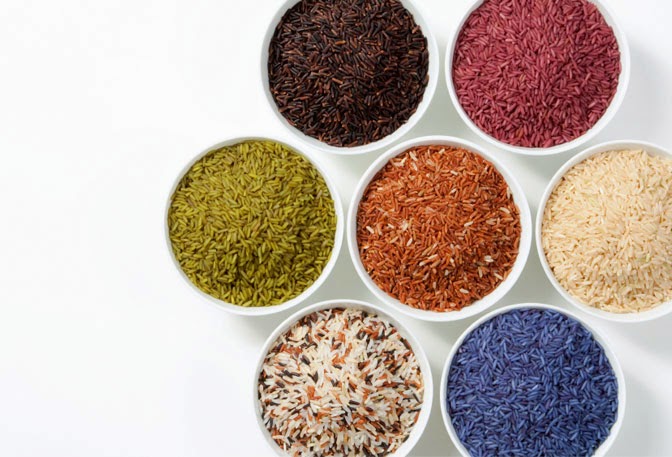
Whole grains are the entire seed of a plant. Rice is a seed of a plant.
The seed of a plant is made up of three edible parts - the bran, the germ and the endosperm. The endosperm is protected by an inedible husk that protects the kernel from natural killers - like sunlight, pests, water and diseases.
After the rice is harvested, the inedible husk (endorsperm) is removed, which results in a whole grain rice kernel. Now the rice (or grain) is ready to eat. Through processing (milling), the bran and germ can be removed from the rice (or grain) results in white rice. Without the bran and the germ, about 25% of the grain's protein is lost along with at least 17 key nutrients, according to the Whole Grain Council. However, if a processor chooses to enrich a refined grain, some vitamins and minerals will be added back to give the grain valuable nutrients. There are many advantages of having/consuming fortified foods as they are beneficial in filling in gaps for possible nutrient deficiencies.
As a vegetarian, I rely on fortified foods (ex. cold and hot cereals and grains/rices) to fill in nutritional gaps such as B vitamins and iron in my meat-free diet. Thanks to food fortification, nutrient deficiencies are not as common in certain parts of the world, although many people still experience serious health conditions from not obtaining adequate vitamins and minerals from starvation or not enough varied food choices. Serious conditions such as goiters and rickets no longer are a primary concern for many thanks to fortified foods like orange juice, fortified milk and iodized salt.
After the rice is harvested, the inedible husk (endorsperm) is removed, which results in a whole grain rice kernel. Now the rice (or grain) is ready to eat. Through processing (milling), the bran and germ can be removed from the rice (or grain) results in white rice. Without the bran and the germ, about 25% of the grain's protein is lost along with at least 17 key nutrients, according to the Whole Grain Council. However, if a processor chooses to enrich a refined grain, some vitamins and minerals will be added back to give the grain valuable nutrients. There are many advantages of having/consuming fortified foods as they are beneficial in filling in gaps for possible nutrient deficiencies.
As a vegetarian, I rely on fortified foods (ex. cold and hot cereals and grains/rices) to fill in nutritional gaps such as B vitamins and iron in my meat-free diet. Thanks to food fortification, nutrient deficiencies are not as common in certain parts of the world, although many people still experience serious health conditions from not obtaining adequate vitamins and minerals from starvation or not enough varied food choices. Serious conditions such as goiters and rickets no longer are a primary concern for many thanks to fortified foods like orange juice, fortified milk and iodized salt.

THE BRAN
The bran is the multi-layered outer skin of the edible kernel. It contains important antioxidants, B vitamins and fiber.
THE GERM
The germ is the embryo which has the potential to sprout into a new plant. It contains many B vitamins, some protein, minerals, and healthy fats.
THE ENDOSPERM
The endosperm is the germ’s food supply, which provides essential energy to the young plant so it can send roots down for water and nutrients, and send sprouts up for sunlight’s photosynthesizing power. The endosperm is by far the largest portion of the kernel. It contains starchy carbohydrates, proteins and small amounts of vitamins and minerals.
Rice is typically rinsed before it is cooked to remove excess starch and to improve texture and taste. Rice can also be soaked to decrease cooking time and to minimize stickiness.
Types of whole grains:
Corn, including whole cornmeal and popcorn
Oats, including oatmeal
Rice, both brown rice and colored rice
Sorghum (also called milo)
Wheat, including varieties such as spelt, emmer, farro, einkorn, Kamut®, durum and forms such as bulgur, cracked wheat and wheatberries
Grains with Gluten:
Wheat - including spelt, kamut, farroa and durum, bulgur and semolina
Barley
Rye
Triticale
Wheat - including spelt, kamut, farroa and durum, bulgur and semolina
Barley
Rye
Triticale
Types of rice:
Short grain brown rice
Long grain brown rice
Basmati rice
Jasmine rice
Sweet brown rice
Black japonica
Wehani
China black
Long grain white rice
Arborio rice
Black japonica
Saffron
Bamboo
Sushi
Wild rice
Cooking grains:
Rinse the grain in cold water before cooking. Bring water to a boil and add grains and a pinch of salt and return to a boil. Cover and reduce heat to a simmer for recommended cooking time. When done, remove from heat and fluff with fork and let sit (covered) for 5 minutes.
Cooking rice:
Add rice and water to a pot (together) with tight-lid. Add 1 tbsp butter or olive oil and optional salt. Bring to a boil, cover and simmer for recommended about of time. When cooked, removed from heat and allow the rice to sit for up to 10 minutes. Remove lid and fluff with fork.
Short grain brown rice
Long grain brown rice
Basmati rice
Jasmine rice
Sweet brown rice
Black japonica
Wehani
China black
Long grain white rice
Arborio rice
Black japonica
Saffron
Bamboo
Sushi
Wild rice
Cooking grains:
Rinse the grain in cold water before cooking. Bring water to a boil and add grains and a pinch of salt and return to a boil. Cover and reduce heat to a simmer for recommended cooking time. When done, remove from heat and fluff with fork and let sit (covered) for 5 minutes.
Cooking rice:
Add rice and water to a pot (together) with tight-lid. Add 1 tbsp butter or olive oil and optional salt. Bring to a boil, cover and simmer for recommended about of time. When cooked, removed from heat and allow the rice to sit for up to 10 minutes. Remove lid and fluff with fork.
Central Market's guide for cooking rice and grains:
| 1 cup rice | Water/Liquid | Time |
| Short Grain Brown | 2 cups | 50 min. |
| Long Grain Brown | 2 cups | 50 min. |
| Brown Basmati* | 2 cups | 50 min. |
| Brown Jasmine* | 2 cups | 45 min. |
| Sweet Brown | 2 cups | 50 min. |
| Wehani* | 2 cups | 45 min. |
| Black Japonica* | 2 cups | 45 min. |
| Red Bhutanese* | 1½ cups | 20 min. |
| Forbidden Black* | 1¾ cups | 30 min. |
| Long Grain White* | 1½ cups | 15 min. |
| White Basmati* | 1½ cups | 20 min. |
| White Jasmine* | 1½ cups | 20 min. |
| Wild | 4 cups | 45-50 min. |
| Sushi | 1.5 cups | 15 in. |
| Saffron Rice | 1.75 cups | 20 min. |
| Bamboo Rice | 2 cups | 20 min. |
* Rinse before cooking
| Grain (1 cup) | Water | Time |
| Amaranth | 2 cups | 25-30 min. |
| Barley, Pear | 2.5 cups | 40 min. |
| Barley, Hulled | 3 cups | 60-75 min. |
| Buckwheat, Raw Groats | 2 cups | 15-20 min. |
| Buckwheat, Roasted (Kasha) | 2 cups | 15-20 min. |
| Bulgur | 2 cups | 15 min. |
| Couscous | 1 cup | 0 min.* |
| Couscous, Whole Wheat | 1 cup | 5 min. |
| Couscous, Israeli | 4 cups | 8-10 min., drain |
| Farro | 5 cups | 50-60 min., drain |
| Freekeh | 2 cups | 30-40 |
| Kamut | 3 cups | 40 min. |
| Millet | 2.5 cups | 20-25 min. |
| Oats, Regular | 2.5 cups | 5-10 min. |
| Oats, Thick | 2.5 cups | 15-20 min. |
| Oats, Steel Cut | 3 cups | 45-60 min. |
| Oats, Groats | 3 cups | 60 min. |
| Polenta, Medium Grind | 3 cups | 20 min., stirring often |
| Quinoa | 2 cups | 15-20 min. |
| Rye Berries | 2.5 cups | 60 min. |
| Spelt | 3 cups | 60 min. |