We’d love to hear from you.

We welcome your thoughts, experiences, comments, suggestions, questions or personal stories. If you don't hear from us right away, please note that your email is very important to us. We will do our best to respond with 24 hours.


Greenville, SC

Trimarni is place where athletes and fitness enthusiasts receive motivation, inspiration, education, counseling and coaching in the areas of nutrition, fitness, health, sport nutrition, training and life.

We emphasize a real food diet and our coaching philosophy is simple: Train hard, recover harder. No junk miles but instead, respect for your amazing body. Every time you move your body you do so with a purpose. Our services are designed with your goals in mind so that you can live an active and healthy, balanced lifestyle.

Blog

Filtering by Tag: endurance recovery

Recovery from a long-distance race

Trimarni


Being sore, exhausted and a little run-down after an endurance event is normal. And to be honest, I think many athletes enjoy the feeling that comes with racing in an endurance event as that post-race feeling signifies the effort that was needed to get from the start to the finish. You earned it!

Although there is no one specific guideline, rule or method to speed up recovery after an endurance triathlon event, I feel it's important to walk you through some of the factors that contribute to recovery time after an endurance event, some of the mistakes that athletes make when recovering from an endurance event and a few strategies to help you get back to good health after a long-distance triathlon event.

Why is recovery important?

In training for an event, we welcome (and need) intentional and residual training stress for proper peaking and then we need to provide the body with a taper, in order to reduce the psychological and physiological stressors of consistent training in order to optimize performance and enhance previous training adaptations.

After a race, recovery is the time when the body returns to a normal state of health and mind, so that you can once again, consistently do high-quality training sessions with no residual fatigue from the last event.

Many athletes make the mistake of training for one race at a time and not seeing the season as a progression of fitness from race to race. In other words, you can actually gain fitness from race to race, so long as you properly recover and continue with well-planned, structured training. Take too long of a break and you lose what you gained in previous training but come back to soon, and you remain stale, tired and fatigued with little ability to take fitness to that next level.

Factors affecting race recovery

How fast or effectively you recover from an event depends on many factors. Even within one season, recovery time for one athlete may differ race to race, as some races require a longer recovery time than others.

Factors affecting race recovery include:
  • Distance of the event
  • Prior experience in the sport
  • Finishing time
  • Racing intensity relative to distance
  • Racing intensity relative to race priority/season planning
  • Race preparation and ability (or lack thereof) to remain consistent to training
  • Life stressors (family, travel, personal, work)
  • Age
  • Athletic ability/resilience
  • Length of taper
  • Health status leading up to the race
  • Nerves/anxiety before the race
  • Nutritional status leading up to the race
  • Fueling/hydration execution during the race
  • Pacing during the race
  • Difficulty/ease of race course
  • Environmental conditions on race day
  • Terrain management on race day
  • Type of course layout (ex. downhill running, extreme heat or cold)
  • Setbacks on race day (ex. dehydration, cramping, bonking, nausea/fatigue)
  • Post race nutrition, including refueling and re-hydration
  • Post race sleep habits
  • Post race stress
  • Post race travel
  • Timing of next race
  • Mental state post race
Although you can not control every factor listed above, it's important to consider that your post race recovery doesn't simply include what you do (or don't do) in the 24-72 hours after a race. In addition to the muscle, tendon, bone and joint stress on the body during an endurance event, there is great stress on the heart, organs and brain. Therefore, recovery after an endurance event should not be taken lightly, nor should it be assumed that just because you complete a race that you will return to 100% health in x-days so that you can get back into training again.

Common mistakes made by athletes post-race

The 48-72 hours after an endurance event are critical for optimizing recovery. Seeing that poor sleep, poor hydration and nutrition, extreme muscle soreness and travel will all impede recovery, athletes should be aware of the consequences of returning back to training too quickly. However, doing nothing is not helpful for recovery. Considering that racing is a great stress on the human body, returning back to training too soon, without optimal recovery, may negatively affect metabolic and hormonal health, central nervous system functioning and mood, not to mention lingering fatigue. In other words, if you rush the recovery, you may dig yourself into a hole that you can't get out of for several weeks, if not months - or the rest of the season.

Here are some common mistakes made by athletes post-race: 
  • Using anti-inflammatories to reduce inflammation
  • Not executing a rehydration and refueling strategy in the 24 hours post race
  • Eating "too" healthy in the 24 hours post race
  • Eating "too" unhealthy in the 24 hours post race
  • Resuming "normal" training, despite being sleep deprived
  • Resuming "normal" training, despite form being affected by soreness and niggles
  • Being too sedentary in the 3-4 days post race
  • Returning back into intense training because a race didn't go as planned (ex. didn't PR, podium, etc.)
  • Returning back into intense training because a race exceeded your expectations and you are itching to get back into training for the next race
  • Returning back to training because you don't know how to function in life without training
  • You hate resting/recovery
  • Following a fixed training plan and not listening to your body post race.

Get your body back into good health after a long-distance triathlon

You can't 100% recover in the 48 hours after an endurance event as glycogen needs to be resynthesized, hydration status needs to normalize, tissues, muscles and fibers need to heal and sleep patterns must return to normal before any type of training (for physical adaptations) is initiated. However, moving blood can certainly help to expedite the recovery process. Here are a few suggestions to help you recover from your long-distance triathlon.


  • Give yourself 4-6 hours to rehydrate and refuel after the race. Understanding that it may take time for your appetite to return to normal, it's OK to eat what you crave but just be sure to eat and rehydrate with water and electrolytes. Not eating/drinking for 6-8 hours after a race is not good!
  • Continue to focus on good refueling and rehydration methods for the next 48 hours with permission to indulge as you wish, within reason. By this time, you should be slowly returning to your normal eating habits, emphasizing real, wholesome food options.
  • Don't sit in the car or get on an airplane in the 4-8 hours after a race. Ideally, give yourself one extra night of rest and light movement before you are forced to sit for an extended period of time, so that you have an opportunity to move your body.
  • Avoid getting a massage in the 48 hours post race. Rehydrate yourself and focus on daily mobility for the next 48-72 hours. Schedule a flushing massage at least 4+ days post race.
  • Consume anti-inflammatory foods, like pineapple, fish and leafy greens in the 48 hours post race.
  • Wear compression (or compression boots) post race. Graduated compression socks (and not calf sleeves) will help with blood flow.
  • Use a safe and muscle relaxing cream (ex. we use Mg12) on any tight/sore muscles after a race. Avoid taking any anti-inflammatories in the 48 hours post race.
  • Avoid alcoholic beverages in the 48 hours post race. Avoid caffeinated beverages in the 6-8 hours before bedtime.
  • Try to get yourself into a good sleep routine as soon as you can. Do not allow yourself to return back into structured training until you can get a consistent 7-8 hours of sleep without waking up throughout the night.
  • To hurry the recovery process, it's advised to do something non weight bearing and very light on the body in the 24 hours after a race (if you can spin on your bike for 15 minutes in the hour after finishing a race, that would be recommended). Instead of recovering by being sedentary, try to move blood through swimming and bike riding.
  • Give yourself 3 days to not follow a training plan but instead, exercise as it comes natural to you. When you have the time, go for a swim or spin but avoid setting an alarm or returning back to your structured training regime too quickly. There's plenty of time for that after you recover.
  • Consider avoiding running for at least 48-72 hours. Since running is very corrosive on the body, it's advised to keep your runs short (ex. 15-60 minutes) while including walk breaks and running every other or 3rd day for the next 5-7 days (ex. if your race is on Sunday, your first run should be no earlier than Wednesday or Thursday and then for the next 5-7 days, you should be running 15-60 minutes every other day or every 3 days).
  • Understand that some body parts will recover faster than others but there is deep damage inside you that you can't feel. Generally speaking, you will not make any additional training adaptations for at least a week and for the less trained/fit, it may take at least 2 weeks to fully recover so that you can begin to train for physiological gains. On the flip side, an elite or trained athlete who is on the verge of overtraining or is racing very intensely, may require 2 weeks to feel fully "healed" after a race.
  • Accept that age, previous fitness and racing execution will affect your recovery. Don't compare your recovery to another athlete, focus only on yourself.
  • If you can't keep good form during a workout, stop immediately. Poor/inefficient form is a sign that your body is not yet recovered and you could risk further damage or injury.
  • Have fun in the 5-7 days after your race. There will be a time to push hard again. Enjoy the lower intensity workouts and having a bit more free time, as you slowly ease back into structured training.
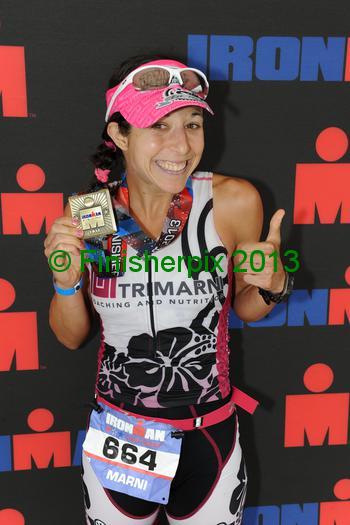


Recovering from an endurance event

Marni Sumbal, MS, RD

So, the work is done.......


It's time to celebrate!!!


Ok, this was day #2 after the Ironman as veggies were not on my mind the day after racing 140.6 miles. The first day post Ironman included our first "real" meal since Saturday evening at the Lake Placid pub for lunch. A veggie burger with fries for me and a real burger w/ fries for Karel. I just love how the body craves fat and salt after an endurance event and I am happy to feed it whatever it wants for it sure does taste perfect post race.

Athletes often love racing not just for the finisher medal but for the post race treats.... which are absolutely enjoyed the best when celebrating a major accomplishment and giving the body exactly what it is craving. But after 2-3 days, it's time to get back to the normal routine in terms of eating...that is, if you have discovered what is normal for your body to maintain optimal health and to help with recovery after your recent endurance feat. 

Endurance racing is not normal for you do not have to exercise more than an hour a day to keep (or get) your body in good health. If anything, endurance racing can be damaging on the body and the distance should be respected with a balanced training plan alongside a diet that provides the body with nutrients to prevent disease and illness as well as to fuel workouts and to help with recovery. 

A lot happens to the body during an endurance event....even if you don't have the perfect race, reach your goal time or find yourself slowing down. I find that many athletes forget the stress on the body (emotional, physical and mental) after the race if the race did not leave the athlete with a personal best time or "great" race. From muscle glycogen depletion, to overheating to dehydration, there are many things that can occur inside the body...regardless of finishing time. It takes time for the body to train for an endurance event so you better believe it takes the body time to recover. 

The number one rule for recovering from an endurance event is to not rush the process. The second rule is to not compare yourself to others. I see it many times that athletes get back into training way too soon and brag about how great they feel. A few days to weeks later, an injury occurs OR the athlete is hit with the flu or a bad cold. Recovery depends on many variables and from my experience as an athlete to helping others with training and nutrition to observing Karel as a cat 1 cyclist, I feel that recover depends on many factors and not always can you "feel" yourself being 100% recovered. Poor daily dietary choices, improper fueling during an event, lack of proper hydration during an event, extreme weather, high intensity, long duration, extreme under-trained fitness, improper pacing and being over-trained before the race can all negatively affect your recovery.

Even if you feel "normal" and can walk down stairs fine after the race, this doesn't mean your body and mind is ready to bounce back into training. I know for myself, it typically takes me a full 2 weeks to feel 100% recovered although my legs begin to feel 100% around 4-5 days post race. The worst days are the first 2 days post race when my body feels like it will break with every step. Oh what we do to our bodies to cross a finishing line just for a medal, a hat and a t-shirt. You better believe I thank my body A LOT when I train and race.

Ruptured fibers, inflammation, displacement of red blood cells, disruption of hormones (cortisol, glucagon, epinephrine), low white blood cell count, oxidative stress, GI distress, electrolyte imbalance, brain fatigue, tearing of connective tissues and muscle fiber damage are a few of the many physiological effects of pushing the body for x-amount of time. It sounds absolutely brutal but with the right training, racing and recovery plan, it can be done and you can still maintain balance in your life while reaching your personal fitness goals.

Here are a few of my tips for boosting the recovery process (keeping in mind that no too athletes are alike):
-Stay calm post race. Your body finally gets permission to collapse, lay down or sit as you likely made yourself stay focused for x-amount of time to get your body to the finish line. Don't be quick to rush out of the finisher area. Take your time but don't spend too much time sitting. Cool off, re-hydrate and if tolerable, have something to eat. But do not make your body do something that it doesn't want to do. Try to walk (hobble) around and keep moving in order to prevent a sudden drop in blood pressure if you suddenly lay down and try to get up quickly. Be mindful of the hormonal shifts and digestion of nutrients in the GI tract that may cause you to feel semi-ok when you cross the finish line to absolutely horrible, where's the potty the next minute. Everything will pass within 24 hours (if not, consult a doctor) but your main priorities are to rehydrate, replenish and to refuel within the next 1-2 hours.
-For the next few days, keep moving but NO training. Remember, you can't train a damaged body or one that is low in fuel. Exercising is fine to get some blood flowing but give yourself at least a day or two before you do anything non-weight bearing (absolutely no running or lifting weights for at least 7-14 days) and remove any pressure that you have to do something. ENJOY your accomplishment and for the next week, any exercise should be gadget-free, non weight bearing and energy-focused. Stop when you feel good and if you don't feel like doing something, don't.
-Compression, ice, epson salt (cold), elevation. It doesn't matter the order (although ice and compression will help reduce inflammation -that is why I love110% play harder) but whatever you can get to first will help you out. Avoid heat post race. Foam rolling or massage can be done post race but I find that unless the massage therapist is very educated with endurance athletes, the massage will be best enjoyed around 3-4 days after the race. Massages after long/hard workouts are fine but post race, you may need just a little time before letting someone press on your damage muscles. Walking, compression, ice, yoga and epson salt will help remove metabolic wastes and to get your body back to a semi-normal state instead of doing nothing.
-Sleep. This is typically non-existent for me the few days after a race or at least, hit or miss in terms of a restful night of sleep. But try to rest as much as possible and recognize that your body is going to be off from the normal routine which means that your cravings for food may affect your sleeping and vice versa so the sooner you can get your body back to balance, the sooner you will feel recovered.
-To replenish glycogen and to help with tissue/muscle damage, it is important that you focus on a high carb diet with moderate protein, by eating every few hours for the next 2 days but especially within the next 24 hours post race. Eat as tolerated - if your body isn't ready for solid food right after the race, have an electrolyte drink (ex Hammer Fizz) and then when you are ready, a glass of milk, yogurt or recovery drink. Carbs can be wholesome in my opinion and still help with recovery but you will know after the first try as to what foods sit the best post race. My favorite post Ironman foods include bread, pizza, banana, pretzels, pringles, watermelon. Recognizing that I eat well most of the time, I certainly do not worry about what I put into my body post Ironman as I know that I am not a science project in a lab setting. My body lets me know what I want post race and give myself at least 24-48 hours to listen to my body..and typically it wants salt, fat and carbs so I start slowly with small carb rich meals, typically a few little combinations of foods and not a big meal until around 12-24 hours post race. Your body is going to act like a sponge to carbohydrates post race which is great for athletes who can eat with the first two hours post race. But if you can not stomach anything post race, just take your time and be careful not to be outside your home/hotel room as you may experience a quick drop in blood sugar and you don't want to find yourself fainting, dizzy or without a potty. I recommend to carry saltines, pretzels and juice with you if you happen to be moving around post race but can not stomach any solid food for a few hours. The body doesn't really care where you get carbohydrates from so just listen to your body as you stay hydrated and be sure to not consume too much too soon or else you may find yourself sick. Consult a medical professional if you do not urinate during a long distance event or if you do not urinate within an hour post race as you may be extremely dehydrated which may affect your heart rhythm.
-You are going to be sore post race. Avoid rushing to the anti-inflammatories as you do not want to damage your liver, kidneys or GI tract or make yourself believe you are feeling normal when you are not.
-You are highly susceptible to illness and infections post race. Be sure to keep your immune system healthy by washing hands, keeping chaffing areas clean and being aware of any blisters or lost toenails.
-Set a goal so you are motivated to train again but I encourage athletes to wait at least 4-6 weeks before racing again. I find that after an endurance event, my body is craving some speed around 4-6 weeks later and light activity around 5-6 days later...but certainly nothing structured for at least 2 weeks. The body and the mind need recovery and your sport of choice should be something you want to do forever so keep that in mind if you try to get back into things too soon. You have plenty of time to race again, be patient and respectful to the body. You may feel fine but your body is going to let you know a few weeks later if you were really recovered when you started to get back into training again. Many athletes experience long-term/chronic fatigue from getting back into racing or training too soon after an endurance event. Yes, maybe some can do it but you are only responsible for yourself and your one and only body.

When in doubt - give yourself 2 more days after you feel 100% recovered before you return to structured training. It's always better to take it easy for a few extra days and give yourself a little more time to soak-up your recent accomplishment.