We’d love to hear from you.

We welcome your thoughts, experiences, comments, suggestions, questions or personal stories. If you don't hear from us right away, please note that your email is very important to us. We will do our best to respond with 24 hours.


Greenville, SC

Trimarni is place where athletes and fitness enthusiasts receive motivation, inspiration, education, counseling and coaching in the areas of nutrition, fitness, health, sport nutrition, training and life.

We emphasize a real food diet and our coaching philosophy is simple: Train hard, recover harder. No junk miles but instead, respect for your amazing body. Every time you move your body you do so with a purpose. Our services are designed with your goals in mind so that you can live an active and healthy, balanced lifestyle.

Blog

Filtering by Tag: recovery nutrition

What's wrong with my appetite?

Trimarni


Can you relate?

You finish a long or hard workout and you have no appetite. You'd think you'd be ravenous after a tough training session but eating is the last thing on your mind. Even worse, the thought of food leaves you feeling nauseous. But come the evening or the next morning, you are starving and you can't seem to stop the nagging hunger pangs and fill the bottomless pit in your stomach. 

If you said "that's me!" you are not alone. Having a decreased appetite after certain training sessions is very common. However, just because this is a normal phenomenon, this doesn't mean that its ok not to eat. The food you eat post workout provides the fuel to power future workouts and gives your muscles the nutrients needed to properly recover from the previous session. 

Here are a few reasons why your appetite is blunted post workout: 
  • Internal body heat - Contracting muscles produce heat. Around 20% of the energy produced by contracting muscles is used for muscle contraction and the rest is convereted into heat energy, which results in an increase in body temperature. 
  • Blood flow - A normal effect of exercise is the diversion of blood away from the gut so that more oxygen can go to the working muscles. Less blood flow to the gut means less hunger sensastions. 
  • Dehydration - Staying hydrated is critical for optimal body functinoing. Dehydration can make you feel tired, nauseated, fatigued and sleepy. 
  • Nutrient deficiency - A decreased/poor appetite is common in several nutrient deficiencies such as iron, magnesium, B vitamins, folate and zinc. 
  • Hunger hormones - Ghrelin is a peptide hormone predominantly produced by the stomach. It plays a key role in stimulating appetite and energy intake. Intense or prolonged exercise supresses ghrelin. 
  • Dieting and/or body image concerns - You are disconnected from your body's cues. You've conditioned yourself to ignore your hunger cues and undereat to meet your body composition goals. 

For athletes focused on performance, health and sport longevity, consuming nutrition and fluids post-exercise is critical. Insufficient energy intake may impair tissue repair, induce excessive fatigue and reduce the ability to stay consistent with training. While counterintuitive, you need to take in calories even when you aren't hungry. 

This is called Mechanical Eating and it's the opposite of Intuitive Eating. 

Intuitive eating means eating only when you are actually hungry and honoring your body's hunger and fullness cues to make food decisions. While this may work for the normal population, avoiding food after intense/long training due to not being hungry will compromise training adaptations and your ability to perform well in your next workout. 

Mechanical eating means having a specific plan as to what and when you will eat when you don't experience hunger cues. 

Because proper recovery can help with performance gains, building lean tissue (strength gains), optimizing health and reducing the risk for injury, it's important to have a plan for post workout nutrition when you lack an appetite to eat post workout. Consider liquid calories as a start and aim to eat smaller carb/protein portions every hour in the 4 hours post workout to help with recovery. If you continue to struggle with your intake post workout, reach out to a sport RD to help create a personalized plan for your needs. 

Snack or meal? How to recover post workout.

Trimarni

It’s well-accepted that the combination of protein and carbohydrate makes the perfect post-workout snack. 💪

Add in water and sodium and you are nailing your recovery nutrition. 💧

This combination helps you achieve the desired training adaptations from your workout by promoting muscle tissue repair, replenishing what was lost in sweat and maximizing glycogen synthesis to help reduce soreness while accelerating performance adaptations.

To optimize recovery, begin consuming a carbohydrate and protein snack within 45 minutes after a workout, when blood flow to the muscles is still high. Don’t wait to refuel!

Keep in mind that full restoration of depleted glycogen stores can take up to 48 hours.

Because your daily energy and carbohydrate needs are higher on intense or high volume training days, don’t be concerned about the extra calories affecting your body composition goals.

A well-designed recovery nutrition plan plays an important role in promoting quick recovery so you can stay consistent with training.


Rest day nutrition - to eat or not to eat?

Trimarni


After a strong weekend of training, I looked forward to my recovery day on Monday. I take my recovery days really seriously so if I am not up to purposeful movement, I don't. But on this past Monday, I felt like an EZ swim would be good to loosen out so after a good night of sleep, I went for a 40-minute, ~2400 meter swim. The meal picture posted above is the delicious dinner that I had at the end of my recovery day. A meatless burger topped with cheddar cheese and guac, roasted salty potatoes, salad w/ yogurt ranch dressing and chips. 

On Tuesday, I was excited and recharged. I met my good friend Kristen at the aquatic center for a swim workout. She was able to join me for half of the workout before she left for work. I finished with 5000 meters and the main set was 3 x (7 x 100's on 1:45 tempo, holding 1:28-1:29 followed by a 300 smooth pull). It was one of those swim workouts where I never ran out of energy and just kept wanting to swim. I finally made myself get out at 5000 meters because it was time for a treadmill run at home. 

I choose the treadmill instead of outside just to lighten the load after a big weekend of training. The main set was 10 x 2 min up-tempo at 8mph w/ 1 min EZ between (65 minute total workout). 


Wednesday was my "long" ride since we are traveling this week (more on that soon) and I had a beautiful day to enjoy a ride up Caesar's Head (42 minutes to get up the 6.32 mile climb) and rewarded myself with an incredible view at the top before descending back down. It was a windy day but I felt strong. I finished the workout with a ~4.3 mile run off the bike around our hilly hood. 

----------------------------------------

Your 'athlete' diet includes what you eat on training days and on easy/off/active recovery days.

If you are like most athletes, what to eat on a rest/off day can be tricky. It's not uncommon for athletes to dramatically restrict calories, skip meals or avoid carbohydrates for fear of gaining weight when energy expenditure is low. And sometimes the opposite occurs - a rest day is a "cheat day." In other words, a rest day is treated as the only day to eat foods that are normally "off-limit."

Recovery is crucial because it gives the body time to adapt to the stressors of training and to rest the mind. Recovery also allows the body to replenish energy stores, rehydrate and repair damaged tissues. Improper recovery nutrition may hinder progress and set you up for a physical setback.

Simply said, what you eat on an off-day from exercise should be somewhat similar to what you normally eat on a training day. Because your workouts require you to strategically consume more energy from carbohydrates, the major change to your rest day dietary intake is the removal of foods that normally support your training sessions – the before, during and after workout foods and sport nutrition products.

If you struggle to eat enough on a day off from training for fear of weight gain, remind yourself that a rest day may be your only opportunity during the week to strategically consume the right types and amounts of foods to maximize recovery between two training sessions. The training sessions that typically precede a rest day will often induce excessive inflammation, deplete liver and muscle glycogen stores, damage tissues and exhaust the mind and body.

Consider a day off from exercise as a great opportunity to get the body back into a state of optimal health status.

Knowing what and when to eat on a day with reduced energy expenditure starts with smart planning.

The basis of a training-supportive diet starts with a healthy foundation of eating. Simply said, what you eat on an off-day from exercise should slightly mirror what you normally eat on a training day. Your meals and snacks outside of training sessions should be nutrient dense and composed primarily of real food. Because your workouts require you to strategically consume slightly more energy from carbohydrates , the major change to your rest day diet is the removal or reduction of foods that normally support your training sessions – before, during and after workout foods and drinks. There’s no need to eliminate carbs or drastically cut back on calories. Use your rest day as an opportunity to increase your fruit, vegetable, whole grain, and healthy fat consumption. Go ahead and spend a little extra time in the kitchen preparing meals. Be mindful about grazing and mindlessly eating with your extra time.


Proper recovery nutrition for every type of workout

Marni Sumbal, MS, RD


As a sport dietitian who specializes in endurance sports, one of the most common questions I receive from athletes is, “what should I eat after a workout?”

For the performance-focused athlete, effective refueling strategies can help optimize recovery so that you can achieve the desired training adaptations from your workouts. But recovery nutrition is much more than drinking a smoothie after your swim, bike, or run. 

Specific refueling recommendations vary based on fitness level, volume, and intensity of the workout, body composition goals, menstruation (for females), and daily energy intake needs.

To help you get the most out of your training sessions and to reduce the confusion on what, when and how much to eat post workout, check out this recent article I wrote for Triathlete magazine online. 

To read more: The proper recovery fuel for every type of workout

Everything you need to know about recovery nutrition

Marni Sumbal, MS, RD


You may be surprised to know that vegetarian athletes can easily meet recommended protein recommendations for athletes of 1.2-1.8g/kg/bw protein per day. As a 24.5 year lacto-ovo vegetarian, I have acquired several go-to protein sources in my diet, like cottage cheese, yogurt, milk, tofu, tempeh, beans, lentils, nuts, seeds, grains and whey protein.


As a heavy proponent of real food in the daily diet, my food choices become much more functional before, during and after workouts and thus, I see the purpose of food (and engineered products) differently when it's used to support a training session.

As an example, whey protein is often consumed post workout, specifically when I have an intense or long workout (or two workouts close together). There is a tremendous amount of scientific research on whey protein, in relation to athletes, the elderly, menopause, weight management, preventing muscle loss in trauma patients and burn victims and assisting in performance gains.


Seeing that protein supports muscle and tissue growth, assists in immune system health, helps with tissue structure and supporting enzymatic reactions and fosters health endocrine functioning, without sufficient protein in the diet, your health can become compromised with added training stress.


Athletes should aim for 1.2-1.8 grams of protein per kg of body weight per day.


As an example, if you weigh 130 lbs (59kg), this equals 71-106g of protein per day.

To break this down, give yourself around 20-30g of protein per each meal which leaves you extra protein to consume during snack times and after workouts. Protein at meal time can help with satiety.

A few take-away messages on daily protein consumption:

  • If you are intentionally trying to lose weight or you need to gain lean muscle mass, you will want to focus on the higher end of your individual protein needs to preserve lean muscle mass.
  • On higher volume and higher intensity workout days (including double workout days), your daily protein needs should be on the higher end to optimize training-induced muscle adaptations.
  • Post workout, don't miss a prime opportunity to recover with protein.
  • Every athlete should recognize his/her own post workout preferences, based on appetite, convenience and type of workout. Recovery nutrition should not be skipped or an after thought but instead, it should be easy to find, prep and consume for any given workout.

The importance of recovery nutrition depends on the type, intensity and duration of exercise. Certainly you have heard this over and over again, that you should never miss the opportunity to refuel and replenish after a workout. If you don't recover properly post workout, you may experience the following: 

  • Increased fatigue
  • Tiredness
  • Struggles with increasing lean muscle mass
  • Struggles with decreasing body fat
  • Delayed recovery
  • Immune system depression
  • Low motivation and energy
  • Increase or delayed muscle soreness
  • Inadequate replenishment of carbohydrate stores
  • Poor training adaptations - increasing the risk for injury, sickness and overtraining

Many athletes assume that recovery is what happens in the 30-60 minutes post workout but from a practical standpoint as it relates to athletic performance improvements, recovery is everything that happens between two workouts. 

Therefore, it's to your competitive advantage to see every opportunity between the finish of one workout until the start of the next workout, to stimulate muscle repair and replenishment. You can do this through food and other recovery modalities like meditation, sleep and mobility work. 

Most research concludes that your ability to greatly adapt to a training stressor is dependent on what you consume within 60 minutes post workout. In other words, if you want to gain physical improvements, you need proper recovery nutrition and hydration. 

----------------------------------------


Sadly, insulin has gotten a very bad rap in our society so simple sugar carbs, like juice and anything with sugar, are seen as a big no-no for athletes. (I'll save my thoughts on sugar for the athlete blog for another time). 

For the purpose of this blog, discussing maximizing recovery, when insulin is spiked post workout, anabolism (growth) is promoted. Low insulin and low blood sugar secretes catabolic hormones, which is completely opposite of what an athlete wants to achieve in the post workout period. 

Post workout, your body is extremely sensitive to nutrient intervention due to an increase in insulin sensitivity and an increase in membrane transport activity. This means that your muscles are highly receptive to soak-up nutrients. To take advantage of this open window, you don't want to miss out on replenishing fuel (glycogen) and promoting protein synthesis (which reduces protein degredation). Recovery nutrition is imperative to your health and development as an athlete!

You do not have to be perfect with your diet to have a healthy and performance enhancing diet. But recovery nutrition should be seen as part of your workout. 

Here are some practical post workout snack suggestions to eat (as tolerated) within 60 minutes post workout after intense or long workouts when you need a snack before a meal. 

  • 25g protein powder + 8 ounce water + 1 banana  ­
  • 8 ounce low fat chocolate milk + 10­-15g whey protein powder  
  • ­8 ounce OJ + 2 egg whites  ­
  • 1 serving applesauce + 15g protein powder + 4 ounce milk/4 ounce water
  • 25g whey protein + 8 ounce water + 6-10 saltine crackers + honey 
  • 25g whey protein + 1/2 cup cherries  ­
  • 1 serving Greek yogurt + 1 orange
  • 8 ounce milk + 10g whey protein + 1 slice bread + 1 tbsp nut butter  ­
  • 1 slice bread + 2­-3 slice deli meat + 1 egg  ­
  • 3/4 cup cottage cheese + 2­-4 dates

The first six options are ideal when you lack an appetite post workout or when you need something quick, convenient and easy to digest after an intense or long workout. 

After long or intense workouts, it's recommended to have a recovery snack first (options listed above) and then a real meal. 

When you are ready to eat your meal, your meal can be 30 to 90 minutes after the recovery snack.  

For EZ workouts, you can go right for a recovery meal of protein/fat and carbohydrates.    

The purpose of post workout protein is to stimulate protein synthesis. Due to it's high amino acid score and high bioavailability, whey protein isolate continues to rank as the gold standard of recovery protein as it digests quickly and rapidly to stimulate protein synthesis.

As it relates to muscle growth and recovery, the mTOR protein is key to muscle building and rejuvination. In response to loading the muscles with training stress, when mTOR is activated, protein synthesis is stimulated, which helps muscles heal and rebuild. mTOR is highly sensitive to leucine, found in whey protein. One 20g serving of whey protein isolate contains 3 grams of leucine. Other leucine containing foods include egg whites, fish, chicken and beef. 

Although whey protein is an animal based protein (milk is 80% casein protein and 20% whey protein), it is a fast digesting protein that is often well tolerated by lactose intolerant individuals. However, the primary and only ingredient should be whey protein isolate if a lactose intolerant individuals is trying whey for the first time or building up a tolerance. 

In a plant based (or vegan) diet, soy protein is a highly recommend protein source to assist in recovery as soy protein will raise blood leucine levels but not as effectively as whey protein. Hemp, brown rice and pea protein will provide protein but do lack all amino acids to make these plant based proteins complete. However, plant based protein powders should not be avoided in the diet for this reason as they are acceptable (and healthy) sources of protein and provide great value in a vegan diet. 

Why not real food after all workouts? 

Seeing that athletes have high energy demands and a real food diet is encouraged throughout the day to support energy and nutrient needs, a supplemental form of protein, post workout, alongside a real simple carbohydrate food (to help spike insulin) can make it easy to nail the recovery nutrition on a consistent basis - especially if you lack an appetite post workout or you need something quick, portable and easy. 


Selecting the "best" protein powder

Many athletes ask me about a "favorite protein powder" or have questions as to the "best" protein powder. With so many protein powders on the market, here are some of my criteria when searching for a quality protein powder.

1) Serving size - 1 scoop
2) Protein content per scoop  - 20-30 grams
3) Calories per scoop - 80-150
4) First ingredient - whey protein isolate
5) Ingredient list - short! natural flavors, no artificial flavors or colorings, no added sweeteners, minimal to no added sugar
6) Quality manufacture, reputable company
7) Use your best judgement  - is it a quality product manufactured with quality ingredients


Brands I often recommend: Solgar whey to go (vanilla), KLEAN, Blue Bonnet, Vega, Sun Warrior, Hammer Whey, INFINIT raw.

I would be happy to review your protein powder to see if it is something that I would recommend to athletes.

As for Clif Recovery protein (yummo) and other combined recovery drinks with carbohydrates, sugar, sodium and protein......

Ideally, I would recommend this type of recovery product when energy needs are very high and it can be difficult to consume adequate protein and carbohydrates in the diet (ex. after a very long workout or with two intense workouts within a few hours). Or for athletes who continually fail to meet energy needs throughout the day and need a higher calorie sugar/carb/protein recovery drink.  Typically, we use Clif Recovery powder as our go-to recovery drink (mixed with water) at our camps and I will often recommend to my endurance athletes after their long workouts in peak training. Seeing that many athletes lack an appetite after hot and intense/long workouts and crave fluids, it seems to be a very tolerable protein powder with a delicious taste. I typically add a little extra whey protein, cherries and water to my clif recovery drink (all in the blender).

Well, there you have it. EVERYTHING you need to know about recovery nutrition and protein powder. Well, maybe not everything but hopefully enough to help you nail your recovery nutrition post workout. 

If you need help navigating through all the advice on recovery nutrition as it relates to your personal journey, reach out to a sport dietitian to help you take away the guessing so that you can create healthy habits to help you create athletic excellence. 

Your Ideal Recovery Meal

Marni Sumbal, MS, RD


Are you under the impression that protein powder is the only way to recover after a workout?
-----------------------
Athletes who train consistently hard on consecutive days are the ones who are able to get stronger and perform better in races. The key to this isn't just a loud alarm clock or superhuman willpower, however, it's recovering quickly from training so you can train hard, day in and day out. Nailing your post-workout nutrition promotes quick recovery, reduces muscle soreness, builds muscle, improves immune system functioning, and replenishes glycogen—all key building blocks in setting you up for tomorrow's session.

When we consume meals or snacks as soon as possible post workout (ex. within 30 minutes), our muscles become primed to accept key nutrients that can replenish glycogen and encourage protein synthesis. As a reminder, recovery includes everything that happens between two workouts which theoretically means that your recovery nutrition "window" is open all day.

Together, carbohydrates, protein, and fats are essential to maximize recovery, and thus, training. When athletes load up only on protein or carbohydrates—two of the usual suspects in most recovery meals—athletes will likely fall short of meeting dietary fat needs, which play an understated but important role in overall health, as well as promoting feelings of fullness.

The day to day foundation of an athlete's diet should be made up of real foods—wholesome by nature and rich in a variety of vitamins and minerals.

Whereas the purpose of recovery nutrition is to help an athlete refuel, rehydrate, and repair (and eventually build), athletes often fall short on recovery nutrition due to a rushed lifestyle, poor planning, loss of an appetite, or the tendency to reward or restrict food (for a variety of reasons). Coupled with a body that is mentally and physically exhausted, it's not a shock that athletes find it easier to make time to train, but not to plan healthy recovery meals.

Although recovery nutrition has evolved into a precise and complicated science, taking into consideration age, gender, environmental factors, fitness level, workout intensity and duration, endurance athletes should recognize that a real world setting may not allow you to eat perfectly after every workout. Thankfully for us, recovery nutrition is quite simple. 

Check out my latest Ironman article with a detailed 4-step guide to building the perfect post-workout recovery snack or meal.
Proper recovery nutrition is at your fingertips.

CLICK HERE to read the article. 


And in case you missed it:
Learn more about: 
Explore Cuisine Gluten-free pastas

And check out these recipes: Explore Cuisine recipes

Nail the basics - recovery nutrition

Marni Sumbal, MS, RD


                                                                                                   (picture source)

Most athletes don't nail their recovery nutrition like they can nail a workout.

Whereas the purpose of recovery nutrition is to help an athlete refuel, rehydrate, repair and build, athletes often fall short on recovery nutrition due to a rushed lifestyle, poor planning, loss of an appetite, or the tendency to reward or restrict food.

Coupled with a body that is mentally and physically exhausted after a hard training session, it's no surprise that athletes find it easier to make the time to train than to make the time to plan smart recovery meals and snacks.

Although recovery nutrition appears to have evolved in a precise science (not to mention that everything related to nutrition has become far more complicated than it should be), taking into consideration age, gender, environmental factors, fitness level, workout intensity and duration, endurance athletes should recognize that in a real world setting, you can not eat perfectly per "scientific recommendations" after every workout.


Seeing that many athletes have an all or nothing approach to nutrition ("if I can't be perfect, why bother?"), here are a few simple tips basics on scientific recommendations to help you apply basic recovery nutrition tips to your crazy, busy and stressful life.
Ultimately, when you recover well, you can train more consistently and when you train more consistently, you improve your fitness.

And who doesn't love an improvement in fitness?


HYDRATION

Science: 

For every 1 lb weight loss (pre workout weight minus post workout weight), replace it with 16-20 ounces of fluid.

Nail it tips: 
-Your total amount of fluid consumption to replace post workout should be spread out throughout several hours, not consumed all at once.

-Be mindful that you are also losing glycogen from the muscles and liver when you train long, which affects post workout weight. Don't overthink the drink - just drink.

-If you are losing more than 4% body weight during a workout or gaining weight post workout, you need speak to a sport RD regarding your sport nutrition fuel and hydration intake during workouts.

-Be aware of the mental and physical signs of dehydration.
-On a daily basis, it's recommended to consume 3.7L for men and 2.7L for women each day for adequate hydration.
-Adding additional sodium (start with ~1/8 tsp salt) to your pre and post workout snack/drink can help with rehydration if you are an excessive sweater, as well as curbing salty cravings that may appear post workout or later in the day. A glass of OJ after a sweaty intense or long workout (with 1/4 tsp of salt) is one of my favorite rehydration beverages.

-Every long workout is an opportunity to understand your hydration needs. Don't wait until race week to guess how much/little you need to drink during your race to perform well. This should have been figured out months in advance and tweaked throughout your peak training.
Consult with a RD if you struggle to understand your hydration needs - a board certified sport dietitian who specializes in your sport can help you out.
-Adding ~1/8-1/4 tsp of salt or 190-380mg sodium (I use pink Himalayan salt) to each 24-28 ounce bottle of sport drink/water may help you retain more fluids of you are a heavy and salty sweater. You may also need to increase your overall fluid intake (not calories) to 28-32 ounces of fluid per hour.
-If you are not a great water drinker, add fresh lemon or lime to your drinks, opt for seltzer or mineral water or add a splash of juice to your water. 

CARBS

Science: 

It can take up to 24 hours or more to completely restock muscle glycogen stores after an intense or long workout.

-Aim for 1-1.2 g/kg of carbs, every 90 minutes in the 4-5 hours following a workout.
Nail it tips:
-If you are working out for 1-2.5 hours (ex. typical "weekly" workout), it's best to consume a recovery meal with protein and carbs (and some fat) within 60ish minutes post workout. Although some exceptions will apply that a recovery snack then meal is encouraged, most athletes can go right for a meal post workout.

-Understand the best foods that will digest the best after your workout when you do the following workouts: intense workout, long workout, early morning workout, late evening workout, mid day or lunch time workout, EZ workout. 

-If you are recovering from a 2.5+ hour long workout (ex. typical "weekend" workout), the next few hours post workout are key for optimizing recovery. Carb and protein intake are critical for recovery and repair.

-Avoid being the one meal a day post workout type of athlete (ex. minimal food post workout and then one big meal in the evening or the opposite, one huge meal post workout and then no appetite the rest of the day). Frequent meals, low in fiber and fat, along with mini meals/snacks are key to recovery without affection digestion.

-If you find yourself with no or little appetite post workout, opt for foods that will sit well like a glass of OJ, a handful of granola, rice, applesauce or fruit for carbohydrates. 

PROTEIN
Science: -Dietary protein ingestion immediately post workout can assist in the skeletal muscle adaptive response to training. Regardless of the workout, your recovery protein can also help meet your daily protein needs.
Many athletes fall short on daily protein intake.  Protein intake should be around 1.3-1.8g/kg/bw a day for athletes and around 25-30g of protein per meal. 

Nail it tips:
-Aim for 25-30g of protein within 30-45 minutes post workout and additional 15-20g protein every 2-3 hours for the next 6 hours (with carbohydrates) to maximize recovery.

-Plan your favorite go-to protein options for immediately post workout as well as for the hours post workout. Be mindful that the heat, the intensity of the workout and your overall appetite (or lack thereof) can affect your ability to tolerate and crave/want protein post workout.

-For a sensitive stomach, choose as soft or liquid as possible. Most athletes will find that liquids will digest easier than solid food, especially in the summer heat after a hot workout. Whey or vegan protein, scrambled eggs (or tofu), yogurt (or a yogurt based drink), milk or cottage cheese (great for salty cravings post workout) are easy go-to options. Always choose your options based on what your body can tolerate the best.

-Be mindful to continue eating protein throughout the 4-5 hours post workout and in your evening meal. 


Nail the basics: 
Be mindful that after a workout, your recovery window is open all day!
That is - everything between two key workout is "recovery".

The best way to nail your recovery nutrition is to plan ahead.

Because most athletes spend more time focusing on the workout itself than on what will assist in helping the body absorb the training stress (ex. sport nutrition and pre and post workout fuel and hydration), I suggest to write down what you will eat in the 2 hours before a workout and in the 4 hours after your long workout.

If you tend to finish your workouts exhausted or starving, it's in your best interest to have your recovery snacks and meals prepared (or easy to prep) ahead of time as you know what happens to your food choices when you don't plan ahead (especially after a long/hard workout).

Here's your get-started recovery nutrition planning guide:
60 minutes post workout: 
Fluid intake: ____________
Carb and protein snack or meal: ______________

1-2 hours post workout: 
Fluid intake: ______________
Carb and protein snack or meal: ______________

2-4 hours post workout: 
Fluid intake: ______________
Carb and protein snack or meal: ______________

3 workouts, 3 recovery meals.

Marni Sumbal, MS, RD

As I mentioned in my last blog, recovery nutrition is important in the foundation phase, as it will help to kick-start the recovery process soon after your workout is complete. But you do not have to be super scientific and strict with what, how much and when you eat.

Remember -  recovery is everything and anything that happens between two workouts and right now in your season, you want to create eating habits that make your body feel good all day long, so that you can maintain a consistent training regime (balanced with your busy lifestyle).
By working on your  daily diet right now, you will set yourself up for great eating habits later on in your season when your training volume and intensity increase.
 

Here are three recovery meals that kept me training consistently last week.
(I had a pre-workout carbohydrate snack before all workouts and water during the workouts)


Swim Workout: 

400 swim
400 buoy

Pre set:
8 x 50's kick w/ fins (on back). 10 sec rest
800 band/buoy/paddles - build from 75% to 85% throghout

MS 2x's:
8 x 50's band and paddles, 85-90%, 15 sec rest
6 x 75's (build by 2 from 80-90%), 20 sec rest.
Repeat

50 EZ cool down

Post workout eats: 
Scrambled eggs with bell peppers, mushrooms and chives and a slice of rye bread with melted cheese.


Run workout: (outside on rolling hill course)Dynamic stretching
5 min walk
25 min run warm-up (nice and EZ, form focused)
Stop - let HR lower
MS:
5 x 1 mile - steady effort, conversational pace w/ 30 sec walk in between
~1 mile cool down jog

Post workout eats: 2 slices fresh challah raisin bread w/ honey, cinnamon and peanut butter
Smoothie (shared the following with Karel): 1.5 scoop Whey protein + 2 celery sticks + handful spinach/kale mix + 1/2 large banana + handful frozen berry cherry mix + 1% Organic milk (about 6 ounces) + water/ice as needed


Bike workout: 
10 min warm-up
Pre set: 
5, 4, 3, 2, 1 minute - increase cadence within each interval from cadence 75-100+rpm (no rest in between)
2-3 min EZ spin

MS: 10x's:
1 min Z2, choice cadence rpm
2 min at cadence 45-50 rpm (heavy gear work), Z2-Z3 effort (legs do the work, heart stays comfortable)
1 min Z3 effort, increase cadence from 50-95 rpm throughout
1 min EZ spin, choice cadence

5 min cool down

Post workout eats: 
1/2 cup Oats + 1/2 cup cherry berry mix + 1/2 large banana sliced + Veronica's Health Crunch mix (chopped) + raisins + milk + cinnamon + drizzle of maple syrup


Foundation phase - recovery nutrition

Marni Sumbal, MS, RD


I found this slide on the internet and I find it to be so true for athletes.
We all want to maximize our performance and we can do so through training, rest and recovery and nutrition. 

Athletes know the importance of good recovery nutrition after a workout as what we eat can help reduce muscle soreness, replenish muscle glycogen, reduce oxidative stress and support the immune system.

Four to six weeks out from a key event and we certainly do not want to go into a workout with lingering fatigue and a tired, dehydrated and glycogen depleted body from poor recovery from a preceding workout. 

Nutrient timing is an important topic as it is a strategy to help athletes consume a combination of macronutrients (typically protein and carbs) to help rebuild muscle tissue and to restock energy stores after a workout to ensure quick recovery and to keep the body in good health.

Perhaps you know this time as the "window of opportunity" to optimize training-induced adaptations and to experience possible body composition changes.

Although the post-workout period is an important part of eating, don't be fooled that it is the only opportunity to keep your body in good health, to maintain good energy levels and to assist in recovery.

Your recovery "window" is actually open all day!
 Let this be a reminder to triathletes and runners who go out for a long workout on the weekend and then recover with a large meal which leaves you stuffed for 6+ hours later (or the opposite - athlete has no appetite post workout and 3-4 hours go by without eating and then the appetite hits hard and the athlete eats everything and anything in sight).

Of course, it is a good idea to kick-start the recovery process soon after your workout is complete with a recovery snack or meal and to properly rehydrate but don't forget to continue to focus on the diet as recovery is everything and anything that happens between two workouts.

Whereas much of the research on post-workout nutrient timing is dedicated to describing a scientific ideal ratio of carbohydrates and protein for glycogen repletion and for muscle protein synthesis, (respectively), it's important that athletes have different "recovery nutrition" protocols for each phase of training.

Foundation phase
Right now in the triathlon season, (hopefully) athletes are working on building a solid foundation. We call this our transition phase.  The intensity and volume is low and the focus is on skills, form, mobility and strength. After the off-season, athletes should be focused on creating good life and training habits to promote consistency with training throughout the upcoming season. Athletes should also prioritize good eating habits to keep the body in good health (injuries and/or sickness are very common in athletes who do too much too soon after the off-season or neglect a healthy diet and lifestyle habits as training becomes more structured).

Even though there is a heavy strength component to training in the foundation phase (swim, bike, run included alongside general strength work in the gym/home), athletes should not experience great muscle tension or damage with each workout.

Although athletes may experience some muscle soreness as the body slowly adapts to training, the nutritional goal post-workout is simply to optimize an adaptation to training. Laterin the season, the overall training load (intensity and volume) will be much greater and quick recovery methods are critical to ensure consistency in training with significant performance gains (and to keep the body in good health). But early in the season, recovery nutrition is heavily focused on keeping the body in good health so that the body can remain consistent with training.

To apply this science to real world, it is important that you focus on good recovery nutrition in the form of a real meal post workout. It is important to understand how your hunger and food choices are affected by your workouts and how your lifestyle schedule impacts your eating choices.

Although exceptions may apply (ex. a recovery drink or small snack before a meal), the foundation phase (or "base training" as many athletes say) should not induce a great amount of overall or lingering training stress in the form of inflammation, muscle/tissue damage and glycogen depletion so the macronutrients in the diet can be rather flexible.

Perhaps after a swim you may find that you need a little more protein and fat with moderate carbs to help a starving belly, whereas after a run in the cold, you may desire comforting carbohydrates with a little protein and fat to warm-up your belly. After an indoor, sweaty workout, you may find that you want something light and refreshing.

When it comes to what to eat post-workout during this phase of training, put your focus into creating healthy eating habits that will help you stay consistent with training, while keeping your body in good health.
Don't worry so much about the ratios of grams carbohydrates to protein.
Create a balanced meal that works for you.

To help get you started:
Aim for around 25-30g protein, 50-80g carbs and 10-15g fat in a recovery meal and work from there. Decide when/if you need more or less of protein, carbs and fat based on your appetite post workout (Again - recovery from workouts at this phase in training should not induce a large amount of fatigue/inflammation so you should be able to focus on your biological hunger versus training-induced hunger/depletion).

The ultimate goal is that by your next phase of training, you will have created a solid foundation of training with a great understanding of your daily diet needs. And when you start your next phase of training, you will feel more comfortable incorporating more nutrition before, during (sport nutrition products) and after your workouts to support your metabolic needs from the added training stress that will help advance performance gains.

In my next blog, I will share three recovery meals and workouts that kept me training consistently last week. 

Happy tummy, post long-run fueling

Marni Sumbal, MS, RD


Saltines post run? Yes please!

Many runners experience GI issues or have a low appetite post run due to a variety of reasons. According to research, many elite runners experience diarrhea after long races and stomach issues are often the number one reason as to why runners are not comfortable fueling before and during workouts and on race day. Athletes would rather run slower or risk bonking over an upset tummy but if this is you, please don't feel that you will never be able to tolerate nutrition before and during workouts. Consult a sport RD who can help. 

Although there are a few tricks to fueling smarter before and during run workouts and pacing better to minimize GI issues, we all know its critical to refuel with carbohydrates post workout to replenish glycogen stores.

So how do you maximize recovery without making your tummy upset post workout?


Recommended foods post workout should be high glycemic and easy to digest along with your favorite protein-rich drink (recommend up to 25-30g liquid protein).

Because fiber and fat slows food passage into the intestines, optimize the best glycogen replenishing foods post workout to best facilitate glucose transport into muscles. 


Practical recommendations are to consume high-glycemic, carb-rich foods as soon as possible post workout. However, I prefer to say "when tolerable" to avoid a very angry belly post workout. After a very hot/sweaty or intense workouts the gut receives little blood to help fuel the muscles. Consequently, after the workout is over and your HR drops, a rush of blood goes the gut post workout which will cause digestion of food/nutrition contents and can cause a very uncomfortable feeling (and you running to the nearest potty).

High/moderate glycemic carbs include: bananas, raisins, corn chex cereal, pasta, pineapple, melon, beets, brown rice, cereal, potatoes, white rice, corn, honey, corn, peas, pasta, oatmeal, sweet potatoes and oranges.

Also to this list, one of my favs..... Saltines!

5 saltine crackers contain 63 calories, 1.4g protein and 11g carbs and  153mg sodium. Combine with a piece of fruit and you are well on your way to speeding-up the recovery process and healing the gut post workout. 

Saltines are also a great pre-workout snack too! 

Remember athletes, proper fueling is not always "healthy" so make sure your daily diet supports your health needs while your sport nutrition regime fuels your performance 

To maximize recovery after an endurance-focused workout, consume 50-75g of high to moderate glycemic carbs every 2 hours until 500g carbs (or 2000 calories) is reached. Or aim for 7-10g carbs per kg body weight as a replenishment goal.
A sample of ~50g carbs would be 1 banana (30g) + 1.5 cup milk (20g) = 45g carbs. 

Make sure you avoid foods that do not tolerate well in your gut post workout. Every athlete is different. One of my most favorite recovery snacks is a glass of milk, a few saltines and a banana but that may not work for everyone.

With optimal carb intake, your glycogen stores replenish about 5-7% per hour so it can take up to 20 hours to reestablish glycogen stores after a glycogen depleting workout. With your recovery window open all day, a happy gut means prioritizing your recovery nutrition throughout the day and not neglecting eating post workout, overeating post workout or going long hours without eating.

Keep in mind that you can not always go by feel when it comes to how you fuel before, during and after workouts. The human body does not always tell us what it needs or when it needs it.
High intensity aerobic exercise for an hour decreases liver glycogen by about 55% and a 2-hour strenuous workout almost depletes the glycogen content of liver and active muscle fibers. Therefore, consuming carbohydrates before, during and after workouts not only helps you postpone fatigue by increasing carb availability to active muscles but helps with recovery, keeps your immune system healthy and keeps your hormones balanced. 

For more helpful info on pre-workout fueling:
Pre-workout fuel: it's not healthy eating
Pre-workout fuel: Part II

Pre and post sport nutrition - fuel smart, perform better

Marni Sumbal, MS, RD


Let's be honest, if you enjoyed this video (and can relate), it's likely that you call yourself a triathlete, runner, cyclist or swimmer. Why? Because you love what you get to do and you enjoy the people who "get you."

But in order to keep up this awesome voluntary active lifestyle that takes you to start and finish lines, you have to be sure to properly fuel your workouts so that you can function well in life.
 
Everything you do with your body requires energy.

Did you know it takes energy to digest and process different macronutrients in your diet (thermogenesis). About 10% of your energy expenditure each day may be related to the Thermic Effect ...of Food (TEF). Protein has the greatest TEF and fat has the lowest TEF, whereas carbohydrates are in the middle.

I recommend a small carbohydrate-rich snack before your workout to boost energy and to improves fat oxidation. The benefits of food consumption—particularly of carbs—far outweigh any perceived benefits from fasting pre-workout from my experience in working with athletes (and as an athlete myself). After training, the TEF goes up drastically and more of the energy is lost as heat with carbohydrates so combine carbohydrates with your post workout protein snack.

REMEMBER: Time your nutrition around your workouts for this is the time when your body is under the most intentional physiological stress. You are burning hundreds of calories in a 1+ hour workout so the least you can do to respect your body is nourish it before, during and after the workout to ensure that you adapt to training stress.

Example: Before a 60-90 min workout (~30-60 min before) - 1 small banana + 1-2 tsp PB or 8 ounces milk + 1/2 large banana + 1 tsp PB
Glass of water + optional coffee/tea

During 1 hour workout: water or if needed electrolyte tablet and/or carbohydrates (20-25g)

Post workout - this is where the magic happens. There's great benefit to consuming protein soon after you finish a workout to enhance recover of damaged muscles and to stimulate protein synthesis. What else is happening when you properly refuel post workout?
You are also experiencing muscle fiber generation, increasing mitochondria, capillarization and metabolic changes. The idea recovery nutrition is around 20-25g protein in the post-workout period where the key amino acid to boost recovery appears to be leucine (essential amino acid).

You'd be happy to know that your recovery window is open more than 30-60 min post workout and instead 24-48 hours you are still recovering! This is why it is really important to keep refueling post workout and to not have one big meal post workout but instead to have repeated small doses of protein (20-25g) throughout the day post workout. 

But to repair quickly post workout, it's ideal to consume a high-quality protein (ex. dairy - which offers a mix of casein and whey OR vegan protein OR soy as a complete protein) as soon as you can post workout (and this will also help with overeating later in the day as well) as carbohydrate (either with recovery snack or with your post workout meal) to replenish muscle glycogen and to maintain stores throughout your training week.

An easy recovery snack could be 8 ounce cow's milk (or 10g vegan protein powder + 8 ounce almond milk) + handful of Cheerios (~20-25g carbs). 12-16 ounces water + optional coffee/tea.

Then real meal when you are ready.

Although I feel there is a place for sport drinks to meet electrolyte, fluid and carb needs during training, I am a big proponent of real food before and after training. Remember that whole foods will not only nourish your body to protect your immune system and reduce risk for disease/illness but will also provide your body with vitamins/minerals and other nutrients that you will use for energy during a workout and to help with recovery.

As athletes and fitness enthusiasts, it's important to think about food for fuel so that you can maintain your active lifestyle and reap the benefits of swimming, biking and/or running x-miles/hours per week.

There are way to manipulate the time of training w/ meal time (or the other way around) as well as modifying workouts/eating to meet energy requirements for body composition changes. But the bigger picture is to focus on performance if you are training for a start/finish line. If you struggle with your daily or sport nutrition for fueling or body composition, contact a RD who specializes in sport nutrition to help you tailor your nutrition based on your individual needs and goals.

Happy Training!!!


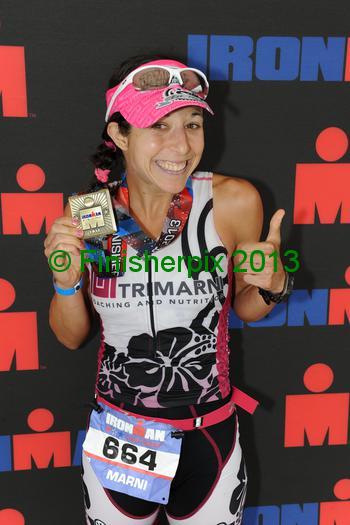
IMWI - 2010 (Enjoying my delicious post-IM breakfast while receiving my paperwork for my 2nd IM world Championship).

Recovering from an endurance event

Marni Sumbal, MS, RD

So, the work is done.......


It's time to celebrate!!!


Ok, this was day #2 after the Ironman as veggies were not on my mind the day after racing 140.6 miles. The first day post Ironman included our first "real" meal since Saturday evening at the Lake Placid pub for lunch. A veggie burger with fries for me and a real burger w/ fries for Karel. I just love how the body craves fat and salt after an endurance event and I am happy to feed it whatever it wants for it sure does taste perfect post race.

Athletes often love racing not just for the finisher medal but for the post race treats.... which are absolutely enjoyed the best when celebrating a major accomplishment and giving the body exactly what it is craving. But after 2-3 days, it's time to get back to the normal routine in terms of eating...that is, if you have discovered what is normal for your body to maintain optimal health and to help with recovery after your recent endurance feat. 

Endurance racing is not normal for you do not have to exercise more than an hour a day to keep (or get) your body in good health. If anything, endurance racing can be damaging on the body and the distance should be respected with a balanced training plan alongside a diet that provides the body with nutrients to prevent disease and illness as well as to fuel workouts and to help with recovery. 

A lot happens to the body during an endurance event....even if you don't have the perfect race, reach your goal time or find yourself slowing down. I find that many athletes forget the stress on the body (emotional, physical and mental) after the race if the race did not leave the athlete with a personal best time or "great" race. From muscle glycogen depletion, to overheating to dehydration, there are many things that can occur inside the body...regardless of finishing time. It takes time for the body to train for an endurance event so you better believe it takes the body time to recover. 

The number one rule for recovering from an endurance event is to not rush the process. The second rule is to not compare yourself to others. I see it many times that athletes get back into training way too soon and brag about how great they feel. A few days to weeks later, an injury occurs OR the athlete is hit with the flu or a bad cold. Recovery depends on many variables and from my experience as an athlete to helping others with training and nutrition to observing Karel as a cat 1 cyclist, I feel that recover depends on many factors and not always can you "feel" yourself being 100% recovered. Poor daily dietary choices, improper fueling during an event, lack of proper hydration during an event, extreme weather, high intensity, long duration, extreme under-trained fitness, improper pacing and being over-trained before the race can all negatively affect your recovery.

Even if you feel "normal" and can walk down stairs fine after the race, this doesn't mean your body and mind is ready to bounce back into training. I know for myself, it typically takes me a full 2 weeks to feel 100% recovered although my legs begin to feel 100% around 4-5 days post race. The worst days are the first 2 days post race when my body feels like it will break with every step. Oh what we do to our bodies to cross a finishing line just for a medal, a hat and a t-shirt. You better believe I thank my body A LOT when I train and race.

Ruptured fibers, inflammation, displacement of red blood cells, disruption of hormones (cortisol, glucagon, epinephrine), low white blood cell count, oxidative stress, GI distress, electrolyte imbalance, brain fatigue, tearing of connective tissues and muscle fiber damage are a few of the many physiological effects of pushing the body for x-amount of time. It sounds absolutely brutal but with the right training, racing and recovery plan, it can be done and you can still maintain balance in your life while reaching your personal fitness goals.

Here are a few of my tips for boosting the recovery process (keeping in mind that no too athletes are alike):
-Stay calm post race. Your body finally gets permission to collapse, lay down or sit as you likely made yourself stay focused for x-amount of time to get your body to the finish line. Don't be quick to rush out of the finisher area. Take your time but don't spend too much time sitting. Cool off, re-hydrate and if tolerable, have something to eat. But do not make your body do something that it doesn't want to do. Try to walk (hobble) around and keep moving in order to prevent a sudden drop in blood pressure if you suddenly lay down and try to get up quickly. Be mindful of the hormonal shifts and digestion of nutrients in the GI tract that may cause you to feel semi-ok when you cross the finish line to absolutely horrible, where's the potty the next minute. Everything will pass within 24 hours (if not, consult a doctor) but your main priorities are to rehydrate, replenish and to refuel within the next 1-2 hours.
-For the next few days, keep moving but NO training. Remember, you can't train a damaged body or one that is low in fuel. Exercising is fine to get some blood flowing but give yourself at least a day or two before you do anything non-weight bearing (absolutely no running or lifting weights for at least 7-14 days) and remove any pressure that you have to do something. ENJOY your accomplishment and for the next week, any exercise should be gadget-free, non weight bearing and energy-focused. Stop when you feel good and if you don't feel like doing something, don't.
-Compression, ice, epson salt (cold), elevation. It doesn't matter the order (although ice and compression will help reduce inflammation -that is why I love110% play harder) but whatever you can get to first will help you out. Avoid heat post race. Foam rolling or massage can be done post race but I find that unless the massage therapist is very educated with endurance athletes, the massage will be best enjoyed around 3-4 days after the race. Massages after long/hard workouts are fine but post race, you may need just a little time before letting someone press on your damage muscles. Walking, compression, ice, yoga and epson salt will help remove metabolic wastes and to get your body back to a semi-normal state instead of doing nothing.
-Sleep. This is typically non-existent for me the few days after a race or at least, hit or miss in terms of a restful night of sleep. But try to rest as much as possible and recognize that your body is going to be off from the normal routine which means that your cravings for food may affect your sleeping and vice versa so the sooner you can get your body back to balance, the sooner you will feel recovered.
-To replenish glycogen and to help with tissue/muscle damage, it is important that you focus on a high carb diet with moderate protein, by eating every few hours for the next 2 days but especially within the next 24 hours post race. Eat as tolerated - if your body isn't ready for solid food right after the race, have an electrolyte drink (ex Hammer Fizz) and then when you are ready, a glass of milk, yogurt or recovery drink. Carbs can be wholesome in my opinion and still help with recovery but you will know after the first try as to what foods sit the best post race. My favorite post Ironman foods include bread, pizza, banana, pretzels, pringles, watermelon. Recognizing that I eat well most of the time, I certainly do not worry about what I put into my body post Ironman as I know that I am not a science project in a lab setting. My body lets me know what I want post race and give myself at least 24-48 hours to listen to my body..and typically it wants salt, fat and carbs so I start slowly with small carb rich meals, typically a few little combinations of foods and not a big meal until around 12-24 hours post race. Your body is going to act like a sponge to carbohydrates post race which is great for athletes who can eat with the first two hours post race. But if you can not stomach anything post race, just take your time and be careful not to be outside your home/hotel room as you may experience a quick drop in blood sugar and you don't want to find yourself fainting, dizzy or without a potty. I recommend to carry saltines, pretzels and juice with you if you happen to be moving around post race but can not stomach any solid food for a few hours. The body doesn't really care where you get carbohydrates from so just listen to your body as you stay hydrated and be sure to not consume too much too soon or else you may find yourself sick. Consult a medical professional if you do not urinate during a long distance event or if you do not urinate within an hour post race as you may be extremely dehydrated which may affect your heart rhythm.
-You are going to be sore post race. Avoid rushing to the anti-inflammatories as you do not want to damage your liver, kidneys or GI tract or make yourself believe you are feeling normal when you are not.
-You are highly susceptible to illness and infections post race. Be sure to keep your immune system healthy by washing hands, keeping chaffing areas clean and being aware of any blisters or lost toenails.
-Set a goal so you are motivated to train again but I encourage athletes to wait at least 4-6 weeks before racing again. I find that after an endurance event, my body is craving some speed around 4-6 weeks later and light activity around 5-6 days later...but certainly nothing structured for at least 2 weeks. The body and the mind need recovery and your sport of choice should be something you want to do forever so keep that in mind if you try to get back into things too soon. You have plenty of time to race again, be patient and respectful to the body. You may feel fine but your body is going to let you know a few weeks later if you were really recovered when you started to get back into training again. Many athletes experience long-term/chronic fatigue from getting back into racing or training too soon after an endurance event. Yes, maybe some can do it but you are only responsible for yourself and your one and only body.

When in doubt - give yourself 2 more days after you feel 100% recovered before you return to structured training. It's always better to take it easy for a few extra days and give yourself a little more time to soak-up your recent accomplishment.

Key Ironman bike workout + mental training

Marni Sumbal, MS, RD

I came across this article the other day and it really struck me with a big ?????

I believe that any athlete who signs up for an Ironman should physically prepare the body to swim 2.4 miles, bike 112 miles and run 26.2 miles. As to the "best" approach to getting to race day, well there are many schools of thoughts to this so I thought I'd briefly share my approach.

Karel has been coaching me for the past few years with my training. I have yet to be burnt out or not arrive to a race hungry to race. I feel I have progressed a lot in the past few years with speed and endurance and most importantly, I always have fun.

I realize that my body has it's limiters with my hip issues relating to my spine and a lifetime of back-issues but I also recognize how to train smart. It doesn't always work out as I'd like since I am a competitor and love to push my body to higher limits but in the past few years, with every down moment that I have experienced with my body, I have only become a stronger and smarter athlete. Thus, my injuries have not been setbacks but rather enhancers.

My approach to training myself and my athletes is simple. Keep things balance. Be patient, keep your mind focused on the journey and never lose sight of your goals. I understand sport nutrition so I feel my training is only enhanced in that aspect but no amount of nutrition will help me train consistently well if my training is not balanced and specific.

I use a lot of tools when I train such as HR, garmin, power meter (910XT Garmin and Garmin 500 bike computer) but as we all know, it is only on race day that your trusted gadget will fail you...never in training!

The whole focus of training is to make progress and to not let your end goal keep you from enjoying the journey. I have taught myself (as an age group athlete who has been fortunate enough to have a body that has gotten me to Kona twice and finishing 5 Ironman's) how to recognize great workouts and how to adjust any workout to ensure it will become a great workout. In other words - completing my assigned workouts means that I understand that what is ahead of me is within my limits. Although many variables such as stress, sleep and nutrition can affect my performance (controllables), I know that each workout on my plan has a purpose. A purpose that the workout is allowing me to make progress. Many athletes are so stuck on the end result that they lose sight of the journey, worry about things out of their control and also push too hard (or not enough) and often question if they are making performance gains. I suppose little progress gains are often hard to "see" but then again, who says that you have to use times/speed as the marker of improving fitness?

My approach to Ironman training is that of quality. There are no Ironman days as I don't want to be training all day in the sun on the weekend and I want to save my best performance for race day. I don't need to prove to myself or on social media that I can swim, bike and run this many hours or miles each week but instead, prove to myself that I have made progress with the workout to set me up for a stronger and faster tomorrow.

Many of my Ironman and half Ironman bike workouts (over the past 3 years) have been relatively "short". Most of my Ironman rides are around 3:5 - 5 hours and most of my half Ironman rides are around 2.5 - 3 hours. The key is the learning how to pace yourself on the bike to get "faster" as an Ironman athlete but also to become more efficient and to run steady off the bike. Thus - I do A LOT of brick runs with each run having a purpose.

With 7 weeks left until Ironman Lake Placid, I really loved today's brick workout given to me by my hubby, coach, bike mechanic and training buddy.

3.5 hour ride + 30 min run - 4 hour KEY Ironman workout

Bike:
15 minute warm-up
5 x 2 min leg openers (100+ cadence rpm)  w/ 2 min EZ
Main set: (I was drafting behind Karel so as he stuck to his zones, my zones were a tad higher than they needed to be but still doable - drafting behind Karel makes me stronger and it has really helped my cycling. I enjoy going "fast" behind Karel as I can't do his speeds alone but I understand that drafting properly keeps me in my proper zones as Karel is extremely consistent so I enjoy the bonus of covering more miles behind him as I prepare myself for my own race day effort. All zones are power based zones determined by a 2 x 20 min max sustainable power effort w/ 2 min EZ in between)

10 min Z4 low w/ 2 min EZ
15 min upper Z3 w/ 2 min EZ
10 min Z4 low w/  2 min EZ
20 min mid - upper Z3 w/ 2 min EZ
5 min recovery
35 min group ride (this effort was low to mid Z4)
5 min EZ
5 x 2 min (high cadence) w/ 2 min EZ
5 min cool down, transition to run.
Total: 73 miles, 3 hours and 31 minutes
(If training with power and/or HR on the bike and you have your zones set-up in proper endurance zones, you should be racing your endurance race in upper Z2 - Mid Z3, typically low Z3 for most athletes. If you want to get faster, you have to train smarter so that by race day, your low Z3 is "faster" than where you were when you started your endurance specific training. As for running in an Ironman - don't get caught up in paces. Used perceived exertion as much as possible while monitoring the HR and walk to help keep good form and to be steady with pacing).

Run:
4 x 1 miles w/ 10 sec walk in between
(I often walk with my IM training in most workouts as it helps me reduce gradual fatigue, it helps me better tolerate nutrition, it helps me control my HR the best I can and it helps me keep good form to reduce risk for injury. I may walk anywhere from 10-60 seconds depending on the workout and although 10 sec is brief and often I wish I could walk longer, it serves the purpose of helping me have a quality workout as I help simulate aid station walks for IM race day).
Mile 1: 7:51
Mile 2: 7:48
Mile 3: 7:51
Mile 4: 7:47
(around 10-13 second walk in between)
Total 4 miles, 32:28, average pace 8:07 min/mile (with ~40-60 seconds of walking)

Should you still do a Key "LONG" workout like a 100 mile ride + 2 mile run or even a 112 mile ride + 10-15 minute run? Yes. Those will be coming for Karel and I in a few weeks. BUT, if you can't do 3.5-4 hours of quality riding + a steady "short" run off the bike, what makes you think that your body is "Trained" to ride 100 miles, weekend after weekend? Those short IM intensity focused bricks will pay off when it is time for the long workouts. Remember - save your best performance for race day. Don't waste your time with junk miles just getting the miles in..make those miles count. And if you can prove to yourself that you can do it in training, trust yourself that you can do it on race day. Don't be a super hero in training and not be able to execute on race day.

After stretching and cooling off with Karel and enjoying a little watermelon and recovery drink (before Karel headed to work today), I had to stop by the Trek Beach store for Karel and when I finally arrived home, it was time to officially refuel!

 
Do you enjoy thanking your body for a great workout with delicious food prepared from home?
Today's creation:
An Omelet with tomatoes, arugula and goat cheese with oregano and rosemary. Rye bread with fruit jam and plain Greek Fage yogurt with fresh cherries and a drizzle of honey.
 
 
If you are wrapped up in the idea that Ironman (or endurance) training has to involve a lot and a lot of miles, how about thinking about other areas in your life that can make a positive impact on your training and racing. Certainly, we all know that even with the best preparation, there can be a variable or two on race day that can count you out from putting all that hard training to the test. Certainly - your mind and nutrition are two important components of training and racing that can help take your fitness to the next level..likely more so than in any long workout for without the right mental focus, pacing strategy and nutrition plan, there's really no point in putting your body through all that long and hard training if you are not equipped properly to handle that training stress (mentally and physically).
 
As you know, I work with my friend, Licensed Psychologist Gloria (Psy. D) on my mental training as she is an experienced mental coach and sport psychologist.
 
Here is a great video to show you the importance of mental training for fitness/performance. Even if you aren't racing or training, I recommend watching this video as it has a few helpful slides on how your mind can either enhance or limit you in terms of reaching your personal goals in life.
 

Creations to fuel your lifestyle - pizza, recovery meal and veggie casserole

Marni Sumbal, MS, RD


RECOVERY MEAL


Bread, fruit and eggs. A few of my favorite things in a recovery meal. 
Are you confused as to the best method of recovery after endurance activity? I know it can be confusing to understand sport nutrition because what you eat around workouts is not what is preached by the media in terms of "heart healthy" eating. This is why I am a firm believer, health first, performance second. When I was at the Oakley Women event in LA this past week, I talked about fueling around workouts and my primary focus was to help the audience understand that we don't need high fiber, high fat, high protein around our workouts. We want foods to be quick to digest and to be energy dense. So if you are snacking on quick digesting foods throughout the day when your body is not active, this is where the confusion comes in as you are likely very vulnerable to your body around a workout and want to eat "healthy and clean". Pass on the salads, high protein/fat foods and fibrous foods around your workouts as that is not the time to be giving your body slow digesting foods. Learn to create a diet that keeps your body nourished and with stable blood sugar and you will find yourself better understanding how to properly fuel around workouts....without feeling as if you are going to gain weight or change body composition with higher glycemic foods.

The immediate consumption of carbohydrates post-exercise is critical for muscle glycogen repletion. Although your recovery "window" is open for 24 hours, the keys to a quick recovery (based on research) are consuming liquid protein as soon as possible post workout (no more than 30g for best absorption) such as whey or vegan protein powder, milk or chocolate milk, followed by  a high glycemic carb breakfast with a little protein (a little fat is fine as well). Avoid stuffing yourself after a workout as the best recovery will come when you can eat every few hours to ensure adequate glycogen storage. If you are finishing a workout extremely weak or starving or feeling full/bloated, consider working with a RD specializing in sport nutrition to help you out with with your sport nutrition fueling regime.

For a yummy and healthy recovery meal: try to start with milk and cereal (ex. rice or corn based if you tend to have trouble with consuming foods after workouts) or fruit, veggie and whey/vegan smoothie as something small to kick start the recovery process. Then when you are ready for your actual meal, think about a variety of fruit for electrolytes, vitamins and minerals and to keep your immune system strong with lots of colors on your plate. Choose your easy to digest quality protein (ex. around 20-30g of protein in your meal such as 1-2 egg whites + 1 whole egg) and your starch/carb (around 40-70g carbs would be a good start to aim for depending on your workout volume/intensity) and I always believe in having some type of veggie with my meal so I used kale and garlic as pictured above with a little hummus on the bread and cheese on the egg. YUM!

VEGGIE CASSEROLE


Do you have those days that are super busy and the last thing you want to do is cook? Yeah, I have them too. BUT, I know that my busy and active lifestyle can be not be fueled off cereal and ice cream...or any other "quick" option that does not provide vital nutrients to my body and mind. My business keeps me busy but with athletes and fitness enthusiasts from around the world relying on me to provide practical information, to review food logs in a timely manner and to communicate passionately and realistically, I would be letting down others, along with myself, if I didn't make time to prepare nourishing meals. Additionally, with every meal comes a workout to follow the next day so it would be a disservice to my body to tell myself that I am too busy to cook and then get upset the next day that I didn't have the right fuel in my body to have an awesome workout. 

I love casseroles because they are super easy. I think we all need go-to easy meals just as much as we should enjoy spending a little extra time in the kitchen. Although this meal took about 40-45 min to make, I wasn't in the kitchen more than 10 minutes so I was able to get things done around the house...thus still staying busy but with a meal ready for me and Karel when it was time to eat. 

1 can favorite soup
2 eggs
Frozen veggies (enough to cover bottom of casserole dish
Seasonings of your choice
Panko bread crumbs
Cheese
Grain or starch of your liking - I used brown rice, potatoes would be a yummy additional as well as you can stick them in the microwave or oven.

Preheat oven to 425 degrees. On a glass casserole dish, spray lightly with non stick spray and place veggies in dish until 1/2 full. Drain 1/2 liquid from soup (unless you are using a broth based soup - then you can keep the broth for another time, I recommend a vegetable soup (vegetarian) or your favorite chunky style soup) and pour over the veggies. Use seasonings of your choice on top - ex. garlic, oregano, chili flakes, pepper, turmeric, onion, etc. Scramble two eggs and a dallop of greek yogurt together and pour over the veggie mix and lightly mix in until evenly combined. Sprinkle with bread crumbs (lightly) and bake for 40-45 minutes. Remove casserole from oven and turn off heat. Top with cheese when veggie casserole is firm and place in oven for 2-3 minutes to let cheese melt. Serve with 1/2 - 1 cup whole grain/starch and Enjoy! 

Matzoh Pizza and Salad


As you may tell, I am not much of a sandwich eater. I've said it in the past but you can only stuff so many plants between two slices of bread. I use to eat sandwiches and when I travel I love a good PB&J for the road/plane or a filling egg, cheese and veggie sandwich from a local eatery. But on a day to day basis, sandwiches don't work for me because I like the volume and nutrient density in plant strong meals and I prefer to use my "bread" for workout nutrition (pre and post) and incorporate more whole grains into my meals instead.

As you may also know, I LOVE pizza. I don't think it's the triangle shape but the combination of flavors - marinara sauce, toppings, bread...yum! In my mind you can make a pizza out of anything or at least, enjoy the flavors of pizza anytime if you want to be creative.

For this yummy creation, I first created a delicious salad of mango, spinach, leeks, celery, carrots, tomatoes topped with a sliced egg (I eat 1 whole egg daily for health benefits). I think used my oven to roast veggies - I tossed peppers, mushrooms, onions and then tofu in a little olive oil and placed in a casserole dish and baked at 425 degrees for 15-20 minutes until roasted. Karel had some leftover chicken that he cooked so I was able to use chicken for his pizza (rt side pic - with a little tofu since he likes it) and tofu for me (left side picture).

After the veggies were roasted, I took two Matzoh's and spread a spoonful or two of marinara and then topped with basil, oregano and garlic (dried herbs/spices). The oven was turned off so I just placed the 'pizzas' in the oven for 2-3 minutes until the cheese was melted and then topped each pizza with the toppings. 

You could use any type of flat bread for this or fresh pizza dough which we often use. I really like Matzoh to eat pre workout because it has a good amount of carbohydrates for 1 slice to be combined with PB and banana slices but it doesn't leave you stuffed like bread or bagel before a workout.

DESSERT


It's not typical that Karel and I will have dessert after dinner.......I just don't see the point of eating after you eat? It's like everything that was prepared for dinner was forgotten and dessert is the only way to feel satisfied. Sometimes we need a little something sweet after a meal but that is often confused with a lot of something. Many times I find that people undereat throughout the day and thus overeat in the evening as our body has a natural way to regulate how many calories we need on a daily basis. Considering that we do very little activity after 8pm, it would be better for your metabolism to spread out your budget of calories throughout the day instead of eating a lot at one time or overeating on something sweet after a meal.

As you can see from my pic above, this is a "dessert" of mixed fruit. The key however is to not overdo it on any one thing. I used 3 strawberries, 4 orange slices and a few banana slices along with a few grapes. Not a lot as I was satisfied after my meal but just needed a little something after the meal. Another great option for dessert is 1/2 - 3/4 ounce dark chocolate which is another one of our favorites in our house.