We’d love to hear from you.

We welcome your thoughts, experiences, comments, suggestions, questions or personal stories. If you don't hear from us right away, please note that your email is very important to us. We will do our best to respond with 24 hours.


Greenville, SC

Trimarni is place where athletes and fitness enthusiasts receive motivation, inspiration, education, counseling and coaching in the areas of nutrition, fitness, health, sport nutrition, training and life.

We emphasize a real food diet and our coaching philosophy is simple: Train hard, recover harder. No junk miles but instead, respect for your amazing body. Every time you move your body you do so with a purpose. Our services are designed with your goals in mind so that you can live an active and healthy, balanced lifestyle.

Blog

Filtering by Tag: recovery tips

Are you recovering well post workout?

Marni Sumbal, MS, RD


Endurance training takes a toll on the body. And if you are like most athletes, where your long workouts occur on the weekend (after a stressful week of training, work and life), you can imagine how easy it can be for the body to carry around residual fatigue as training volume increases if you are not recovering well from your daily workouts.   

Adequate recovery is critical in the restoration of physiological and psychological processes.

From a nutrition point of view, replenishing glycogen, increasing protein synthesis and rehydrating are three critical components to maximizing your fitness but your post workout recovery nutrition also acts as nourishment to keep your immune system functioning properly. 

Consider these three reminders when it comes to post workout recovery.

1) Recovery is everything that happens between two workouts. If you want your body to consistently perform well at every workout, you  need to consider everything that happens between two workouts, which includes sleep, diet, stress management, mobility, etc.
To minimize risk for injury or illness, you may need to make some lifestyle changes (or investments) to ensure that your life allows you to recover, refuel, rejuvinate and repair between every workout but specifically after the more intense or high volume workouts. Endurance triathletes are known to squeeze in a lot into one day but sometimes you will gain more out of your workout by slowing down (and not feeling the need to rush to the next thing in life) and allowing your body to recover properly. 

2) Recovery nutrition depends on the sport duration and intensity. Therefore, there is a fueling and rehydrating strategy for every type of workout. As an athlete who seeks performance gains, it is important that you see recovery nutrition as part of your workout. Your workout is not complete until you recover with the appropriate fueling and hydration snack or meal. Keep in mind that what you eat post workout is part of your daily nutrition needs/calories (whereas what you eat before and during a workout are "extra" calories to support a workout and should not be added to your daily recommended caloric intake).
You will know if you are not recovering well if you find yourself with a run-down feeling in the 4 hours after training, you have difficulty sleeping at night (yet feel exhausted during the day), you can't give the effort that you know/think you should be giving during a workout, you are struggling to get through easy workouts, your muscles feel fatigued, exhausted or sore to the touch, your appetite seems a bit wonky or you have trouble reaching or sustaining higher intensities.

3) Recovery nutrition will not destroy your body composition goals. A common mistake for the athlete who seeks a change in body composition is not prioritizing the fueling and/or hydrating post workout all in an effort to lose weight. Keep in mind that weight loss in the form of reducing body fat (which is the kind of weight loss you want - not from water weight, muscle loss or bone loss) is dependent on expending calories or reducing calories and staying consistent with training so you can get stronger, faster and more powerful. Nail your recovery nutrition so that you can reach your full athletic potential.

Boost athletic performance with restful sleep

Trimarni


After 6 consistent, quality workouts last week, it's time to reward my body with a restful night of sleep. 

As an athlete who is passionate about training smarter in order to train harder, I feel absolutely no guilt when I see all of my alarms set on "OFF."

Yay for no-alarm Mondays!!

As a coach, I see and hear far too often of athletes waking up super early for a recovery workout. Or, after days and days of early morning wake-up calls to squeeze in the training in a time-crunched lifestyle, the body is no longer performing but the athlete feels a sense of guilt if he/she doesn't workout the same time, every day. Sure, active recovery is great and I am all for it in a balanced training plan, but never at the expense of getting a good night of sleep. 


Restful sleep is not only important for overall health but for athletes, it's crucial for rest and recovery. 

For the fitness enthusiast and health conscious

Did you know that restless or inadequate sleep can increase risk for depression, weight gain, cravings, health problems (heart disease, heart failure, irregular heartbeat, high blood pressure, stroke, diabetes) , poor concentration, faster aging, forgetfulness and can impair judgment. Try to aim for around 7-8 hours of sleep most days per week. It's likely that for most people, you can not sleep in any longer to get the recommended amount of sleep for you may risk being late for work or you may not be able to workout first thing in the morning (which may help with better sleep in the evening). So I recommend getting to bed earlier, especially if you are a 11pm or later "lights-off" type of person. Address late night snacking, computer or TV use as well as your diet patterns which may be causing you to stay up late or get a restless night of sleep. 

For the athlete
I think most athletes and coaches understand the importance of quality sleep and how sleep is a big part in the recovery process from intense training. However, this is one area where many dedicated, hard working and motivated athletes fail to succeed because a "no-alarm" morning or day-off from training may cause you to think you are slacking, being lazy, will gain weight, will not perform well, etc. because of a missed workout day. Also, many athletes are stuck in black or white thinking and a day off from training means no movement, no stretching, little focus on wholesome eating etc. Once again, I stress the importance of balance in the life of an age-group athlete. 
So in reality, sleep deprivation or inconsistent sleep, alongside not allowing room in a periodized training plan for adequate recovery will only increase the risk of a decrease in athletic performance and increase risk for injury, sickness and burnout. 

When it comes to adequate sleep vs the sleep deprived, there is not one specific category for those who sleep well and those who do not. But I think most athletes who sleep well, know how much sleep they need to feel rested.  If you want to see if you are in need of more consistent sleep, try going to bed without an alarm as early as possible on a Friday after a long week of training and balancing life/family/work and try waking up without an alarm. Be sure to keep your room dark and without outside noise. This may show you how much sleep your body is in need of to fully recover. However, although 9-10+ hours of sleep after a hard training block or week of life/training may be needed, on average, most healthy individuals will report needing around 7-8 hours of restful sleep a night to perform optimally in sport and in life. For many, this may be a fantasy to get that much sleep. 

For many athletes, even skimping on 30-60 min of sleep a few days per week can cause a host of health and performance issues...especially if the inconsistent sleep habits are occurring overtime. 

-Sleep deprivation may negatively affect glucose metabolism and cortisol which may increase the risk for insulin resistance, impaired recovery, a suppressed immune system, inefficient use of energy during workouts and increased cravings. 

-Sleep deprivation may affect mood, concentration, alertness, skills and judgement. All very important components of performance when it comes to using and moving your body especially for triathletes while riding a bike or for other athletes who require skills and concentration to perform. 


The key to any balanced training plan is consistency. Perhaps one or two nights per week you are sleeping only 6 hours due to an early morning workout or a late night of meetings/errands, etc. That may be fine for you can catch up the following day by going to bed a bit earlier so that you do not put yourself into sleep dept. Just like with training, you do not want to take too many risks with your body or else you may fall into a deep hole that you are unable to get out of. 

Try to make restful sleep part of your routine and this may mean modifying your workout routine slightly in order to get your body into a good sleep cycle. Although you may not have to modify every workout, every day, consider allowing at least one day per week to wake up without an alarm for a workout (you still need to go to work). You want to make sleep a priority in your routine, just like wholesome eating, stretching and training smart.  

If you are an athlete who is training for an event and is following a 8, 12 or 16+ week training plan, remember that you are using your body to perform in order to adapt to training stress. If you feel strongly about your "EZ" am workout of strength, swim, bike or run am because you are stuck in a routine and feel like life can not go on if you don't workout every morning, keep in mind that every movement you make burns calories and planning intentional off days can help with consistent training. Consider an evening yoga class, a long walk with your dog, a lunch break stretch or playing with your family in the evening as great energy boosters on a day "off" from training. As you sleep in and/or take a day off from training, bottle up all that unused "training" energy for a quality and consistent next 5-6 day block of training. 


Campy - the cutest professional sleeper. 


Recovering from an endurance event

Marni Sumbal, MS, RD

So, the work is done.......


It's time to celebrate!!!


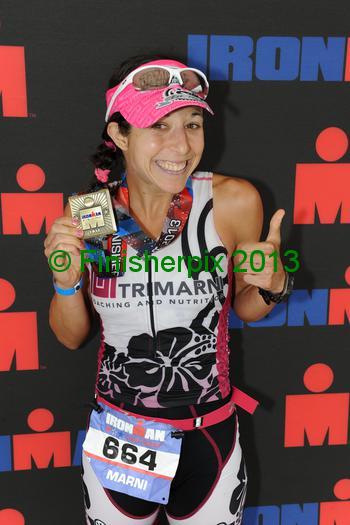
Ok, this was day #2 after the Ironman as veggies were not on my mind the day after racing 140.6 miles. The first day post Ironman included our first "real" meal since Saturday evening at the Lake Placid pub for lunch. A veggie burger with fries for me and a real burger w/ fries for Karel. I just love how the body craves fat and salt after an endurance event and I am happy to feed it whatever it wants for it sure does taste perfect post race.

Athletes often love racing not just for the finisher medal but for the post race treats.... which are absolutely enjoyed the best when celebrating a major accomplishment and giving the body exactly what it is craving. But after 2-3 days, it's time to get back to the normal routine in terms of eating...that is, if you have discovered what is normal for your body to maintain optimal health and to help with recovery after your recent endurance feat. 

Endurance racing is not normal for you do not have to exercise more than an hour a day to keep (or get) your body in good health. If anything, endurance racing can be damaging on the body and the distance should be respected with a balanced training plan alongside a diet that provides the body with nutrients to prevent disease and illness as well as to fuel workouts and to help with recovery. 

A lot happens to the body during an endurance event....even if you don't have the perfect race, reach your goal time or find yourself slowing down. I find that many athletes forget the stress on the body (emotional, physical and mental) after the race if the race did not leave the athlete with a personal best time or "great" race. From muscle glycogen depletion, to overheating to dehydration, there are many things that can occur inside the body...regardless of finishing time. It takes time for the body to train for an endurance event so you better believe it takes the body time to recover. 

The number one rule for recovering from an endurance event is to not rush the process. The second rule is to not compare yourself to others. I see it many times that athletes get back into training way too soon and brag about how great they feel. A few days to weeks later, an injury occurs OR the athlete is hit with the flu or a bad cold. Recovery depends on many variables and from my experience as an athlete to helping others with training and nutrition to observing Karel as a cat 1 cyclist, I feel that recover depends on many factors and not always can you "feel" yourself being 100% recovered. Poor daily dietary choices, improper fueling during an event, lack of proper hydration during an event, extreme weather, high intensity, long duration, extreme under-trained fitness, improper pacing and being over-trained before the race can all negatively affect your recovery.

Even if you feel "normal" and can walk down stairs fine after the race, this doesn't mean your body and mind is ready to bounce back into training. I know for myself, it typically takes me a full 2 weeks to feel 100% recovered although my legs begin to feel 100% around 4-5 days post race. The worst days are the first 2 days post race when my body feels like it will break with every step. Oh what we do to our bodies to cross a finishing line just for a medal, a hat and a t-shirt. You better believe I thank my body A LOT when I train and race.

Ruptured fibers, inflammation, displacement of red blood cells, disruption of hormones (cortisol, glucagon, epinephrine), low white blood cell count, oxidative stress, GI distress, electrolyte imbalance, brain fatigue, tearing of connective tissues and muscle fiber damage are a few of the many physiological effects of pushing the body for x-amount of time. It sounds absolutely brutal but with the right training, racing and recovery plan, it can be done and you can still maintain balance in your life while reaching your personal fitness goals.

Here are a few of my tips for boosting the recovery process (keeping in mind that no too athletes are alike):
-Stay calm post race. Your body finally gets permission to collapse, lay down or sit as you likely made yourself stay focused for x-amount of time to get your body to the finish line. Don't be quick to rush out of the finisher area. Take your time but don't spend too much time sitting. Cool off, re-hydrate and if tolerable, have something to eat. But do not make your body do something that it doesn't want to do. Try to walk (hobble) around and keep moving in order to prevent a sudden drop in blood pressure if you suddenly lay down and try to get up quickly. Be mindful of the hormonal shifts and digestion of nutrients in the GI tract that may cause you to feel semi-ok when you cross the finish line to absolutely horrible, where's the potty the next minute. Everything will pass within 24 hours (if not, consult a doctor) but your main priorities are to rehydrate, replenish and to refuel within the next 1-2 hours.
-For the next few days, keep moving but NO training. Remember, you can't train a damaged body or one that is low in fuel. Exercising is fine to get some blood flowing but give yourself at least a day or two before you do anything non-weight bearing (absolutely no running or lifting weights for at least 7-14 days) and remove any pressure that you have to do something. ENJOY your accomplishment and for the next week, any exercise should be gadget-free, non weight bearing and energy-focused. Stop when you feel good and if you don't feel like doing something, don't.
-Compression, ice, epson salt (cold), elevation. It doesn't matter the order (although ice and compression will help reduce inflammation -that is why I love110% play harder) but whatever you can get to first will help you out. Avoid heat post race. Foam rolling or massage can be done post race but I find that unless the massage therapist is very educated with endurance athletes, the massage will be best enjoyed around 3-4 days after the race. Massages after long/hard workouts are fine but post race, you may need just a little time before letting someone press on your damage muscles. Walking, compression, ice, yoga and epson salt will help remove metabolic wastes and to get your body back to a semi-normal state instead of doing nothing.
-Sleep. This is typically non-existent for me the few days after a race or at least, hit or miss in terms of a restful night of sleep. But try to rest as much as possible and recognize that your body is going to be off from the normal routine which means that your cravings for food may affect your sleeping and vice versa so the sooner you can get your body back to balance, the sooner you will feel recovered.
-To replenish glycogen and to help with tissue/muscle damage, it is important that you focus on a high carb diet with moderate protein, by eating every few hours for the next 2 days but especially within the next 24 hours post race. Eat as tolerated - if your body isn't ready for solid food right after the race, have an electrolyte drink (ex Hammer Fizz) and then when you are ready, a glass of milk, yogurt or recovery drink. Carbs can be wholesome in my opinion and still help with recovery but you will know after the first try as to what foods sit the best post race. My favorite post Ironman foods include bread, pizza, banana, pretzels, pringles, watermelon. Recognizing that I eat well most of the time, I certainly do not worry about what I put into my body post Ironman as I know that I am not a science project in a lab setting. My body lets me know what I want post race and give myself at least 24-48 hours to listen to my body..and typically it wants salt, fat and carbs so I start slowly with small carb rich meals, typically a few little combinations of foods and not a big meal until around 12-24 hours post race. Your body is going to act like a sponge to carbohydrates post race which is great for athletes who can eat with the first two hours post race. But if you can not stomach anything post race, just take your time and be careful not to be outside your home/hotel room as you may experience a quick drop in blood sugar and you don't want to find yourself fainting, dizzy or without a potty. I recommend to carry saltines, pretzels and juice with you if you happen to be moving around post race but can not stomach any solid food for a few hours. The body doesn't really care where you get carbohydrates from so just listen to your body as you stay hydrated and be sure to not consume too much too soon or else you may find yourself sick. Consult a medical professional if you do not urinate during a long distance event or if you do not urinate within an hour post race as you may be extremely dehydrated which may affect your heart rhythm.
-You are going to be sore post race. Avoid rushing to the anti-inflammatories as you do not want to damage your liver, kidneys or GI tract or make yourself believe you are feeling normal when you are not.
-You are highly susceptible to illness and infections post race. Be sure to keep your immune system healthy by washing hands, keeping chaffing areas clean and being aware of any blisters or lost toenails.
-Set a goal so you are motivated to train again but I encourage athletes to wait at least 4-6 weeks before racing again. I find that after an endurance event, my body is craving some speed around 4-6 weeks later and light activity around 5-6 days later...but certainly nothing structured for at least 2 weeks. The body and the mind need recovery and your sport of choice should be something you want to do forever so keep that in mind if you try to get back into things too soon. You have plenty of time to race again, be patient and respectful to the body. You may feel fine but your body is going to let you know a few weeks later if you were really recovered when you started to get back into training again. Many athletes experience long-term/chronic fatigue from getting back into racing or training too soon after an endurance event. Yes, maybe some can do it but you are only responsible for yourself and your one and only body.

When in doubt - give yourself 2 more days after you feel 100% recovered before you return to structured training. It's always better to take it easy for a few extra days and give yourself a little more time to soak-up your recent accomplishment.