We’d love to hear from you.

We welcome your thoughts, experiences, comments, suggestions, questions or personal stories. If you don't hear from us right away, please note that your email is very important to us. We will do our best to respond with 24 hours.


Greenville, SC

Trimarni is place where athletes and fitness enthusiasts receive motivation, inspiration, education, counseling and coaching in the areas of nutrition, fitness, health, sport nutrition, training and life.

We emphasize a real food diet and our coaching philosophy is simple: Train hard, recover harder. No junk miles but instead, respect for your amazing body. Every time you move your body you do so with a purpose. Our services are designed with your goals in mind so that you can live an active and healthy, balanced lifestyle.

Blog

Hiking in the Smokies: Ramsey Cascades

Trimarni


We heard about this hike from a friend (thanks Allan!). This hike was challenging and beautiful. In addition to a stunning waterfall, we saw a young bear walking throughout the forest! Talk about a great first hike of our vacation. 

We arrived to the trail around 10:30am and managed to find a parking spot near the start of the trailhead. The hike started out mellow as we walked by the flowing water and through so many spectacular trees with exposed roots. Around 1.5 miles into the hike, the terrain became a bit more technical with rocks and roots. As we continued the hike, we started climbing and climbing. Crossing narrow foot bridges over the creek was a cool experience. The last 3/4 of a mile took us about 25 minutes and per our Garmin watches and the grade averaged ~18.5%. We had a snack (PB&J) at the waterfall and spent around 30 minutes relaxing at the beauty of the waterfall. There were several boulders to sit on to relax before we made our way back down the trail (which nearly took us just as long to get down as it did to get up - it was super technical). In total, we spent a total of 4 hours on the trail head with 3:15 of it covering 8 miles. In route to the trailhead to park, you drive on ~3 miles of gravel. There are several areas to park your car and enjoy the water in a tube or just floating around. 

Quick Stats: 
Name of trail: Ramsey Cascades
Waterfall: Yes (the tallest waterfall in the park)
Distance: 8 miles (4 miles out and back) - it took us 3 hours and 15 minutes round trip (1:45 up and 1:30 back). 
Parking: Small gravel lot, get there early to park near the trailhead. You drive on a few miles of gravel (and over a small wooden bridge) to get to the trailhead. 
Elevation gain: ~2200 feet (start at ~2000 feet and finish at ~4250 feet)
Difficulty: Strenous - rocky, rooty and technical. 

Here are some pictures of our 8-mile hike. To learn more about the Ramsey Cascade Trail, check out this link.  


Smoky Mountain vacation - recap

Trimarni


This was the week when we were planning to board a plane to kick off our 5-week trip to Europe. One week of participating in the Haute Route Alps (7-day cycling tour), followed by one week of sightseeing off the beaten path and finishing our trip with a few weeks in and around Karel's hometown of Znojmo, Czech Republic to celebrate his dad's 80th birthday. This trip was over a year in the planning and we were really looking forward to our time in Europe. Although our trip was cancelled, we still felt like a vacation was in order. This vacation served a few different purposes but most of all, it was an opportunity to check out of our normal routine of swimbikerun and enjoy different sights and a lot of nature. We choose the Smoky Mountains because it was logistically close for driving but far enough away to feel like we were taking a "trip." It was also a location that neither of us have been to together (funny enough - Karel and I both discovered that we were both in Gatlinburg in the winter of 2003 and we didn't even know each other then!)

Karel and I  rarely take vacations that don't involve swimming, biking and running. Our last vacation (that didn't involve a race) was five years ago. We tried our best to embrace this change in our normal routine and slow down a bit. 

Removing our daily lifestyle of swimming, biking and running meant an opportunity to do a different activity that we both enjoy - hiking! For Karel, hiking is not a slow and leisure activity. He stops to enjoy the views but he hikes on a mission - much like how he runs ;) I am usually following behind as I can never keep up with his pace. But we both enjoy stopping at the sights that we see along the way. 

If you are considering a trip to the Smoky Mountains, here are some tips from our recent trip:

Where to stay


I was not familiar with the area so I booked a place on Airbnb in Seviervielle, TN (blue circle). Prior to booking, I chose this place because it was pet friendly (for Campy), had a beautiful view, was reasonably priced for peak season and was located between Townsend and the Smoky Mountain National park - which were two areas that we wanted to visit. However, if I had to book again, I would have booked a place in Gatlinburg (red circle) closer to US-441 S. We had a ~50-75 min drive to most of our hikes so staying a little closer would have knocked off some driving time. 

Cost
Aside from lodging, groceries and gas (~2.5 hour drive), this was a fairly inexpensive trip for us. We spent around $50 during our week stay. This included a tour to the Tuckaleechee Caverns in Townsend and an overly priced parking spot in downtown Gatlinburg. We brought a cooler of groceries with us (and a few prepared meals) and made two small shops at Kroger during our vacation. We didn't eat out but did purchase a few small grocery items at a local mass general store. 

Hiking
There are so many hikes in and around the Gatlinburg area. It was difficult to decide which ones to select during our short Sun-Sun, 7-day stay (well - more like 6 days as we came home a day early as it poured all day on Saturday). I used Alltrails.com, Hiking in the Smokys website and the National Park Service website (along with a few recommendations from friends) to plan our hikes. Here are the hikes that we went on:
Monday: Gatlinburg trail at the Sugarland Vistor Center (the only dog friendly trail in the area)
Tuesday: Ramsey Cascades Trail 
Wednesday: Spruce Flats Falls
Thursday: Tuckaleechee Caverns (not a true hike)
Friday: Alum Cave trail to Mt Leconte

The Gatlinburg trail was a nice hike with Campy. It had beautiful views of the Little Pigeon river. We arrived late morning and the parking lot was busy. However, the trail itself was very quiet as most of the tourists were on the hiking trails (which were not pet friendly) to the waterfalls. We made it about 1/2 mile before the sky opened up and it poured on us. Being the amateur hiker that I am, I didn't even think about bringing rain jackets for us (travel fail!). Karel ran back to the car to get an umbrella and we ventured on another 1/2 mile until we decided to turn around. Campy was not impressed with his only hike and the first day of our vacation was a wet one. 

I'll recap the other hikes in future blogs - stay tuned.

There were plenty more hiking trails for us to visit but we wanted to avoid large crowds and pace ourselves with the hiking terrain and distances. 

Lessons learned 

  • We wanted to check out downtown Gatlinburg as we both visited the area (not together) in the past but had vague memories of the area. This was a bit of a letdown as it was very touristy and commercialized, a bit overwhelming. We wore our masks, checked out a few stores (which were more or less all the same) and walked up and down the street. It was a very hot day and we probably could have done without this adventure to downtown. 
  • As I mentioned above, I should have booked a place closer to the hiking trails. 
  • Bring a rain jacket! 
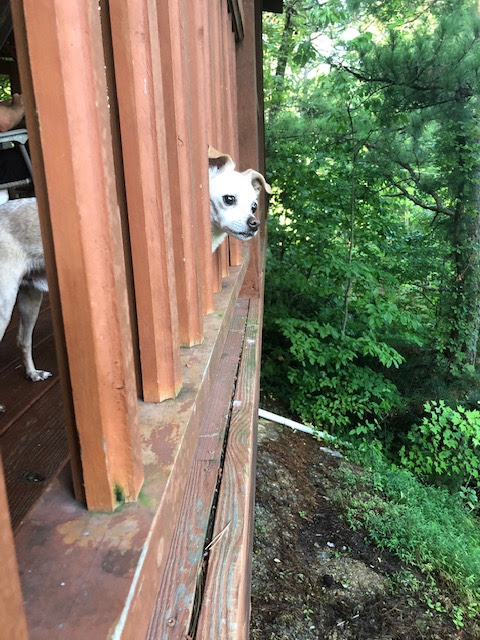
  • I made the mistake of assuming that the trails were pet friendly. This is why we brought Campy (so he could enjoy the vacation with us). Although he had no trouble sleeping throughout the morning while we were out and about, it would have been fun to make more memories with Campy. 
  • I am glad we didn't bring our bikes as I would have been a bit stressed trying to find safe and quiet biking routes. I found one pool but didn't want to mess with the hassle of reserving a lane while on vacation. Running the trails would have been a lot of fun but we wanted to give our bodies a break from the pounding. 
Final thoughts
We finished the vacation rejuvinated and exhausted. Our work never takes a vacation so we dedicated the morning hours to hiking and then worked throughout the afternoon. We only set an alarm on Friday (to get to the trailhead before it got busy) so it was nice to reset the body without an alarm clock (or a hungry kitten and senior cat demanding breakfast at 5:46am every morning). I'm sure this place is stunning in the fall with all the colors of the leaves on the trees. It was rather hot and humid at times but we also had a few rain showers which cooled things off. 

Here are some pictures from the start of our trip: 


DTWM - Body Image

Trimarni


Being yourself is one of the greatest gifts that you can give yourself. Ultimate happiness resides in being you. Authentically you. 

Have confidence in yourself as a person, not a size. Don’t let your look keep you from doing things that you enjoy. Let your individuality shine. Be your body’s ally, not its enemy. Live in the pursuit of authenticity. 

Appreciate your inner being, soul and spirit. You are a biological masterpiece.


Body image is subjective. There are so many different ways to define it. Although the idea of the ideal body image has radically changed throughout history, many are constantly navigating life with the assumption that “ideal” means: smooth, symmetrical, clean, thin, lean, delicate and young. Having a positive body image doesn’t mean that you don't care about your body composition or appearance. The problem occurs when you attempt an extreme style of eating or training in order to look “normal.”
I give you permission to reject body image standards. Redefine your ideal. Be you. 

Your gender, ability, age, ethnicity, mental status, sexual orientation and nationality matter. You are so much more than a look. You are an incredible human being. 

Never let anyone convince you that a lighter version of yourself will make you more successful. And never ever let anyone make you feel ugly, unworthy or unattractive. 

You write the guidebook when it comes to your body image. Play by your rules. 

Never stop caring about your health. But remind yourself that you have choices. You get to decide what is healthy. Your body. Your decisions. Your life. 

It’s time to heal your dysfunctional relationship with food and your body. Don’t stop the work that is needed for complete body acceptance. You deserve to live a life of loving your body - because your body is incredibly beautiful and amazing.


Is there a voice inside your head telling you to spend a tremendous amount of time and effort in pursuit of your “ideal” image? This voice is a causing you to miss out on living your best life. Don’t let a number on the scale or clothing size determine your self-worth. Success doesn’t come from an image. Healthy comes in all shapes and sizes.

Take note of the damaging messages society is sending to you about beauty and health. The media is constantly trying to tell you that you are not good enough. Society is obsessed with size. The smaller the better. Altering your body is not the solution. Your own perception of your body is driving your constant feelings of inadequacy, unworthiness, and unhappiness. This must change.

Your body is not the enemy. Don’t let your body stand in your way of you living your best life.

If you reach a lower body weight, this does not increase your value as a person. Similarly, being happy at your weight (even if it doesn’t match the ideal image) doesn’t decrease your value as a human.

You are not your weight.

Change the narrative.
Reject weight based values.
We value what we love.

Value the traits that make you feel worthy.
Value the incredible machine that carries you through life.
Love the qualities that make you unique. Love the human being that you are.


The way that many think about weight loss is very unproductive. When you approach a diet with an all-or-nothing mentality, it only takes a matter of time before an all-in approach results in a rebound back to nothing. It's hard to be restrictive for an extended period of time. 

Don't aim for a weight goal. Don't make your image the focus. A scale measures how much force exists between your body and the planet Earth. It does not measure success, effort, happiness, courage and self-worth. It surely can't measure your awesomeness. 

Much of the pressure to change body composition stems from wanting to meet society's expectations of how you think you 'should' look. This type of aesthetic-focused weight loss is typically much more extreme than what's needed to improve health. Your ideal weight is the one you achieve when you are living the healthiest life that you fully enjoy. Your best-life-weight will vary throughout a lifetime, as will your diet. 

Food is fuel. Food is nourishment. Food is comfort. Food is social networking. To only eat in the name of a specific body composition denies you of living your best life. 

A super restrictive diet with strict rules may help you lose weight but it may also make you miserable. Focus on behavior-based strategies that improve your health. Make changes that you can sustain for the long haul. Make changes you enjoy. Focus on behavior changes that you want to live with. Create goals that are worth pursuing in and of themselves. 

Make a gradual shift in your eating choices. Slowly change your lifestyle habits. Allow yourself to be less than perfect. 

Invest in your health.
Future proof your body.


Friendly reminder. 

Your body is constantly changing. Self-respect and body acceptance cannot be conditional.
Society has created the idea that your self-worth and happiness is defined by your weight, size, shape and image. 

This ideology is so deep-rooted that many are on a constant roller coaster of body obsession and dieting. 

What outside noise are you letting into your definition of self-love? It’s time to put self back in self-worth. Your worth must be determined by you. 

Value your body for the incredible machine that it is. Reject societies image of weight-based values. Be grateful for the body you are in. Be respectful, compassionate and kind to the body that carries you through life.

DTWM - Patience, it's ok, keeping showing up

Trimarni


DTWM - It's ok to be ok
There’s no denying that life during this pandemic has been distressing. Everyone is feeling an emotional burden and each of us are having a different pandemic experience. At the devastating end of the spectrum are the tragic losses: loss of life, loss of loved ones, loss of job and loss of mental and physical health. There's also the loss of normal rituals and routines. We lost the predictability that we often took for granted. This is a frustrating time of uncertainty.

Acknowledging the reality of our unpredictable situation, we must not demand that all circumstances should be favorable in order to be happy. There are plenty of reasons to struggle with our "new normal" but there are always bright spots in dark times.

While it's "ok not to be ok," it's also "ok to be ok.”
See the good. Be grateful. Celebrate. Spreading joy during sad times doesn't make you a bad person.
The ability to feel multiple emotions is the resilience that helps us navigate through difficult times.
Feelings aren't right or wrong or good or bad. They just are. Whatever you feel at this unfamiliar time is ok.

You aren’t a bad person if part of you feels happy at times. If you can find, create or spread joy in this troublesome time, consider it a gift and a privilege - and most of all, be grateful for it.


DTWM - Patience 
We cut corners and look for shortcuts. We want quick answers to complex problems. We are intensely hungry for results. We love instant gratification. Another reason to love Mother Nature - she’s the best teacher for learning patience.

You may have recently found yourself growing more inpatient - with yourself, with others and with the current circumstances. Impatiently wanting to get back to normal life, as quick as possible.
With money to spend, work to get done, warm weather to enjoy and vacations to take, your impatience may be getting the best of you. You may feel like you’ve sacrificed enough and you can’t continue to live like this for any longer.

No matter how much you desperately want life to return to normal, this virus will not dissolve just because you are so over it.

We are all potential victims. We are all possible killers.

The sacrifices we make can save a life. As it relates to this virus, if there’s nothing to spread, there’s nothing to catch.

We all have the right to be impatient about our current situation. The virus is no less dangerous and the cure is no where in sight.

Patience requires that we are willing to forgo present satisfaction for future benefits. Indirectly or directly, your behavior and choices can protect yourself, your loved ones and the rest of our nation. Even if the odds are against you that you won’t die from this virus, you still have a moral obligation to protect your fellow community members and citizens.

During these unprecedented times, we must be patient, disciplined and selfless as we voluntarily curb our freedom and make smart choices, all in the interest of the common good.


Keep showing up
Life often throws unanticipated challenges at us. Although a challenge may cause disappointment, anger, frustration or sadness, you are ultimately the only one who can choose how you decide to react and respond to the challenges that life presents to you.

Much of the “unfairness” in the world is not within our control. Too often, the situations we get the most upset over are situations in which we have no control over. Step out of the victim mindset and view yourself as a survivor.

This doesn’t mean you should ignore current situations and pretend bad things don’t/won’t happen. This doesn’t mean that you shouldn’t feel anger or frustration over devastating injustices that are happening in this world.

It’s important to control your emotions in a positive way. Otherwise, negativity and unfairness can overtake your thoughts and control your emotions - making it difficult to feel good about the world and your role in it.

You can’t change someone else’s decision or behavior if they aren’t willing to change.
You can’t change the tragedies that have occurred in our nation but you can support causes that will help prevent future affliction.

Don’t assume society will magically change. The real change comes when you go within and do the work of inner transformation.

You can’t predict the future but you can increase the chance for success by being persistent and consistent.

Sometimes we need to accept that life will be unfair. And sometimes we will have a strong intuition to fight for what is right.

Life is a mixture of devastating loss, baffling experiences and joyous occasions. Life is a hodgepodge of unpredictable moments.

With the past behind you and the future still unknown, enjoy the present. Gratitude is always an option.
Your current situation may not be what you planned or wanted, but you must accept what is, keep showing up and do what you need to do to be the best human that you can be.

Deep Thoughts with Marni

Trimarni


Do you remember the SNL segment "Deep Thoughts by Jack Handey"? 

Everytime I begin to write down my thoughts with pen and paper, I laugh to myself as I think about that sketch. As I type out my passionate words on social media, I can't help but laugh and think "Deep Thoughts by Marni." 

I am a deep thinker. I can easily get lost in my own thoughts and the only way for me to sort things out is through writing. I am very nostalgic and I love to learn. I consider myself to be open-minded and I often look at things from multiple perspectives. 

With so many ideas and thoughts circulating through my mind, exercise (or training) is the place where I have the freedom to explore and sort through my thoughts. Many times I'll start a workout with an anxious and racing mind and I'll finish the workout feeling calm and confident. Sometimes I'll have a brillant idea before a workout and then come to my senses when the workout is complete. On the other hand, many of my great ideas do happen during my workouts. 

Over the past few months, I've found myself thinking a lot more than normal. With so much going on in the world, I've had a lot to think about. It can be uncomfortable at times. Writing has always been my outlet for my thoughts. Since I was little, I've always enjoyed writing. It's often therapeutic for me. Whereas my mind often thinks in incomplete sentences while mashing together unrelated (and often illogical) thoughts and ideas, writing helps me organize my thoughts and dismiss what's not relevant or practical. Writing is an opportunity to purge thoughts instead of letting them marinate in the mind. The great thing about writing is that it gives you the freedom to express yourself (or your thoughts) without beind judged. 

I've been sharing some of my writings on social media and thought I'd document a few of them here on my blog for easy viewing. Perhaps you'd like to share them with a friend or pin them for your own future reference. While I write for myself, maybe you'll find them helpful in your own life journey. 

Throughout the upcoming week, I'll share some of my favorite "deep thoughts." 
To start, here is a DTWM (Deep Thoughts With Marni) post that I shared on the topic of "not giving up." I wrote this on the day when I was supposed to race 2020 Ironman Lake Placid.


It's inevitable that any athletic journey will have moments of self-doubt.

Over the past 14 years, I have completed 16 Ironman distance triathlons. During each race, I contemplated giving up. No race was free of struggles and adversity.

But to keep me going, I have a saying that I frequently repeat to myself during tough times.....

"Don't give up on an uphill."

I use this saying to remind me that it's so easy to give up when things get difficult. When something is uncomfortable, we are in a state of uncertainty, expectations are not being met or we are in a place of frustration, giving up often feels like the right thing to do.

Today I was supposed to race my 17th Ironman - Ironman Lake Placid. This incredibly beautiful location in upstate NY holds a very special place in my heart - it’s where Karel raced his first Ironman distance triathlon in 2013 (our first Ironman together) and the majestic mountains gave the impetus that prompted our move to Greenville. Today would have been our 4th trip to Lake Placid.

Athlete or not, these are trying times. We are all on a very steep uphill and it's very uncomfortable.

During times of trouble, stress and unpredictability, it can be difficult to find meaning to life, causing a loss of motivation. A common response in trying times is to give up. If you have tossed around this thought in your head, you are not alone. And your feelings and emotions are validated.

But like the strong thought of quitting on an uphill, when we give up, we settle for easy. Your reason for continuing must be strong enough to knock down the barriers that stand in your way.
If your mind is trying to convince you to give up, resist the urge of quitting on the uphill. Recognize the self-sabotaging forces that are dominating your process of thinking.

When all the odds are against you, there's something gratifying about not giving up. Not giving up is a mindset. It requires persistance, grit and a bit of stubborness. Refusing to give up as an athlete will strengthen you as a human being.

Embrace where you are with your emotions without any judgement. These feelings force you to validate your beliefs, ideas and choices. Strong emotions and feelings are the reality check needed to ensure that you are pursuing meaningful adventures in your one and only lifetime.

It's the times when life tries to break you down that you will be most tested. Stay strong and resilient as you persevere through adversity.

Never give up on an uphill.

Greenville Spinners 10-mile TT #3 - Race recap

Trimarni

 
Photo: Greenville Spinners

After the last Greenville Spinners Time Trial event (#2 in the series but my first time participating in the event), I made note of some areas of improvement. Although only a few weeks separated the two events, there were so many lessons learned from my first ever Greenville time trial event. 

There are so many differences between endurance racing and time trial racing. In an endurance triathlon event, it's all about energy management - being great at not slowing down. In a time trial race, it's all about you versus the clock. Although both are extremely uncomfortable, it's a very different type of hurt. In endurance racing, the body endures great mechanical fatigue, not to mention dehydration, glycogen depletion and central nervous system fatigue. You can't fake the training if you want to perform well in an endurance event. There's no skipping steps or rushing the process. You need great body awareness and exceptional mental strength. Going into an endurance vent with a haphazard fueling and hydration strategy (before and during the event) often leads to GI issues, early fatigue and other performance limiters. In a long distance event, there is room for error and mistakes. Not always does the "fastest" athlete perform the best on race day.


In a time trial event, every physiological system in the body is called into action. The little details (like aerodynamics and willingness to suffer) are extremely important. Although nutrition is important, it won't necessarily make or break the race. Being fit, strong and powerful go a long way. Did I mention the ability to suffer? It's a very uncomfortable feeling when the heart is beating out of your chest, your legs are burning and at any moment, you feel like you can't go any harder but something inside of you tells you that you still have a little bit more in you. 

After my first attempt at the 10-mile event, I knew there were things that I needed to do differently if I wanted to perform better. I certainly felt a bit of expectations in this last time trial event as I had a reference point to compare to (series #2). Knowing that improvements are not always linear, I felt like I could do things better this time around. 


I went into this race very tired - emotionally and physically. Still mentally exhausted from our 6-days of training camps, this past week has been extremely busy. I've also found myself emotionally drained from all of the COVID-19 news/media. When Karel and I arrived to the Donaldson parking lot around  4:45pm on Thursday late afternoon, I was anxious to get on my bike to loosen out my legs. As I started my warm-up, my legs felt just like they did throughout the week - heavy and tired. Interestingly, my running legs have felt good and I've been enjoying swimming long course this week. But on the bike - ugh - I had no oomph. I made sure to give myself plenty of time to warm-up. I felt it out as I went along and did a warm-up that helped me get into the zone. It took me the entire warm-up to finally start to feel somewhat good. 

Warm-up
15 min EZ
2 x 30 sec all out (w/ 60 sec EZ)
2 x 45 sec all out (w/ 60 sez EZ)
3 x 3 min build w/ 3 min EZ
EZ spin until my start time of 6:14pm EST

Karel joined me (as a participant) for this last series (even though he is not a fan of time trial events - he was always a crit-style racer and enjoyed the sprint at the end of a road race). Of course, with 8 years of triathlon under his belt, he has become a different cyclist and much more of a well-rounded endurance triathlete - not to mention an incredibly fast and efficient runner! Karel put himself in the Merckx category (no time trial equipment, just a road bike) just to keep it more fun for him. 

As I warmed up (Karel and I each did our own warm-up), I took note of the wind direction and made mental notes of the parts of the out and back 10-mile course that I needed to take advantage of. In the last event, I felt like I could not have gone any harder/faster on the downhill segments. Instead, I needed to embrace the suffer and push harder on the more difficult sections (climbs and false flats and in the wind). This is where I would be able to gain a little more time (talking seconds - not minutes) but it would certainly come at a cost. I also knew that I needed to have a really quick start (clipping in) and needed to nail my u-turn at the turn around. 

Having friends/athletes at the event made a huge difference. Our athletes Alvi and Yannick, along with our former athlete and good friend Thomas, were also participating in the event. Since the starting times are first come, first serve (you sign-up online), we strategically positioned ourselves one after another for motivation. With a 1-minute gap between each rider, we each rode our own race but also had vision of who was around us on the out and back course. Having Karel ahead of me gave me a rabbit to chase (I never caught him but I did ride faster than him ;) and I also felt like I had a bullseye on my back as I had Yannick, Alvi and Thomas chasing me down (in that order). I knew Yannick would catch me but my goal was to not let Thomas catch me (he started 3 minutes behind me). All three of these guys are incredibly fast. This mental approach helped tremendously. Even though it was me against the clock, I was able to squeeze a bit more out of myself knowing that I had people chasing me down along with having Karel to chase. 

Lastly, I focused on all the little things during the race that could make a big difference. In addition to my race bike set-up, I had a little sport nutrition in my Ventum hydration system to keep my brain alert and to keep my mouth/throat from getting dry. Although it was a little added weight (I didn't have anything in my front bottle - it was just there for aerodynamic purposes), it was negligible. After the last event, Karel put new elbow cups (Wattshop) on my Ventum and moved the cups a bit closer to the aerobars. While this position allowed me to get more aero, it also helps me feel even more stable on the bike (especially when pushing hard). Lastly, all 5-feet of me needs every opportunity possible to gain free speed - whether it was tucking in my head (while still safely looking ahead), nailing my start and u-turn (thankful there was a cop controlling traffic, which allowed me to quickly and safely take the turn), pushing as hard as I could on the downhills (to get out as much watts as I could) and lastly, being willing to suffer a bit more on the inclines. 

It's amazing what you learn about yourself after one all-out effort. You quickly realize that you are always capable of a little more - even when you think there was absolutely nothing left in you. 

I left everything out on the course. It took me several minutes to return back to life after I crossed the finish line. I didn't physically catch Karel, Yannick passed me a few miles in and Thomas never caught me. Although the course was slightly shorter than the last time, I had a big improvement. It hurt, it was painfully delightful and I was reminded of why I love racing - there is so much satisfaction in breaking down physical and mental barriers. You learn so much about yourself (like thoughts/feelings are not actions) and you get to surround yourself with like-minded individuals who understand your joy for suffering. 

A big thank you to the Greenville Spinners Bicycle Club for putting on this series. With all that is going on in the world, none of us are immune to a wide range of emotions. I can't escape my daily rollercoaster of emotions but for these brief moments in time -when I move and use my body - I feel tremendous joy and gratitude for my physical health. I didn't come this far to only come this far. Onward I go! 

GARMIN STATS (Series #2)
Distance: 10.2 miles
Time: 25:33
Speed: 24.0 mph
Normalized lap power: 198 watts (average power 192 watts)
Elevation gain: 436 feet
Average cadence: 95 rpm
Average HR: 152 bpm (max 166 bpm)
Average temperature: 87 degrees 

GARMIN STATS (Series #3)
Distance: 9.98 miles
Time: 24:17
Speed: 24.7 mph
Normalized lap power: 203 watts (average power 201 watts)
Elevation gain: 410 feet
Average cadence: 90 rpm
Average HR: 151 bpm (max 164 bpm)
Average temperature: 87 degrees 


Trimarni 3-day Endurance camp recap

Trimarni


After wrapping up our 3-day advanced camp on Wednesday late afternoon, we were excited to welcome our next set of campers for the 3-day endurance camp. There was even some overlap at the Swamp Rabbit Inn so that the endurance campers could see the exhaustion - I mean excitement - on their faces as they enjoyed 4 Sidewall Pizzas as a "gift" from Karel and me. 

As for the endurance camp, this group was no less dedicated or determined compared to the advanced group. All seven athletes were prepared to put in some solid work, try new skills and stretch the comfort zone. We had a similar camp structure to the advanced camp with only a few modifications. 

Thursday
AM: 60 min pool swim 
Late morning: 2:30 bike workout followed by a 30 minute run. 

Friday
AM: 70 minute open water swim workout followed by a 60 minute hilly run workout
PM: 2-hour ride

Saturday
2:20-hour bike ride (with a 4.5 mile climb/descend) followed by a 80-min run workout. 

In total, our endurance campers completed just over 2 hours of swimming, almost 7 hours of cycling and almost 3 hours of running. This came out to around 12 hours of training in less than 72 hours. 

The ride/run/swim locations were similar to the advanced camp except for Friday - the PM ride was more skill focused and less hilly than the advanced camp.

With so much to gain at a training camp, here are a few camp lessons that you can apply to your solo training routine: 
  • You are so much stronger and more capable than you think you are.
  • When in doubt, you can dig deeper and exceed your expectations. 
  • Don't forget your "whys" on your tough days or when you have a setback or when life is extremely stressful. 
  • To better take care of others, you need to take care of yourself. 
  • Be more kind and more patient with yourself - especially given current circumstances of your life. 
  • Never stop learning. 
  • Don't be afraid to try new things. 
  • Be open to change. 
  • Enhance your strengths. 
  • Never stop working on your weaknesses. 
  • Maximize your time spent training but don't forget to stop and enjoy the view. 
  • Don't be paralyzed by your fears or the what ifs. 
  • Don't be afraid to test yourself and push your mental and physical limits. 
  • Provide yourself with a supportive, safe and fun training environment. 
  • Surround yourself with energy-givers.
Here are a few pictures from the 3-day endurance training camp (in no particular order): 


Trimarni 3-day Advanced camp recap

Trimarni


Although our recent camp experience felt a little different with our new COVID-19 guidelines in place, the camp focus remained the same. With every Trimarni camp, we want to help our athletes stretch their comfort zone, practice new skills, improve terrain management, try new things, master sport nutrition, feel challenged and of course, have fun. With each camp being all about our campers, we have many opportunities to help our athletes improve their weaknesses and strengthen their strengths. Although every athlete loves to accumulate miles at a training camp, we feel it would be a diservice to our campers to only prescribe workouts. Instead, we have a tentative schedule as to what we will accomplish each day (and within each workout) but with education as a key component of our camps, we always adjust as we go along to ensure that each camper gets the most out of his/her Trimarni camp experience. 

Here's what our five advanced campers accomplished throughout their 3-day training camp: 

Monday
AM: 75-minute open water swim workout at Lake Jocassee followed by a 65 minute hilly run workout. 
PM: 2:30 bike workout (working on terrain management on a 4.5 mile loop that included a mix of descends, cornering, rolling hills, false flats and climbing. Total elevation gain throughout the ride ~2200 feet)

Tuesday
AM: 90-minute pool swim workout at the Westside aquatic center. 
Late morning: 4:10 bike (~4000 feet elevation gain) followed by a 30-minute run. 

Wednesday 
AM: 3-hour bike (~3000 feet elevation gain) with two 4.2 mile climbs/descends. Started at Tuxedo Park in NC. 
Followed by a 85-minute run workout on a packed gravel trail on Lake Summit road. 

Our campers finished camp feeling very accomplished and slightly (but not overly) exhausted. In total, our campers completed 9.5 hours of biking, almost 3 hours of swimming and almost 3 hours of running. A total of almost 16 hours of training (in 90+ degree temps) over 72 hours.

As it relates to training, we are still mindful not to overload our athletes as we don't want their immune systems to get taxed with a virus spreading quickly among the population. Although our campers completed a lot of training volume over 3 days, no workout was "too hard" for our athletes. More so, our athletes did an excellent job focusing on doing the small things well like listening to the body, fueling/hydrating smart and maximizing recovery between sessions.

While they were each challenged and tested, we designed the workouts so that everyone could perform well based on their current level of fitness. I prescribed fueling/hydration recommendations for every workout so our athletes were very prepared and well-fueled and hydrated for every session. We also carefully planned out each training session so that there were opportunities to refill bottles/nutrition to ensure that no athlete would have their health or performance compromised by underfueling/hydrating. 

In no particular order, here are some pictures from our recent 3-day Advanced Camp. 


Trimarni training camps - adjusting to the new normal

Trimarni


Like much of the world, we never expected a global pandemic to erase our spring and summer plans. And with no end in sight, we are all trying to adjust to a new normal. For the past 6 years, we have held two group training camps - one in the spring and one in mid summer.


Back in March, we finished our spring 4.5 day group training camp in Clermont, Florida just days before the COVID-19 outbreak hit mainstream media. We felt extremely lucky that 20 athletes could take advantage of a safe training environment to stretch the comfort zone, enjoy some warmer temps and to be surrounded by like-minded individuals. There were high-fives, hugs and lots of time in close proximity to one another. Although our planned Olympic distance race was cancelled, our campers left camp feeling accomplished and the camp environment felt very normal.

Fast forward to mid May, we knew that we would not be able to hold our June camp as originally planned. To do our part to help stop the spread of COVID-19, we cancelled our June camp and refunded the athletes who registered. For those who felt comfortable traveling to Greenville and being in a group training environment, we offered the opportunity for our campers to attend a smaller size camp in July and August with a few changes to our normal camp structure (specifically lodging and travel).

Well, time went on and in late June, we once again didn't feel comfortable holding our modified camps in July and August. Once again, we tried to figure out a way to safely hold a training camp while following current CDC and local guidelines.

Karel and I have been diligent about keeping ourselves (and others) safe throughout this pandemic. We've made changes to how Karel does his bike fits, we have declined invites to group events (ex. wedding, birthday celebrations) and we have not traveled (except for my bday trip to a farm in NC) since March. We haven't eaten out at a restaurant since the winter and we haven't visited our beautiful downtown Greenville since Feb. We visit the grocery store and the aquatic center as our typical outings and we have been wearing masks since before they were required in public places. We are trying our best to keep ourselves safe and to keep others safe........I really miss hugs. We have a few training partners that we spend time around but the vibe is always one of worry and fear as to not contract or spread a virus. 


While cancelling our summer camp was an option, we felt like we could responsibly hold a training camp for our athletes. But, we would need to make some changes. More than anything, with a season of cancelled races, we felt like they needed the escape to feel like their training was being validated. With a several new camp guidelines in place and several changes to our camp structure and size, the benefits of attending a group training camp remained the same (even during a pandemic). Knowing how difficult it is to plan anything right now, we decide to hold one week of camps (which occurred last week). 


Here are a few changes that we implemented into our new normal of holding a group training camp: 
  • Instead of holding one 4.5 day group training camp of 10-15 athletes, we held two smaller 3-day camps (first camp from Mon-Wed (advanced) had 5 campers and the second camp from Thurs-Sat (endurance) had 7 campers). This allowed for easier physical distancing. 
  • We had our local athlete Alvi help us throughout camp instead of bringing our assistant coach Joe (who lives in Florida). Sorry Joe :(
  • Instead of holding our camp at the Swamp Rabbit Lodge (where all campers would be sleeping and eating in the same house), our campers stayed in their own rooms at the Swamp Rabbit Inn in Traveler's Rest. We still wanted our campers in the same location to minimizing commuting. The Inn has plenty of space to spread out and a pool to encourage safe socializing. 
  • We encouraged our campers to prepare all food in advance to minimize grocery shopping and to discourage eating out. If our campers were to eat out or go out in public spaces, they were required to wear a mask. 
  • We held all of our conversations outside before/after workouts and did not hold our typical "group" educational discussions in the evening (which would require being in close proximity of one another). 
  • We required masks inside the aquatic center. 
  • We had hand sanitzer available anytime we provided foods and drinks. 
  • Athletes were not allowed to fly to camp but had to drive. 
  • Athletes were required to make good decisions before and during camp to ensure maintaining good health throughout camp. 
  • Instead of asking for free sport nutrition products and swag from companies, we purchased products from our local run store (Run In) to give back to the local community. 
  • We will be donating 10% of our camp proceeds to three organizations: HarvestHope Food Bank, School Tools and the Greenville Humane Society

Although the camp environment felt a little different, the experience remained the same. Our campers left camp knowing that they stretched their comfort zone, tested physical and mental limits, practiced new skills, broke bad habits, trained safely in a group environment and temporarily escaped the normal stressors of life (job stress, life stress, family/kids). 

Keep yourself safe when running in the heat

Trimarni


Remember that time when you were wishing for warmer temps? Well, that time has come.
I always run with hydration and fuel in my Naked running belt (all year long) but no surprise - I go through my fluids much quicker when it's hot and steamy outside.

Although it can be misearble (and sometimes dangerous) to train in the heat, there are a few ways to help mitigate the physiological response to exercising in hot and humid temps.

First off, it's important to understand why exercise feels so difficult in the heat.
  1. Blood that would normally go to the working muscles in a cooler environment is now going to the skin for cooling (so heat can be released into the air).
  2. Your body is trying to maintain a safe body temperature (homeostasis). If body temp increases beyond a safe level, normal bodily functions can't be maintained and your body will shut/slow down.
  3. With a greater risk for dehydration and loss of electrolytes in the heat, your body can not maintain normal physiological functions. With less fluid in the body, your heart has to work even harder to keep blood volume up to function. In other words, when blood volume drops due to dehydration, your heart has to beat faster to circulate the same amount of blood through the body. When you are dehydrated and blood volume drops, it's incredibly difficult to meet all of the demands of the working body. Ultimately, the body will prioritize cooling and cardiovascular safety and you'll be forced to decrease your effort. If you try to fight it, you'll end up overheating and may fall victim to a heat-related illness.
Here are a few helpful reminders to keep yourself safe when training in the heat:
  • Do not attempt a run workout in the hottest hours of the day. Run early morning or in the evening when the sun is not blazing over you. Don't try to be a hero - if it's not safe outside, take your workout indoors (ex. brick running).
  • Wear appropriate clothing that keeps you cool, comfortable and protected- lightweight, loose-fitting, breathable and sweat wicking. Don't forget to use sunscreen, wear a breathable hat (and sunglasses) and utilize a cooling towel around your neck. Plan your route to include shade, water fountains, gas stations (for refilling) and off any new asphalt. 
  • Don't ration your fluids - stop and refill before you run out of fluids. Aim for at least 10 ounce fluid, 80-100 calories and 240-400mg of sodium per every 30-45 minutes of running. Sip every 8-15 minutes. Use plain water for cooling the body. 
  • Adjusting to the heat takes time. It needs to be taken with caution. Keep an eye on your heart rate - even if your pace feels "slow" your rising heart rate will remind you that your body is perceiving the effort as "hard."
  • Adjust your effort during structured workouts. Think of intervals as progressive - try to get stronger as the workout continues. Start out easier to reduce the chance of overheating. Starting out too hard (ex. in an interval or in the early part of a workout) will inhibit the body from being able to cool itself. 
  • Speed intervals, tempo work and race efforts require adjusted expectations in hot conditions (the best strategy is to not have expectations or a set outcome goal). You will likely need to give yourself more rest to lower the heart rate between intervals or incorporate more walking between intervals. Because the heart rate will rise quickly in the heat and will continue to rise (cardiac drift), your intense efforts should not be forced. It won't take much to increase your heart rate to a "strong" effort. 
  • Don't be tempted to keep the pace of a training partner. Listen to your body cues to prevent overheating. Focus on your fueling/hydration needs - drink when you need to drink and stop when you need to stop. 
  • Focus on your hydration and fueling in the 72 hours before and after the workout. Preparing for a hot weather workout does not mean only focusing on what you eat/drink in the hours before and after the workout. Because of the taxing nature of hot workouts, you need to prepare in advance and plan well after the workout is complete. 
  • Monitor the signs and symptoms of a heat related illness. Chills, headache, nausea, dizziness, no urge to urinate, dark urine, confusion and light-headedness  during and after a workout are not normal and should be taken seriously. 

Open water swimming: Everything you need to know

Trimarni


As a triathlete, you must think like an open water swimmer. But before jumping into a large body of water, there are a few ways to help you stay safe and confident.


Open water swimming drills for the pool 
  • Incorporating sighting can help strengthen your neck muscles for the open water.
  • Swimming in one lane with 3-4 people abreast can reduce anxiety when swimming in a crowd.
  • Treading water to start a lap (instead of pushing off the wall) can teach you how to quickly build momentum – similar to the start of a race. 
  • If you have access to a pool without lane-lines (which are used to reduce turbulence), practice swimming in a straight line without using the black line to navigate you. 
  • Because an elevated heart rate can cause breathing issues during the triathlon swim, try “deck-ups.” For this drill, you will swim one or two fast laps, quickly push yourself up and out of the water, touch an object (like a wall or chair) a few feet away and then carefully jump (or slide) back into the pool while trying to control your breathing while swimming another one or two laps. 
OPEN WATER SWIMMING 101
Although the triathlon swim has specific demands requiring you to be extremely swim fit, open water swimming requires a special set of mental and physical skills – which can only be achieved by swimming in open water. o reduce your open water fears, here are a few tips:
  • Address your open water fears -  In order to reduce your fears and to gain confidence, it is important to address what scares you the most about open water. Is it unpredictable water conditions; is it swimming in a group; is it not having walls or lane lines for resting; is it overthinking the creature life that is lurking beneath you? Knowing that many triathletes worry about running out of energy and "surviving" the swim, give yourself plenty of time to build fitness, strength and skills in the pool before swimming high intensity or high volume in the open water. When you approach an open water swim, take it slow. Even ten minutes of swimming around the shore can help boost confidence.
  • Get stronger in the pool - Many triathletes approach triathlon swimming training as needing to complete x-distance in the pool in a certain amount of time. Sadly, rarely does this translate to better open water swimming - and many times this produces a false sense of confidence for race day. Open water swimming is a strength resistance sport. By incorporating pool toys like a snorkel, buoy, ankle strap, fins and agility paddles into your training, you can help improve your body position, strength and alignment. This will help reduce drag while becoming a more efficient swimmer. A great resource to better understand how to train in the pool in order to become a better triathlon swimmer is Gerry Rodrigues with Tower 26
  • Get experience in the open water - Use any opportunity possible to get into the open water. Even if the nearest lake/ocean/river is an hour away from where you live, putting yourself into a large body of water once or twice a month can improve confidence and comfort in the open water for race day. Make sure your open water location is safe, check the weather in advance and always swim in the company of others.
  • Stay on course - A successful open water swim is all about staying on course. Sighting and knowing your swim course is key. Use landmarks like a tall tree, a mountain peak a light post or a building to help you sight and stay on course - especially when the sun is shining in your eyes, the swim buoys are too small to see in the distance or the water is wavy. The fastest swim will result in you covering the exact distance of the swim course - and no extra. 
  • Ease yourself into it - Although you may see a lot of triathletes swimming intensely fast to the first buoy, this approach is not recommended for the majority of triathletes (specifically those who are adult-onset developing swimmers). Not only will you risk a foot or leg cramp but you may experience anxiety and tightness in your chest due to a rapid rise in your heart rate and difficulty breathing. Slowly walk yourself in the water (if land start) and use the first 5-10 minutes to find a good rhythm of taking strokes and breathing. Don't worry about anyone else except for yourself.
  • Warm-up on dry land - A pre-swim warm-up is extremely important yet far too many triathletes miss out on the opportunity to gradually increase the heart rate and warm-up the body for an open water swim. After taking time to adjust your swim suit, swim skin or wetsuit, along with your cap and goggles, perform a 5-10 min very easy swim warm-up, followed by a pyramid of 10,20,30,20,10 strokes fast with equal strokes following each of easy swimming. You can repeat this pyramid 2-3 times until you feel ready to start your workout (or race). By skipping a dry land warm-up, you may experience a sense of panic when you start increasing your effort (due to an elevated heart rate and rise in blood pressure) A warm-up in the water will also help reduce open water anxieties. 
  • Wear a comfortable fitting wetsuit - You should be comfortable swimming in open water with and without a wetsuit. But since many races are wetsuit legl, it's important to feel comfortable swimming in your wetsuit. Since a wetsuit can feel restrictive, do not wait until race day to wear your wetsuit for the first time (or to swim in open water for the first time). When buying a wetsuit, it's recommended to purchase a reputable brand marketed to triathletes to ensure proper mobility, buoyancy and fit along without feeling restriction around your neck and shoulders. 
  • Have fun - It's ok to be nervous. However, once you start swimming, your nerves should wash away. It is very important to stay calm and not to overthink. Anytime you feel anxious or feel a sense of panic, flip on your back (or rest on your buoy) and rehearse some calming mantras to reduce your worries. 

GEAR
  • Goggles. Because open water swimming requires you to lift your head (often into the sun) to “sight” to see the shore, landmarks, boats or buoys, invest into a few different pairs of goggles. Goggles with wider (or curved) lenses will have increased field of vision. It may take you a few different brands/models to find the perfect pair.
  • Swim cap. Because swim caps come in different sizes and types (latex or silicone), find the one that provides a secure fit while you swim. To be seen by boats and onlookers, choose a brightly colored swim cap for the open water. 
  • Swim suit. Choose a competitive style swimsuit to reduce friction and drag in the water. To further decrease drag, you may consider a swim skin, which can be worn over your tri kit in a non-wetsuit legal swim.


  • Wetsuit. If you’re swimming in cold waters, consider a wetsuit. When the water temperature is below 76.1 degrees Fahrenheit (24.5 degrees Celsius) you are allowed to wear a wetsuit during the triathlon swim. A wetsuit provides a distinct advantage over a traditional swimsuit as it offers buoyancy, compression, insulation, and speed. It’s encouraged to try on several different brands to find the one that fits your body shape. Most wetsuit companies allow returns or exchanges within 30 days of purchase. A wetsuit should be tight, but not restrictive. Keep in mind that neoprene will stretch in the water. Wetsuits come in two styles – full and sleeveless. A full sleeve wetsuit will be the most buoyant (and warmest) option whereas a sleeveless may provide more shoulder rotation and less sensation of constriction. While you may not need the top-of-the-line wetsuit, I don’t suggest the cheapest option. The average price of a quality middle-of-the-line wetsuit is between $200-600. 
  • Swim buoy - Anytime you are swimming in open water, it is important that you are visible and safe. Because the open water is an unpredictable environment, there are no lane lines or bottom to "rest" on and land is not always just a few strokes away, a brightly colored swim buoy is an affordable, safe and practical way to be seen by boaters, jet skis, paddlers, surfers and other swimmers. Just strap the buoy around your waist and you now have an easy-to-access flotation object for resting. Many buoy's also serve as a dry bag for your keys and phone. 


In case you missed it, here's a recent interview with Leo Briceno. We discussed why he is so passionate about helping others learn how to safely swim in th eopen water.


Race Report: Greenville Spinners 10-mile TT

Trimarni


Although your race season may look different in 2020, it's important to find ways to feel athletically challenged. Here are a few reasons why athletes still need to be put into "race like" scenarios:
  • To look forward to a physical and mental challenge.
  • To keep you motivated and dedicated (give yourself a reason to keep showing up to your workouts).
  • To give training a purpose.
  • To anticipate, plan and prepare for something (similar to a race).
  • To feel the nerves, excitement and wonder of the unknown.
  • To test yourself in uncomfortable scenarios (similar to race day).
  • To feel pressure to show up and deliver the best version of yourself on that day.
  • To challenge yourself. Perhaps to do something that you have never done before.
  • To hold yourself accountable: Start what you will say you will do. Finish what you start.

Although the Greenville Spinners Time Trial series always interested me, it was never well-timed with my triathlon races (or our group camp schedule). With no triathlon races on my 2020 summer calendar (all have been cancelled), I have been itching to race. I am really missing the comraderie of suffering, seeing familiar faces, cheering for others and going through all the emotions and motions of racing. The race itself is just a bonus.

After signing up for the Time Trial, I quickly found myself feeling all the nervous energy that I had been missing for the past 9 months. Karel was really excited for me to race in my first ever time trial so he decided to stay on the sidelines for this event so he could watch/cheer for me in action. Plus, we had two of our athletes (Alvi and Yannick) along with knowing several friends and familiar faces at the event, so Karel had fun being in the race mode without having to suffer. Not to worry - I did plenty of suffering!

I went through all the motions of preparing for my time trial effort (which started at 6:52pm on Thurs evening). I "tapered" with bike specific workouts to help sharpen my engine. I reduced my running volume (I kept with my normal swimming training) and I kept strength light and focused on mobility. I found myself nervously excited on Thursday as I counted down the hours to the event. I triple checked my gear, got overly excited about putting on my "race kit" and got all the feels when I saw my Ventum bike all race ready (thank you Karel!) with the race wheels on. 

The event atmosphere was safe, fun and inviting. There were over 80 athletes registered in all types of categories. Some had full time trial set-ups whereas others had road bikes. There was a wide range of abilities and even a hand cycle participant (so inspiring!!).

It was hot and steamy out but I wasn't complaining. I love the heat and I was ready to suffer. 


Karel joined me for my race warm-up, which lasted a little less than an hour. As an endurance athlete, I knew I would need a long warm-up before I felt ready to go. Thankfully we arrived early and gave myself plenty of time to get in a solid warm-up.

WU:
~15 min EZ
~10 min steady (still pretty easy)

MS:
3 x 2 min (build #1 to 3 from strong to very strong), each with 90 sec EZ spin
5 min EZ
2 x 15 sec all out sprints w/ 90 sec EZ spin
EZ spin

Total time: ~50 minutes (~15 miles)

I rode on the time trial course, which was an out and back course, totalling 10 miles (it ended up being slightly longer at 10.2 miles). The course features rolling hills, with one significant climb on the way out and way back, right near the start/finish. The course is on a popular road for cyclists as its a nicely paved ~7 mile loop that circles that Donaldson airport. There are also several large factories spread out inside the loop so the best times to ride at Donaldson are in the evening and on the weekend. There's a designated parking lot (with two port-o-johns) provided by the Greenville Spinners. 

Did I mention how great it was to see so many familiar faces?? I've been competitively racing triathlon for over 14 years and although I love to compete, I just love being around like-minded individuals. 
After my warm-up, I kept spinning my legs until it was time for me to line-up for my designated start time (6:52pm). Riders went off in 1 minute intervals and we spaced ourselves out as we stood in place, ready for our start time. 

I didn't feel too nervous for the event but instead, I was excited for the suffering. I was going to give it my best effort as I didn't want to miss out on this opportunity to test myself. Karel prepared me well and I was mentally and physically ready to leave it all out on the course. 

Just me against the clock. Often called the "race of truth," a time trial is often viewed as the ultimate test of a cyclist's fitness ability. Lucky for me, I am a triathlete and I have not done any specific time trial workouts specific to this distance. Time trialing for 10-miles is very different than completing 112 miles on the bike after 2.4 miles of swimming and before 26.2 miles of running. Nevertheless, I focused on what I could control - bike handling skills, terrain management, aerodynamics, gear and mental attitude. I can't change my fitness when I arrive to a race but I know I can give my best.  

Garmin Stats: 
Distance: 10.2 miles
Time: 25:33.58
Speed: 24.0 mph
Normalized lap power: 198 watts (average power 192 watts)
Elevation gain: 259 feet
Average cadence: 95 rpm
Average HR: 152 bpm (max 166 bpm)


Cool down spin: ~20 minutes

After my effort, I was spent. My legs were shaking and I could barely stay stable on my bike. Karel was on the last hill near the finish and he yelled "push it, push it" to me as I was giving everything I had at the finish. I managed to squeeze out a tiny bit more but wowzer, that hurt. It was painfully delightful. My heart rate rarely gets that high so I knew it was a honest effort, leaving everything out on the course. Mission accomplished. 


I am incredibly grateful to my body for allowing me to participate in this event. I realize these are difficult times and life is uncertain and unpredictable. I am thankful that the Greenville Spinners put on such a well-organized and safe event and that I have the health and ability to participate. And thank you Karel for all your support and for teaching me how to become a stronger, more confident and more skillful cyclist. It's crazy to think how much I struggled to ride a bike when I started triathlon and now I absolutely love my time on two wheels. 


Stressed about stress eating?

Trimarni


For most of us, stress and food go hand in hand. It's been a crazy day. On impulse, you grab a chocolate bar, a box of cookies or a bag of chips. You only plan to take just a few bites. And before you know it, well.....you know what happens next. We have all been there.

Stress and food cravings
In the short term, stress can shut down appetite. For a lot of people, there’s a lack of appetite during stressful situations. Within the brain, the hypothalamus releases a hormone, which suppresses appetite. The brain also sends messages to the adrenal glands (sitting on top of the kidneys) to pump out the hormone epinephrine (you may know it as adrenaline). Epinephrine helps trigger the body's fight-or-flight response, a hyped-up physiological state that temporarily puts your appetite on do-not-disturb.

All of this is very normal. An example that comes to mind is race day morning. I’ve worked with many athletes who struggle to take even a small bite of a piece of toast in the hours before a race because of stress, nerves and anxiety. Can you relate? This is why mental skills are really important before a race to help calm the body and mind.

But if stress continues — this is where appetite changes. The adrenal glands release another hormone called cortisol (the "stress" hormone), and cortisol increases appetite. Cortisol also increases the drive to eat. Once a stressful episode is over, cortisol levels should fall. But if the stress doesn't go away, cortisol may stay elevated for a period of time.

Of course, overeating on comfort foods isn't our only stress-related behavior. When you are stressed, it’s harder to fall asleep and stay asleep. It can be hard to gather the motivation to exercise and alcohol is more likely to be used as a coping mechanism. Your mind may also race with thoughts, which makes it hard to think logically. Some research suggests a gender difference in stress-coping behavior, with women being more likely to turn to food and men to alcohol or smoking.

Food gives us feelings of power, control and pleasure – all things we crave in stressful situations. It’s no surprise that when our stress levels increase, so do our cravings for “comforting” foods. Numerous studies have shown that physical or emotional stress increases cravings for food high in fat, sugar, or both. This is why we  don’t crave nutritious foods like kale and broccoli when we are stressed. It has nothing to do with willpower. Once you ingest high fat- and sugar-filled foods, the brain receives messages to inhibit stress-related emotions. Our brain is smart – it knows that if it receives certain foods, it can temporarily counteract stress. It’s like “hey, eat that cookie and you’ll feel better.” But of course, this approach doesn’t last for long.

Don't stress about stress eating
If you’ve ever overindulged, binged or overate due to stress,  you are not alone. You are not a bad person if you have struggled with emotional eating. You have feelings. You are normal. I want to stress (literally) that stress eating has nothing to do with lack of willpower. It does not mean that you are weak or lazy. We have all been experiencing very unpredictable and unknown scenarios that none of us were prepared for. If you’ve gained a few pounds over the past few months or found yourself emotionally eating, beating up on yourself is not the answer. Nothing good ever comes out of the self-torture that is negative self-talk and shame.

Shame is perhaps one of the most painful and uncomfortable feelings to tolerate as it relates to food. When you feel shame, you don’t just think, “oops I ate a cookie when I should have had an apple. It’s more than “I have done something wrong;” Shame feels like “I am wrong” “I am a horrible person.” “I am not worthy.” or “I am unlovable” or even “I am broken.” To help combat these feelings and to reduce the chance of stress eating, here are a few tips:

STRESS EATING TIPS
  • 1...2...Pause - Before you emotionally eat, pay special attention to how you’re feeling; are you stressed, bored, lonely, or anxious? Simply pausing and evaluating the situation can help you understand what compels you to indulge and can help with your food related decisions.
  • Out of sight, out of mind - Having tempting foods within eyesight can lead to frequent snacking and overeating, even when you aren’t hungry. Visual exposure to high calorie foods stimulates a part of your brain which may lead to increased cravings and overeating. This can turn into a habit - every time you are stressed, you crave a specific food or drink. It’s best to keep particularly tempting foods, like sugary baked goods, candy, chips, dips and cookies, out of sight, and if they are too tempting, out of the house. There’s nothing wrong with enjoying a tasty indulgence when you’re not necessarily hungry or when you are stressed. Sometimes chocolate does solve problems. However, overindulging too often and skimping on nutritious foods in order to indulge can harm both your physical and mental health.
  • Check your self before you wreck yourself - One of the most helpful ways to prevent overeating is to take a minute and check in with yourself. Determine whether you’re eating because you’re hungry and need nourishment or fuel, or whether it’s because you are stressed or anxious. In general, you should be eating every 2-3 hours. This is normal appetite fluctuations. Though it’s easy to stray from your normal dietary pattern when your schedule gets disrupted, it’s important to maintain some semblance of "normal eating." Give yourself time to eat slowly and mindfully.

What you need to know: heat acclimatization

Trimarni


Remember when you were complaining about the cold weather?
Hello summer heat!

The body has many mechanisms to help adapt to a range of environmental conditions. Heat acclimatization plays a major role in the body’s physical responses and overall ability to perform the heat.

What is heat acclimatization? 
Heat acclimatization (or acclimation) involves biological adaptations that reduce physiological strain (ex. heart rate and body temperature), improve comfort, improve exercise capacity and reduce the risks of serious heat illness during exposure to heat stress. Heat acclimatization can occur in a hot and dry environment as well as a hot and humid environment. Acclimatization varies person to person and also depends on the volume of exercise, the intensity of exercise, hydration status and fitness level.

Trained athletes and those with less body surface area will generally (but not always) have more physical advantages to tolerating the heat compared to the untrained or those with more body surface area.

Humidity 
On humid days, when the air is already saturated with water, sweat evaporates more slowly. This explains why it feels so much hotter (and harder) to train in high humidity. When relative humidity reaches a high enough level, the body's natural cooling system simply can't work. Sweat evaporates very slowly, if at all, and the body heats up. No matter how much you drink or try to cool yourself, if your body is overheated and you can no longer cool yourself, your body will no longer be able to safely train in the heat.

Physiological strain
There is a great cardiovascular strain when exercising in the heat. Cardiac output (volume of blood pumped by the heart per minute, a function of heart rate and stroke volume) becomes inadequate to fuel the dual demand for skin and muscle blood flow. Even though heart rate increases during thermal stress, the amount of blood that the heart can pump per beat is reduced because of overall low blood volume. This is called cardiac drift. The heart is trying to compensate for the reduced blood volume by beating faster. This makes it extremely difficult to cool the body and support the working muscles. Ultimately, the skin will win and your muscles will not be able to properly contract.

When training in the heat, the body will struggle to maintain core temperature, keep up with muscle contractions and maintain optimal gastric emptying. This is why so many athletes experience GI distress when training in the heat. And when you get dehydration, this makes training in the heat even worse.

Importance of sport nutrition
Restoring fluids and meeting hydration needs during workouts is a must as this is the only way to maintain muscle contractions and reduce the risk of heat stress. However, don't expect your gut to tolerate taking in sport nutrition on a hot summer day if you haven't been consistent with your fueling/hydration over the past few months (in cooler temps). It can take up to 6-8 weeks to train the gut to tolerate digesting and absorbing nutrition while exercising. If fluid replenishment is not adequate (ex. rationing your fluids, not planning your refill stops appropriately, not drinking on a schedule, etc.), blood volume will decrease which also boosts heart rate to compensate for the reduced blood volume.

Dehydration reduces blood volume and as the body compensates by retaining more sodium in the blood, there is increased pressure in major blood vessels as blood becomes more concentrated, thicker and more difficult to circulate. Dehydration also increases glycogen utilization (depleting carbohydrate stores quicker). The breakdown of glycogen during training leads to an increase in intracellular acids (ex. lactic acid) which decreases pH thus causing skeletal muscle fatigue. When athletes experience heat stress and dehydration, they typically complain that a normal easy or stustainable given effort feels much more difficult. Ultimately, performance declines and as exercise continues, health can be negatively compromised.

How to adapt
When preparing for heat acclimatization, it's important to first have a solid base level of fitness. In other words, avoid starting a training plan (or new exercise routine) when the weather turns warm or hot. For the competitive athlete or those preparing for a summer or fall endurance event, this stresses the importance of maintaining a good level of fitness all year long.

Because heat acclimatization is a complex series of physiological adaptations that occur when exposed to the heat, you need to train in the heat in order to acclimate to the heat. While you can attempt to acclimate passively with the use of a sauna protocol, the best strategy is to acclimate actively by completing a few of your workout sessions in the heat, over the course of about 3 weeks. While it may feel uncomfortable and difficult at first, you are teaching the body to better tolerate exercising in the heat. Overtime, your physiology will change to reduce the cardio, thermal and metabolic strain on the body due to the heat. Prolonged exercise in the heat forces the cardiovascular system to provide blood flow to the working skeletal muscles to meet metabolic demands and to provide blood flow to the skin to dissipate the heat released by the working muscles. Additionally, although you will continue to sweat to cool your body, you will lose less sodium in your sweat.

Most athletes will find that performance is not significantly compromised when training in the heat for short distances and that blood can support the muscle demand and skin demand. However, when exercise is prolonged or intensified, the body may fail to maintain thermal homeostasis and will move into positive heat storage. Because of this, you must take training in the heat seriously. You must adjust your effort/intensity and volume. And you must check your ego at the door and be willing to acclimate slowly and patiently.

Are you struggling to train in the heat?

Trimarni


Acclimatization
Complete heat acclimatization requires up to 14 days but the systems of the body adapt at varying rates. Be mindful that every time you train in the heat, you gain more tolerance to the heat. In other words, you do not need to make an effort to train in the hottest time of the day acclimate to the heat. Continue to build fitness in a temperature controlled environment, alongside training in the heat (you don't need to be outside in the heat for every workout). There's no point suffering in the heat if you are unable to complete a workout and stay consistent with your training. Sometimes you just need to stay indoors.

Change in physiology
It is very important to lower the intensity during the first 1-2 weeks of training in the heat (ex. early summer) as your body is trying to improve control of cardio functioning. Be mindful that acclimatization will require you to reduce your effort/intensity so be OK with seeing slower paces/watts in the first few weeks of acclimating. This is for your health and safety - which trumps trying to gain fitness in the first few weeks of training in the heat. During the early adaptations of heat acclimatization (ex. early summer or first warm days of the year), you will likely notice an increase in cardio strain due to the added stress of exercising in the heat. Your perceived exertion will increase (especially at higher intensities and prolonged durations) and you will feel more tired, fatigued and exhausted than normal. Cardio changes occur in the first 5-10 days whereas changes in sweating mechanisms can take 10-14+ days. Because of this, you may need to make some modifications to your training. 

Training modifications 
Consider splitting up your workout (half outside, half indoors). Find shady areas to train. Opt to train indoors when it's just too hot outside. Or try to workout when it's not as hot (early morning or early evening). If you try to push your normal efforts in the heat, your body cannot adjust to the heat. Do not try to chase paces/efforts that you could easily hold in cooler conditions. You'll only push back the time that your body could be acclimating (plus, this is a sure fire way for a good workout to quickly go bad).

Sport Nutrition 
Proper fueling and hydration during workouts helps maximize training adaptions. Falling short on fluid, carbohydrate and electrolyte needs may increase the risk for immunosuppression or injury. Plus, the symptoms of underfueling and dehydration are not pleasant.
A sport drink provides a practical and easy way to obtain fluids, electrolytes and carbohydrates - in the precise formulation - to optimize digestion and absorption.
Gels, bars and chews are portable, convenient sources of carbohydrates to consume during a workout but they lack the fluid and sodium found in a sport drink, and without this precise formulation they are more difficult to digest and absorb - increasing the risk for GI issues.
Although your daily diet helps to keep you nourished and fueled, the diverse nature of hot and humid weather, long distance workouts, intervals, brick workouts, two-a-day sessions and strength training validates the importance of consuming well-formulated sport nutrition drinks during specific workouts.

Fueling and hydration
When it comes to fueling/hydrating, do not view two back-to-back workouts as two separate workouts. If you are “only” running 20 minutes off a 3 hour bike, you need to see this as a 3:20 hr workout NOT a 3 hour bike + 20 minute run. Same goes for bike or run after a swim workout. And when you are running, you are using much more full-body muscle than when you are cycling - which requires more fluids for thermal control. Plus there is less breeze when running vs. cycling. Do not compromise your ability to have one long quality workout and recover quickly by not bringing adequate sport nutrition/hydration for both workouts.
Although pouring cold water on the body can help you feel cooler in hot temperatures, you still need to ingest fluids. To help prevent a sloshy stomach and to assit with optimal rehydration during your workout, you need to consume a sport drink regularly during your workout. Make sure you always have a sport drink with you when you train (not just water) and be mindful of the negative health issues that you may experience by overdrinking water in the heat OR under-consuming sport nutrition without adequate calories and electrolytes. Plan stops to refill your sport drink bottles before you run out of fluids. Overconsuming salt/electrolytes and fluids before and during workouts will not help you acclimate to the heat but staying adequately hydrated and well fueled will help you better perform and respond to the heat.

Female athletes
Female athletes who menstruate regularly each month may notice an increase in thermal strain during the luteal phase (high hormone phase) before and during menstruation. The increase in progesterone causes body temperature to increase in preparation for the fertilization of an egg. When fertilization does not occur, estrogen and progesterone decrease before the follicular phase. The high concentration of progesterone during the luteal phase affects fluid balance, causing female athletes to feel bloated from fluid retention. Additionally, whereas female athletes are more likely to feel cold during the estrogen-dominant follicular phase, progesterone acts on the hypothalamus (temp control center) which increases body temperature. Female athletes may feel warmer than normal, which makes it more difficult to dissipate heat (although a helpful physiological response for racing in cooler weather events). Female athletes should be mindful of how the body responds to training in the heat, specifically in the 7-10 days before menstruation and adjust efforts accordingly.

Minimize heat stress
There are several ways to minimize heat stress. Your training gear should be breathable, light, wicking and should help you stay cool and minimize exposure to the sun. Your clothing should protect the areas of your body that are most exposed to the sun (ex. back, neck, shoulder, face). Always wear broad spectrum sunscreen when you train outdoors and reapply. Wear a cooling towel around your neck and regularly re-wet throughout your run. Use water to cool your body on the bike and run. Search for shaddy sections to run and select "cooler" times in the day to workout.

Know the warning signs 
Identify the warning signs of heat cramps (muscle cramps), heat exhaustion (thirst, profuse sweating, fatigue, pale and cool skin, weakness, headache, nausea, chills/goose bumps, cessation of sweating, faintness, dizziness) and heat stroke (strong and rapid pulse, hot and dry skin, confusion). If you suddenly feel like you are experiencing a heat related illness, stop exercising, get into a cool environment and drink electrolyte-based liquids. An extreme loss of appetite, excessive sleepiness, headache, chills or abnormal fatigue during or post workout can all be signs that you are not properly hydrating (or fueling) during your workout. 

Here's a video helping you understand how to best fuel and hydrate during warm weather training:


A Local's Guide: What to Do in Greenville, SC

Trimarni


Lodging
If you are planning a cycling-focused train-cation in Greenville, SC, there are a few options for lodging. You can always go the VRBO/Airbnb route or book a hotel but there are a few other options to make your stay feel more like home.

Swamp Rabbit Inn TR (Traveler's Rest) - closer to the mountains/bike-friendly routes
Swamp Rabbit Inn Greenville (downtown) - walking distance to our award-winning downtown
The Bike Barn (close to Furman University and the Swamp Rabbit Trail)


Swamp Rabbit Trail 
The SRT connects downton Greenville to downtown Traveler's Rest. With over 20 miles of paved road, you can run, bike or walk on our heavilyused trail. If you are close to downtown, be sure to stop at the Swamp Rabbit Cafe and grocery for a delicious treat or Stecca bread.


Falls Park 
Our picture-worthy downtown has everything you would want in a downtown. Small businesses, farm-to-table restaurants, a park, waterfall, a scenic bridge and so much more. Located in the West end of downtown Greenville, this nature-filled park is worth the visit. You can also check out our art distric and Peace Center. Our downtown is also very pet-friendly.


Hiking
If you need a break from riding the roads on two wheels, be sure to visit some of our many popular hiking destinations. Lake Jocassee (Devils Fork) is one of our favs (you can rent a paddle board or kayak to see more of the lake). Other locations include Paris Mountain, Dupont State Forest (which is popular for mountain biking), Table Rock, Jones Gap state park, Lake Conestee, Caesar's Head and Pleasant Ridge. Most South Carolina state parks require a park pass (or a one-day park fee) and can get very busy on the weekend.


Eating
There are so many restaurants to choose from in and around Greenville. You'll find over 100 restaurants around downtown Greenville and several options in downtown Traveler's Rest. 
Here's a blog post that I wrote in 2014 (a few months after we moved to Greenville) discussing some of our favorite recent finds.


Where to ride
There are many notable cycling routes. We have lived in Greenville for 6 years and we are still discovering new routes! Here's a list of our favorite scenic climbs:
The Watershed
Green River Cove loop
Saluda Grade
Skyuka
Caesar's Head
Paris Mountain
Sassafras

Where to start your ride
Trailblazer Park 
Furman University 
Traveler's Rest Museum 
Hotel Domestique 
North Greenville University (Tigerville location - behind the theater off 414)


Extra StuffRun In - Run store
Carolina Triathlon - tri/bike shop
Set up Events - SC triathlon series - local race series
Greenville Humane Society - adopt, foster, donate
Westside Aquatics - lap swimming
Greenville Spinners - local cycling club
Greenville Triathlon Club - local triathlon club
Greenville Track Club - local track/running club
Greenville Splash - local master and open water swim group
Lake Summit run route - Popular crushed gravel loop around Lake Summit (park at Tuxedo Park).

Although the word is slowly getting out, Greenville, SC is a hidden gem in the southeast. We are so happy to live in such a beautiful and friendly community. If you love nature and live an active lifestyle, you too will quickly fall in love with our incredible city.


Greenville Cycling: The Watershed

Trimarni


What you need to know before climbing the Watershed 
Note: Within the watershed, there are two routes. At the divide, you can go toward Saluda (right) or Hendersonville (stay straight).

Distance: Starting from Callahan Mountain road, the first section to the divide is 4.14 miles. Toward Hendersonville, it's another ~2.89 miles until the top of the climb (~6.45 miles total). Toward Saluda, it's another 2.6 miles to the top of the climb (~6.13 miles). The top of either climb takes you into NC.

Elevation gain: Toward Hendersonville, you start at 1208 feet and finish at 2274 feet (1049 feet elevation gain). Toward Saluda, you start at 1208 feet and finish at 2114 feet (897 feet elevation gain)

Grade: According to my Garmin, the average grade heading toward Hendersonville is 3%. The average grade heading toward Saluda is 2.8%. There are some short segments around 4-6% but there's nothing steep. I feel the Hendersonville climb is a little more pitchy compared to the Saluda side, which feels more of a gentle climb.

Road condition: The road condition is poor. There are many cracks, rough spots and holes. For such a beautiful place to ride, the road condition is not so fun. The Hendersonville side is worse compared to the Saluda side.

Scenery: This is a very scenic climb. You can see the bright blue water from the North Saluda Reservoir as you are climbing. There are sections where you can see and hear running water from the forest and you are tucked in a canopy of trees. It's a very beautiful and quiet place to ride.

Recommended bike/gearing: Road bike or tri bike. You'll want climbing gears just to keep a more fluid pedal stroke but this is not a technical or demanding climb.

Descend: Because of the poor road condition on the Hendersonville side, you need to keep your gaurd up as you are descending. There are also a few tighter sections. On the Saluda side, the road condition is a bit better. After you pass the dividing point, the descend becomes a bit easier with long sweeping turns. This is not a technical or fast descend as you do have to continue to pedal and "work" for some speed down the climb.

Climb with a view? While there is a lot to see as you are climbing, there's no specific view point on this climb. Just a lot of beautiful scenery spread over several miles.

Traffic: This is a very busy area for cyclists - more so than cars. I wouldn't say this is a heavily traffic route but you will have a few cars and motorcycles pass you as you are riding on the weekend. During the week, it's pretty quiet.

Difficulty: This is a great climb for beginner and developing cyclists. It's also a great route for specific intervals because there is some climbing but nothing too demanding. The road is wide open and there is nothing steep until the dividing point. Because of this, you can ride as long as you want and still get in a good workout. And simply turn around when you are done.

Honest feedback: We have taken several campers on this climb and it's a very safe place for group riding. While the road condition is poor, it's a very peaceful and scenic climb. It's also a great place to work on descending skills. It's a popular route so you will never feel alone when riding on the weekend. It's also a way to take you toward the Green River Cove Loop or toward Flat Rock (and be sure to visit the Flat Rock Bakery).


Greenville Cycling: Green River Cove Loop

Trimarni


What you need to know before climbing the Green River Cove Loop 

Note: The Green River Cove loop has a little bit of everything. This 20-mile loop includes descending, 3 very steep short climbs, a scenic flat section and a 2.3 mile climb with over 17 switchbacks. Because there is a lot going on in this loop, I'll break it down into three specific sections: The beginning, middle and end.

Distance: Starting from the gas station on Holbert Cove Drive (by hwy 26), the beginning section is 9.57 miles (left on Silver Creek Road - your first stop sign to the church. You then make a left on Green River Cove Rd). The middle section (starting at the church) is 8.3 miles. The end section (the actual climb with at least 17 tight switchbacks) is 2.29 miles. And then back to the gas station is about 1.7 miles.

Elevation gain: Since this is a loop, you start and finish at the same elevation (2010 feet). For the actual climb at the end, the elevation gain is 904 feet (in 2.29 miles).

Grade: In the beginning section, you'll notice there is a lot of descending. There are several switchbacks to descend on (two extremely tight and technical turns around 6 miles in this loop - be sure to slow down!) which is a lot of fun (if you have good bike handling skills. However, the fun is often interrupted by three very steep climbs. While each climb is relatively short, it stares at you in the face and reminds you that what goes down, has to go back up.
Steep climb 1: ~0.3 miles = ~9% average grade
Steep climb 2: ~0.28 miles = ~6% average grade
Steep climb 3: ~0.15 miles = ~8% average grade
In the middle section (after the church), this is mostly flat with a few small (very small) rollers.
In the end (the climb), this averages ~8% with some sections between 11-15% (and that's if you take the switchback in the outside and not in the inside where it's much steeper).

Road condition: The road condition is good. Some sections have been recently paved and other sections are a bit more beat up. It's not bad but it's not excellent.

Scenery: This is a very scenic climb. You have wide open views of the foothills, alongside farms, the rushing water of the Green River, beautiful trees and rocks spread around the land and as you near the top of the climb at the end, you can see the mountains far in the distance. If I had to compare this to a race venue, it reminds me a lot of the Ironman Lake Placid or Whistler race courses (just no epic mountains with snow on top).

Recommended bike/gearing: We have taken several campers (even a group camp) on this route and everyone had a tri bike. However, it's much more fun on a road bike since there are so many switchbacks throughout this loop. You'll enjoy the climb at the end much more on a road bike.

Descend: I'd consider this a very technical loop. There's one section that is dangerous (it will come out at you if you aren't prepared, around 6 miles into the loop), but nothing will come out of no where. You can almost always see what is coming. We've never descended down the climb (although Karel is itching to do it) so that may be a different story. The descend is technical and does require good skills.

Climb with a view? This loop is beautiful. There's no specific view point on this climb. Just a lot of beautiful scenery spread over several 20 miles.

Traffic: Although a few miles in the begining and the last few miles before and during the climb can get busy (there are several hiking trails throughout and a few river tubing facilities by the river), this is a very quiet loop. There have been some times that we don't encounter any cars until the last few miles of the loop. Because there isn't a lot of room to pass on the switchbacks, this is where you'll experience the most cars. But generally they are patient and there are some sections for cars to pass. The only downside is if a car is going down the climb and you are climbing up as you won't be able to take the far outside of the switchback (where it is less steep than the inside, but still steep).

Difficulty: The 3 pitchy short climbs are challenging. The end is challenging. I'd call this a difficult loop because of the grade changes. There are easier sections throughout the loop with the descends and the flat section in the middle.

Honest feedback: It's one of my absolute favorites. If it wasn't for those 3 nasty short climbs in the beginning part of the loop, I'd do this loop more often. I suggest to do this loop when you are fresh as it will take a lot out of you to conquer this loop. Note: In the Hincapie Gran Fondo, the Green River Cove loop comes at the end: After Skyuka and after the Saluda Grade (originally it was Howard's Gap but the road fell apart so they replaced that nasty climb with the Saluda Grade).


Greenville Cycling: Saluda Grade

Trimarni


What you need to know before climbing Saluda Grade
Distance: Starting from the gas station at 176, the climb to Saluda is 7.67 miles. However, the first few miles are fairly flat. The actual climbing guesstimate is around 3.88 miles.

Elevation gain: Start at 974 feet and finish at 2118 feet (total gain = 1537 feet).

Grade: According to my Garmin, the average grade is ~2% with most of the climb averaging around 4-5%. It's a steady climb with a few sections where the grade kicks up a bit. There are some more demanding segments that are around 6-9% but there is nothing crazy steep on this climb.

Road condition: The road condition is excellent. It's very smooth. This is a treat compared to our bumpy roads in SC (this climb is in NC).

Scenery: This is a very scenic climb. With a rock wall and trees on your right and a river flowing below the trees on you on the left, you can't help but feel at peace during this climb. You are literally tucked into nature.

Recommended bike/gearing: Road bike or tri bike. You'll want climbing gears just to keep a more fluid pedal stroke.

Descend: While I am calling this a climb, it's not a true mountain. It's a beautiful climb that takes you (left) into the town of Saluda (or you can go to the right and head toward the Green River Cove loop - I'll share that climb next). If you were to descend down the Saluda grade, it's a very fun descend with sweeping turns (nothing tight) - you can always see where you are going.

Climb with a view? While there is a lot to see as you are climbing, there's no specific view point on this climb. Just a lot of beautiful scenery spread over several miles. There's a bridge with water running underneath, a small waterfall or two and a lot of beautiful trees.

Traffic: This road can get busy on the weekend as there are many touristy things around this area. The road starts off rather tight (two lane road) but at times it widens for cars to pass. Cars are fairly patient where we live so I never feel unsafe when we ride. But then again, I ask that all cyclists be the person that you want the people in the car to remember (in a good way).

Difficulty: While not an easy climb, it's not technical or intense. Having said this, there's nothing easy about our riding where we live. So depending on how you get to the Saluda grade (what preceeds it), your legs may be toasted before you start this moderate climb.

Honest feedback: We have taken several campers on the Saluda grade as it's a steady, peaceful climb. The only downside is that it's in Tryon, NC so it does require us to ride a bit longer to get to this climb. But that isn't a bother as there are so many amazing routes to get to the Saluda grade. Many cyclists will take the Watershed into Saluda and then descend down the Saluda Grade. There are so many options to include this route into your ride. In Saluda, I suggest to stop at Wildflower bakery or the M.A. Pace General store.


Greenville cycling: Skyuka Mountain

Trimarni


What you need to know before climbing Skyuka Mountain
Distance: There are two ways to climb to the top of Skyuka. From Skyuka Mountain Road, the climb is 4.27 miles (to the scenic rock point, picture above). From White Oak Mountain Road, the climb is 4.06 miles.

Elevation gain: Start at 1061 feet and finish at 2883 feet (total gain = 1966 feet).

Grade: According to my Garmin, the average grade is ~8% (from both sides). There are several very pitchy segments that range from 11-17%. This is a nasty climb with no relief (recovery sections) from bottom to top.

Road condition: The road condition is poor. There are a few sections that have been paved, which is a real treat. You can expect cracks, bumps, debris, water, trees limbs and bumps as you are climbing and descending.

Scenery: This is a very peaceful climb with views of the mountains tucked beyond the trees. However, you likely won't be enjoying much of it as you'll be focused on the road ahead of you. There is a little bit of everything throughout this climb - waterfalls, a lake, mountains, trees, running water....it's nature at its finest.

Recommended bike/gearing: Road bike! Crazy enough, the first time we climbed Skyuka we were on our tri bikes. The road bike is better for this climb as the descend is extremely technical with fast sections going right into very tight switchbacks. You'll want your "easiest" climbing gears; Semi-compact crank. 52-34 chainset and11-30 (or 28) cassette. Disc brakes and electronic shifting will also make your climbing/descending experience a bit more enjoyable.

Descend: No matter which side you descend from, this is a very technical and dangerous descent. We've never taken any of our group camps (and only one private camper) on this climb for that reason. With the poor road conditions, debris on the road and fast descends going into back to back tight switchbacks, you definitely want to have great bike handling skills for descending when planning this climb.

Climb with a view? While it's our most technical and challenging climb and most dangerous descend, the view at the top makes it all worth it. You actually get two scenic points to enjoy - one on each side of the top of the mountain. The panoramic view is really is breathtaking. Just make sure to go on a clear day so you can really enjoy the view (we've climbed it in the winter and all we got at the top were clouds). On the White Oak Mountain side, you'll see a beautiful waterfall flowing from the mountain. On the Skyuka Road side, there is a lake near the top! Be sure to have your camera ready for this climb.

Traffic: There are several houses spread throughout the mountain, as well as some other lodging facilities. However, I've never found this climb to be busy with traffic - only a few cars may drive by (if any). Because the climb and descend is so technical, the cars are not traveling very fast (albeit, a little faster than what we can do on two wheels).

Difficulty: You've probably gotten the gist that this is a technical and extremely difficult climb with an incredible view. You'll need great fitness, endurance, strength and bike handling skills to feel comfortable and safe on this climb.

Honest feedback: We have never taken any of our group campers on this climb because it's not the best for tri bikes. We've actually only taken one private camper/athlete on this climb. The view at the top is incredible but it's a very challenging climb with a sketchy descend. Be safe and smart.


The 7-hour tour (Hogback Moutain, Skyuka Mountain x2, Saluda Grade, Green River Cove loop)
Date: 6/14/20
Road bike
Riding time: 7:06
Total Miles: 104
Total elevation: ~12,000 feet
Run off the bike: 21 min/2.5 miles/~300 feet