We’d love to hear from you.

We welcome your thoughts, experiences, comments, suggestions, questions or personal stories. If you don't hear from us right away, please note that your email is very important to us. We will do our best to respond with 24 hours.


Greenville, SC

Trimarni is place where athletes and fitness enthusiasts receive motivation, inspiration, education, counseling and coaching in the areas of nutrition, fitness, health, sport nutrition, training and life.

We emphasize a real food diet and our coaching philosophy is simple: Train hard, recover harder. No junk miles but instead, respect for your amazing body. Every time you move your body you do so with a purpose. Our services are designed with your goals in mind so that you can live an active and healthy, balanced lifestyle.

Blog

Filtering by Tag: Article

Will Fasted Running Make You Faster?

Trimarni


Just because you can run fasted doesn’t mean you should. 


The ongoing debate "to fast or not to fast" sparks passionate discussions within the running community, with proponents highlighting benefits like improved fat adaptation and weight loss, while opponents raise concerns about performance, health, and weight gain.

Pro ultrarunner @kilianjornet has publicly discussed occasional use of fasting before easy, low-intensity runs to understand how his body adapts to running with depleted glycogen (carb) stores. Meanwhile, other elite ultrarunners, like @mountainrocheattribute the “high carb revolution” as the primary catalyst for the increasing rate at which endurance running records are being broken.So, what’s the real story behind fasted running, and is it a strategy worth considering for your training? Check out my full article at Outside Run.


Fasted Running - will running fasted make you faster?

Trimarni


Just because you can run fasted doesn’t mean you should. 

The ongoing debate "to fast or not to fast" sparks passionate discussions within the running community, with proponents highlighting benefits like improved fat adaptation and weight loss, while opponents raise concerns about performance, health, and weight gain. Pro ultrarunner @kilianjornet has publicly discussed occasional use of fasting before easy, low-intensity runs to understand how his body adapts to running with depleted glycogen (carb) stores. Meanwhile, other elite ultrarunners, like @mountainroche attribute the “high carb revolution” as the primary catalyst for the increasing rate at which endurance running records are being broken.

So, what’s the real story behind fasted running, and is it a strategy worth considering for your training? Check out my full article at HERE.


Is breakfast the most important meal of the day?

Trimarni


The Importance of Breakfast

Where are my breakfast lovers at? 🙋‍♂️🙋🏽‍♀️🙋🏼

As the name suggests, breakfast (or the first meal after you wake in the morning) breaks the fasting period that occurred throughout the night. 

Despite the many benefits of starting your day with a nutritious meal, I've heard many convincing reasons for skipping breakfast: 

  • Not feeling hungry
  • Not having time
  • Wanting more sleep 
  • Can't tolerate food first thing in the morning
  • Desire to lose weight
  • The rest of the family skips breakfast 
  • Having nothing to prepare
  • Poor appetite 
  • Having nothing to eat 
  • Having no one to prepare breakfast

There's been a considerable amount of research to try to answer the question "Is breakfast the most important meal of the day?" and while the results are mixed, there are many noticeable benefits for starting your day with a meal. 

  • Eating regular meals and snacks - starting with breakfast - allows for more opportunities throughout the day to provide your body the nutrients and energy it needs to optimally function. You are also giving your brain a boost.
  • For better productivity, concentration and focus, it's important to feed your body and brain when you wake up in the morning. Because the brain uses glycogen (stored carbohydrates) when you sleep, trying to thrive throughout the morning can be difficult when blood sugar is dropping. 
  • For better satiety and more stable energy throughout the morning, it's important to combine a bit of fat and protein with carbohydrates. For example, instead of having a bowl of cereal (primarily carbs with a little protein), have yogurt topped with nuts, granola and fruit for a well-balanced meal to keep you satisfied throughout the morning. 
  • Low energy, sugary cravings, moodiness, cognitive impairment, sleepiness and overeating, alongside lightheadedness, dizziness and poor concentration may occur the body doesn't receive the energy it needs in the early morning hours of the day. Plus, you are more likely to snack or graze throughout the day when you fall short on your morning calorie needs. 

Breakfast does not have to be a fancy meal. Your food options can be made quickly and consumed on the go. And for anyone who has yet to appreciate traditional breakfast foods like oatmeal or eggs, you'll be happy to hear that breakfast can be whatever you want it to be. 

To create a well-balanced breakfast, aim for the following range of macronutrients:
  • Carbohydrates (~50 - 80g)
  • Fat (~15 - 20g)
  • Protein (~20 - 30g)
If you lack creative breakfast ideas, here are a few suggestions:
  • Pita or wrap stuffed with scrambled eggs, veggies, leafy greens, salsa, guacamole and cheese. Serve with orange slices.
  • French toast w/ yogurt, nuts and fruit.
  • Burrito/wrap with beef, tofu or eggs, lettuce, tomato, onion, mushroom, guacamole, salsa, cheese and a dollop of sour cream.
  • Naan breakfast pizza
  • Oatmeal w/ nuts/seeds and berries and a glass of milk or yogurt.
  • Apple with spoonful of nut butter on a slice of toast. Served with yogurt or cottage cheese.
  • Waffles topped with fruit, cottage cheese and seeds. 
  • Rice w/ lean meat (or Boca vegetarian crumbles) and veggies topped with cheese. 
  • French bread, pita or wrap w/ marinara sauce + cheese and your choice of protein on top.
  • Cottage cheese or yogurt with fruit, goji berries, cacao nibs, nuts and granola.
  • Grilled tempeh + wrap/pita or bread + slice of cheese, lettuce. Fruit on the side.
  • Yogurt topped with granola, honey, nuts, seeds and fruit.
  • Lettuce wraps filled with lean protein, veggies, cheese and avocado. Served with a side of rice/whole grains.
  • Smoothie made with protein powder, fruit, milk and spinach/kale. Served with bread or waffle and a spoonful of nut butter on top.
  • Homemade muffin with butter on top and hardboiled eggs on the side.
  • Bagel with egg, cheese, lettuce and veggies.
  • Pita bread with hummus, veggies, lettuce and egg or lean meat. Served with fruit.
    And if you need help deciding what to meal prep, Joey has 5 delicious and easy breakfast recipes that you can choose from. Check them out HERE!

    5 tips for doing your first Ironman

    Trimarni


    I made a lot of mistakes in my early years of Ironman training and racing. I was a stubborn and naive 24-year old who was obsessed with the sport of triathlon.

    Fast forward 18 years, 19 Ironmans and 2 XTRI events, I have a lot more experience, knowledge and wisdom to pass along to other athletes. 

    In my first year of endurance racing in 2006, I completed the Boston Marathon, Disney half ironman and IMFL within 8 months. Despite having the most success at IMFL by winning the 18-24 age group by an hour, I wish I would have focused more on shorter distances instead of directing all my energy to the Ironman distance. I should have hired a coach to guide me on the best path for my body and development.

    If completing an Ironman is on your bucket list, I was recently interviewed by Business Insider and shared my best tips for those who are interested in conquering the 140.6 mile distance.


    You can read the full article HERE.

    Coach vs. the Dieting Athlete

    Trimarni


    In many sports, it is considered beneficial to achieve a leaner body composition for locomotive efficiency — in other words, the less you weigh, the easier it is to move your body. Within the sport of triathlon, triathletes are not immune to this mindset and will often manipulate the diet in order to achieve a lower body fat percentage. Although there are safe and healthy ways to change body composition, triathletes can be very rigid and inflexible with their thoughts and actions. When a driven, perfectionistic, competitive, achievement-oriented triathlete is constantly exposed to diet discussions, advertisements, articles, endorsements and images on social media, a general interest in weight loss may manifest into an unhealthy obsession.

    With so many ways to enhance performance and to optimize health, two of the most popular sought-after strategies by athletes include diet and body composition changes. When done correctly, performance may improve. However, it’s not uncommon for athletes to engage in unhealthy weight control methods, resulting in great emotional and physical consequences. Whether for aesthetics, competitive leanness, body dissatisfaction or in pursuit of an ideal “race weight,” athletes often place unrealistic expectations on performance and their bodies. What may start as an innocent attempt to lean-up or to lose a few pounds, can easily spiral out of control, undermining health, training, recovery, performance and mental well-being.

    Earlier this year, I was asked to contribute an article to the USAT Performance Coaching Newsletter - an educational newsletter provided to all USA Triathlon coaches. For the month of June, the USAT Performance Coaching Newsletter was dedicated to nutrition. As we all know, for optimal performance, nutrition is just as important as training. For triathlon coaches, it is important that you are familiar with nutrition guidelines and recommendations as well as understanding how to effectively speak to your athletes about nutrition and body image.

    If you are a coach, you have a responsibility to take care of your athlete - physically, emotionally and mentally.


    When your athlete feels pressure to achieve a leaner body composition, an increased fascination with nutrition, body fat, weight and calories can develop into an unhealthy group of eating behaviors called disordered eating. Typical disordered eating behaviors include obsessive counting calories, clean eating, carrying out food rituals, fasting, avoiding sport nutrition products, having an off-limit food list, or avoiding certain foods or food groups for non-medical reasons.

    If you are concerned that your athlete may have an unhealthy relationship with food and the body, start the conversation with a non-judgmental tone in order to make your athlete feel safe and cared about. Making it clear that you care about your athlete’s health and well-being, you may say, “I’m worried about you because I’ve noticed that you are struggling to complete your workouts lately.” You may also say, “you’ve been experiencing a lot of injuries/sicknesses lately. It may be best to consult with a professional to make sure you can adapt to your upcoming training load.”

    The most common precipitating factor in the development of an eating disorder is dieting. What starts as a well-intentioned diet plan, slowly transforms into skipping meals, undereating, removing specific foods or entire food groups from the diet and sacrificing calories before and after workouts. An eating disorder is a serious psychiatric condition that affects all types of individuals. Eating disorders are complex and multifactorial. Interestingly, athletes are at higher risk for an eating disorder compared to the rest of the population. A disciplined, goal-oriented athlete can be guilty of chasing perfectionism. Feeling great pressure to succeed, restricting food can become an easy way to exert control. Constantly pushing the body to the limits, athletes don’t realize how much food and fluids are needed for training. Lastly, many athletes believe that leanness is an essential factor in improving performance. With these realities in mind, it’s not difficult to understand why so many athletes suffer from eating disorders and disordered eating behaviors.

    With several different genetic and socio-cultural triggers, risk factors for an eating disorder include dieting, need for control, weight stigma, body dissatisfaction, perfectionism, anxiety, biochemical imbalances, traumatic life events, behavior inflexibility, nutrition misinformation, low self-esteem, and being teased or bullied. With a strong stigma behind eating disorders, it’s important to show support to those who are struggling and to emphasize that help is available.

    As a coach, routinely remind your athletes that optimizing performance should not require excessive training and restrictive eating. Resorting to destructive methods of manipulating body composition will only sabotage performance and health.

    Pay attention to any warning signs that your athlete may be eating too little and training too hard. Fatigue, anemia, compromised bone health, hormonal imbalances, hair loss, notable weight loss, lack of energy, a decline in muscle mass and strength, mood changes, amenorrhea, restless sleep, and overuse injuries are common signs of an energy imbalance. Inadequate caloric intake relative to energy expenditure (RED-S) will result in extra stress on the body – increasing the risk for injury, sickness and burnout. 

    Encourage athletes to maintain healthy training and eating behaviors that will favor long-term health and longevity in sport. It’s encouraged to partner with a Board Certified Sport Dietitian to provide effective, safe and personalized nutrition advice to athletes. If you are concerned about an athlete’s weight or health, a Board Certified Sport Dietitian can counsel athletes who are struggling with the physical and emotional consequences of dieting.

    As a coach, how much emphasis do you place on body image? Do you often talk about weight loss, body fat or dietary trends to your athletes? Body composition is a sensitive and personal issue yet far too many coaches share an overvalued belief with their athletes that a lower body weight will improve performance. Inadvertently, you may be placing your own values and attitudes regarding weight, dieting and body image on your athletes. As a coach, you should never assume that reducing body fat or weight will enhance the performance of your athlete. Every athlete has his/her own optimum performance weight where the body functions the best and this body type is achieved through consistent training, nutritious eating and proper fueling and hydration. Acknowledge an athlete’s strengths beyond the physical, for athletes are more than just a look. Making remarks about body composition and performance can trigger or exacerbate disordered eating thoughts and behaviors. Don’t be the coach who makes stereotypical assumptions about the ideal body type for athletic greatness.

    As a coach, use your power and authority. In today’s fad-diet, body image obsessed society, it can be difficult for athletes to keep a healthy perspective on body image. Help your athlete understand the importance of maintaining a healthy body composition – even if that image doesn’t look like the idealized image seen on social media. Protect the physical and psychological well-being of your athletes by discouraging dieting and enforcing health and performance-promoting eating habits.

    Extreme nutrition habits are extremely trendy while discussions of health are lacking. Be a role model and encourage your athletes to care for their mental and physical health. Eating is not cheating. Meeting daily nutritional needs and supporting training sessions with proper sport nutrition is a necessary component of athletic success, and it keeps sport fun and health-promoting.

    My article can be found in the 2019 June issue of the USAT Performance Coaching Newsletter.

    Top 10 anti-bloating foods

    Marni Sumbal, MS, RD


    Many people complain about bloating. That feeling of feeling full, tight, gassy and uncomfortable in the belly. With many causes, a few of the top reasons include constipation, IBS, SIBO (small intestinal bacterial overgrowth), gastroparesis and gynecological conditions. 

    With several treatment options, looking into the diet is a great first line treatment plan.

    In a recent Bicycling article, I was given the opportunity to provide a few of my thoughts on this popular topic. You can check out my tips along with the top ten anti-bloating foods.

    Anti-Bloating Foods

    Case Study - a nutrition change to improve the triathlon run

    Marni Sumbal, MS, RD


    Running does not require a gym membership, it's fairly inexpensive and you can do it almost anywhere (and anytime). It comes with a list of benefits including body composition changes, fitness gains, stress relief and improved self-confidence. Plus, when you run outside, you get to explore nature with your senses. Running is also a great way to feel connected to your community. 


    While running can provide you with a great endorphin-rush, making you feel like you are capable of tackling everything on your to-do list after you finish your workout, running does come with a few downfalls.

    Running is very corrosive on the body and comes with a great risk of injury. Running requires good range of motion as well as exceptional cardiorespiratory endurance and muscular strength. Injuries due to overtraining, poor biomechanics and improper shoes or increasing mileage too quickly are very common in runners of all fitness levels.
    For triathletes, aside from injuries, one of the biggest concerns that I hear time and time again is the complain of nutrition issues. Those dreaded side stitches and gut-related issues like bloating, belching, diarrhea/loose stools and vomiting are no fun during a run workout or running race. 

    A while back, I started working with triathlete Joel, who is a well-experienced long-distance triathlete. Joel and his wife Ali are accomplished triathletes and love to race. Joel was frustrated that he was unable to put together a solid marathon off the bike in an Ironman. Physically he felt like he was able to complete the distance but as the miles progressed, he consistently suffered from fatigue - turning his run into a walk.

    To learn more about what Joel changed with his nutrition to help him excel on race day, you can read the full article here on Triathlete.com or on page 47 of the August 2018 Triathlete Magazine Issue in print.

    If you are interested in incorporating a hydration belt into your workout (or race day) wardrobe, here's a recent blog post on the topic and a discount code for the Naked Running Belt: Benefits of wearing a hydration belt

    7 triathlon nutrition myths and misconceptions

    Marni Sumbal, MS, RD


    Within every sport, there are "must try" nutrition strategies for athletic success. While some are effective, most are extreme, unhealthy, unrealistic and unsuccessful.

    In the sport of triathlon, combining three sports together can be challenging. The longer the distance, it becomes more difficult to master the art of fueling to delay fatigue and optimize hydration while minimizing GI issues. There's also the mindset that a lean body will outperform a body that is "overfat" because less is best when it comes to body weight. Sadly, more and more athletes are using extreme endurance training in an effort to achieve a certain body image over attempting to improve performance. Therefore, triathletes will often gravitate toward any style of eating that provides food control and helps take away the guessing of what to (and not to) eat in order to improve the odds of race day success.

    To help with the dietary confusion and to ensure that your health isn't compromised in route to your upcoming event, Carrie Barrett reached out to me to hear my input on a few common nutrition myths and misconceptions in the sport of triathlon. Because these nutrition myths are found in many sports, all athletes and fitness enthusiasts should take the time to read this great article that Carrie put together. 


    7 triathlon nutrition myths and misconceptions

    Want to know what the pros eat?

    Marni Sumbal, MS, RD


    Coffee....lots and lots of coffee. Only kidding.....

    Well, not really.

    In addition to coffee, professional athletes put a lot of focus on nutrition as they train to perform because it's their job. Unlike the age grouper who participates in triathlon as a hobby, the athlete who gets paid (when ranking high at a race or from sponsors) is likely going to explore any and all opportunities to maximize fitness in training to ensure race day excellence. And this means putting a focus on nutrition.

    Although professional athletes are not immune to body image struggles, I do find that age group athletes expend an extreme amount of energy on the "look" of the body versus how the body performs during workouts. In other words, whereas a professional athlete will eat for fuel, an age grouper will train to lose weight - often restricting calories/carbs in an effort to maximize the fat-burning process.

    Whereas the professional athlete will often utilize a sport dietitian to help personalize nutrition to maximize performance (or spend a lot of time on trial and error to figure out the best fueling practices to keep the body performing and functioning well), it's not uncommon for age groupers to train for a race with little attention or focus on nutrition but instead, trying to achieve a certain body image - the "look" of a fit athlete. Again, this isn't limited to only age groupers but the professional athlete who recognizes that an underfueled or undernourished body can't adapt well to training is going to make every effort to meet personal fluid, fuel and nutrient needs to feel strong, healthy and fit during training. Having said this - I know this isn't true for all professionals and only hope that those who are struggling with their relationship with food and the body (or lack a good understanding of how to eat/fuel/hydrate to adapt well to training stress) reach out to a Board Certified Sport Dietitian for help.

    I was recently asked by Ironman to give my feedback on "what the pros eat." For the most part, I wasn't surprised by their answers as the ones featured in the article are top-notch athletes who appear to have put a lot of energy into nutrition before and after workouts. While I can't speak on behalf of all pros and this was just a snap shot of what the pros eat, I was pleasantly surprised to read the typical fuel choices of the pros.

    To check out the article, click HERE. 

    Prevent that embarrassing race day nutrition disaster

    Marni Sumbal, MS, RD


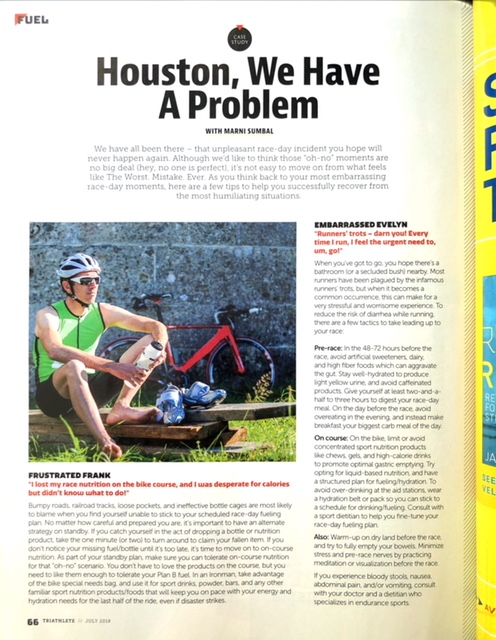
    We have all been there - that unpleasant race-day incident that you hope will never happen again. Although we'd like to think those "oh-no" moments are no big deal (hey, no one is perfect), it's not easy to move on from the Worst. Mistake. Ever. As you think back to your most embarrassing race-day moments, check out a few of my nutrition tips in my recent Triathlete Magazine article (July 2018, pg 66), to help you successfully recover from the most humiliating situations. 

    The Celiac Athlete - nutritional needs

    Marni Sumbal, MS, RD

    For any athlete with Celiac disease, it may feel overwhelming to meet daily and athletic nutritional needs with a gluten-free diet. But just because you have Celiac disease, your diet doesn't have to adversely affect performance or sabotage health IF you plan appropriately.

    As a Celiac athlete, you should not feel embarrassed or frustrated with your dietary situation. With proper education and guidance, you can stay healthy and optimize performance to meet your athletic goals. 

    In the May 2018 issue of Triathlete, you can check out my latest case study article. I featured a Celiac triathlete that I worked with and his struggles relating to meeting his nutrition and energy needs while training for long-distance triathlon events and what we changed to help him find athletic success in training and on race day. 


    Here are a few tips for the Celiac athlete: 
    • Read ingredient labels and avoid cross-contamination. When it doubt, go without. 
    • Stick with your go-to "safe" foods before key training sessions and races. Avoid eating out and be in charge of what you cook and eat. 
    • Plan ahead for traveling, meeting, events and busy days. Make sure to have snacks available so you can stay nourished and fueled with gluten-free options.
    • Prioritize real foods that are naturally gluten-free to meet your nutritional needs for meals and snacks. 
    • Utilize processed/convenient gluten-free foods for energy density when you need to bump-up your caloric intake on higher volume training days. 
    • Be mindful of your caloric and carbohydrate intake to make sure you are eating "enough" as it's easy to fall short on your needs when avoiding gluten containing foods. 
    • Carefully select your foods as many gluten-free foods are poorly fortified. Common nutrient deficiencies (which may result from malabsorption) include iron, zinc, calcium and B12. Keep an eye on your fiber intake to keep your digestive system healthy. 
    • As you put your energy into a gluten-free diet, don't forget about your protein and fat needs. 
    • If you suffer from pain, headaches, fatigue, GI issues, chronic sickness or injury or a decline in performance, reach out to a sport RD for nutritional help. 

    Should you go Keto?

    Marni Sumbal, MS, RD


    It seems like every week we hear of an endurance athlete thriving on a ketogenic diet. While advocates boast about endless energy, bonk-free training/racing and rapid weight loss, there are several limitations beyond strict dietary compliance, bad breath and digestive issues.

    What is Ketosis?
    Under normal physiological conditions, glucose is the primary energy source of the brain. When dietary carbohydrates are restricted and insulin drops, the body becomes stressed and requires an alternative energy source to maintain normal brain cell metabolism. Fatty acids are subsequently mobilized and broken down in the liver to produce ketones. The liver then releases ketone bodies into the bloodstream where they travel to the brain to be used as the new fuel source. Although the ketogenic diet was originally developed as a drug-free way to treat epilepsy, athletes are now voluntarily putting the body into a state of ketosis in order to oxidize fatty acids and use ketones for energy. To achieve ketosis, dietary carbohydrate intake must be restricted to less than 50 grams per day, which is equivalent to one small banana and potato. In a ketogenic diet, around 75% of calories are derived from fats, 20% from protein and the remaining 5% from carbohydrates.

    Ketosis and performance
    From a performance standpoint, triathlon involves relatively short-duration, high-intensity efforts to boost your anaerobic threshold and as you quickly transition from swim to bike to run, climb hills, accelerate past a competitor and sprint to the finish line. These high-intensity efforts are highly dependent on carbohydrate metabolism and a ketogenic diet may reduce the capacity to utilize carbs, thus compromising your specific energy needs during training and racing. Since you don’t need to be in ketogenic state to improve your fat-burning abilities (thankfully, endurance training will naturally do this for you), focus on a nourishing diet to keep your muscles and liver stocked with glycogen. A well-balanced diet should contain 4-10g/kg/day carbohydrates, 1.5-1.8g/kg/day protein and 1g/kg/day fat.

    Final thoughts
    You probably know that one athlete who has athletically succeeded on a ketogenic diet but there’s far too many athletes who have overhauled the diet to induce ketosis, only to disrupt other body systems which consequently wrecked metabolic and hormonal health and impaired race day performance. As a reminder, your race day performance is influenced by much more than what is occurring inside of you on a cellular level.

    Since real life athlete applications have failed to consistently show promising sustainable improvements in endurance performance, more research is needed to establish the effectiveness of a ketogenic diet for triathletes.

    To read the article in print, check out the May 2018 issue of Triathlete Magazine (pg. 48).

    Low(er) volume, high intensity training for endurance triathlon events

    Marni Sumbal, MS, RD


    The definition of "high" or "low" volume training can vary from athlete to athlete. While I consider our training volume to be low compared to what some athletes do when training for an endurance triathlon event, it may also be seen as "high" volume compared to what other athletes do for long workouts. Since much of our weekly volume occurs from frequent training sessions (instead of two "long" workouts each week), I'd say that we have the right mix of intensity, frequency and volume to encourage training adaptations without risking injury or burnout. Certainly, this was years in the making with lots of trial and error and many athlete case studies to learn from.

    Last year I was interviewed for a Triathlete magazine article on this topic of high/low volume training. I really enjoyed providing my insights on this topic for I feel many endurance triathletes adhere to haphazard training which includes high volume workouts. weekend after weekend. often in a sleep-deprived, poorly nourished state, that lack specificity and structure. In other words, the investment into training "long" does not pay off on race day as the athlete ends up burnt-out, injured or sick.  On the flip side, many athletes procrastinate with training and then suddenly ramp up training volume, which over-stresses the body and doesn't allow adequate time for physiological adaptations.

    While there may be a right way to train for an endurance events and a wrong way to train, what's right or wrong for you is specific to you and only you. In today's social media, always connected world, it's easy to compare your training to someone else, feeling as if you are never doing "enough".  I believe that it takes time to "build" an endurance triathlete and it can't be done in one or two seasons. Just because you sign up for a half or full distance Ironman, this doesn't mean that the "right" type of training for you is loads of high volume workouts. Typically, we feel it takes a good 2-3 consistent-training years to gradually build a solid foundation of endurance training stress to be able to feel fully prepared to "race" in a half or full Ironman distance triathlete. And even if you don't plan to "race" a long distance triathlon event, this doesn't mean that you should skip steps or rush the process of preparing your body to handle long training sessions.

    "In a time when likes and comments on social media give us instant validation of a workout well done, it’s easy to become wrapped up in the mindset that when it comes to training volume, bigger is better. After all, if your buddy is racking up the kudos for his weekly 20-mile runs and 75-mile rides while your Tuesday night three-miler goes unloved, it’s only natural to want to ramp up the mileage. But with heavy training comes the obvious risk of injury or burnout. And, often, those extra miles are just not worth it—or necessary."

    To read more on this topic, you can check out the entire interview/article and my sample workouts below.....


    Execute low volume-high intensity training

    Should you swish or swallow?

    Marni Sumbal, MS, RD


    When was the last time you felt a sudden drop of energy during a workout but after a quick sip of a sport drink, swig of a gel or chop of a chew, you felt an instant pick-me-up?

    Because skeletal muscle glucose uptake during exercise is not an instant process, it's important to consider the practicality of sport nutrition products as it relates to meeting your fluid, electrolyte, carbohydrate and motivational eeds.

    Because of the time that it takes to digest and absorb nutrients (nutrients must move from the mouth to the small intestines, where absorption occurs), this is one of the primary reasons to rely on well-formulated sport nutrition products (instead of real food) in a convenient/portable form, to supply your body with a steady intake of "fuel" regularly throughout training/racing.

    Ironically, when you consume sport nutrition, your muscles don't receive a quick jolt of energy, but instead, your brain was rewarded by something sweet (glucose), giving you a well-needed motivational/energy boost.

    Although fatigue can be delayed through regular consumption of sport nutrition products during training/racing, it's the perception of glucose, rather than the metabolism of glucose in the body, that often gives you the instant energy boost as soon as you sip your sport drink or put some type of sugar in your mouth. In other words, in addition to ingesting calories, electrolytes and fluids, you can keep your brain communicating with your muscles to keep you moving during moments of low energy/motivation by swishing and spitting your sport drink (or sucking on an energy chew).


    A lot of athletes question our strong desire to wear a hydration belt/pack when running - regardless of the volume/intensity of the workout/race. 


    Well, it doesn't take much (sugar) to keep you going when you could be giving up due to low energy/motivation in training and racing and your low moment can be very unpredictable. I can't tell you how many times during a long distance race or intense workout that I was glad to have my fuel available around my waist when I needed it (between aid stations/intervals) due to a sudden drop in blood sugar or just a low moment. Just a sip, swish and either spit or swallow, and I found myself with an instant boost of energy to keep me going in the face of fatigue.

    To learn more about this topic "Swish or Swallow" you can check out my article in the March/April issue of Triathlete Magazine.

    Don't be afraid to share your struggles

    Marni Sumbal, MS, RD


    In our social media obsessed world, it's very easy to scroll through Facebook or Instagram and feel like everyone but you is succeeding in life - diet, training, family, relationship, career......

    Living a failure-free life is not possible nor is it worth striving for. We all struggle at times. Furthermore, setbacks bring value to life as they give life greater meaning when things go well. A failure makes you appreciate the successful moments and forces you to learn how to react to unfavorable situations.

    Although it's normal to use social media to post/share your highlighted moments in life, it's important to acknowledge your setbacks and not hide your feelings when you are in a tough place. Instead of avoiding your feelings or pretending that you are ok, accept sadness, embarrassment, guilt, frustration, depression and fear in your grieving process.

    For almost every athlete, a setback is bound to occur at some point in your athletic career, if not at least once per season. Sickness, injury, a life transition or a pivot from structured training can be difficult to accept, not to mention the disruption to your normal flow of life. But don't let it get you down - take action and stay strong.

    As an athlete, important part of self-discovery is embracing the setbacks and struggles that you encounter and learning from the past. Accept that your road to athletic excellence will not be smooth sailing and struggling is a normal part of your journey. Fighting through obstacles and not giving up is an awesome way to write your comeback story.


    In an effort to normalize setbacks as an important part of the triathlon (or any athletic) journey, I am excited to announce my new "Case Study" column in Triathlete Magazine, where I will share an athlete that I worked with on nutrition and discuss the "problem" and "treatment" plan. I am excited to share these athletes and their authentic, real, raw life- failures and all.  I am not sure how many articles I will write and for how long but I can share that my first article is out in the March/April issue of Triathlete Magazine.

    I am very honored to share Heather's incredible story as my first case study column as I feel many athletes can identify with her past struggle with race day nutrition and feel inspired and motivated by her incredible comeback story. She was one incredible athlete to work with and her determination to overcome her setback was incredible. 

    You must not let a setback define you or convince you that giving up is the best option. 

    Sharing your struggles makes you stronger. Be real, be raw, be authentic, be you. 

    No person should feel shame or guilt from failure. Instead, embrace your setbacks and don't forget to celebrate the good moments in life. 

    If you can't figure out the answer to your problem on your own, reach out to a professional for help. 

    Proper recovery nutrition for every type of workout

    Marni Sumbal, MS, RD


    As a sport dietitian who specializes in endurance sports, one of the most common questions I receive from athletes is, “what should I eat after a workout?”

    For the performance-focused athlete, effective refueling strategies can help optimize recovery so that you can achieve the desired training adaptations from your workouts. But recovery nutrition is much more than drinking a smoothie after your swim, bike, or run. 

    Specific refueling recommendations vary based on fitness level, volume, and intensity of the workout, body composition goals, menstruation (for females), and daily energy intake needs.

    To help you get the most out of your training sessions and to reduce the confusion on what, when and how much to eat post workout, check out this recent article I wrote for Triathlete magazine online. 

    To read more: The proper recovery fuel for every type of workout

    50 ways to be a better athlete

    Marni Sumbal, MS, RD


    As a long-time endurance triathlete, I love the process of training for a race. I enjoy the journey that I get to take my body on within every racing season and at the start of every season, I look forward to stretching my limits in an effort to reach new personal accomplishments. 

    It's not uncommon for endurance athletes to be very committed to training while constantly looking for what else is out there to help take fitness to that next level. With a relentless drive to improve, it's important that your training methods, dietary regime and lifestyle choices don't get you injured, burnout or with a serious health issue.

    In a recent Ironman article, I selected my top 50 ways to be a better athlete so that you can unlock your potential and reach athletic excellence on race day without compromising your health and quality of life. 

    Which qualities on my list are you doing a great job of and which qualities need improvement?

    Read the article HERE.

    Body composition through the competitive year

    Marni Sumbal, MS, RD


    Changing one's body composition will only offer a performance advantage, however, if we first establish the goals and methods uniquely suited to each athlete's individual needs. Numerous so-called "magic bullets" circulate in the health and fitness world for losing fat; triathletes should be cautious of "strategies" that promote quick results. These methods pose a great risk for losing lean tissue, bone mass, and gaining body fat, lingering fatigue, illness, injury, compromised recovery, and ultimately, performance decline. Perhaps even worse, a reckless weight reduction program can trigger disordered eating habits, paving the way to a dangerous eating disorder.

    Although a certain perceived "leanness" may in fact be athletically advantageous, every athlete has an ideal body composition range where he or she will feel, function, and perform the best. It cannot be overstressed that the bathroom scale provides irrelevant information about your true body composition and should not be used as a method for measuring body composition for health and/or performance improvements. If you are still convinced that reduced body fat will offer you a distinct advantage, before your get started, it's very important to accurately measure the proportion of your body that is excess fat in relation to muscle, bone, and essential fat.

    In an attempt to prevent the aforementioned evils of quick-fix weight loss and to ensure athletic longevity (a.k.a. continued enjoyment!) for cycling, running, and other endurance sports, planned body composition changes should be the direct outcome of a well-executed training plan, proper recovery, restful sleep, well-balanced eating, and effective fueling/hydration strategies.

    In a past Ironman.com article, I outlined how you can use your entire season—however it looks for you—to build fitness while creating healthy eating behaviors and sustainable strategies to meet your unique nutritional demands.

    To read my guide to making peace with your weight all season long, building your fitness, and creating healthy eating habits, read more HERE.

    How I fuel - Triathlete feature

    Marni Sumbal, MS, RD


    A few months ago, I saw an email in my inbox from my contact at Triathlete Magazine. I assumed it was a request for an article so I opened it to see what topic I was asked to write about. Well, to my surprise, the email was to inform me that Triathlete magazine wanted to feature me in an article! I was shocked, surprised and honored. Although the article was just one page, I found it to be a fantastic opportunity to share my messages on how I fuel my body.

    In today's society, female athletes are bombarded with unrealistic body images and misleading nutrition advice. As an athlete, you can't let these images and misinformation derail you from achieving athletic excellence in your own personal athletic journey. As an athlete and as a nutrition professional (and coach), I want to be a good role model for female athletes of all ages. As a strong, confident and healthy female athlete, I aspire to encourage other female athletes to use sport as a healthy outlet to build confidence, strength and to improve health. I feel honored that I can do amazing things with my body through the sport of triathlon but the dedication to training and to my diet does not come from a place of body image. Instead, I train and eat for health and performance.

    It's no surprise that I keep my body fit and healthy through consistent training and good daily nutrition choices. And with this dedication, I am able to do amazing things with my body on race day. However, my training work ethic and enjoyment for healthy eating is not forced, obsessive or extreme. I have no rules in my diet, I use sport nutrition regularly, I eat before all workouts, I love carbohydrates, I am a 25-year vegetarian and I have a very flexible diet. I don't count my training miles or volume, I don't feel guilty if I have to modify a workout and I don't make training my life. 


    While this Triathlete article is just a short snapshot of my life as an athlete, I hope that I can continue to inspire, educate and motivate female (and male) athletes, of all ages and in all sports to see value and worth in your body for it has a lot of strengths and a lot of capabilities.

    I encourage you to thank your body every day for it's physical abilities.

    As an athlete, you can't achieve much on race day with just an image. 

    Nail your 2017 nutrition goals

    Marni Sumbal, MS, RD


    There is a lot of information available to athletes on the topics of nutrition, specifically as it relates to how food can change your body composition, improve your health and boost your performance.

    I think it is safe to assume that most athletes view food as a naturally safe way to boost athletic performance and the diet as a method of changing body composition.

    But with so much information available to athletes, the topics of eating for health, eating for fuel, eating to change body composition and so forth, can make the simple topic of "diet for athlete" so confusing and overwhelming.

    Due to information overload, I wouldn't be surprised if you are one of the many athletes who have explored (or tried) a dietary trend or fad at least once a year (likely around January) in an effort to get your diet under control in order to change body composition.

    The interesting thing about a diet trend is the unique marketing of the dietary strategy which accurately identifies everything that you are doing wrong (insert you saying "this diet is exactly what I need!") and finds a sneaky way to convince you that this diet is the only way to fix your issues.

    At Trimarni, we do not restrict food in any way.
    We do not diet or jump on any hot sport nutrition trends or fads.
    We apply research to real world settings but we always put our health before performance.

    We eat a balanced diet every day of the year, we use sport nutrition products properly and we eat before and after our workouts.
    Food has a positive role in our life and it enhances our performance and keeps us healthy.
    There's no extreme method of eating (or not eating) and absolutely no food rules or off-limit food list.

    Doesn't this sound peaceful and reassuring that this style of eating really does exist?

    Sadly, you may still be searching for a diet plan.

    If you want to create a sustainable style of eating, there's no better time than right now, when your training volume is low and you have extra time in your day to spend on your lifestyle habits, to focus on yourself and your own nutritional needs and to create a great relationship with food and the body.

    As a qualified nutrition expert (Board Certified Sport Dietitian), it's important to me to remain a great nutrition role model to my coaching athletes but also to the public, as I know many athletes follow Trimarni and obtain services from Trimarni.

    If you insist on changing your diet in 2017 without the help of a nutrition expert, I hope you find value in my latest Triathlete Magazine article (pg 56) as I share a few simple smart nutrition tips to kick start your nutritional success in 2017.