We’d love to hear from you.

We welcome your thoughts, experiences, comments, suggestions, questions or personal stories. If you don't hear from us right away, please note that your email is very important to us. We will do our best to respond with 24 hours.


Greenville, SC

Trimarni is place where athletes and fitness enthusiasts receive motivation, inspiration, education, counseling and coaching in the areas of nutrition, fitness, health, sport nutrition, training and life.

We emphasize a real food diet and our coaching philosophy is simple: Train hard, recover harder. No junk miles but instead, respect for your amazing body. Every time you move your body you do so with a purpose. Our services are designed with your goals in mind so that you can live an active and healthy, balanced lifestyle.

Blog

Filtering by Tag: triathlon training

Preventing burnout after 19 years of long distance triathlon racing

Trimarni


The pictures above represent my 19-year evolution in the sport of triathlon.

On the left, I am doing something that I've never done before. My first Ironman in Panama City Beach, Florida at the age of 23. On the right, I am preparing to race my 24th full-distance triathlon on one of the most challenging Ironman courses in the world - Ironman Lanzarote (a Canary Island located off the coast of Northwest Africa). 

At the age of 43, it's wild to think that on Sunday, I will be participating in my 25th full distance triathlon. I will be racing Ironman Chattanooga - which is one of my favorite race venues in the US. 

Next year will mark 20-years since my first Ironman.

Every year, for the last 19 years, I have participated in some type of triathlon event. Whereas there was once a time where my self-identity was triathlon, I can say that for the past ten years, triathlon is simply part of my lifestyle. 

To keep my fire alive and to prevent burnout, here are a few tips on how I've been able to enjoy the sport of triathlon for almost two decades, while also experiencing continued success as I continue to age. 

1. Training Balance

  • I write my own training but follow a periodized approach to training (cycles of high, moderate, and low intensity) to prevent overtraining.

  • I change up my workouts to avoid monotony and boredom. 

  • I do several workouts on my own but I also love training with other people. I have a great group of cycling friends which means I rarely have to bike outside by myself. 
     
  • I don't chase miles or hours each week. Every workout has a purpose. 
     
  • I incorporate "fun" workouts into my training to change up the normal routine. 

2. Prioritize Recovery

  • I love to sleep and I try to get as much as I can (often 9 hours). 

  • I prioritize active recovery days (ex. Monday), mobility work and occasional body work (ex. dry needling, massage). 

  • I focus (but don't obsess) on my daily nutrition to support my training, especially during higher volume training cycles. 

3. Mental Well-being

  • I don't chase metrics or view workouts as good or bad. 

  • I enjoy where I get to train. I do most of my training (bike/run) outside. 

  • I don't associate my self-worth with my workouts. 

4. Support System

  • I surround myself with people who "get me" and support me (friends/family/Karel).

5. Life Balance

  • I have several interests and hobbies outside of the sport of triathlon.

  • I enjoy changing up my routine and having periods of non-structured training (aka exercising). 

6. Listen to Warning Signs

  • I always listen to my body. I prioritize health over performance. 

  • I don't mind scaling back intensity/volume, taking rest, or adjusting my training if I am feeling off. 

Burnout doesn’t just happen in sports—it can happen in work, school, relationships or daily life. Here are some strategies to minimize the risk of burnout in your daily life: 

Manage Your Energy (Not Just Time)

  • Focus on what truly matters, let go of non-critical tasks.
  • Take micro-breaks. Get outside, stand up or stretch for 5–10 minutes every 90 minutes to 2 hours to give your mind and body a reset. 

Protect Your Mental Health

  • Surround yourself with people who give you energy, not take it away from you. 
  • Limit constant stimulation and information overload (emails, news, social media).
  • Set realistic expectations for yourself—avoid perfectionism.

Recovery & Physical Care

  • Prioritize restful sleep (at least 7–9 hours).
  • Move your body every day. Exercising is not selfish.
  • Eat well-balanced meals and stay hydrated.
  • Avoid using alcohol and caffeine as a coping mechanism. 

Connection & Support

  • Share feelings with trusted friends and family. Don’t bottle up your emotions. 
  • Ask for help from others. 
  • Get involved in your community. 

Joy & Balance

  • Take part in weekly activities that are fun, creative, energizing or restorative (reading, art, nature, exercise, dancing, music).
  • Protect your personal boundaries. Learn to say “no” without any guilt.
  • Take breaks, go on vacations and give yourself mini “resets” throughout the month. 

Watch for Warning Signs

Burnout often shows up as:

  • Constant fatigue
  • Lack of motivation
  • Loss of enthusiasm from activities that once brought your joy
  • Feeling overwhelmed 
  • Increased irritability and frustration 
  • Detachment 

Unconventional long distance triathlon training

Trimarni


I'm a big fan of repeatable workouts. I feel there is great value of doing a workout several times over the course of several weeks as you know what to expect and you can focus on executing better each time (especially under fatigue). I also believe that certain workouts are worth repeating year after year. There's no need to reinvent the wheel. 

When training for a three-sport, ultra endurance event like an Ironman distance triathlon, I feel that the best training approach is to find the least amount of training needed to produce the biggest training gains. However, among the endurance triathlon community, I find that far too many athletes are doing the same workouts over and over, hoping for different results. Every weekend is a long ride (5-6 hours) followed by a run (20-40 minutes) and the next day is a long run of around 2 hours (and maybe a swim or bike before or after). The training is somewhat predictable for the majority of long distance triathletes and this often results in burnout, injury, illness, excessive fatigue or a plateau in fitness. This isn't to say that this type of training isn't productive but after a few years of building your endurance, a new training stimulus is needed - not just physically but mentally. 

Endurance training is needed to build endurance capacity. Endurance training improves VO2 (max oxygen uptake), increases capillary density of working muscles, increases blood volume, decreases heart rate at the same intensity, increases mitochondria and so much more. But to truly prepare an athlete for a ultra distance triathlon, I feel too much weight is put on the long workouts as the way to ensure race readiness. But what about building strength, resiliency and improving the lactate threshold?

Taking a look inside our training/coaching methods, I'd say they are a bit unconventional. Our athletes aren't doing the typical "Ironman" training workouts that the majority athletes are doing. Yet our athletes feel prepared for their races because they are strong, resilient and healthy. We haven't always been this way but we have learned so much over the past decade of coaching endurance athletes. We found that endless hours of riding and running and continuous swimming didn't help our athletes become strong and resilient for race day. 

It's important to understand that unconventional training isn't the opposite of conventional training. Conventional training methods are effective. But we have found that our unconventional training produces similar results to conventional training - like strength, resiliency and most importantly....endurance. Most importantly, it provides extra benefits like bigger gains with less work. This isn't to say that our workouts are easy (you can ask our athletes - they work hard) but the workouts are a mix of quality, skill and happy workouts - a nice blend of workouts to keep our athletes physically and mentally healthy while optimizing fitness for race day readiness. 

I'm currently training for my biggest racing load of my endurance triathlon journey. I will be doing an Ironman, followed by a half ironman and then another half ironman - all within 6 weeks. Each race is two weeks apart. Then seven weeks later, I have another Ironman. I'm not sure how this will all work out but I know that I need to be incredibly strong and healthy in order for my body to perform well and not risk a health issue before/during this ambitious race schedule. 

My overall endurance is great. I don't find there is much value in spending every weekend doing long rides. Additionally, our terrain is very challenging, hilly and technical so our miles go by very slow and those miles are very demanding. Running is very hard on my body and brings the greatest risk for injury so I have to be very careful with how I go about my run training. I love to swim but after 30 years of swimming, I still need to focus on my technique. 

Finding different ways to stress my body helps my body adapt to different stressors. Because physiological gains are made in the later half of a long workout, I like finding different ways to stress my body so that it perceives the workout as "long." In other words, I not only mentally and physically feel like I've been training for many hours but physiologically, my body doesn't know the difference. Less time spent training = similar training adaptations. 

Here are a few examples of my last two weekends of "long" workouts: 
3/12: 
90 min Bike + 23 min Run (2.88 miles) + 90 min Bike + 42 min Run (5.21) = 3 hour ride + 1 hour run (~8 miles)
Bike workout (trainer)
WU: 15 min EZ
Pre set:
3 rounds:
2.5 min Moderate effort and 80 - 85 RPM
40 sec Strong Effort and fast RPM
1.5 min Steady smooth Z2 type of effort and choice RPM
---
4 min EZ spin
---
MS:
6x
1 min hard
4 min @ sub threshold/Sweet Spot and 80 - 85 RPM
2 min at steady smooth Z2 and 90+ RPM
---
10 min fast cadence recovery (100+ rpm)
---
5 min EZ spin

Run #1: Best EZ pace
Run #2: Steady effort

For this workout - the first "brick" of the 90 minute ride + short run was not too challenging, it was very doable like a mid-week brick. However, doing the same ride on fatigue legs was much more challenging and stressed my system similar to the last hour of an Ironman bike. And then running for over 5 miles after 3 hours of riding (and a 20 minute run) made for very tired legs - again, similar to the later miles of the Ironman. I needed to stay up with my hydration and fueling similar to a long workout and I also went through a lot of highs/lows - again, similar to a long distance triathlon. 

The next day was a "long run" of 1:35/11 miles with a main set of 2 rounds of 4 x (1.5 miles of hill repeaters - 4 loops up and down a steep hill in Furman) and then a loop around the Furman lake. I took a reset break between the sets. Doing this run on tired legs from Saturday and including hills (a safe way to get the HR up) provided a valuable training stress with low risk of injury for me. 

On Saturday (3/19) I did a slightly different workout of 
Run (5.28 miles) + Bike (80 minutes) + Run (12.5 miles)
My first run was a form focused run w/ 20 sec walk breaks every mile. 43 minutes and 5.28 miles. All of my runs include hills because well, that's where we live - it's very hilly!
I then did a 80 minute ride on the trainer (I love riding outside but I need to do the trainer for steady state work since we don't have flat where we live and steady state is not a strength of mine). The trainer ride was similar to last week except it was 6 rounds of 4 minutes sweet spot into 30 sec strong followed by 2 min EZ spin. I then went back outside for another run of 1:45 (12.5 miles) and included 3 x 10 min loops of a tempo effort around 45 minutes into the run. 

In total, I ran almost 18 miles and for the 12.5 mile run, my legs were incredibly tired. It felt like I was nearing the end of the Ironman. But I was able to practice good nutrition, work on my mental skills and focus on keeping my form in check. Of course, I was also receiving a lot of great physiological gains from this 3 hour and 45 minute "long" workout. 

And then on Sunday - 3:44 (34 miles) of mountain biking with over 4000 feet elevation gain followed by a 20 min run off the bike. 

This is just to show that there are different routes to get to the same final destination.
Make your training count and don't just count your training miles. 


Anaerobic vs. Aerobic training for endurance athletes

Trimarni


Triathlete magazine recently asked my thoughts on the importance of anaerobic training for endurance athletes - you can read more HERE. 

Why is it important to train different energy systems? 

There are two ways to produce energy in an oxygen deficient (anaerobic) state. The first is the lactic acid system and the other is the ATP-CP system (Adenosine Triphosphate-Creatine Phosphate). In efforts lasting less than 10 seconds, your body uses the ATP-CP system. During these short very high-intensity efforts, no lactic acid is created. Immediate energy is provided from the breakdown of high energy phosphates.

The lactic acid system is formed within the muscle cells during glycolysis - breaking down of glucose (thus the importance of keeping glycogen levels stocked with proper recovery nutrition and the daily consumption of adequate carbohydrates).

As pyruvate accumulates in the muscle cell (by-product of glycolysis), it converts to lactate and releases hydrogen ions in the process. Lactic acid (lactate and hydrogen ions) is a by-product that fuels your body for efforts lasting less than two minutes. The point in which lactic acid begins to accumulate is called the anaerobic (or lactate) threshold. The hydrogen ion lowers the pH of the muscle tissue, making it more acidic. This leads to the burning sensation felt during intense exercise.

Lactic acid isn't bad for you - it actually provides fuel for the muscles once the lactate gets recycled. Interval training and high intensity efforts are important components to improving endurance and maximizing aerobic capacity.

If this excites you and you are interested in a different style of "endurance" training to improve your strength, resiliency and steady state efforts for your upcoming long distance triathlon, check out our training plans HERE.


TriWeek: Triathlon Cycling

Trimarni


Sandwiched between the swim and run, the bike portion of the triathlon is the longest discipline in both time and distance. With nearly 50% of your race time spent on two wheels, insufficient skills and not enough time in the saddle will cost you valuable time and energy on race day.  Proper bike training will not only help you get faster on the bike but youll minimize the effect of cycling on your running legs.

When it comes to triathlon gear and equipment, cycling is by far the most expensive discipline. Plus, training outdoors has its hazards, especially when you are sharing the road with cars, pedestrians, and nature. For these reasons, many triathletes dont train properly, or spend a considerable amount of time cycling indoors. At the end of the day, preparation for the bike portion of a triathlon is about having the right equipment, doing the right training, and constantly working to improve your bike handling skills.


The cycling culture may look intimidating, but as long as you are riding a bike and having fun, you are part of the club. The way to building bike fitness is fairly straightforward: Go ride your bike. But to truly showcase your cycling fitness, proper bike handling skills and training are critical for safety, confidence, and efficiency. Knowing how to corner, brake, descend, stand, climb, and change your gears will take your bike fitness to an entirely new level. For most triathletes, due too much indoor riding (or a dislike of riding a bike), these fundamental skills are lacking.


Bike handlingAlthough it seems basic, you must learn how to signal a turn, making a u-turn, point to something in the road, and take in nutrition (from a bottle or your pocket) as you ride. All of these tasks require you to ride your bike with only one hand. The only way to become efficient at this skill is to practice. In an empty parking lot, practice lifting one hand at a time off the handlebars to learn how to balance yourself on your bike. Then practice grabbing your water bottle from the cage and looking behind you as if you were able to make a turn.

Cycling Skills: 5 Pro Tips
1. For smoother shifting, braking and turning, anticipation is key. For example, change your gears right before you really need to, especially when approaching a hill. 

2. Don’t wait until you are on the side of the road to perfect your flat-changing skills.

3. Learn the rules of riding on the road. Know how to signal appropriately when making a turn or pointing out a hazard on the road. Try to anticipate the decisions of the drivers (cars) around you.

4. Check your bike (cables, brakes, tires, spokes, chain, etc.) before every ride. Don’t forget to pump your tires. The recommended tire pressure can be found on the sidewall of your tire. Give your bike a quick clean after every ride. 

5. In wet weather, stay off the painted line, watch out for oil, and break earlier than usual, especially when taking a turn. Look out far enough ahead so you can see and react to any obstacles on the road or on the shoulder.
As a newbie triathlete, the improvements you make in fitness will impact your performance more than an expensive set of race wheels, aero helmet, or high-end bike components. That being said, having the essentials will certainly make triathlon bike training much easier.


Purchasing a bike
You may have noticed that a triathlon bike looks very different than a traditional road or hybrid bicycle. The major difference is the geometry of the frame and handlebar set-up. A road bike is typically light, stiff, and responsive. Equipped with drop bars, this allows you to make use of multiple hand positions, which makes for more comfortable climbing and descending. Easy to handle, a road bike also makes it fun to enjoy a casual ride and to constantly work on your bike-handling skills.

A triathlon bike puts you in a more compact, forward, aerodynamic position, lessening drag and letting you apply more direct transfer of power to the crank. This position also lessens the load on your quadriceps to ensure more efficient running off the bike. Built for speed in a straight line, a triathlon bike handles very differently than a road bike. It’s not uncommon for beginner triathletes to feel unstable on a tri-bike compared to a road bike.


Purchasing a bike is a big investment, but your first bike likely won’t be your one-and-only forever bike. Buying from your local bike/triathlon store will help you find the right bike size for your body and budget. Plus, a new bike comes with a warranty and may even come with a service-package from your local bike store (LBS).

For beginners, there's nothing wrong with starting on a hybrid bike (that's how I got started!). However, it's recommended to invest in a road bike. Although clip-on aerobars allow you to rest your elbows on pads to lower your body in a more aerodynamic, tucked, position, the road bike is not set in a position for you to be aerodynamic on the aerobars and ride efficienty in the drops and base bars.

Although an aluminum bike frame is durable, carbon is light, which makes for a smoother ride when on the road. Also, electrical shifting, while quite a pricey upgrade, allows you to change your gears with just a push of a button (electronically) instead of using conventional shift levers and mechanical cables. Not only is electronic shifting quick and precise but you can also shift better under a heavy load – like pedaling uphill or when standing out of the saddle.

For an extra upgrade, you may want to consider disc brakes (over rim breaks), which have more responsive and stronger braking power and control, especially in wet conditions. Regardless of the bike you choose, you need to understand the inner workings of your bike and take care of it. A clean bike is a happy machine.

To learn more: Athlete to Triathlete

The world’s first virtual triathlon has arrived!

Trimarni


Maybe you swam in college and miss the camaraderie of being part of a squad. Perhaps past running injuries have made you tri-curious. Or, maybe you are seeking a new challenge as a devoted cyclist.

If you are a little nervous about the idea of participating in your first swimbikerun event - not to worry. The Time to Tri virtual triathlon is the perfect way to get your feet wet in a 3-sport event. And if you are a seasoned triathlete, this four-week-long event is will be an easy way for you to log some miles while positively impacting the multisport community. There's also a club competition for triathlon teams!

This FREE Time to Tri Virtual Triathlon is the first ever online swim, bike and run event that allows you to easily sync your workout devices to the Time to Tri virtual triathlon website to track your results and position on the leaderboard. The virtual triathlon is open for anyone (in the US) - with any level of experience - to participate in a triathlon at your own pace.

Olympic distance: Complete the following:

  • Swim 1,500 meters (0.93 miles)
  • Bike 40 kilometers (24.8 miles)
  • Run 10 kilometers (6.2 miles)
Sprint distance: Complete the following: 
  • Swim 500 meters
  • Bike 20K 
  • Run 5K 
Prizes: All Virtual triathlon participants within the United States will receive a $20.00 ROKA gift card if they register and complete the virtual triathlon. Additionally, the following prizes will be awarded to participants selected at random from both Sprint and Olympic Distances:
  • Three (3) USAT Store Gift Cards. (ARV: $25.00)
  • One (1) 2XU Gift Card (ARV: $50.00)
  • Three (3) Rudy Project Tralyx Sunglasses (ARV: $225.00)
  • One (1) Rudy Project Boost 01 Helmet (ARV: $275.00)
  • Three (3) Jaybird Headphones (ARV: $110.00)
  • Six (6) TriBike Transport Gift Certificates (ARV: $250.00)
Frequently Asked Questions:
  • Complete the 3 segments in any order, at any time. Each segment should be tracked separately from the others and does not need to be completed consecutively. You do not need to use the same wearable/app for each segment.
  • Activities will count if they exceed the stated distance. We will also count activities 15% below. We automatically adjust the time up or down based on the existing pace re-calculated for the correct distance. We did this to account for wearable/app error and user error.
  • You can attempt a segment several times during the challenge, and your fastest activitity will be counted. For example, your first 5k run is 20min, and two days later you run 18min for 5k. The 18min effort will automatically replace the 20min effort.
To learn more and to sign yourself up for the virtual triathlon.....click HERE! 


Greenville Endurance Triathlon Camp - recap

Trimarni


We recently finished our 13th group training camp. We had triathletes travel to Greenville, SC from all over the U.S. for 4.5 days of swimming, biking and running. The campers left feeling accomplished and exhausted - with new skills, knowledge, memories and friendships.

Although putting on a triathlon training camp for 15 athletes is incredibly time-consuming, stressful and exhausting, it's always a rewarding experience to see how our campers stretch comfort zones, push physical and mental limits and are open to trying new things. Most of all, we feel incredibly lucky that such incredible human beings attend our camp. Every camper is kind, supportive, humble and supportive. While there are times that we want our campers to shine and show-off their strengths, we believe that no camper ever feels too slow or too fast at our camp. It's the perfect mix of learning, working and fun.

The final stats are in and over 4.5 days, our campers accomplished.....

~4 hours of swimming
~12 hours of cycling (~12,000+ elevation feet gained on the bike)
~3.5 hours of running
Total: ~19.5 hours of training!!

This camp would not be possible without the help of our SAG support Joey (and photographer), our on-course support (and giver of positive energy) Al and our amazing assistant coach Joe (who is an expert problem-solver).


Also, a huge thank you to the following Trimarni affiliates who supported our camp with sport nutrition products for our campers to use throughout their intentional training overload: 

Infinit Nutrition
BASE Performance
Breakthrough Nutrition
Skratch Labs
CarboRocket
CLIF Bar

As a sport dietitian, I feel it’s important to align myself with a variety of companies who offer well-formulated sport nutrition drinks. By offering these products to my athletes, they can try out different products, during all types of workouts, and then decide which ones will work the best based on personal experience.


A big thanks to Mg12, AMP performance and Veronica's Health Crunch for supplying products for the camper swag bags!

Here's a quick recap of camp: 
Thursday:
AM: 90 minute OWS-specific pool swim at Furman
AM: 75-minute hill run workout
PM: 3 hour terrain management/heavy gear work bike workout


Friday:
AM: 3 hour terrain management bike + time trial
AM: 30 min brick run (race pacing)
PM: 90 min endurance focused swim + smoothies from Dane at Run In!


Saturday:
AM: 5 hour ride
AM: 30 min interval brick run
PM: Pizza party (Yum Sidewall pizza!)


Sunday:
AM: 1 hour open water swim workout
AM: 90 minute progressive interval hill run


Congrats to our campers for surviving camp!
We can't wait to see you next year!


Are you training for a triathlon in 2016?

Marni Sumbal, MS, RD


Do you have a triathlon goal for 2016? 

Are you registered for your first Olympic, Half or Full Ironman distance triathlon in 2016? 

Are you looking to improve your skills, endurance, strength and overall fitness throughout your racing season to see what you are capable of achieving at your key race in 2016?

Are you serious about your training and want a smart training plan to follow to see what your body is capable of achieving in 2016?
-------------------
If so, we created our (NEW) 20-week Trimarni training plans with YOU in mind. 


As accomplished endurance triathletes and devoted coaches, we understand the physiological and nutritional needs of endurance triathlon training and racing.

We love coaching athletes of all fitness levels.
All we ask is that you have a goal and a race in mind, you enjoy the developmental process of training, you want to excel on race day and you are committed to training smart, working hard and keeping your body in good health.

No matter what level athlete you are or what event distance you are training for, we put a lot of thought and effort into our plans to ensure that you would feel physically, mentally, nutritionally and emotionally ready for your upcoming races. 

---------------------------------------------------

Marni is a Board Certified Sport Dietitian (CSSD) and holds a Master of Science in exercise physiology. She specializes in sport nutrition and she is a certified USA Triathlon level-1 coach. With a great understanding of the physiological and nutritional requirements of training for endurance sports, she enjoys working with triathletes of all levels. She has coached fitness enthusiasts to become first-time Ironman finishers, has helped many age-groupers, with families and busy work schedules, reach personal best times and achieve life-long goals and has developed athletes to qualify for the Ironman World Championship.
Marni is a 10x Ironman finisher with a 10:17 Ironman PR (IM Austria), including 4 Ironman World Championship finishes. 


Karel is an experienced RETUL bike fitter with exceptional skills as a bike mechanic. Karel knows everything and anything about cycling. As an exceptional cat 1 cyclist turned triathlete, Karel has the ability to think like a one sport athlete but train like a triathlete in order to help Trimarni athletes learn how to train smarter. As a cyclist turned triathlete, Karel has had to learn the basics when it comes to training for triathlons, which has allowed him to better coach his athletes. Karel qualified for the 70.3 World Championship after his first half IM and finished his 2nd Ironman in 9:22 (Ironman Austria) with a 3:11 marathon.
Karel and Marni enjoy working together because they each have their own strengths and specialty areas when it comes to coaching athletes and performing as top age-group endurance triathletes. 
-------------------------------------------------------
We enjoy the developmental process of working with athletes and teaching our athletes how to train smarter in order to execute well on race day.  We provide great detail and attention to every workout which includes focus on strength training, daily and sport nutrition, pacing, intervals, mental toughness, recovery and learning how to adjust to life. We strongly believe in an educational component to our coaching so that our athletes know why they are doing what they are doing in every workout, with every phase of training.
Thank you for considering Trimarni Coaching to help you reach your short and long term triathlon goals. 
--------------------------------------------------
2016 TRIMARNI TRAINING PLANS

FOR JANUARY ONLY:
Any athlete who purchases a Trimarni training plan in the month of January will be entered into a raffle for one FREE entry to any Rev3 Triathlon race (distance of your choice) for 2016. The winning athlete will be notified on Feb 1st. 
If you are interested in joining our performance team with the purchase of any training plan, you will receive the past 4 check-in educational emails for FREE. Topics discussed included sport nutrition (with specific calculations for determining carbohydrate, fat and protein needs as well as how to fuel before, during and after workouts), daily nutrition, understanding "check-points" (testing) and swim training specifics. You will receive over 15 pages of detailed educational materials that will help you train and fuel smarter for FREE if you join our performance team in Jan.
You will receive all past and current weekly check-in emails as soon as you purchase you plan.  
If you are a triathlete who is interested in Trimarni coaching and being part of the Trimarni team but not interested in individualized-coaching this season, the PERFORMANCE team plan is designed just for you! 


With the purchase of any Trimarni 20-week endurance triathlon training plan (Half or Ironman distance)
-You can feel part of a team by joining our private Trimarni Coaching Facebook page to socialize with your fellow Trimarni teammates,
-Connect with us at key Trimarni races and camps (our athletes receive top priority for camp registration before opening our camps to the public - typically our camps fill-up before we can open to the public)
-Receive our weekly “check-in” emails (which will provide you with weekly education, information, tips, race results and support on topics like swimming, cycling, running, mental strength, sport nutrition, daily nutrition, strength training, race strategy/execution, motivation tips, etc). You'll feel like you are receiving a detailed consultation from us every week!
-Rec
eive exclusive Trimarni sponsor discounts.

Instead of browsing the web and consulting with friends over and over again about your gear, training and nutrition questions, let us help educate you so that you can learn how to train and race smarter.
Plus, we want to be part of your training and racing journey as a Trimarni team member.
At check-out when purchasing your 20-week half or full Ironman training plan, select "Performance Team". After your purchased training plan is emailed to you, you will be part of the Trimarni team for only $50 a month (we will contact you regarding set-up for monthly paymnets). You can start/cancel your $50/monthly payment anytime. 
We look forward to having you be part of the Trimarni team!
Email us with any questions. 

Olympic, Half and Full Ironman plans
The Trimarni training plans are designed for committed, passionate, performance-seeking athletes of all fitness levels who want to train smarter to train harder. We keep our training philosophy simple - we want you to reach performance goals without compromising your overall health. Our training plans are designed to keep you in good health, as you balance everything in your busy life, as you take your fitness to the next level. We believe that our plans will keep you excited to train while minimizing burnout and risk for injury. Our plans provide the right mix of challenge and fun as you work hard to reach personal fitness goals. 
We have updated our plans which are all now 20 weeks and include 4 weeks of our Transition/Foundation plan. 
For more info on what is included with each plan: 
Endurance Plan - Half and Full Ironman distance
At checkout, you can add the option of the Performance Plan OR select 1-hour phone call if you'd like to set-up a consultation with me and/or Karel at any point throughout your season to discuss your race strategy, training or nutrition. 
Transition/Foundation Plan
Back by popular demand, our updated transition plan is designed specifically to help you develop the proper skills to progress smoothly throughout the year. Consider this the blueprint of building a strong house for your body.  It is important to appreciate the first phase of your training plan as the focus is not on speed, pace, heart rate and/or power but instead skills, form and neuromuscular control. We designed this plan to help you get stronger before you try to get faster or go longer. We consider this phase a necessary but often overlooked part of most  triathlon training plans. Every Trimarni athlete (and Karel and myself) follow a transition phase before we get into more specific training.
For more info: 

8-week Transition/Foundation Plan

Periodized Strength Training Plan

You know it's important but strength training is often the most neglected or confusing component of a triathletes training plan (and often the first to go in the spring when the training becomes more specific). 
We designed a periodized strength training plan that allows for smooth progression throughout your periodized plan. With swimming, biking and running as your primary focus, our strength training plan may make it easier to achieve better swim, bike and run results with a stronger body.
Our strength training plan is designed to help you build a strong foundation and then when you add more speed and power in your training plan, the strength training routine changes from simple, isolated movements to more complex and dynamic movements.
If you are returning to your sport after an injury, experience chronic injuries or feel like you could benefit from strength training in order to improve speed, power and endurance, you will love our strength training plans.
The Trimarni periodized strength plan includes videos for every exercise, including dynamic warm-ups, glute/hip/core focus and stretching links for your entire season and almost all exercises can be performed at your home, with minimal equipment. 
For more info:
Periodized Strength Training Plan

---------------------------------------------

GIFT CERTIFICATES
Yes - we have them! 

Trimarni Gift Certificates for coaching, nutrition and RETUL bike fits are available for your friend, training partner or loved one for the holidays, birthdays, special occasions, anniversary's or just because you care.

Please send us a message via our contact page on our website before purchasing your desired plan so we know to include a gift certificate with your purchase to your favorite athlete in mind.


We are excited to be part of your 2016 training and racing season!


Trimarni training plans - new and updated!!!!

Marni Sumbal, MS, RD


At Trimarni Coaching and Nutrition, we realize that no two athletes are alike. We (as athletes) all have different health and fitness goals, we live different lifestyles (with different stressors, obligations and time constraints) and we all come from different athletic backgrounds.
When it comes to coaching an athlete, there is nothing like a personalized training plan with specific workouts and zones to support your individual athlete development. Even better is a training plan that caters to your every day life so that you never feel guilty about the 3 M's - missing workouts, modifying workouts and making-up workouts.

An experienced coach understands that preparing an athlete for a race is more than just being a great workout writer.
Depending on a coaches background or specialty area, coaches are often required to be experts in many areas or they bring in the other experts in for a "team" approach to coaching - sport RD, exercise physiologist, sport psychologist, counselor, motivational speaker and physical therapist.  As you can see, there is so much more to "coaching" an athlete than just giving workouts.

At Trimarni coaching and nutrition, we never want our athletes to feel as if training takes over their life or a nutrition journey is extreme, restricting or complicated. We want our athletes to feel prepared and confident with their training and nutrition so we love helping our athletes put in the work for positive results but not at the cost of poor health or sacrifices in life. 

What we feel is not effective in a quality training plan is a standard approach of training - simply having athletes check-off workouts just to get them done. We want athletes to get something valuable out of every workout. We never want our athletes to feel that a workout is only successful if a specific number of miles or minutes are achieved. 

We put great detail and attention into every workout and do our best to carefully monitor our athletes to help them stay balanced with training but also in life.  We also want to give you as much information (handouts) as possible so you understand the why's with your training. We place a lot of focus on strength training, daily and sport nutrition, proper pacing, race execution/planning, mental toughness, recovery and so much more and we want you to learn as you train so you can be a smarter athlete. 

The Trimarni training plans are designed for committed, passionate, performance-seeking athletes of all fitness levels. Yes - that's you!
Our training plans are designed to keep you in good health as you take your training to the next level. 

As a 4x Ironman World Championship qualifier and sport RD, I understand what it takes to train and fuel smart to excel as an endurance triathlete. Karel is a recent Ironman World Championship qualifier and with only 2 years as a triathlete (former cat 1 cyclist), he understands the importance of athlete development. Together, we have coached many athletes of all different levels and ages, who dream big just like us and are willing to work hard for short and long term goals. 

We feel confident that our training plans will take the guessing away from haphazard training and ensure consistent performance gains to help you feel physically and mentally "race ready". We want you to arrive to your race start line with your uninjured, strong and healthy body, feeling "hungry to race" and confident to do so!

If you are interested in a Trimarni training plan, here is what we currently offer to help you with your performance journey: 
Don’t miss our “spring training” special – receive 20% off a 1-hour phone (or skype/facetime) consultation with Marni and/or Karel with the purchase of your training plan now until March 31st!! This can be used to discuss all things related to training, nutrition, sport nutrition, gear or racing!


Half or Full Ironman
Training for an endurance event requires dedication and commitment. We can assure you that it is extremely helpful to have a training plan that will allow for gradual fitness progression and to help you reduce the risk for injury, burn out and sickness. With the help of our endurance training plan of your choice (half or full Ironman), we want to make sure that you absolutely love your upcoming training journey. And if this is not your first go-around with endurance racing, we are confident that you will enjoy the detailed, periodized workouts in our training plans with specific periodized strength training. No matter your fitness level, we can assure you that you will never get bored with our workouts and you will find yourself getting stronger, faster and fitter during your 16 week plan. 

Olympic Distance Triathlon Plan - UPDATED
Our 12-week plan includes periodized training with key workouts with specific main sets. We focus on all phases of training, including a proper build phase, followed by peaking, taper and race week. Just like in our endurance plan, you will receive a go-to guide to learn how we coach our athletes and how to use your gadgets properly. You will also receive a s
port nutrition handou, foundation strength exercises, a swim technique handout, a Trimarni pace zone calculator – for determining pace and HR zones with testing and all workouts can be accomplished with RPE (ratings of perceived exertion) or you may use your GPS device with attached heart rate monitor. A GPS-device/HR monitor is highly recommended for better pacing and quality training. A power meter is not required for our training plans but can be used.

8-week transition plan - STILL AWESOME
Triathlon focused

The transition plan is designed specifically to help you develop the proper skills to progress smoothly throughout the year. Consider this the blueprint of building a strong house for your body.  Our transition plan comes with specific strength and skill workouts to help you get stronger before your more structured training. We do not want you to rush you into your structured training and have you training hard right from the beginning so this plan allows you to place some healthy stress on your body so you can properly adapt to your more specific race-focused training. If you follow the plan that you are given, you will realize that you have some weaknesses (we all do) and that is what we want to address before you advance with your training. Check out our website under the 8-week transition plan to learn more about what is included in your plan. 

Periodized Strength Training Plan - NEW!
For Triathletes, runners and coaches

No longer will you feel like strength training is a missing link in your training plan! Our periodized plan is designed for triathletes (and runners) to help you get stronger before you get faster so you can go longer.
Even though we know you love to train, we are not here to give you a strength training plan that is too advanced for your fitness or one that is haphazard and does not yield favorable swim, bike and run results. Our strength training plan is designed to help you build a strong foundation before you begin to add more speed and power in your training plan and then designed to help you become more powerful and stronger all the way until your A-race. We have personally created over 50 exercises AND videos featured in your strength training plan as well as dynamic warm-up exercises AND videos for swimming, biking and running. We also include specific glute/core/hip strength routines, specific routines for each of the 4 phases of training including recommendations for days performed, sets and reps and ALL strength training workouts are machine-free!
We do require a therapy band, stability ball and free weights (5, 10, 15 and 20 lbs) at minimum. If you have access to medicine balls, kettle bells,  plates and bars, you will have exercises that incorporate full body movements with the use of added weight. 

Don’t miss our “spring training” special – receive 20% off a 1-hour phone (or skype/facetime) consultation with Marni and/or Karel with the purchase of your  training plan now until March 31st!! This can be used to discuss all things related to training, nutrition, sport nutrition, gear or racing!


Our goal is to help athletes reach performance goals while keeping the body in the best health possible.
We train in a way that provides the most optimal performance gains with the least amount of training stress. 

Happy Training!


Trimarni 8-week Triathlon Transition Plan - Available NOW!

Marni Sumbal, MS, RD


Why do I need the Trimarni 8-week transition plan? 

To improve next year's performance by making good use of the transition phase between 'off season' and your first phase of triathlon specific training.  The transition plan is designed specifically to help you develop the proper skills to progress smoothly throughout the year. Consider this the blueprint of building a strong house for your body. 


What makes this plan different than my regular base building triathlon training plan? 

Transition plan highlights:

-The swim focus is on improving your aerobic threshold, drills, kicking, upper body strength and form and improving your aerobic capacity.
-For the bike workouts, you will see some high intensity intervals mixed with skills/drills and cadence work. You will be doing single-leg drills, heavy leg drills and a little higher volume bike training on the weekends to improve aerobic threshold.
-The run workouts in this phase will be focused on form and improving your economy and efficiency as a triathlete. The strength training will pay off greatly in running improvements.
-The strength training will be periodized throughout the plan to ensure that you are strengthening key muscles groups that will yield favorable gains in swim, bike, run fitness.
-Checkpoints are determined in week 7 to establish realistic, current zones.
-Your first week of specific triathlon training (with bricks) takes place in week 8 to help you transition to your more specific training plan.


Remind me again why I need the 8-week transition plan?


This plan is vital to your season success. Because we do not build a roof before building the foundation of a house, we want you to think of this phase as the bottom tier of your season pyramid of training. Out of every phase of training, this is the most important, yet overlooked phase. We are confident that this plan will pave the way for a great season ahead!


Will I see Campy in your exercise videos? 

Yes!! But this one didn't make the final cut....


What do I get when I purchase the 8-week Transition Plan?


GO-TO GUIDE:
No training detail is left out of this plan. We created this plan as if you were a one-on-one Trimarni athlete. In this 10-page document, you will get the inside details on how we train and educate all of our Trimarni athletes.
Most importantly, you will understand why we have our athletes strength train throughout the entire season and what type of strength exercises are most appropriate throughout each phase of the season.
You will not only be instructed on what equipment we use when we train our athletes but also how to set up your gadgets for proper, effective training.  You will also learn how we (and our athletes) use Training Peaks to monitor training progress (Training Peaks is a FREE software program to upload your workouts for review).
In this plan, there are specific training details for swim, bike and run workouts that will help you better understand how to train smarter not only in the transition plan but also throughout your entire season. You will learn a lot in this guide, not only specific to the 8-week transition plan. 


FOUNDATION STRENGTH & DYNAMIC WARM-UP EXERCISES: 
Every strength workout includes specific exercises, sets and reps to follow. This will occur throughout your entire 8-week plan. You will have access to over 20 videos (corresponding to the strength exercises in your plan) in which Marni is demonstrating the strength exercise and giving important tips. As a bonus, you will also receive a very basic stretching routine as well as 7-9 videos specific to dynamic warm-ups for swimming, biking and running. We want to make sure you know how to warm-up properly before all workouts as well as for race day. We hope you enjoy the videos!


NUTRITION GUIDE (optional addition to your transition plan)
We do not believe in being extreme with your eating or modifying the diet only for a number on the scale. We also do not believe in any extreme use of sport nutrition products (or lack thereof) but instead, to use sport nutrition properly to support training demands and to keep the immune system healthy.
We want you to fuel smart and eat smart to train smart!
For 12 weeks, you will be given specific suggestions as a way to create a balanced diet, to develop a healthy relationship with food and to learn how to eat for fuel and for health.
To help you learn how to eat for fuel and for health (or to improve your knowledge), use the information in this guide as a way to help you reach your health, performance and diet goals.
The information in this guide is not a replacement for medical advice.  Always consult with your primary physician and registered dietitian before starting/modifying an exercise or nutrition regime.  
This guide is the beginning of a new way of thinking about food and your body. It’s time to learn how to create and maintain a healthy relationship with food and your body. We want you to appreciate a more real food diet and to eat the right foods that are timed appropriately with your workouts and lifestyle. There are no meal plans or off limit food lists but instead, every week you will have something specific to focus on or to address when it comes to your daily diet/eating routine.
As a bonus in the nutrition guide, you will also get a 30 minute hip/core workout and 30 min core workout that you can do anytime.

Can I see a sample workout? 

Sure!
Here is a bike workout from our transition plan that was featured on Triathlete Magazine online:
Transition Phase One-Hour Bike Trainer Workout

Are you excited to start the plan?

Triathlon training tips: Pre-race nutrition, swim, bike, run

Marni Sumbal, MS, RD


I am always excited to share my knowledge and experience with others, especially to the newbie triathletes who are about to train for (or race in) their first triathlon. 

If this is you (or someone you know), you are about to step inside a fun, rewarding, inspiring, active lifestyle with a wonderful community of passionate, like-minded, multi-thinking, time management experts who love to challenge the body and mind to reach goals and to push physiological limits. 

A big thanks to Oakley Women for letting me share my triathlon training tips with you all!

To read more about my trip to Laguna beach with Oakley Women this past spring, click 
HERE.

PRE RACE NUTRITION TIPS


SWIM TIPS


BIKE TIPS


RUN TIPS


Any questions? Send me an email via my website:
TRIMARNICOACH.COM

Trimarni camp recap - day 1

Marni Sumbal, MS, RD


Wow – I can’t believe that our first endurance triathlon training camp is over! Karel and I could not be happier with how things went and it was all because of the positive energy that was shared throughout the camp from our inspiring campers.
Karel and I both knew that a Trimarni camp was in our near future but as we started to plan this camp in early January, we felt as if we didn't have enough time to get it all done. When it comes to getting things done, Karel and I are both "no excuses" type of people so if you ask us to do something, we will find a way to get it done. However, with that comes doing things right. Although there may be not be a perfect way to get something done, we always give our best effort.
We put a lot of time, money and effort into our camp so that it could be "right". Down to every detail, we knew that we couldn't make mistakes with this being our first camp but instead, everything would be a learning lesson.

After four days of swimming, biking and running in Clermont Florida, we are sad to see everyone go.
With 13 athletes (plus 2 for Sat afternoon swim + mock tri on Sun) from all over – California, Maine, Washington DC, Pennsylvania, Texas, Georgia and Florida –  new friendships were formed and there was non-stop happiness for four days. As to be expected, body's are tired and muscles are sore but each athlete has improved confidence when it comes to training and racing smart.

Several athletes stepped out of their comfort zone but now feel more confident with their skills. Every athlete had his/her comfort zone stretched with quality training, in hilly terrain, throughout the 4-day training camp.

It’s hard to summarize all that was accomplished during our camp but I would love to share some of the highlights from the camp.

Day 1: Thursday Feb 28th 2014
6:30am – 1 hour swim
10 min warm-up
Pre set: 8 x 25’s – 10 strokes fast, rest of the pool EZ w/ 10 sec rest
Drill set w/ fins: 4 x 125’s – 25 right arm, 25 left arm, 25 6 beat kick w/ 1 stroke, 50 perfect stroke. W/ 20 sec rest
Main set:
4 x 100’s @ 80% w/ 10 sec rest (w/ fins)
4 x 100’s @ 90% w/ 20 sec rest (w/ fins)
4 x 100’s @ 90% w/ 30 sec rest (no fins)
200 cool down

8-8:20am – tour of the National Training Center.
(all Trimarni camp athletes had full access to the NTC facility throughout the entire camp)

8:30am-9:45am – interval run (hilly paved trail)
10 min warm-up
10 min dynamic stretching and discussion of the purpose of the workout/main set as well as key pointers to remember)
Main set 3x’s:
(athletes were to focus on their lap pace, time and perceived effort)
4 min @ half marathon pace
1 min EZ walk
3 min @ slightly faster than half marathon pace
1 min EZ walk
2 min @ 10K pace
1 min walk
1 min all out
1 min walk, then repeat the main set 2 more times.
Then cool down

After the run, we took the athletes inside for a 20 min hip/core/glute circuit. Each athlete was able to perform some of our favorite exercises and we also discussed the importance of hip/glute/core work on a daily basis in order to build a strong foundation.                                                                                                                                                                                                                                                                                                                                                                                                                                                                                                                                                                                                                                                                                                                                                                                                                                                                                                                                                                                                                                                                                                                                                                                                                                                                                                                                                                                                                                                                                                                                                                                                                                                                                                                                                                                                                                                                                                                                                                                                                                                                                                                                                                                                                                                                                                                                                                                                                                                                                                                                                         

After a quick shower, it was time to clean up for an afternoon of presentations.
(Originally, we had planned for our athletes to have a nice and EZ 2 hour leg opener ride after the swim, but because it was slightly raining and rather chilly that morning, we went to plan B on Wed evening before our camp started. Actually plan B was created around 9pm at night when we checked the weather all day and finally decided that riding in the cold rain after a swim on the first day wasn't the best idea for our campers. As a triathlon coach and athlete, I love a routine and schedule but there are many times when you have to be flexible and creative).

1pm – time to eat!
I provided lunch for all 13 athletes while Karel set-up the RETUL fit system for two athletes to receive fits during our camp (an extra service at our camp).
On the lunch menu:
Whole wheat pitas or Gluten-free rice wraps
Organic ground beef (for those who are not vegetarians)
Quinoa
Veggies
Homemade hummus (chickpeas, olive oil, lemon juice and garlic)
Salsa
Beans
Chopped romaine
Corn
Onions
Gluten free tortilla chips
Pita chips
Coffee
Veronica’s health crunch mix
Water

After food was served, athletes received their awesome swag bags, thanks to some amazing sponsors at the camp. Karel and I wanted the athletes to also take home a little something from us, so every athlete receive a customized Trimarni canvas tote filled with delicious snacks to keep their tummy’s happy at the camp.

From 1-5pm I gave a presentation on “Train smarter to train harder” but first we reflected on the morning workout as well as tips to help with training smarter on the run for triathlon training.

1)      Understanding training tools and gadgets.
Why’s sport nutrition so confusing?
2)      Avoiding haphazard training.

3)      Being proactive – acting instead of reacting.

4)      Performance focused not time-obsessed.

5)      Having a healthy relationship with food and your body.

After my presentations, Karel finished the afternoon by talking about all-thing bike related (saddles, chain rings/cassettes, positions on the bike, wheels, helmets, etc.) and also discussed the importance of getting a professional fit whenever you buy a bike OR whenever you buy something new for your bike (ex. saddle, handlebars) that may affect your position.
I was so happy that every athlete could have the opportunity to pick Karel's brain. Karel knows so much about biking with his experience in retail, bike and tri racing and also being a cyclist all his life.

When the campers left the NTC, Karel and I went back to our hotel to make some food for dinner and then we went back out again to drop off our 5-gallon jug of water for the campers on Day 2 of the camp (on the bike route). I had a bit more prep to do for lunch on Friday and by 10:30pm we called it a night.

Every evening I sent out an email of plan for the workout the next day, as well as the map for the ride (which Karel created on mapmyride so athletes could have access from their smart phones via the mapmyride app) and other details such as what to bring, sport nutrition fueling suggestions and what time to meet at the NTC.

Day 1 was a great success and our immediate reaction was “WOW – everyone gets along so well!” Considering that this was our first camp, we weren’t sure what to expect but we did have expectations for our campers. We wanted the athletes to have fun, enjoy being around other like-minded individuals, we wanted to stretch their comfort zones and we most of all, wanted the athletes to leave camp with a better understanding of our philosophy of how to train smarter in order to train harder and reach success faster.
Here are a few pictures from our camp from day 1:


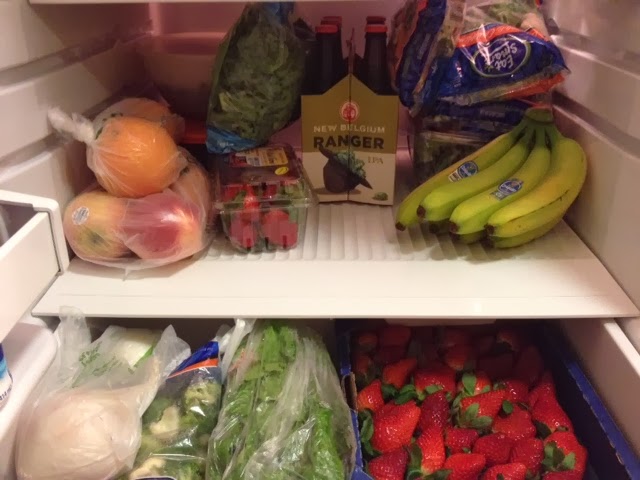
Our fridge is packed - hello from Clermont!

Marni Sumbal, MS, RD


Hello from Clermont!

Because our camp is all about our campers, it was nice to have a little time to myself this morning to work my lungs and muscles with a great swim/run brick workout.


4000 yrd swim:
1000 warm-up

Drill set w/ fins:

8 x 125’s (25 right arm, 25 left arm, 25 6 beat kick, 50 swim perfect stroke) w/ 15-20 sec rest

MS 4x’s:
200 steady on 3 minutes
2 x 100’s fast on 1:30
50 EZ float, then repeat

200 cool down swim (free/back) w/ fins

40 min run:
20 min warm-up
MS 4x’s:
4 min @ 8.6mph (6:58 min/mile) w/ 30 sec rest
Walk cool down


After packing up the car one last time at my parent’s house, it was that time. I had to say good bye to Campy. 6 loooong days apart. Oh I hate saying good bye to him L


After an easy 2-hour drive to Clermont, Florida (which included a quick stop on 310 at a local farmers stand to pick up fresh strawberries and oranges for my campers), I checked into the Value Inn (like an Extended Stay) and started to unpack my packed vehicle.


Karel arrived to Clermont a few hours before me and he tested out our day #1 bike courses (34 miles). Karel put together all of our rides for the camp and uploaded them to Mapmyride app for our campers. I am just so thankful for Karel and how he always goes above and beyond everything I could ever imagine and this has been a lot of fun to work together on this new adventure with our business.
                                           

After we unloaded both of our cars, I had a bit of organizing to do in our room/kitchen and then we headed out to drive the course that Karel biked today so that I could get familiar with the route.

We then headed to Publix grocery store so that we could fill our large refrigerator in our room (which includes a microwave, stove and sink) with some delicious happy tummy food.

A few of our staple refrigerator foods when we travel:
Milk
Eggs
Cheese
Deli meat (for Karel)
Tempeh or tofu (for Me)
Veggies
Leafy greens
Fruit
Dark chocolate
Trail mix
Kefir
Greek yogurt
Water
Butter (Karel uses Irish butter)
Ginger
Potatoes
Sweet potato
Seltzer water


A few other must-haves:
Peanut butter
Oatmeal
Pita bread
Wasa crackers
Granola/Cheerios
Fresh local bread/baguette
Rice
Quinoa
Olive oil
KIND bars
Coffee

We will be test riding part of our day #2 camp course tomorrow morning (which includes Sugarloaf mountain) and then swimming later in the day at the NTC. We are so excited that some of our campers will be flying in tomorrow and then the rest of the gang will meet up on Thursday morning……with an early wake-up call for our 6:30am swim at the National Training Center.

If you are interested in following along throughout the camp – check out #trimarni #trimarni camp on Instagram/Twitter as well as following Trimarni Coaching and Nutrition on Facebook. Thanks for your support!
Wait a minute, Karel....something doesn't belong here?

Happy triathlete marriage...it's all about compromise. I make the plant strong meals, Karel enjoys his IPA beer.


Swim smart - tips for all levels of triathletes

Marni Sumbal, MS, RD


When it comes to the swim training needed for a triathlon, there are those who love the water and are natural (or competitive) swimmers, those who are determined to become better swimmers and those who feel robotic and inefficient while swimming. Perhaps you've heard yourself or a triathlete say "I wish I could feel smoother in the water."

It's really beautiful to watch a swimmer swim. Smooth kicking, effortless arms and very few strokes to move from one side of the pool to the other. 

Swimming is all around a great sport but also a great way to improve fitness. It taxes all systems from cardio, respiratory to muscular and it also helps provide stress to the body without impact which transfers to run and bike fitness as well. 

That is - so long as you are not too exhausted from swimming that you can not maintain good energy during your run and bike workouts. 

There are a few pointers when it comes to training for a triathlon in the pool: 

1) You want to feel comfortable in the water
2) Form before speed
3) Strength training/dry land can improve imbalances in the body and also help with stronger upper body muscles
4) An efficient swimmer will perform better in all legs of a triathlon than a "fast" swimmer who expends too much energy during the swim portion. 
5) Swimming endurance will pay off more than swimming fast. However, before you go longer, form first, then incorporate that good form into short speed sessions to raise your threshold. 
6) You should actively warm-up your muscles before you swim and then do a warm-up (time-based warm-up can be more beneficial than yards for newer swimmers). 
7) Learn how to pace yourself in the water, especially when it comes to faster sets. 
8) Swimming makes for great active recovery - not every swim has to have a workout. 
9) When you train in the pool, your workout should have a purpose and a main set is often needed for more structured (and smart) training. 
10) Do technique work and drills!!
11) Use your tools - fins, paddles, buoys
12) Work with a swim coach that can help you with your stroke. 
13) Many athletes will benefit from a sport drink w/ carbohydrates and electrolytes during swimming to prevent overeating after workouts (feeling ravenous) as well as helping the athlete keep good form and to postpone fatigue.
14) Don't compare your endurance pace with "fast" pace and expect to swim the same time for a 100 compared to a 500 or 1000. Unless you run the same pace for a 5K as you do for a half marathon, appreciate going fast in short distance and steady in longer distance. 
15) REST between intervals!! If you want to get faster you will benefit from intervals with adequate rest to keep good form. Your threshold will improve even with 20-60 sec between intervals if that is what you need to be consistent at the beginning phases of training. 
16) There will be a time to go longer. Do not expect to swim 20 x 100's at goal olympic pace or 6 x 500's at goal IM pace in the first 4 weeks of swim training. Get faster (with good form) before you go longer. 

I have been swimming competitively since I was around 11 or 12 years old. I have loved the water ever since my first practice. I think I was a fish in my past life. 

My specialty races were:
200 butterfly (best time 2:19)
100 breast stroke (best time 1:09)
200 IM (best time 2:22)

I find it funny that I never enjoyed long distance swimming and always hated the 1 mile open water swim "race" we would do during our winter "hell week" training at FAU during college. Now seven Ironmans later, I call myself a distance swimmer. 


I really enjoyed every practice during my 20+ years of swim practices and had my share of back issues (and still do, now moved to my hips). But looking back, I can quickly acknowledge that I was very overtrained as a swimmer who did more than needed to improve. There was a lot of emphasis on yards with swimming 9 days a week and most workouts around 7000 yards in the evening (after 30 min of dry land). 

When you swim competitively (or do any sport) in school, it's hard to draw the line as to what is too much or not enough, especially if you are participating in a team sport with a few coaches leading the group. 

Now as a triathlete, I do not have to swim 9 times a week but instead, give myself workouts in the pool that allow me to be a better all around endurance triathlete. 

Recently I joined the Golden Group UNF masters swim with coach Erin for evening swims on MWF from 5:45pm - 7:15pm. I thought I had enough of my evening swims after a decade + of swimming in the afternoon every day, but being able to share this time with Karel gave me instant motivation to join his group. 

The group is small (about 6-8 of us) and the workouts are very focused on form. Karel has been part of this group since December and in two months, he has improved so much that it is almost unbelievable to think of where he was when he started to swim in June 2012 to where he is today. I'm talking a difference of barely breaking 1:30 for "fast" (which is still great for a new swimmer) and running out of oxygen and thus would need at least 30-60 sec rest to repeat that effort (but it didn't last long until his form suffered too much that he couldn't continue repeating those) to be able to swim 1:13!!!

Whereas my body performs a lot different than Karel's in the water due to many years of swimming, Karel is not only enjoying swimming more than ever but also not have shoulder problems any more and I am not having my upper back issues anymore. 

No matter what type of swimmer you are (experienced or novice or in between), part of the TRIMARNI TRAIN SMART approach is to focus on form.....all the time! NO workout should be at the expense of poor form.

When Karel started swimming with the Golden Group, the max yards was around 2000 (maybe 2500). Obviously Karel and the other swimmers could swim more but there was so much attention needed for better strokes that the extra yards were not worth the extra waste of energy. Now the swims are around 3000-3500 but in the past 6 months Karel has not swam over 4000 yards yet his speed and endurance are improving significantly. It's like free speed when you improve your form!

After weeks of form focused sets with fins (which has helped Karel a lot and I just recently purchased a pair and I have found a noticeably difference in my ability to focus more on my stroke with drill sets as most of our drills sets are with fins), the group as a whole (which is of mixed levels) have all improved their strokes and thus times as well......without swimming longer or harder!

After a few swims with the team, I have noticed that a lot of my bad habits in the water and being focused on a lot more now. It's like night and day to feel the catch in the right spot or to focus on the right time to breath. Even if I can jump into the water any day and swim 2.4 miles straight, this doesn't transfer to a faster swim leg or total time in an IM. 

The key with swimming is patience. There will be a time when you have a better feel for the water. If you want to get faster you do not have to swim faster all the time and you do not have to go longer all the time. 

But the mistake for athletes is focusing too much on the yards. I often give yard focused sets for my athletes but there's a specific set for every workout. As a coach, it's hard to recommend drills without seeing an athlete so communication and videos are helpful but also having someone to watch you is imperative. Even for me as a lover of the water, I really enjoy having someone correct my stroke to make me a better triathlete. 

Swim workout 1/13: 

After mini sets of drill focused work (almost all of it was with fins) for a total of 1800, we did the main set: 

4 x 300's - descend 1-4 (last 300 was the fastest).
Within each 300, descend (first 150 a bit slower than the 2nd 150). 
5:30 cycle

Not only did we have enough rest to refocus but this set required a lot of concentration and we put all that technique work to good use. 

My times: 
4:23
4:22
4:11
4:01

Not only did I feel so smooth in the water (Karel said the same thing - he was right behind me in the lane) but I am also swimming the paces that I was swimming during my peak Ironman training but with a lot less effort and volume in the water and feeling much smoother and efficient in the water. There will be a time when the volume of my swim-bike-run training increases but for now, I will enjoy focusing on the little things before putting all the pieces together when it counts. 

If you are looking to take your training to the next level, remember that less is more, recovery is just as important as sticking to a balanced training plan and good form during workouts make for a happy body and mind. 


Do you have your eyes set on an upcoming triathlon but are not sure how to get started or take training to the next level?

Are you struggling with endurance in the water, do you want to improve power on the bike, do you want to become a faster runner off the bike or do you struggle with motivation when you train because you are not following a balanced plan to help take your training to the next level?

Trimarni coaching and nutrition has your triathlon training needs in mind with a variety of PRE BUILT PLANS.

Transition triathlon plan - what are your weaknesses?

Marni Sumbal, MS, RD


To be successful in life, you have to live in a successful environment.

For example, if you are changing dietary habits and decide to bring your lunch to work instead of ordering out, your kitchen must have Tupperware.

If you are determined to train for an event in the winter, your must have options as to how you will be consistent with working out in the cold winter months. 

If want to get to bed earlier for a more restful night of rest, you may need to avoid bringing (and using) electronics (ex phones)in your bedroom. 

But most of all, you have to know where you are going in order to understand why you are seeking a change.


Karel and I have worked long and hard and finally.....the 5-week triathlon transition plan is ready!!!

YOU CAN READ ABOUT IT HERE

My life is built on learning from my mistakes and studying successful habits of others. I don't wish to be like others but instead, consider my own goals, needs and lifestyle and figure out the best way to make changes for progress. I like to spend my energy on what works for the masses but also consider those who enjoy thinking outside of the box (but in a safe, ethical and realistic way - thus our "train smart" philosophy has been created from considering a different way of training for endurance events).

The transition plan is a perfect way for any triathlete, runner or fitness enthusiast (who enjoys swimming, biking and running) to learn about his/her own weaknesses within his/her body. Alongside specific nutrition suggestions for each week of the plan, there is a big emphasis on strength training. 


I have experienced years and years of hip/lower back issues. I have also never given up on my quest to better understand my body to keep it in good health as an endurance athlete. As you may know, I was not able to run from Feb until the end of April and had around 10 weeks to prepare myself for IM Lake Placid in July. It was through my determination to focus on myself and to not think about anyone who I felt had it "easy" that I was able to run my way to a PR for 26.2 miles off the bike but also a 10-minute Ironman PR. And 14 weeks later with a healthy body, I had another 6 minute PR in Kona of 10:37. 

This year, I am determined to continue my quest to be the best triathlete I can be, all while continuing to help other athletes (runners and triathletes) and fitness enthusiasts reach their personal fitness, body composition and health goals AND maintain a balanced life. Triathlons are my lifestyle, not my life and I love to race to travel and travel to race. 

Karel and I have started our own transition plan in our training and all of my 2014 athletes will be (or have) starting with a transition phase of training. The goal of the plan is to build a resilient body. A body that can withstand the stress of training. Also, for athletes and fitness enthusiasts who need structure and a purpose for workouts - EVER workout has a specific main set and there is a specific strength/hip circuit every time the plan calls for strength or hip/core work (pictures included). In other words - all you have to do is use your amazing body and make it perform during every workout. 

So even for myself, even the most determined, motivated and well-fueled person can experience a set-back if the body is not strong enough to tolerate a season of training and racing. And even if the set-back could not be prevented, it is still a learning experience.

And this thinking isn't limited to athletes. It's far too common that individuals will move too quickly with exercise when motivation is high or a goal is high on the priority list and without focusing on the smaller things (ex. is your glute medius strong enough to keep you running with good form when you "exercise"? Are you maintaining good flexibility to keep your body from getting tight?)

This plan is years in the making for I have made mistakes along the way and this year I want to be sure I can use my failures to help others identify weaknesses. As I mentioned in an earlier blog, I will not be training for any running races this "winter" or triathlon "off season". I am a triathlete and I am a three-sport athlete. I don't want to miss out on this very important time of my periodized training plan to address my weaknesses so that I can work on them. Whatever your sport or fitness routine may be, remember that it is your body that has to make progress and it takes a lot to accept your weaknesses and work on them. Don't wait until it's too late and the regret not focusing on the little things when they really do matter in the bigger picture.

The goal of the plan is to not make you fast, strong or powerful now. The goal is to help you progress consistently with training/exercise so that you can have a successful season (or exercise routine) ahead of you. With a strong, healthy body throughout the season, you will be able to show off your fitness down the road when it counts.

As for now - focus on your weaknesses when no one is watching.

We can't wait to hear what you think of the plan, especially after you finish week 5 and "test" your fitness.

Any questions - send my way. Thank you!
-Marni and Karel 
Trimarni Coaching and Nutrition 


Race season planning - tri in 30 days

Marni Sumbal, MS, RD

Caitlin C. from Women's Health Magazine is continuing her journey of training for her first triathlon in 30 days. She is getting ready for the Iron Girl Sandy Hook sprint triathlon on Sept 8th and I have really enjoyed helping Caitlin prepare for this upcoming adventure. 

In case you missed her previous posts, here are the links:


Since I LOVE helping athletes and fitness enthusiasts prepare for starting lines, I can't stress enough that training for any type of event (just like in life) takes time, commitment and an understanding that there will be many ups and downs and obstacles to overcome. The most important thing in any training journey is that you are enjoying seeing yourself make progress (in other words - you are making progress with your health, fitness and nutrition and not just checking off the miles). Caitlin C from Women's Health comes from a running background and accepted this triathlon challenge in 30 days because it was something that she wanted to commit herself to. I'm so excited to hear about her race day experience on Sept 8th. Keep up the great work Caitlin C!!

And speaking of Caitlin...

Trimarni Coaching athlete (pre-built plan) Caitlin Boyle from Healthy Tipping Point has been training for her first 70.3 triathlon which will be in Miami at the end of the October. I am so excited to watch her race as Campy and I will be there to cheer on Karel as he also races the half ironman in Miami.

Reading about Caitlin's journey has been wonderful as she shares the highs and lows of life as a mom, business owner and fitness enthusiasts as she dreams big and works hard for her 70.3 medal. 

Training for a race is not easy and it isn't for everyone. There is a right time and a place for the right race and it is important that you do not rush the journey. Here are my top tips for planning your upcoming A race:
1) Time of the year - make sure your race falls at a time when you are not under a lot of stress in life (or you can minimize stress). 
2) Consider the race course -  Does the course excite you?
3) Prep - do you have enough time to properly prepare your mind and body, practice/perfect nutrition, get stronger, raise thresholds and accommodate for missed workouts due to life? 
4) Logistics - consider traveling, lodging, eating, race venue, spectating (family/friends), price, etc. Don't just sign up for a race because it is open for registration. Always do your research first. 
5) Set realistic short and long term goals - hopefully your next A race is not your last. There's nothing wrong with dreaming big but keep in mind that you are making investments for a future of racing (hopefully) and that every race builds off one another. Absolutely you can have a stellar "first race" experience but if you have the right coach/training plan, you can expect to get stronger and faster overtime so don't limit yourself for the future but do not put too much pressure on yourself at the beginning. 
6) Work hard, recover harder - not every body is designed for racing/training, especially swim-bike-run (or solo sports). Although hard work is required to arrive to the starting line with a nutrition and pacing plan that allows you to put all your training (8-12 weeks) to the test, be mindful that in order to race you have to actually get to the starting line. Discovering the "right" balance of training is very hard for athletes, especially if you are overly focused on miles or doubt yourself in training. Trust yourself that you can receive the most performance gains with the least amount of stress so long as you don't over-train yourself (especially in the first 3-4 weeks of training). 
7) Have a team - it takes a village to raise an athlete. Massage therapist, dietitian, coach, family/friends (Sherpa), PT, chiropractor, bike shop mechanic, running gait expert, exercise physiologist, etc. There are many people that you can involve in your training to help ensure that you will have a fun, enjoyable experience as you prepare your body and mind for your upcoming race. Do not feel you have to do it all alone as there are others who have knowledge to help people like you reach your goals. 
8) Don't take short cuts - nothing worth having comes easy or quick. Training for an event requires money for equipment/gear as well as time, patience and a good attitude. Enjoy the journey and remember that even if you aren't where you want to be on race day, you are probably somewhere that you weren't when you started. Never give up until you get what you want in life. 

Since I am all about season planning (since I typically do not race a lot but instead, make my races count), here are my big races for 2014-2015 (Karel will be racing a bit more than me):
St. Croix 70.3 - May 4th (me and Karel) - I've wanted to do this race for several years. Time to make the dream come true.
Ironman Austria - June 29th (me and Karel)
(IM Austria is a trip to visit Karel's family and the Europeans that live over seas are too fast for either of us to qualify for Kona so we will enjoy our first international race). 

2015 - Either IM Canada OR IMCDA to try to qualify for Kona 2015.

Karel plans to do another IM in late summer 2014 to try to qualify for Kona 2015 so that we can both live out our dream of racing on the big island together. It will take a lot of work, patience and time but if life is going to pass on by anyways, we may as well enjoy every day of it with our triathlon lifestyle. Triathlons are not our life, but our lifestyle and we love to race to travel, travel to race. 

Whatever race you decide to do this year or next, be sure to consider what will make for a great race experience, not only for you but also your friends and family that support you. You never want to let a goal or a lifestyle negatively affect the rest of your life. You are not forced to be a triathlete, cyclist or runner but instead, life is about living a healthy and active lifestyle with your one and only body. 

Have a great, safe, fun weekend!