We’d love to hear from you.

We welcome your thoughts, experiences, comments, suggestions, questions or personal stories. If you don't hear from us right away, please note that your email is very important to us. We will do our best to respond with 24 hours.


Greenville, SC

Trimarni is place where athletes and fitness enthusiasts receive motivation, inspiration, education, counseling and coaching in the areas of nutrition, fitness, health, sport nutrition, training and life.

We emphasize a real food diet and our coaching philosophy is simple: Train hard, recover harder. No junk miles but instead, respect for your amazing body. Every time you move your body you do so with a purpose. Our services are designed with your goals in mind so that you can live an active and healthy, balanced lifestyle.

Blog

6 hours on the ridge - MTB Race Recap

Trimarni


On Saturday Feb 22nd, we participated in 6 Hours in the Ridge. After Hurricane Helene, we weren't sure if our favorite mountain biking trails would ever open (or be the same) again but local organizations and volunteers have worked tirelessly to get the trails back in great condition. 

However, over the past few months, our winter conditions have not been in our favor for staying consistent on our mountain bikes. We've had a lot of rainy and cold days which means closed trails. I've done very little mountain biking in 2025 following not being on my mountain bike since May 2024. Although we registered for 6 hours on the ridge a few months out from the race (it sells out at least a month out) I was feeling very unprepared. Karel and I did a 2:20 hr ride at The Farm (a great new trail system a few miles from where we live) on January 5th and then I did a panic recon ride at Pleasant Ridge (race venue) on Tuesday of race week. We also did a 1-hour pre race ride at The Farm the day before the race. 

My last "long" ride was in September but I wasn't as concerned about the duration of the event as I was about my skills. 

On the day before the race I felt horrible. My legs felt tired and heavy and I was not in a good head space. I fueled like I would for an Ironman (carb loaded) and trusted my body that I would be ok for the event. However, the night before the race was a very poor night of sleep for me. I barely slept an hour. I was tossing and turning. I woke up exhausted. 

I felt like everything was going against me. 

The race started at 10am with packet pickup ended at 9:15am so we left our house a little after 8:30 (20 min drive). 

This was our third time participating in this local MTB event at Pleasant Ridge but first time completing the race in the counterclockwise direction. Thankfully, this course direction worked in my favor as it was a little less technical in the last mile, whereas the clockwise direction is very technical (and requires a lot more effort to get over rocks and roots) in the first mile. 

The concept of the race is simple.
  • Complete as many laps as you can (want) in six hours.
  • Each lap is 6.3 miles, ~760 feet elevation gain.
  • For the 2025 edition, the course was counter clockwise. 
  • Start at 10am.
  • Riders must finish the last lap by 4pm for the lap to count (example, if you start your x-lap at 3:20 but arrive at 4:05pm, that lap doesn't count in the results). 
6 hours is a long time on the mountain bike. My brain was trying to protect me from possible future discomfort. I had already battled so many thoughts to get myself to the start line and now I needed to stay focused for the next 6 hours. 

All morning I told myself “prove your thoughts wrong.” Although I didn't feel super excited for the race, it was a lot better than riding the trainer on a cold dreary day. I told myself that I get to play on my mountain bike all day! 

After the pre-race meeting, we lined up at the red banner start and we were off at 10am. 
We started off in a mass start, up a newly (somewhat) built trail to get on to the course. The race had over 60 individual riders and several teams. I was amazed by the number of younger riders, especially females. It was so great to see so many young female mountain bikers. 

Karel found himself near the front with a few other guys for a few laps, but the eventual leader took off immediately. Although there was not a lot of room to pass in the first few miles, I found myself able to ride a comfortable effort in the first loop and I was only passed by a few guys. The course included part of the long loop (and down the "rock") which I am very familiar with. Knowing the course really helped. After the first loop I found myself riding mostly by myself and not dealing with any traffic from other riders. 

The conditions started off very muddy and slippery. This had me a little worried as I didn't want to crash. I had one slip in the first loop when my wheel got stuck in the mud on a tight turn but other than that, I didn't have any falls, crashes or major issues. 

It was in the 30's (F) for the start and never got over 50 but it felt comfortable all day. As the sun continued to rise, the trails started to dry out a little. I started off with leg warmers, gloves and arm warmers but eventually took off my leg warmers.
 

Nutrition: 
I started the race with my USWE Hydration pack filled with 2.5 bottles (~64 ounces) with each bottle containing 90g carbs from INFINIT Fructose. I started off with the orange flavor. My plan was to finish my hydration pack within the first 3 hours and then refill my pack in our "aid station" at half way. I prepared 2 more bottles of INFINIT Fructose (Grape flavor) and had a bottle of water to top off my pack. I also nibbled on a Clif Bar throughout the ride and a Rice Krispie Treat. Karel also used his hydration pack (He used Maurten) and instead of refilling his pack he brought along a second USWE pack for a quick change). 

Lap Splits: (each lap was 6.35 miles and ~760 feet elevation gain)
  1. 47:04
  2. 44:47
  3. 46:04
  4. 47:34 - stopped to refill my flask
  5. 44:49
  6. 43:45
  7. 44:35
  8. 45:21 (I barely made this lap to finish the race in 5:58 - with less than 2 minutes to spare)
(total: 6:04 ride time, 52 miles, including a 10 min warm-up, ~6000 feet elevation gain)

Riding for 6 hours is a long time but riding 8 laps on a 6.3 mile course is mentally challenging. I tried to use every trick I could think of to get me through this race. The first loop was more of a recon loop to get to know the conditions. The 2nd and 3rd loop went by somewhat quickly but on the 4th loop, I started to realize that I had only been riding for 2ish hours and still had 4 hours left! I was really looking forward to my aid station stop as that was my first goal. Get 4 loops done and then reset. 

The motivating part of the race was getting half way as this gave me a better idea of the number of laps I could possibly get in over the next 3 hours. I left my aid station with 3:02 on the clock which meant I was going to cut it close. With each lap taking me around 45-47 minutes, I really needed to stay committed to keeping my laps under 45 minutes.....and not having any mechanical issues or accidents. 

I continued to tell myself "controlled is fast" so that I wouldn't make silly mistakes by trying to go faster. I tried to use the non technical sections and uphills to try to pick up speed and to stay controlled on the more technical sections. With less than two hours left in the race, every minute counted. 

Each loop included roots, rocks, twists, turns, punchy up and downhills. Every loop required a lot of my attention and sometimes I found myself making mistakes and I would tell myself "ugh that was a bad line." It was fun to pass some of the lapped riders and to cheer for others (and receive cheers). I really love the mountain bike community as everyone is supportive. I really looked forward to returning to the start area and getting a boost from the spectators and other riders who were resting/refueling. Lap 6 and 7 were my make or break laps and although I felt like I could get in my 8th lap within 6 hours, I knew I was cutting it close. It had to be a perfect lap with no major slowdown. Lap 7 was my toughest lap mentally and physically as I really wanted to quit as I was getting really tired but I told myself "you didn't come this far to only get this far." The hardest part was knowing that I couldn't make lap 8 a victory lap. I had to keep pushing and giving my best all the way to the finish line. 

I was hoping that Karel would lap me so that I could see him but after a few laps, Karel experienced his normal cramping in his inner thighs (thankfully he didn't experience his normal back pain). He admitted that he started out way too hard and that probably caused the early onset of the cramping. However, he wasn't going to quit so he adjusted the best that he could and also finished with 8 laps. Karel was waiting for me at the finish and watched me roll through the finish line. 


Whew. That was hard in so many different ways. 
I placed first overall female and Karel placed 1st age group and 4th overall.


We received really cool wooden awards. After the awards we packed up our stuff and headed home.


Our bikes were extra muddy and required a super duper deep clean from Karel. 
As you can see from our aid station area, Karel brought extra wheels, a tool box filled with everything we needed in the case of a mechanical, a pump and we also had a bag of drinks, snacks and extra riding gear (ex. gloves, arm warmers, etc). 

As I laid in bed on Saturday morning, I had so many thoughts "I am not prepared. I didn't sleep well. I won't perform well. I should skip the race."

Thankfully, I didn't let my limiting beliefs win. I worked through them and told myself to just start the and see what happens. 6 hours on the ridge is always a true test of grit, strength and endurance and I’m proud of myself for showing up.
 

A diet mentality and athletic performance

Trimarni


You don’t have to be a “dieter” to be caught up in diet culture and, as a result, struggle with a diet mentality. 

A diet mentality refers to the thoughts and beliefs that come from past dieting experiences, or current ideologies reinforced by diet culture. 

Diet culture is a system of beliefs that worships thinness, equates health to weight and demonizes certain foods while glorifying others. 

Because thoughts and beliefs influence behaviors, a diet mentality can significantly impact athletes by promoting a harmful focus on body image and weight control, often leading to restrictive eating habits that can detrimentally affect athletic performance and health. 

It's time to check in with your thoughts. 

Is your diet mentality negatively impacting your health and performance?


Dangers of Under Fueling

Trimarni


It often starts well-intentioned or unintentional. You want to lose a few lbs or you find yourself too busy to eat so you don't worry about skimping on calories and carbohydrates. 

You feel great during your workouts......until you don't anymore. 

Training volume and intensity increase and now you are struggling with low motivation, niggles and fatigue. You dug yourself into an energy deficient hole. 

If you want to perform at your best, you need to give your body the energy it deserves. Intentional or not, failing to eat enough energy to support training demands can lead to serious health consequences. 

It's time to stop underestimating what your body requires in order to recover from your training sessions and to function optimally in life.


Sport Nutrition Science 101 - not all products are created equal

Trimarni


Hydration drinks, energy drinks, energy gels. With so many different products on the market, it's important to know how they compare (and differ) in their respective functions. 

For endurance athletes, it's in your primary interest to maintain a state of hydration (fluids and sodium) while consuming adequate fuel (carbs) to optimize health and performance in training and on race day. Therefore, it's important to understand that not all sport nutrition products are created equal. 

By understanding the formulation and application of sport nutrition products, you can select your sport nutrition products more effectively, knowing that the product(s) you are using are being quickly digested and absorbed. 

Otherwise, there's a good chance that what you are consuming is sitting around in the gut, potentially causing GI issues, dehydration or bonking (and a waste of money).


Is your diet lacking variety?

Trimarni


"I pretty much eat the same things everyday." 

In my sport nutrition practice, I often hear this response from athletes. 

While the monotony and repetition can help with meal planning, there are two main concerns. The first is lack of nutrient variety and the second is not adjusting your diet to meet the demands of your training. If you stick to a limited food selection, you are likely missing out on essential vitamins and minerals found in different food groups. 

If you aren't systematically altering your macronutrient intake to support higher volume and/or more intense training sessions, you may be in a constant state of low energy availability. 

By strategically adjusting your meals and snacks, you can better support your training by providing your body with a full spectrum of nutrients and energy to support proper muscle function, immune system support and bone health while reducing the risk for nutrient deficiencies, fatigue and injury.


Triathletes should not fuel like runners

Trimarni


Although we have a tremendous amount of research on sport nutrition strategies to optimize performance in runners, there's very little research on long distance triathlon.  It's impossible to isolate one variable in a triathlon-focused experiment. For example, with so many different environmental, physical, mental, terrain, pacing, fitness and physiological factors contributing to performance in a 70.3 or 140.6 mile event, it's impossible for research to create specific sport nutrition guidelines for swimming, biking and running when there are so many unpredictable and uncontrollable variables.

We must recognize that running off the bike for 13 or 26 miles in a half or full distance triathlon (respectively) is very different than running a stand alone half marathon or marathon. For example, a stand alone endurance runner will start the race is cool or cold conditions, first thing in the morning with a body that is glycogen loaded and well-hydrated. Marathon races are often issued a heat warning if a race is predicted to reach over 75-degrees. The pacing strategy of a marathon is usually one of holding back and increasing the pace as the race continues (negative split). The race course is generally flat and training is based on preparing to hold a specific pace. With all this in mind, a runner goes into a race with little to no added physical stress. 

A triathlete couldn't be more different. 

A triathlete starts the run in moderately warm or hot conditions. The triathlete has already been exercising for 3-6+ hours when the run begins. The triathlete is now needing to run with muscles in a fatigued state while attempting to avoid extreme dehydration and glycogen depletion. There's also the mental fatigue of racing for 5-15+ hours compared to a stand along marathon that lasts 2-3 hours for the elite athletes. 

A few other physiological changes are taking place when running off the bike: 

  • Oxygen consumption, respiratory frequency, ventilation rate and heart rate increase more when running off the bike vs. stand alone running. 
  • Metabolic changes - triathletes are running in a state of glycogen depletion, dehydration, ventilatory respiratory muscle fatigue, decreased stroke rate and volume and increased core body temperature. 
  • Biomechanical changes - triathletes are running 13 or 26 miles with muscle fiber damage and different running economy than that of stand alone running. This includes increased ground contact time, increased vertical oscillation, decreased running economy, altered foot placement, decreased stride length and gait frequency, tight hip flexors, less stored elastic energy in the muscle-tendon complex. 
  • Neural fatigue - neuromotor patterns are reduced when running off the bike. When running off the bike, triathletes also experience inefficient muscle recruitment patterns, central nervous system fatigue (inability to send signals/recruit muscles to contract), decrease in the voluntary activation of muscles, decrease in the frequency and synchronization of motor neurons, reduced drive from motor cortex. 
Having said all this, when it comes to the nutrition guidelines for runners, we can't apply the exact same fueling and hydration strategies to triathletes. Even if research doesn't offer specific guidelines for triathletes when running off the bike, it is clear that triathletes can't fuel and hydrate in the same way as stand along runners. 


How's your relationship with social media?

Trimarni


It was 19 years ago when I trained for my first Ironman. I was 23 years old. I knew about the Ironman from the NBC coverage of the Ironman World Championship in Kona but I only knew a few people who had finished an Ironman distance triathlon. Back then, I felt alone in my Ironman journey.

In 2006, I wasn't actively involved with social media. Facebook was still in it's infancy and Instagram didn't exist.

As I was preparing for my first Ironman, I didn't find myself comparing my journey to anyone else because I had nothing and no one to compare it to. I didn't feel inclined to buy fancy gadgets or use specific nutrition products. I wasn't being "influenced" to buy certain things on social media.

After the race, I had to call my friends to let them know how I did in the race. I didn't feel any pressure before or during the race because there wasn't a way to track my performance.

Social media has become a standard part of our lives. I'm incredibly grateful for Facebook, Blogger and Instagram as each platform has allowed me to connect with others, share my passion and grow my small business.

Social media can play a positive role in life but it also carries the potential to become a stressor. It's not uncommon for people to mindlessly scroll social media and to finish feeling sad, anxious, depressed or bad about yourself.

I don't want to return to a place of no social media but I do believe that it's important to establish a healthy relationship with social media use.

If you have found yourself in an unhealthy relationship with social media, here are a few tips:
  • Remove notifications and set a time frame for browsing.
  • Understand your purpose when logging on to a social media platform. Be thoughtful about why you are choosing to browse, scroll or search.
  • Use social media the way you want. Follow people, brands and influencers that make you feel good about yourself - or enhance your life in a positive way.
  • Don't compare your life to the picture-perfect moments you see on social media. This is another reason to be selective about who you follow on social media.
  • Put your mental health first. If social media is making you stressed or anxious, it may be a good idea to delete social media apps from your phone during a temporary social media breakup.
----------------------
“Remember when people had diaries and got mad when someone read them? Now they put everything online and get mad when people don’t.”
― Unknown

3 balanced meals to nourish, fuel and satisfy

Trimarni

As an athlete, you have unique nutrition needs compared to the inactive. The interrelated roles of macro- and micronutrients, along with hydration, impact your health and physiology.

As an example:
 • Water is needed to maintain body temperature, remove wastes and lubricate your joints. 

 • Carbohydrates provide energy for your muscles, maintain blood glucose levels and fuel the central nervous system. 

 • Proteins are the building blocks of your muscles and help with rapid recovery. 

 • Fat is an essential nutrient that provides energy while supporting body functions necessary for human health. 

 • Vitamins and minerals optimize immune system health and provide the flame to metabolic reactions to help you turn food into energy during exercise. 

No single food will help boost your health or performance but instead, it’s the synergistic role of all the foods in your diet that affects the functioning of your body during exercise. Your diet should be periodized just like your training.

In the off-season (base phase), you should be creating a foundation diet - a well-balanced, satisfying, nutrient-dense style of eating to support your training needs. From here, you can adjust your carbohydrates, snacks and nutrient timing based on increasing training volume and intensity. 

To help you get started, here are three meal ideas with 60g carbs, 30g protein and 15g fat. Snacks should look like mini meals. 


For more recipes and fueling advice, check out my book Essential Sports Nutrition on Amazon.

2025 Trimarni Camps - open for registration

Trimarni


As you begin to plan out your 2025 triathlon racing season, we hope to see you at a 2025 Trimarni camp.

We have three different camp experiences for you to choose from.

Since our very first group training camp in Clermont, Florida in March 2014, our focus has remained the same. Our mission is to provide you with an unforgettable camp experience, empowering you to stretch your athletic limits while providing you with a great amount of education and skill focus to help you become a better athlete. When you participate in a Trimarni camp, you will learn new skills and training techniques (and break some old bad habits) to ensure that you can train smarter and race better.

We have the perfect training playground in Greenville, SC and we can't wait to share it with you.

At a Trimarni camp you will leave your stressful and busy life behind you.

Your camp investment will give you the opportunity to train in a group format (alongside two hands-on coaches) while learning a lot. You will eat well, fuel smart and receive a lot of motivation and inspiration from your fellow campers.

You do not have to be a Trimarni coached athlete to attend.

All three camps are open for registration.
Check out our website to learn more about each camp experience.


Weight loss without dieting

Trimarni

One of the most common New Year resolution is weight loss (or changing body composition). If you are feeling dissatisfied with your body, wanting to improve your health or feeling tempted to lose weight fast, you may be thinking that a diet, calorie restriction or extreme exercise is the solution.

A desire to lose weight coupled with body dissatisfaction can easily turn unhealthy and dangerous. It's easy to take a diet too far. It's not uncommon for people to make extreme changes - like not eating grains, dairy, sugars and processed foods - severely restricting calories and nutrients all in the name of weight loss. A "diet" may offer quick fixes and a black and white method of dictating what you can and can not eat, but the truth is that these methods are extreme and impossible to maintain in the long term. Plus, they teach you nothing about changing your lifestyle habits which is how long lasting weight loss is achieved.

You can take a pill, injection, supplement, purchase a meal replacement kit, fast for 8-12 hours or follow a fad diet but if your weight loss method isn't sustainable, the weight loss you achieved will not last. Furthermore, with many extreme weight loss methods, there may be long term risks associated. It's easy to think that weight loss will happen easily from eating less and exercising more but maintaining a healthy weight means making sustainable habit changes. 

Here are some practical tips to help you eat healthier without the constraints of dieting:

1. Embrace whole foods

  • Fruits and Vegetables - make sure your plate shows color variety
  • Whole Grains and potatoes - choose brown rice, quinoa, oats, and potatoes.
  • Lean Proteins - incorporate beans, lentils, fish, chicken and tofu.
2. Eat slowly and mindfully
  • Take your time to savor each bite.
  • Look forward to something at every meal.
  • Limit distractions while eating (ex. avoid eating in front of the TV, while reading, scrolling social media, in the car, etc.)
  • Pay attention to your hunger and satisfaction cues.

3. Stay Hydrated

  • Carry a water bottle with you as a reminder to drink. 
  • Add a slice of citrus fruit, a splash of fruit juice, cucumber or mint to add flavor to plain water.
4. Adopt a positive relationship with food
  • Avoiding Labeling Foods as "Good" or "Bad" as this can lead to guilt and unhealthy eating habits.
  • Focusing on eating for fuel, nourishment and joy. Think about how foods make you feel and how they fuel your body.
  • Induldge responsibly to prevent feelings of deprivation and the tendency to overeat.
5. Plan and Prepare Meals and Snacks
  • Set aside time once or twice a week to prepare meals and snacks.
  • Create a grocery list to help with meal planning (and to avoid impulse buys).
  • Don't go more than a few hours without eating. 


2024 Season Recap - An emotional year

Trimarni


The end of the year is a natural stopping point for reflection. 

If I had to give an award to each of our races/events/travels: 
🇮🇹 Favorite country visited: Italy
🥘 Best food: South Africa
✈️ Best travel experience: Virgin Atlantic Upper Class Lounge (Heathrow)
🇿🇦 Most unique race experience: Xterra South Africa
🇿🇦 Most memorable race experience: 4-stage MTB PE PLETT
🚲 Most humbling race: Whitewater Off-Road Triathlon
🌴 Favorite team race: IM 70.3 Gulf Coast
🚲 Favorite bike course: Xterra Oak Mountain
🔥 Most fun racing experience: Lakeside double sprint
❄️ Most memorable finish line: The Stone extreme triathlon (Karel)
🥇 Most surprising race result: IM 70.3 Louisville
🇳🇴 Favorite open water swim: XTRI Norseman
🚂 Favorite run course: Ironman Chattanooga
🚴🏻‍♀️ Best day on the bike: Gavia to Stelvio to Gavia - 8:43 ride time. 105.22 miles, 17,261 feet gained.
🇲🇽 Most fun trip: Cozumel
🇧🇪 Bucket list race: Paris Roubaix (Karel)


TRAVEL
We traveled more than ever before. 
  • London
  • South Africa
  • Belgium (Karel)
  • Czech (Karel)
  • Norway
  • Italy (twice) 
  • Switzerland 
  • Kona (Karel)
  • Cozumel 
I love international travel. I really enjoy the experience of immersing myself into a different culture and engaging with the local customs, traditions, food and people. We combined our love for travel with racing. There's a lot of logistics (and stressors) that come with traveling for a race but after several years, I feel we have developed a good system (Karel takes care of the bikes, I take care of the travel logistics).

RACING
I raced nine times and Karel raced ten times. We competed in mountain biking, off-road triathlon, stage racing, sprint triathlon, gravel racing, extreme triathlon and road triathlon. 
Karel completed his first extreme triathlon in Ponte di Legno, Italy in June (The Stone) and completed his second extreme triathlon in Livigno, Italy in September. I finally checked off the Norseman XTRI and crossed the finish line in August. We really enjoy the extreme triathlon events because they challenge us in different ways compared to the standard long distance triathlon. We also enjoy the self-support aspect in that we both get to support one another throughout the event (and finish together). 
I surprised myself with the overall female win at Louisville 70.3 (in my home state) and shocked myself with the overall amateur female win at IM Chattanooga.

HEALTH
I am really proud of my body for staying healthy and injury free over the past 6 years. Karel has struggled with his health a lot this year. He is experiencing a lot more aches and pains in his body (specifically his back) and he tore his medial meniscus in October and will be getting surgery on January 9th. He struggled with long Covid in August and September. 
With physical health comes mental health and I have really struggled with the passing of Campy in July. My life will never be the same. I miss Campy so much and I still can't look at his pictures without crying. We also really miss Madison, who passed away 12 weeks after Campy. 

I exceeded my expectations at almost every race and I find myself getting stronger and faster with age but this year was more than just the wins and accomplishments. This year has been a true test of resilience. Karel and I were challenged in many different ways and we were tested over and over again. 

As we look ahead to 2025, there is excitement and uncertainty. This past year has shown us what we are capable of achieving and overcoming. We look forward to new challenges, new countries, new events to conquer and new comfort zones to stretch. 

JANUARY/FEBRUARY
8-hours in London en route to South Africa

Xterra South Africa 


Karel - 2:49, 1st AG
Marni - 3:08, 5th female 

4-stage MTB PE PLETT

Karel - 3rd solo male, 11:03.43
Marni - 1st solo female, 11:36.56
157 miles of mountain biking and 13,000+ feet of climbing over four days.

MARCH
Paris Roubaix Challenge (Karel)


APRIL
Whitewater Off-Road Triathlon 


Karel - 2:15.59, 2nd overall
Marni - 2:45.32, 2nd overall female

MAY
Ironman 70.3 Gulf Coast 

Marni: 4:40.18, 2nd AG (40-44), 4th overall female.
Karel:: 4:18.04, 1st AG (45-49), 15th overall.


Xterra Oak Mountain 

Marni: 3:07, Overall female amateur 2x, North American Champion
Karel: 2:53.02, 1st AG, North American Champion

JUNE
Lakeside Double Sprint Triathlon (Marni)

Total Time: 1:25.40, 1st Overall Female. 9th Overall

The Stone Xtreme Triathlon (Karel)

14:40, 7th overall
2.4 mile swim in the dark (4am race start)
109 miles of biking and 13,576 feet elevation gain covering Aprica, Mortirolo and Gavia pass
21.8 miles of running and 7830 feet elevation gain, starting in Ponte di Legno and finishing at Passo Paridiso


AUGUST
Norseman XTRI World Championship (Marni)

2.4 mile swim: 1:06.03 (3rd female out of the water)
111 mile bike (10,819 feet): 6:43 (6:38 riding time, 9th female)
26 mile run (5,709 feet): 5:26.33
Total: 13:23.43, 9th female, first female American

Ironman 70.3 Louisville 

Marni: 4:45 - Overall female 
Karel - 4:33 - 2nd AG 


SEPTEMBER 
ICON Xtri (Karel)


15:14 - 16th overall
2.4 mile swim, 123 mile bike, 24 mile run: ~18,000 feet elevation gain, 5 mountain passes, including the iconic 48 switchbacks on the Stelvio pass. 

Quick visit to Zurich, Switzerland 


Ironman Chattanooga

Cancelled swim
8:17.13, Overall female amateur 
(4:40 bike, 3:33 run)

Race support in Kona (Karel)

Race support in Cozumel 


The Starved Brain

Trimarni


Low energy availability (LEA) occurs when either dietary intake is too low or energy expenditure from exercise is too high. As a result, the body does not have enough energy left to support all physiological functions needed to maintain optimal health.

LEA can be unintentional or intentional. Lack of knowledge about adequate nutrition to prevent an energy inabalance may cause LEA. In the case of the later, undereating may result from body dissatisfaction, social pressure to look a certain way or the belief that a lower body weight will result in a faster/better performance.

The brain requires a constant supply of glucose, the primary energy source to function optimally. When you are in a state of LEA, the brain is the first organ to panic.

The brain quickly goes into survival mode, which has a massive impact on the way you think. Undereating may change aspects of your personality and cause serious physical issues.

Undereating and underfueling isn't just an "in season" focus. LEA can occur in any body size, weight or shape.

Proper nutrition is not just for physical health but also for mental health and emotional well-being.

It's time to do a nutritional check-in. Is your brain starving for carbohydrates?


The misuse of fasted training

Trimarni


The line separating fasted workouts from disordered eating can become blurry for athletes.

Proponents claim that fasted workouts have several significant health and performance benefits. The main reasons why athletes perform fasted training include:

  • Increasing the rate in which your muscles use fat for fuel 
  • Sparing glycogen stores  
  • Increasing mitochondrial density
Fat oxidation refers to the process of breaking down fatty acids. To oxidize fat, you need: 
  • Healthy mitochondria (the powerhouse of cells where chemical energy is generated to power the cell's biochemical reactions). 
  • Fat molecules (specifically triglycerides) to be broken down into glycerol and fatty acids. Fatty acids are then transported to cells and undergo a series of reactions (beta-oxidation) to produce acetyl-CoA to enter the citric acid cycle to generate energy.
  • Oxygen (transported to the muscles by blood). Fat cannot be burned (or oxidized) without the presence of oxygen. 
While there are studies supporting the benefits of fasted training, what may start out as a genuine attempt to become more "metabolically efficient" can become a slippery slope that descends into disordered eating patterns. 

Although working out in a fasted state is not an eating disorder, it can be considered a form of disordered eating. This is because any type of rigid food rule about when you can eat may foster unhealthy behaviors around food and may bring on a hyperfixation on body composition. Telling yourself when you can and cannot eat is telling your body that the cues and signals given from the body aren't important and can be ignored. 

Fasted training may seem like an easy option to improve fat burning potential but if you are working out on an empty stomach in order to improve metabolic efficiency, consider the following when it comes to proper implementation: 
  • Fasted training is shifting the eating window an hour or two later in the morning while still maintaining proper energy intake throughout the day to support energy and health needs. 
  • Proper refueling is key after a fasted session. Failure to adequately refuel will have harmful effects on health and physiological adaptations. 
  • The process of fat burning has several components and regulatory mechanisms. A critical component of fat oxidation is oxygen. Fasted training should only be used during low-intensity, "aerobic" training sessions. 
  • Fasted workouts should only be done once or twice a week. When there are limited hours between training sessions to refuel and restore muscle glycogen levels, fasted workouts may impair recovery and workout quality may be compromised.
  • The ideal phase of fasted workouts is in the early base period when workouts are of low intensity and low volume. 
Fasted workout reminders......
  • Weight loss and body composition changes are not goals of fasted training.
  • Only one or two low-intensity, low volume sessions per week should be in the fasted state. 
  • You can't see or feel the fat that you use for exercise. Fasted workouts are not designed to specifically change how you look. 
  • High intensity and high volume workouts should not be done in a fasted state. 
  • Athletes should be cautious with fasted training, especially females. Negative effects include elevated cortisol, potential to break down lean muscle for fuel, slow recovery, increased adipose fat, and hormonal issues. 
  • Fasted training doesn't work for everyone.  
  • Fasted training should not be performed by individuals who have a history of disordered eating or an eating disorder. 
Fasted training for performance is not.......
  • Fasting even when feeling low in energy, weak, lightheaded or hungry. 
  • Carrying out all weekday training sessions fasted. 
  • Increasing workout volume and intensity in a fasted state in order to burn more calories/body fat. 
  • Testing how long or hard you can workout before you need to fuel. 
  • Using fasted workouts as an excuse to skip a meal or snack. 
  • Carrying out fasted training because you think it will help you lose weight.
  • Fasting due to fear of gaining weight (or not burning fat or as many calories) if you eat before a workout.
  • Using fasted workouts as a reason to "burn" the calories consumed the day before.
Many athletes are drawn to fasted workouts for performance gains but it's very easy to overuse or misuse fasted training as a way to manipulate body composition due to an unhealthy relationship with food and body. 

In my professional opinion, I am not a fan of fasted training. While fasted training may increase fat oxidation rates, there's little to no evidence that specifically working out on an empty stomach will enhance performance. Fasted workouts will increase the stress on the body in addition to the stress that is caused by life and training. There are many other areas to focus your time and energy on that will bring you far better gains in performance and body composition.

Consistent training (with a fueled body) is an effective way to increase the capacity of fat oxidation. Through training, you generate more mitchondria, more enzymes, more transport proteins, better muscle blood supply and faster breakdown of triglycerides into fatty acids. The end result is a greater capacity to burn fat. In other words: fasted training is not needed to become better at fat burning. 
 
If you have not achieved at least 90% of your athletic potential through years of consistent training, healthy lifestyle habits, good restful sleep, proper recovery and optimizing mental health, you shouldn't be chasing the final 10%. The 90% are the real magic bullets that will help you optimize your health and performance. 

The Story of Sunny

Trimarni


We said good bye to Campy on July 18th, 2025. A few weeks passed and our house felt quiet and empty. We cared for Campy for over 16 years and it felt so strange to go through our day without a dog. Before Campy passed away, we both felt that we would wait a while before adopting another dog but we really missed the routine and responsibility. I found myself scrolling through adoptable dogs on animal rescue websites and feeling like I could open my heart to another dog sooner than I though. I don't think I will never be able to love another dog like I loved Campy, but my broken heart was able to feel some love.

I searched on many different rescue websites, primarily on the east coast and at rescues where the dogs were at risk for euthanasia. Animals in Texas, California, North Carolina, Florida, and Alabama account for more than half of all shelter animals killed in the country.


Over several days, I filled out over a dozen applications for rescue dogs. I found that the adoption process for most of them was slow and extremely detailed. 


On August 22nd, I came across a dog named "Hubert" from Animal Care and Control. He was being fostered by a girl named Meghan in Charlotte, North Carolina. I reached out to her via email and shared my story and our recent loss. I asked a few questions about Hubert to make sure he would be a good fit for us. I was delighted when she responded back rather quickly with additional information about Hubert. She answered all of my questions and appreciated that I wanted to make sure he was a good fit for us. It was important to us to find a small dog (less than 20 lbs) that would enjoy our active lifestyle and travel. We were looking for a young dog over the age of one and a dog that gets along with cats. Hubert seemed like the perfect fit. I'll be honest - at first I found myself primary searching for chihuahuas and any dog that resembled Campy but I knew that was because I missed Campy. There was something about Hubert that reminded us of Campy but he was also very different. We fell in love with Hubert's ears and his innocent eyes.

A few days later we had a facetime chat with Meghan, virtually met Hubert and discussed the opportunity for us to meet Hubert through a program that Animal Care and Control offers called a 'Staycation.' We mentioned to Meghan that we would be traveling to Italy the following week and we didn't want to adopt a dog before we left. Because Meghan wasn't allowed to put Hubert on hold until we came back from Italy, Meghan came up with the idea that we could take in Hubert for a few days as part of their Staycation program. If we decided it wasn't the right fit, he would return to Meghan. If we wanted to move forward with the adoption, she said she would petsit for us (at her house) while we were away for 10 days.

On August 24th (Saturday) we met Hubert in Greer, SC. A friend of Meghans was traveling to our area from Charlotte and said she could transport Hubert to meet us. We instantly fell in love with Hubert. He was sweet, energetic and happy. Karel's mom was with us and we loved how well he acted around her. As soon as we returned home, we stopped by my mom's house and she quickly said "he's going to be a good boy." Despite his background of being abandoned, he was comfortable around people.


First time meeting Sunny


Falling in love with Sunny


Driving Sunny to reunite with Meghan after we officially adopted him.


Sunny gets one last visit with Meghan before he comes to his forever home with us.


Introducing Sunny to his big fenced yard.

Taking into account the 3-3-3 rule of adopting a rescue, we knew the first few days would be a bit overwhelming for Hubert. He was in a new house, he was surrounded by five cats, he was sleeping in a new house, meeting new people, going for car rides and going for walks. Although we probably did too much with him when during his staycation, we quickly realized that we needed him in our life.

On Monday August 26th we told Meghan that we would like to make it official and adopt Hubert.
Hubert's adoption fee was $103, which included his neuter. We asked the foster coordinator if we could get him neutered in Greenville (instead of Charlotte) and she said that was fine. Even though it was more expensive at our local vet, we didn't want to bring on any added stress to Hubert.

It was hard to drop off Hubert with Meghan on the day before we left for Italy but he was excited to see her familiar face. We missed him a lot during our trip but we knew that when we returned from Karel's extreme triathlon in Italy, we would officially welcome Hubert to our family on September 12th.

I couldn't wait to pick up Hubert on September 12th. Meghan met me at the Gaffney outlets. I was so excited when I saw Hubert and I was happy that he remembered me. The outlets hold a special place in my heart for it is the same location where we used to meet our friend Christy when she would watch Campy while we traveled. It's ~50 minutes from where we live and ~50 minutes from Charlotte.

We liked the name Hubert but we felt he needed a name that meant something to us. After brainstorming for several days, we came up with the name Sunny. Our life has been dark without Campy and Sunny was giving us the sunshine that we needed to feel happy again.

Sunny’s (formerly Hubert) Journey at CMACC


Sunny is said to be ~1.5 years old and sometime in July, he ended up at a high kill shelter in North Carolina due to being abandoned in an apartment with his brother Benz. Apparently, the owners of Sunny and Benz were the ones who called the shelter to report that someone had abandoned their dogs - and this wasn’t the first time the police dealt with these people calling in (their) abandoned animals. We don't know how long they were left in the apartment but it was a few days. Benz had a severe broken leg that was never cared for, and he wore it down to the bone walking on it. Benz eventually got the leg amputated and recovered like a rock star and was adopted soon after by a great family.

Sunny was at the shelter for less than a week when he was picked up by Meghan. When she first met him, he came out to the lobby wiggling and giving kisses.

Once he got into foster, he hid in his crate a lot because that was his safe space. He loved affection so he soon learned to trust Meghan and that it was okay to come on the couch with her.

He also quickly learned her cat doesn’t appreciate dogs invading his space. Meghan shared the story of the first time Sunny got swatted at by her cat, and ran into his crate and wouldn’t open his eyes. She had to pick him up and tell him to open his eyes, that it’s okay. He was wagging his little tail but was too scared to open his eyes. We had the same thing happen at our house with Mia. We seriously thought he damaged his eye, only to learn that he was just scared to open his eyes and was being extra dramatic. That hasn't stopped him from playing with our cats - especially Asher (our tuxedo).

Sunny had a few different temp foster stays with some of the other fosters in the group while Meghan was out of town for a few weekends. He enjoyed playing around with the dogs and he looked so proud that he was invited into their club. Meghan thinks those dogs helped him gain some confidence and come out of his shell.

Sunny slowly started showing more and more of his personality over several weeks. Eventually he no longer retreated to his crate and just wanted to be by his person all the time.

Meghan said that Sunny was a special foster – he was always smiling and wiggling and such a happy little guy to just be around you. She is sad to think what his first year of life was probably like, but she's happy that he got out of that situation at a young age.

I stay in touch with Meghan and send her videos and pictures via text on a weekly basis. I love showing how far he has come and how much we are enjoying his company.

Knowing Sunny's story helped us better understand his personality.

Although Sunny was sweet to us, after a few days of adopting Sunny, we noticed he had more anxious behaviors. He wouldn't eat his food but instead he would hide it. After he played, he would come inside and act hysterical - wound up with energy. At random times he would excessively dig into blankets or the couch/bed. He would walk outside with his face near the ground and would obsessively eat sticks. One of the biggest concerns was seeing how reactive he was in the prescence of other dogs. He couldn't even look at a dog up the street without barking hysterically. He was extremely barky (we couldn't get him to stop), he didn’t know how to act around strangers, he would nip when he got excited and after a long walk outside, he was wound up with energy.

Although Campy had similar issues, Campy was only 10 lbs and it was easy for me to scoop him up and remove him from any situation. Although Sunny is not a big dog, he is 16 lbs which makes it difficult to quickly pick him up.

We knew Sunny was a very happy and smart dog but we felt he had a lot of anxiety and uncertainty about life due to his past. And with five cats in our house, his barks and wild energy made our house feel divided and stressful.

We never had experience with obedience training as Campy was our first and only dog. We knew we needed to help Sunny feel more confident and comfortable. I did some research and realized that much of Sunny's behaviors were due to anxiety and the need for more mental stimulation. After researching several different behavior training schools, we selected @dogtrainingeliteupstatesc because of their reviews and testimonials.

We enrolled Sunny in the gold elite package. It was a pricey investment but we knew we needed to do something to help Sunny so that he could enjoy our active lifestyle with us. The package consisted of two home visits, 5 days of group training in the facility (M-F, 9am-4pm) and six months of free group classes. This package also included an e-collar (not a shock collar) which is how the trainers work with the dogs.

We were skeptical about the training (and the collar) as we have no prior experience in dog training and we asked a lot of questions about the collar to make sure it was safe.


After the first in-home visit (~90 minutes) with trainer Casey, Sunny was a changed dog. We couldn’t believe how quickly he learned “come” and “off.” Sunny thrived at school and responded so well to his 3-4 different trainers, Each day he learned a new skill like place, down, heel and sit. After each day of class, before we picked up Sunny, we watched a tutorial video of how to give commands and watched videos of Sunny in action. And although we don't mind some barking, Sunny can control his barking.


On the way to school.

Since the training, we don't say "no", raise our voice or use the collar for punishment. We don't have to use treats for rewarding good behavior. Everything Sunny learned has been through positive reinforcement. The collar is simply a mode of communication. Sunny still deals with some anxiety being alone but the training helps wear out his mind before we leave.

Sunny feels secure in his collar and he loves working on his new skills. He loves to learn and loves to please. 

Whereas before we were extra careful where we walked Sunny, we can now let Sunny off leash and he has more opportunities (and freedom) in life thanks to his training (and collar). He gets excited to put on his collar and work on his skills and we love taking him new places. The training also helps him use his mind which helps him relax.

After just five days of his school, we saw his confidence improve, he’s no longer anxious, the cats are calm around him, we can peacefully coexist around other dogs (and he loves to play with dogs!) and he has so much more freedom in life. Whereas before we couldn't take him places because of his barking and anxiety, we can now take him anywhere and he is a joy to be around. He is still a happy and fun dog with his unique personality and traits but he feels comfort knowing that we are helping him safely navigate this new world. We are so happy that Sunny has so many more opportunities in life thanks to his good behaviors and listening skills - all thanks to Dog Training Elite.


Enjoying downtown Greenville with Sunny


Sunny loves the fireplace. 


Off the leash at Furman


Sunny and Ella


Off the leash in Traveler's Rest


Sunny and Sylvi 


Sunny and Asher

We recently did a DNA test on Sunny (via the Wisdom panel) and the results showed that Sunny is....


Thank you for reading Sunny's story. I hope his story inspires you to rescue/adopt or to support animal rescues and shelters.


Off the leash skill work in Traveler's Rest


Waiting for the OK to eat dinner


Sunny loves the sun!


We love Sunny's spots. He has very little hair on his belly. Suprisingly he doesn't shed. 


2024 Animal Rescue Donations - supporting Hurricane affected areas

Trimarni


Thank you for helping us support the animal rescues affected by Hurricane Helene and Milton by purchasing a Mountain or Ocean themed shirt during our October fundraiser. 

According to Bestfriends.org, "more than 1,000 dogs and cats have been transported to safety: 360 following Hurricane Helene and 668 following Hurricane Milton. Additionally, the mobile vet clinic in North Carolina has assisted 816 animals from 522 families and is expected to wrap up services by November 9, depending on need."

But this is not a 'one and done' type of deal.

Although Hurricane Helene and Milton caused significant damage to many animal shelters and rescues in Western North Carolina and Florida, this was an added issue to an already big problem.

Shelters are overcrowded with animals. 

If you were wondering the difference between an animal rescue and an animal shelter, both provide temporary housing and safe place for animals. Animal shelters are often funded by the government (town, city or state level) while animal rescues are funded by donations, their own money and private individuals. In a shelter, you'll find animals in kennels, while rescues are often run out of private homes or buildings. 

A big difference between shelters and rescues is that shelters often have a capacity (and limitations) for how many animals they can care for at once and the resources available. Because public and government run shelters are mandated by law to accept all pet surrenders and stray animals brought in by the public.

As a result, many states (ex. Texas, California, North Carolina, Florida and Alabama) in the United States need to euthanize dogs and cats due to overcrowding at shelters. Overcrowding is due to breeding (there are 2000+ federally licensed dog breeders and over 10,000 puppy mills - inhumane commercial dog breeding facilities), owners surrendering/giving up their pets, strays, economic factors and not spaying or neutering. The reality is that there are more and more kittens and puppies coming into an overcrowded space, where millions of young, adult and senior animals are in need of homes - there are already 6.3 million animals in shelters nationwide. Sadly, every year almost a million shelter animals are euthanized (from puppies and kittens to seniors, to muts and pure-breds). 

Shelters work with rescue groups to help with overcrowding. When you see a plea from a shelter asking for urgent fosters, stay-cations or adoptions, this means that the shelter is overcrowded and must remove animals from kennels to free up space for new intakes (remember - they are required to take in surrenders and strays). Rescues work with shelters to help save animals from euthanasia and to improve the chances that the animals can find a forever (or foster) home. 


An example of this is our recent rescue Sunny.


Sunny (who is a little over a year old) was abandoned in an apartment in North Carolina. He was brought into Animal Care and Control Charlotte-Mecklenburg. I found Sunny on Petplace.com. When Karel and I were thinking about a new furry family member after Campy passed away, I was specifically looking for adoptable rescue dogs from North Carolina. While our state of South Carolina is not a kill state (which is wonderful), North Carolina is a kill state.  Thankfully, Sunny (previous Hubert) was pulled from an overcrowded shelter thanks to Meghan, who fosters dogs from Animal Care and Control and volunteers at the Charlotte Humane Society. Because Sunny was from a shelter, the application process was very quick and simple. Thanks to Meghan, she was able to give us a better understanding of Sunny's personality, likes and dislikes. His adoption fee was only $103 - which included neuturing. We opted to get Sunny neutured at our local vet because we wanted to reduce the overall stress by keeping Sunny close to home before and after his surgery. I applied for over a dozen different rescue dogs from various rescues but we fell in love with 'Hubert' after he spent a few days with us as part of the shelter stay-cation program - it was meant to be. I'll be sharing Sunny's story on a future blog post. 

I'm incredibly grateful for Meghan because she gave Sunny a chance for him to find a good home versus staying in the shelter in a kennel. Many dogs are not adopted (and are at higher risk for euthanasia) due to behavior issues, medical issues or old age but sadly, these dogs were never given a chance to experience what safety, routine, trust and love feel like. 

This is why shelters need your help and why rescues really need donations. 

Because of the incredible support of so many people purchasing a fundraiser shirt (or multiple shirts) and providing a donation, we were able to raise $2964.80!!! 
Thank you so much for your support and generosity. 

This money will be going to the following rescues which were affected by Hurricane Helene and Milton. 

True & Faithful Pet Rescue Mission, Inc - $900

A 501(c)(3) senior dog rescue organization located in South Florida.
We are proud to have a team of dedicated volunteers who work tirelessly to provide love and care to senior dogs that have been abandoned, neglected or abused. Our mission is to rescue these dogs and provide them with a better life filled with love, compassion and comfort. We are donation-based, and every dollar counts towards the care and well-being of our furry friends. We believe that every dog deserves a chance at a happy, healthy life, no matter their age or background.

Furry Friends Clinic & Ranch - $900

Furry Friends Adoption, Clinic & Ranch is the Humane Society of Greater Jupiter/Tequesta, a 501c3 not-for-profit, no-kill rescue organization headquartered in Jupiter Florida. We work every day to support the human-animal bond by addressing needs at both ends of the leash. As the needs of our community and region evolve, we are refocusing to improve our care for pets while also addressing the root causes of pet overpopulation. Our vision is to transform our facilities into nation-leading campuses for lifesaving programs, address disparities in the supply of and access to adoptable pets, provide access to Veterinary Services to all, and build a culture of care and achievement.

Brother Wolf Animal Rescue - $900
Founded in 2007, Brother Wolf Animal Rescue enhances the lives of companion animals and the people who love them. We work across county lines with the goal of saving the greatest number of lives possible through strategic, creative, and impactful programming. Through adoption and pet retention programs, a low-cost mobile spay and neuter clinic, lifesaving shelter transfer partnerships and extensive volunteer and foster networks, Brother Wolf Animal Rescue impacts the lives of thousands of animals each year in the Western North Carolina region.
After the catastrophic loss of our shelter and all physical assets, we are working around the clock to rebuild – find out more about Phase One and how you can be a part of our life-saving work here. We are a community-based organization and rely on the generosity of our donors to continue our impactful work for animals as we receive no government funding. We know that together we can create a kinder world.

Esther Neonatal Kitten Alliance - $264.80
Located in Arden, NC. Esther Neonatal Kitten Alliance is committed to saving every animal in our care who can be saved. Esther Neonatal Kitten Alliance provides care and rescue to newborn and medically-challenged kittens through loving foster homes, strategic partnerships, and community education. We only euthanize an animal if a veterinarian has assessed that there is no chance of recovering an acceptable quality of life or it would be clearly inhumane or unsafe to not do so immediately. You'll see from our data that we often fall below the 90% benchmark that typically demonstrates a "no-kill" save rate even though our policies align with the no-kill philosophy. That's because neonatal kittens have fragile immune systems and often arrive as orphans with compromised health. Most of the kittens we welcome into our care are too young to be weaned yet and many of the animals we help each year are severely sick or injured when they arrive. Despite specialized around-the-clock care and our very best efforts, some animals don't make it. In those cases, our job is to provide as much love, comfort, and compassion as we can during their brief lives. Each year, we help hundreds of the most vulnerable kittens throughout our region.
(This donation will help vaccinate 25 kittens)

Also, be sure to check out Best Friends Animal Society.
Best Friends Animal Society runs the largest no-kill animal sanctuary in the United States. The sanctuary is located in Utah and is home to a variety of animals, including dogs, cats, birds, bunnies, horses, and pigs. Visitors can take free tours of the sanctuary or volunteer to spend time with the animals. Best Friends Animal Society works with a network of animal welfare and shelter partners to achieve its mission. Best Friends' emergency response teams are actively supporting the needs of impacted animal shelters and rescue groups in Florida, Georgia and North Carolina.

Thank you again for your support!   

Endurance athletes and reflux - is breathing to blame?

Trimarni

Over the past few years, I have received a lot of emails from athletes expressing issues with reflux/heartburn, belching, nausea and bloating when exercising. Interestingly, for many of these athletes, issues are only (or most) noticeable on race day. 

Although poor sport nutrition application is often at blame for the majority of fueling and hydration issues among endurance athletes, I started to notice patterns, similarities and trends among the athletes who reached out to me for nutrition assistance regarding their "reflux" issues. 

Despite adjusting fueling and hydrating products, training the gut and following specific fueling/hydrating guidelines, athletes were still having issues - primarily on race day and often near the middle of a long distance race. 

This got me thinking outside of the box. Is nutrition the primary concern or is it something else? 
I started to think about what is different on race day (non-nutrition related) compared to training.
Stress. Pressure to perform. Duration. Intensity. 

As I started to investigate more into this issue, it occurred to me that on race day, athletes are breathing a lot more and often than in training. While this may not come as a surprise or a concern, the primary muscle used for breathing is the diaphragm. And when the diaphragm is weakened or doesn't function properly, this can cause issues. Most athletes know about a side stich or adominal cramp (which is when the diaphragm spasms) but rarely is the diaphragm discussed when it comes to upper GI issues. 

With so much focus on strengthening the arms, core and legs, don't forget that your diaphragm is a muscle. Like any other muscle in your body, you can help make your diaphragm work better and more efficiently. Since performance can suffer when breathing muscles are fatigued, it makes sense why athletes experience more GI related issues on race day. You are breathing more often, harder and longer than in any training session. If you can improve the strength and endurance of your diaphragm, not only will this have a positive influence on performance and may reduce the risk of upper GI issues but learning how to breathe better can change your neurological programming. As a result, your brain (which controls fatigue) will do a better job recognizing that you are not in a life-or-death situation and it won't try to limit or protect your body by sending out fatigue signals to get you to slow down or stop. 

What is acid reflux?
Reflux is when stomach contents (ex. acid) flows up into the esophagus, which is the tube that carries food from the mouth to the stomach. This can happen when the lower esophageal sphincter (LES), the ring of muscle fibers at the bottom of the esophagus, doesn't close properly. Heartburn is the burning feeling in the chest caused by stomach acid traveling up towards the throat (acid reflux).  

What are the main symptoms of acid reflux? 

  • Heartburn 
  • Unpleasant sour taste in the mouth
  • Burping or hiccups 
  • A hoarse voice
  • Bloating 
  • Feeling full quickly when eating 
  • Nausea 
  • Pseudo-asthma - wheezing, coughing, shortness of breath
Lifestyle causes of acid reflux: 
  • Coffee, tomatoes, alcohol, chocolate, fatty or spicy foods
  • Smoking
  • Overweight
  • Hunched over/poor posture
  • Pregnancy
  • Stress and anxiety
  • Increase in hormones - progesterone and oestrogen 
  • Stomach ulcer
  • Bacterial infection in stomach 
  • Hiatus hernia 
  • Anti-inflammatory painkillers (ex. ibuprofen)
  • Eating before going to bed
Causes of exercise-induced acid reflux: 
  • Strenuous/intense exercise
  • Hard breathing 
  • Dehydration 
  • Abdominal pressure
  • Drinking from a straw
  • High impact activity 
  • Gulping air 
  • Drinking quickly
  • Eating too close to a workout

Most reflux symptoms during exercise occur during hard or long sessions (less likely during mild or moderate sessions). Exercise can increase intra-abdominal pressure which can lead to the lower esophageal sphincter (valve between esophagus and stomach) failing and reflux occurring. Additionally, the esophageal contractions become weaker and less effective, moving food down toward the stomach during exercise.

The symptoms of GERD (gastroesophageal reflux disease) are not from stomach acid but acid in the wrong place. This is controlled by the diaphragm. A properly functioning diaphragm muscle keeps the acid in the stomach, where it belongs. Acid plays a vital role in health and normal digestion so a better - more long term - solution than medication is to improve the function of the diaphragm.   

How your breathing impacts reflux
The diaphragm is a dome-shaped muscle that separates the chest and abdominal cavities. It pushes up or down to help control your airflow. During inhaling, your diaphragm contracts (tightnes) and flattens, moving down towards your abdomone. This creates a vaccum in your chest, allowing your chest to expand and makes room for your lungs to expand with air. During expiration, the diaphragm relaxes (moves up) which helps move air out of your lungs. 

Diaphragmatic breathing (belly breathing) is when the abdomen expands during inhalation, while the chest remains relatively still. This is the proper way to breathe yet many people don't do it correctly. Belly breathing has many benefits. It can help slow the heart rate, increase oxygen uptake, improve mental clarity, decrease stress and muscle tension, lower blood pressure, sharpen focus and lower the fight-or-flight response. Shallow, upper chest breathing is when the diaphragm moves up when you inhale (the chest contracts during inhalation and the abdomen pulls toward the spine) and the lungs can't expand as much. Stressors from everyday life and the habit of "sucking in" the stomach can lead to shallow "chest" breathing. Chest breathing can cause a fight-or-flight response, which can be helpful in certain situations but it is usually a stress response - which isn't always helpful during athletic performance. 

To improve the function of the lower esophageal sphincter (LES) and to reduce the risk for reflux while exercising, you need a strong diaphragm. Diaphragmatic breathing (or belly breathing) can help strengthen the diaphragm muscle. This will also help improve lung capacity and take in more oxygen. 

By practicing diaphragmatic breathing, you can improve the function of the anti-reflux barrier which can help prevent stomach acid from entering the esophagus. Ultimately, reducing the risk for upper GI issues when exercising. 


Mental Health Check-In

Trimarni

Mental illnesses often come with the stigmatized belief that those who struggle with depression or anxiety are weak and fragile. Many people hide mental health struggles due to shame. To improve quality of life, it's important to work through any barriers that are preventing you from addressing your mental health in a positive and productive way. 


Although May is Mental Health Awareness Month, I always find November to be the most difficult month for my mental health due to the cooler weather, no more races (or planned travel), darker days and a change in pace. I am already finding myself a bit more sad as this will be my first winter without Campy in over 16 years.  

Mental health isn't just about how you think. It's about how you feel and act. It includes your emotional, psychological and social well-being. It determines how you make choices throughout the day, how you handle stress and how you interact with others. Mental health is important throughout your entire life. You must never stop caring about your mental health. And as I've learned over the years, mental health can change over time.

Depression is a common mood disorder that causes a persistent feeling of sadness and loss of interest. It affects how you feel, think and behave, leading to a variety of emotional and physical problems. When you are depressed, you have trouble doing normal day-to-day activities, and sometimes you may feel as if life isn't worth living. Depression drains your energy, optimism, and motivation.

Depression isn't something that you can't simply "snap out" of it. It's not "all in your head" and you can't just "look on the bright side." Depression is a serious but treatable disorder that affects millions of people. Don’t underestimate the seriousness of depression.

Depression makes it difficult to connect on a deep emotional level with anyone, even the people you love the most. Depressed people may say hurtful things and lash out in anger (remember that this is the illness talking) but many times, someone may be depressed but always act happy and joyful. It may be hard to believe that a caring, happy, funny, successful, kind and loving person would ever consider something as drastic as suicide, but a depressed person may not see any other way out. Depression clouds judgment and distorts thinking due to intense, uncomfortable feelings.

During depressive episodes, symptoms may include:

  • Feelings of sadness, tearfulness, emptiness or hopelessness
  • Angry outbursts, irritability or frustration, even over small matters
  • Loss of interest or pleasure in most or all normal activities, such as sex, hobbies or sports
  • Sleep disturbances, including insomnia or sleeping too much
  • Tiredness and lack of energy, so even small tasks take extra effort
  • Reduced appetite and weight loss or increased cravings for food and weight gain
  • Anxiety, agitation or restlessness
  • Slowed thinking, speaking or body movements
  • Feelings of worthlessness or guilt, fixating on past failures or self-blame
  • Trouble thinking, concentrating, making decisions and remembering things
  • Frequent or recurrent thoughts of death, suicidal thoughts, suicide attempts or suicide
  • Unexplained physical problems, such as back pain or headaches
Do not be afraid to ask for help. Seeking help is a sign of strength, not a weakness. There are many mental health services available for mental, emotional and social concerns. With appropriate care, you can recover from mental illness to live a rewarding and meaningful life. Caring for your mental health is just as important as taking care of yourself physically.

A few helpful ways to reduce your own feelings of stress, anxiety and depression:
  • Manage your time with a to-do list so that you don't feel overwhelmed with tasks and deadlines.
  • Accept your own needs and recognize the triggers that make you feel physically and mentally exhausted or troubled.
  • Give yourself a break to mentally calm down your mind and to physically calm down your body.
  • Bring joy to exercise. Exercise produces stress-relieving hormones and can improve overall mental and physical health. Training should never feel like a chore.
  • Set time for yourself without feeling guilty that you should be doing something else with your time. Do something daily that makes you feel good.
  • Avoid alcohol and drugs, eat a healthy diet and get enough sleep.
  • Don't be afraid to talk about your feelings to a close friend, counselor, to your spouse, caregiver, boss or family member.
  • Ask for help when you feel overwhelmed. You don't have to be superman/woman. It's ok to feel too tired, busy or not in the mood to do something.
  • Accept your unique self. We are all different. Be proud of who you are - and how you look - instead of wishing you were more like someone else.
  • Care for others. Maintain relationships and connect with people that care about you and are important in your life.

If you or someone you know is suffering from mental health issues, there are many hotlines that offer free services. Click here for more information.

The 988 Suicide & Crisis Lifeline is a United States-based suicide prevention network of over 200+ crisis centers that provides 24/7 service via a toll-free hotline with the number 9-8-8. It is available to anyone in suicidal crisis or emotional distress.

Body temperature and hydration - racing in the heat

Trimarni


Tomorrow is the 2024 Men's Ironman World Championship in Kailua-Kona, Hawaii. The females showed us great resiliency, strength and courage on/by the mountains of Nice, France and tomorrow the men will battle it out on an island.

The heat and humidity in Kona is something that you have to feel to understand.

The human body can do incredible things - like race for 140.6 miles - but it thrives within a limited range of body temperatures. Muscle contractions keep the body moving but a substantial amount of energy is converted into heat. As a result, the body generates a large amount of heat which significantly raises the body temperature.

To help keep the body temperature somewhat stable and to prevent overheating, the body must dissipate heat through sweating, increased blood flow to the skin and increased respiration.

For the body to do what it needs to do to help you maintain a stable core temperature, you have a responsibility to keep your body hydrated. And hydration doesn't mean taking in copious amounts of salt or drinking large quantities of plain water.

A well-formulated sport drink provides a practical (and easy way) to obtain fluids, electrolytes and carbohydrates, in the right formulation to optimize digestion and absorption. Because you will always need to consume water when you exercise for prolonged periods in the heat, a sport drink (with salt and carbs) is the most practical source to meet your fluid, sodium and carbohydrate needs.


Feeling empty

Trimarni

It's been 94 days since I said good bye to Campy. As my soul dog and constant companion for over 16 years, I continue to struggle with grief, loss and sadness. And on October 10th, we said good bye to our cat Madison, who had been the mediator of our house for the past 15 years. 

Since Campy's passing, I've had three incredible races. I placed 9th at Norseman XTRI and was the first American female. I was the first female at IM 70.3 Louisville and I was the first amateur female at IM Chattanooga. 

It's crazy to think that I could perform so well despite feeling so empty inside. The truth is that I was avoiding the process of grieving. I was so busy and focused that I didn't have time to fully feel or think about my loss. The warm weather, the races, the travel, the triathlon community  - these amazing distractions allowed me to avoid all of the unpleasant emotions and feelings associated with loss. 


I came across this picture on Facebook and I instantly felt a connection to it. I showed Karel (who is also struggling with the loss of Campy and Madison) and told him that I wake up every morning and feel like this. There's a big piece of myself missing and I'm struggling to find it. 

I've experienced a lot of loss in my life. Losing my dad to cancer when I was 31 years old was extremely difficult. But losing Campy feels so much harder. However, I know that's not the case. It took me several years to work through the emotions with the loss of my dad. I know it will take time with Campy.

When I said good bye to Campy, I lost my soulmate. For over 16 years, we did everything together. And his last year of life required so much more love, attention and energy. I don't know who I am without him. Campy was apart of me. Loss is such a confusing and hard emotion to understand.

Coping with loss is a journey. Like training for an Ironman or extreme triathlon, it requires work. And although the emotions may be the same, no two people will experience grief in the exact same way. And like sport, grieving can be exhausting. 

I miss Campy so much. Learning how to live without his physical presence has been very difficult. 
Despite the heavy weight that I feel, I'm grateful for triathlon because it is a constant in my life. 

Since IM Chattanooga, I'm giving myself a lot of grace with my "exercise" routine since I don't have any more races this season. And because of the loss of some of my favorite mountain roads and trails due to Hurricane Helene, I'm finding it extremely difficult to plan races for 2025. And combine that with the loss of the summer heat and humidity (which I love), I'm also struggling with motivation to train. But I make myself exercise each day because I know I come back feeling better than when I started. Even if it's only a 30 minute run, I need to get myself outside and moving. I use my friends to keep me accountable to showing up to a swim or group ride. 

Grief hurts but it's an emotion that everyone experiences at some point in life. The only way to fully engage with grief is to open ourselves to it. I've been supressing my emotions for several months and my feelings neeed acknowledgment. That is why I wanted to write this blog. Despite the wins, the international travels and amazing adventures, life has been really hard over the past few months.
And if I only share positive content, I am not showing my true authentic self.

Without knowing that other people are going through (or have gone through) the same intensely painful experiences, irrational thoughts and exhausting emotions, we may never feel a sense of hope that we won't always feel this way. I'm learning that finding similarities between my own grief experiences and the experiences of others is important in the uniqueness of my grief journey. 

I hope this blog post helps anyone who is struggling with loss. 

In memory of Madison

Trimarni


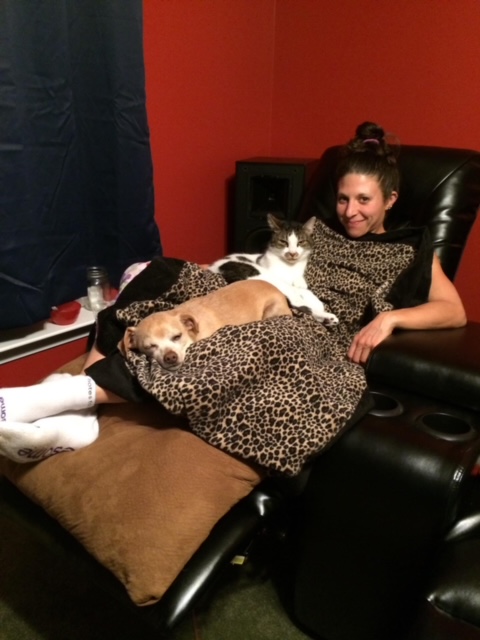
9/19/2009 - 10/10/2024

Madison passed away peacefully with the help of Dr. Haueisen at the Pointsett Animal Hospital on October 10th, 2024 around 2:20pm. Madison will now join her best friend Campy, who passed away 87 days ago - exactly 12 weeks to the day. 

Madison battled Feline Hypertrophic Cardiomyopathy (HCM) for the past 2.5 years. In Feb 2022, Madison received a double lung tap as a last resort to saving her life after a 5-day battle with her failing heart and lungs. Although she surived the procedure, the vet didn't think she would make it more than 6 months. 

With the help of medications, frequent vet visits and a lot of love, Madison proved everyone wrong and lived another 2 years and 8 months. She always had a strong will to live as her number one priority in life was to show us love and compassion. 


The story of Madison.
In the summer of 2009, Madison was found by Campy in the bushes of our apartment complex in Jacksonville Florida. After several months of seeing her outside, she followed me and Campy up three flights of stairs and we officially welcomed her to our family. We don't know the official age of Madison but we think she is between 16.5-17.5years old. Madison was always a lover, not a fighter. From the very first day in our house, she never wanted to be a bother. She was incredibly grateful that she had a home but most of all, a family to call her own. Smudla did not care for Madison but Madison never fought back to Smudlas hisses and "love" taps. Madison constantly tried to be friends with Smudla but instead, she got a best friend in Campy. For all of Madison's 15+ years with us, Campy and Madison had a very special bond. Wherever Campy went, Madison followed. They were inseparable. 

We believe that Madison held on over the past year to make sure that she could help us through the grieving process of losing Campy. Even if her heart was hurting from losing her best friend, we believe she knew that we needed her more than ever before. After Campy passed away on July 18th, it was only two months later when Madison's health started to decline. It was 12 weeks to the day when Campy passed away that we needed to say good bye to Madison. Madison was a fighter and she was so incredibly strong and stubborn. 


Whereas Campy was the glue to our family, Madison was the adhesive tape. She made sure there was also routine, order and no hostility. Madison's goal in life was to give Karel and me unconditional love on a daily basis. When Smudla started to decline due to her kidney failure, Madison was there to watch over Smudla. Madison was so happy to finally take on the roll of caregiver for Smudla. Madison did the same for Campy. 


Madison was our constant companion. Where there was a lap, there was a way on to it. She hated being held but she showed her love by being next to us or on us. As annoying as it was sometimes to have Madison on our lap while working on the computer, it was something that we never took for granted. Not every cat is a lap cat but Madison took her title very seriously. She was very stubborn and no matter how many times we politely scooted her away because we were working, she worked her way back on (or by) our lap. If you received an email from me over the past 10 years, there's a good change Madison was on my lap when I wrote that email. 


Madison wasn't a playful cat. She was very scared of people for most of her life. It wasn't until kitten Ella came along that Madison started to show her bravery around strangers. A few cats later, Madison had no fears. She took her role as "momma Maddy" very seriously. With each new cat, there was a strong hiss to show them who is the boss of the house. Very quickly, Madison was in charge. 

Madison was a creature of habit. She would only eat from her food bowl and would never try to steal food from anyone else. If another cat started to eat her food, Madison would look at us for help as she didn't like confrontation. Madison loved Rotisserie chicken (just like Campy) and she loved fish. For several years, Madison would sleep with us on the corner of our bed (on my side) on her favorite purple blanket (which used to be my dad's when he was battling cancer). When we woke up in the morning, she would be purring by our heads (on a pillow) as a way of guarding us to that the other cats wouldn't wake us up. She always looked after me and Karel. 

Madison loved to drink from the bathroom sink. She learned this from her predecessor Smudla. Every morning as Karel would walk to the downstairs bathroom, Madison would quickly follow him for supervision. She loved this routine - and so did Karel. 

Madison and I would have conversations every day. I would talk to Madison and she would answer in her meows. We would talk for several minutes. She had a strong purr to go along with her soft demeanor. Madison let us welcome in 4 new cats over the past five years.


Ella was the first to come into our family. Although Ella and Madison had a good friendship, as Ella entered her "teenage" year at the age of 2, she had a bit too much energy for senior Madison (~13-14 years old). Madison tolerated Ella and didn't mind the occassional cuddles. 


Sweet Sylvi came into our life in 2020 and he was a great addition to our family. Found by us on the Swamp Rabbit Trail around the age of 12-16 weeks old, Ella finally had a playmate. But Sylvi has a sensitive and loving personality, which was perfect for Madison. 


And then came Asher in 2021. Found on the side of the highway at 2 weeks old, Asher grew into a strong, confident cat with little gratitude for being "rescued." In his mind, he was born in this house and every cat has it this good. Asher's best quality was cleaning Madison. She loved it. Until Asher decided that cleaning time needed to turn into playing time - and Madison had none of it. Despite Asher getting most of the hisses and whacks in the house, Asher created a very strong bond with Madison over the past few months. We can tell he is grieving the loss of Madison as he is hiding, sleeping on her favorite patio blanket and not acting like himself. 


In April 2025, Mia was the last to be rescued. Madison taught Mia the rules of the house very quickly and although it wasn't the smoothest introduction, Madison tolerated Mia for the six months, since she came into our family. Most of all, Madison looked after Campy and Ella to make sure that Mia didn't mess with either of them. I guess Madison assumed Slyvi and Asher could take care of themselves. 


Madison was a great cat. She had the best "aero tuck" and loved folding herself into the most perfect cinnamon roll when she slept. She never tried to escape from our house or try to run away. She lived in 3 different homes with us prior to spending her last nine years in our current home. She loved napping in the patio, especially on a warm day. We let her chew on the grass outside every now and then as it was one of her favorite things to do. Madison loved blankets and loved to be warm. She loved the sun and the fireplace.  


Most of all, Madison loved me and Karel and we loved her so much. 
Losing our two seniors so close to one another is tremendously difficult. Because we are still grieving the loss of Campy, we feel even more empty without Madison. 

Madison was such a strong and resilient cat. She fought so hard to stay with us for as long as she could. Madison beat the odds. From surviving months outside of our apartment as a young cat to fighting her heart/lung/kidney condition as a senior. 

It hurts knowing that we are closing the chapter of our life with Smudla, Campy and Madison. Our first three furry kids. There's no one to remind us of our six years in Jacksonville, Florida and the past nine years in Greenville, SC. 

We will never forget her love and the memories we made over the past 15+ years.  I'm struggling to find the words to accurately describe how special Madison was to us as she was an incredibly loyal, loving and special cat. It also hurts knowing that Madison was our remaining reminder of Campy and now she is gone. Putting together this tribute for Madison was very difficult as it was the first time I looked at pictures of Campy since he passed away in July. Campy was my soul dog and I'm still struggling with his loss and companionship. 


To help ease our pain, we hope that Madison and Campy are restored to good health, are reunited with one another and can finally be together again.