We’d love to hear from you.

We welcome your thoughts, experiences, comments, suggestions, questions or personal stories. If you don't hear from us right away, please note that your email is very important to us. We will do our best to respond with 24 hours.


Greenville, SC

Trimarni is place where athletes and fitness enthusiasts receive motivation, inspiration, education, counseling and coaching in the areas of nutrition, fitness, health, sport nutrition, training and life.

We emphasize a real food diet and our coaching philosophy is simple: Train hard, recover harder. No junk miles but instead, respect for your amazing body. Every time you move your body you do so with a purpose. Our services are designed with your goals in mind so that you can live an active and healthy, balanced lifestyle.

Blog

Animal Rescue Fundraiser - Hurricane Helene and Milton

Trimarni

Furry Friends Jupiter - Jupiter, FL.             Brother Wolf Rescue - Asheville, NC.
Hurricane Milton                                         Hurricane Helene

When a disaster strikes, it doesn’t just impact people, homes, buildings and roads. It affects our most vulnerable members of our communities - animals.

The devastation of Hurricane Helene and Milton impacted many animal rescues across Florida, Georgia, South Carolina, North Carolina and Tennessee. Thankfully, animals at most shelters were evacuated early and placed in emergency shelters and fosters ahead of the hurricanes making landfall.

With shelters, sanctuaries and farms struggling due to loss of power and water, hundreds of animals have been evacuated from destroyed areas and relocated to various animal shelters across the east coast - or placed in foster homes.

Shelters like Brother Wolf and Furry Friends Jupiter were completely devastated by the hurricane whereas many other shelters have to undergo extensive cleanup and construction. Esther Neonatal Kitten Alliance (in Asheville, North Carolina), was hit extremely hard and left without power, water, and essential kittens supplies.

Although it sounds fun (and rewarding) to be around animals all day, working/volunteering at an animal rescue is hard - mentally, emotionally and physically. Staff and volunteers see the abused, neglected, and abandoned. Rescues are always in need of supplies to keep their animals safe, healthy and happy. And behind the scenes, rescues spend a lot of money providing care (and safe living conditions) for the homeless animal population. When an animal is abandoned, surrendered, or found, the rescue takes full responsibility for caring for that animal - which means paying for vaccines, neuter/spay, dental, emergency surgeries, transportation (ex. to another shelter), grooming, etc. to get/keep that animal in good health. Roughly 6.5 million animals enter shelters each year but only 3.2 million are adopted. (American Society for the Prevention of Cruelty to Animals).

Monetary donations are the lifeblood of rescues.

The ultimate goal for every rescue is to find a loving forever home for these deserving animals but without the generous and ongoing support of the public, rescues can not function. Shelters require monetary support for veterinary care, maintenance of facilities, food, vaccines, emergency surgeries, transport and so much more.

Now, more than ever before, pet adoptions and fosters are urgently needed to help free up space and resources for animals displaced from Hurricane-ravaged areas. Many shelters are at max capacity, which means turning away homeless pets with nowhere to go or having to euthanize adoptable animals to create space.

To help the animal rescues impacted by Hurricane Helene and Milton, you can show your love for the mountains or ocean, coffee and animals by purchasing a one-of-a- kind long sleeve shirt. And with every purchase, our small business will donate 100% of the net proceeds to rescues, sanctuaries and shelters impacted by Hurricane Helene and Milton.

You can also make a monetary donation (with or without a shirt) and 100% of your donation will go to rescues, sanctuaries and shelters impacted by Hurricane Helene and Milton.

  • Shirts are designed by the incredible artistic mind, Heidi Hogan at Creative Mile.
  • Shirts are produced by Graphic Cow, a custom apparel screen printing company in our town of Greenville, SC.
  • Orders will be accepted until October 18th, 2024 at 12pm. Estimated shipping is the week of November 4th, 2024.
  • Monetary donations will be accepted until November 4th, 2024.
In late November, a social media/blog post (and in our weekly newsletter) will share how much money was raised, how many shirts were ordered and which rescues received the donations (and how much). Currently there are many rescues that are struggling after the Hurricane. Our goal is to provide donations to those who need it the most.

Thank you for your support and for helping animal rescues!
-Marni


Helene's Devestation

Trimarni


Unity Park next to downtown Greenville
Video of Unity Park after the storm.

As you may have noticed, we did not send out our weekly newsletter last week. We were without power for 8 days due to the aftermath of Helene. Currently we are still without internet/cable.

Being without power was a minor inconvenience when we think about the thousands of people who lost their homes and businesses, as well as the confirmed 220+ deaths that occurred because of the carnage and destruction by Hurricane Helene. We consider ourselves very lucky that we had no damage to our home and our six animals are healthy and our fish survived. Our wooden fence broke when a tree fell on it but that is the worst of it (a minor and easy-to-fix issue).

We live in Greenville, SC – just outside of Traveler’s Rest. We bought our house in 2015, a year after moving to Greenville from Florida. We chose this location because of its proximity to the mountains. Like most people who trade the beach for the mountains, we fell in love with this area because of the beauty of nature, a variety of outdoor activities, amazing cycling on bike-friendly roads and a strong sense of community.

One of the perks of living in Greenville is our ability to “play” outside throughout the year. We are rarely impacted by bad weather, yet we get to experience all four seasons. It’s rare to experience snow or ice and we are too far inland to be at risk of hurricanes.

That is, until Hurricane Helene showed up and barreled her way up through the panhandle of Florida, through Georgia and slowed down and stalled over upstate South Carolina, Western North Carolina and Eastern Tennessee.

From what I read as to why this was the worst storm to hit the Carolinas in a generation, due to previous rain fall in the week before the hurricane, the ground was saturated and the rivers, ponds and streams were elevated. The storm dropped an estimated 40 trillion gallons of rain (enough to fill 60 million Olympic-sized swimming pools or 619 days of water flowing over Niagara Falls). Because of the geography of where the rain fell, the southeastern and northwestern slopes acted as funnels that directed all this water downhill and it collected into streams and rivers running into valleys. When you drop trillions of gallons of water on a mountain, it must go down. And the interaction between the mountains and the storm systems wrings more moisture out of the air. Massive rain overflows and mudslides made for extreme flooding. And flooding isn’t limited to a lot of water, it also means all the things water carries with it (large trees, buildings, roofs, cars, etc.). Roads fell apart and bridges broke. This isolated places and people because rescue efforts could not take place. As I mentioned before, we don’t expect weather like this where we live. Sure, we get wind and rain. But no one near or in the mountains worries about a hurricane. It’s like asking a Floridian if they are prepared for the chance of a blizzard.

Due to climate change, storms are wetter and warmer. Air holds nearly 4% more moisture for every degree Fahrenheit warmer and the world has warmed more than 2 degrees since pre-industrial times.

Many people are still without power and water, have lost their hours or are trapped in/near their homes. Rescue missions are difficult in the mountains because houses (and cabins) are spread out over miles of land, often in very remote locations - typically reached via bridge or small country road. Several of our friends have had their homes demolished or their houses are filled with water, mud and debris.

Although we are struggling with the devastation and grieving the loss of so many small businesses, lake towns, mountain villages and several of our favorite cycling roads and hiking paths, this hurricane brings with it some very powerful lessons.


Left Photo: Emily Ruth
Right Photo: Denise Knight


Community – We were in Chattanooga while the storm rolled through as I was registered to participate in the Ironman (Sunday). We hired a pet sitter to take care of our cats and fish but we were not prepared to be without power while we were away. Our incredible neighbors went out of their way to take care of our house (empty the food from the refrigerator, clean up the water that accumulated under the fridge from ice melting) as well as look after our animals and fish when our pet sitter wasn’t there. Our biggest worry was our fish because they need an air pump (which requires electricity) to get good water circulation and oxygen to breathe. Thankfully Karel has a battery-operated bubble maker, which kept our fish alive. They weren’t able to eat for four days because the filtration system wasn’t turned on but they are doing fine now. Sadly, our generator wasn’t working because there was old gas left inside from the last time we lost power (over a year ago). My mom’s partner Allen went out of his way to find someone in another town to fix our generator (which is what we used for the week without power). We have had so many people offer help (internet, laundry, shower, etc.) which shows the compassion by people in our community who want to go out of their way to help others. Our Greenville community has really come together to help one another.

Preparation – You can never be too prepared. This hurricane taught us a lot about being prepared for a “what if” situation. Because we travel a lot (often internationally), we are going to do a much better job of having a plan (and equipment) in the case another disaster happens at our house (or prevents us from getting to our house). As an example, we have five cats. We only have two cat carriers. If for some reason we couldn’t get into our car and needed to rescue our cats, we would need at least one more big carrier. We will also get together all of our important documents in the case we need to quickly escape our house in an emergency (or someone needs to collect our most important documents). Water, food, batteries, headlamps, flashlights, chargers, and non-perishable food are also needed in the case of an emergency.

Priorities in life – Natural disasters force you to realize how fragile life is. When you are put in a situation where you could lose everything, you have to quickly decide what’s most important to you. You see things differently. For example, is it important to be able to see your abs in the mirror when you are wondering how you will find clean drinking water? Is cellulite on your legs a big deal when you are trying to take care of your friends and family who have lost everything? How much of your house is filled with “stuff” that you don’t need or use? Are you living out your best life or waiting for the perfect time to start living?

Control – For seven days, we waited for our power to return. We couldn’t control the situation so we didn’t stress about the situation. We focused on what we could control and let go of expectations. Being without power for several days forces you to live life differently. You have to be creative with your time and decisions. You also quickly realize how much is taken for granted on a daily basis.

Donate – If you have the means to donate, many organizations are in need. Here’s a list that can get you started. Don’t forget about the animal shelters and vets who need our help. If you are able to foster an animal, the shelters are overflowing as dogs and cats are being transported out of Asheville and to other shelters (which are already overcrowded).


'24 IM Chattanooga - How I fueled my amateur female win

Trimarni


It's been 18 years since my first Ironman. Eight days ago I completed my 20th Ironman (23rd long distance triathlon) in Chattanooga and it was my best-ever Ironman day in terms of speed and power on the bike and pace on the run.
At the age of 42 years, I feel incredibly strong and healthy. I contribute much of my continued success in long distance triathlon to the understanding and application of sport nutrition and nutrient timing.

Although there have been several significant advancements in the science of sport nutrition over the past few years which have contributed to faster race performances, I've kept three things the same with my training and race day fueling.......

⚡KEEP IT SIMPLE - my fueling and hydrating strategy is simple (and easy to tweak depending on the weather/distance). It's not complicated, it requires little thinking, it's easy to digest/absorb and I can stick to my strategy on any terrain or in any weather conditions.

⚡LESS IS BEST - more nutrition than what your body needs (or can digest) will not give you more energy. The goal is to fuel for the effort that you are trained to do (not the effort you wish you could do).

⚡PRACTICE - I never train underfueled/underhydrated. I fuel similar before and during my long training sessions as I do on race day. This trains my gut, builds my confidence and helps take away the guessing on race day. I know what my body needs (and when) and how to troubleshoot if something feels off in my body.

Don't wait too late to master your fueling and hydration for your long distance event.


'24 IM Chattanooga Race Recap

Trimarni

Race Week 
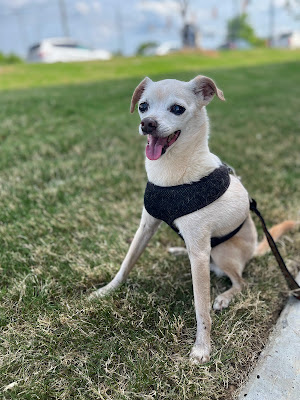
We left for Chattanooga on Thursday September 26th around 11am. Most of the drive was in the rain. We drove through Asheville and Knoxville as it's so scenic and our favorite way to go Chattanooga. It rained most of the drive. Two weeks ago we adopted Sunny - a 1-ish-year old, 16 lb terrier mix from the Charlotte Animal Control and this was our first road trip together. My mental health hasn't been the best this past week because I have been really missing Campy (it's been 10 weeks since he passed away) and I wasn't sure how I would be able to put together a good race in Chattanooga. I gave myself a lot of grace going into Chattanooga as I didn't specifically train for the event with Norseman XTRI as my primary focus. I signed up for Chattanooga because I love the course and I love the community/spectator support. I also love hot and humid races. Seeing that the weather was cool and the bike course was entirely changed a month out from the race, I was having trouble getting myself excited to race. We arrived after 3pm and went right to athlete check-in. I was given bib number 218 and it was a quick process to get in and out of the registration tent. We drove to our Airbnb (next to the Whiskey building) which was located ~0.6 miles from the transition area. After seven years of racing in Chattanooga, this was the first time that we stayed in this location and we loved being within walking distance of the venue. After we unloaded the car with all of our stuff, we drove to Whole Foods to get a few groceries. Karel walked Sunny around the parking lot while I did a quick shop (I brought most of our non-perishable foods). We ate dinner and went to bed around 10pm. 


On Friday morning we woke up to texts from our neighbors that the power was out due to strong winds and heavy rain. We never expected the strength of storm that came through Greenville (especially since we live close to the mountains). Thankfully we have incredible neighbors (and a great pet sitter that we just hired for this trip) and they took care of our house (and animals and fish) for the next few days. Sadly our generator had old gas in it so it didn't work when the neighbor tried to start it. We need it to power up our 70-gallon fresh water fish tank so the cichlet fish can breathe. Karel has a portable bubble maker so our neighbor used that instead (the only downside is our fish couldn't eat for 3 days due to no filtration system running but thankfully they all survived). We were very stressed about our house after we heard that a tree broke our wooden fence in the backyard. On Friday morning I found out that the 2.4 mile river swim had been cancelled due to the predicted fast flow of water from the dam. This was a major bummer since swimming is my strength. After 18 years of triathlon, this was my first ever bike-run "triathlon" which was a strange feeling because it felt so different to what I had mentally prepared for (and what I know after racing 19 Ironmans). 


On Friday, I opted to ride the Kickr trainer (which Karel brought from home) for around 80 minutes. I did an over-under workout to wake up the legs. I didn't realize the Y was open (and free for IM participants) but if I had, I would have swam first as it's where I can zone out and relax before a race. The trainer workout felt good and got my mind into a good place. The rest of the day was uneventful. We walked to pick up pizza in the evening. We invited our friends Yannick and Katie over for pizza from Community Pie and enjoyed pizza in our Airbnb. I always get Margherita pizza two nights before a long distance race. 

My mom arrived with our athlete Scott around 8pm. Scott was supposed to come on Friday morning but he had a tree fall in his driveway which blocked him in - and he was without power.  He was able to get the tree removed and they had a suprisingly smooth drive to Chattanooga through Atlanta. I was happy that my mom was there to help us out with Sunny as he is still new to us and has a few anxieties/fears that we need to work on (he was abandoned in an apartment). 

We woke up to wet roads and light rain on Saturday. I didn't want to risk any issues the day before the race so I rode the trainer for ~45 minutes and did a few short efforts to wake up the legs. My legs felt a little tired during the ride but I felt surprisingly good for a 12 minute run off the bike (1.6 miles - I ran until I was ready to stop). As for the rest of the day, I prepared my bottles for my bike and flasks for the run, got all my nutrition ready and collected my gear. It felt strange to not have to think about getting ready for the swim and to not drop off a bike gear bag (due to the time trial start we wore our bike gear to the transition area on race morning). Karel got my bike ready in our Airbnb and for the first time ever, I used a disc wheel on my tri bike in an Ironman. Because of rain in the afternoon, Karel taped over the box that holds the wires for my electronic shifting so that they wouldn't get wet after leaving my bike in the transition area. Around 1pm we walked down to the race venue and I dropped off my run bag and bike. 

I eat the same foods the day before every Ironman and half IM, which makes it easy to get in my carbs as I don't have to think about what (and when) to eat. My typical day before race meals are: 

  • Before workout: 2 piece bread + peanut butter
  • During workout: 1 scoop Never Second C30
  • After workout: Glass of milk + handful cereal. Then bagel + PB + banana + 2 eggs
  • Lunch: Pasta + marinara + veggie burger 
  • Afternoon snack: Pop tart + Chobani black cherry yogurt 
  • Dinner: No chicken noodle soup (Amy's Organic) + 1 cup rice + saltine crackers
Race morning
Surprisingly, I slept really well the night before the race. With my alarm set for 6am due to the delayed start (cancelled swim) the race nerves felt nervous. I was curious to see what type of fitness I brought to the race since I didn't specifically train for this race but I didn't feel any pressure or expectations. The race also felt a little anticlimactic without the swim, which also made me feel less nervous. Even though I love to swim and was looking forward to the 2.4 mile river swim, the race just felt different. I was worried that without the swim, I wouldn't place as high in my age group as I usually need the swim and bike to make up for my slower run time, relative to other ladies in my age group. I laid in bed around 7pm and fell asleep between 8:30-9pm. Although I was in bed for close to 10 hours, we woke up to the sound of a car being towed outside our building around 3am. Sunny thought it was time to get up with all of the noise so Karel had to take him outside. It was an eventful 30 minutes but I was able to go back to sleep (and felt very rested at 3am). 

For my pre-race meal, I had the usual: Cinnamon Raisin Bagel w/ PB and banana. I ate around 6:30am and had no issues eating. I also had my Nescafe instant coffee and some water. I kept telling myself that this was similar to typical weekend - a long brick (bike-run) workout. Sunny stayed with mom when Karel and I walked to the transition area around 7:20am to drop off my bottles for my bike (and run bag), check my tires (which were fine from the day prior) and drop off my special needs bag for the bike (which had to be dropped off by 7:45am). We walked/jogged back to the Airbnb and Karel set up his gravel bike on the trainer and adjusted it for me so I could do a 10 min EZ spin on the trainer. This really helped to wake up my legs and got my mind in a good place to feel ready for the race. I didn't feel nervous but rather, I just wanted to get the race started. 

With the age groupers starting at 8:40am, we walked back down to the transition area around 8:20am. I was able to see some of the professionals start while on the trainer and walking to the transition area. I put on my cycling shoes and helmet outside of the transition, gave Karel my running shoes and went to my bike. I stood in line for a few minutes and before I knew it, I was standing in line, almost ready to start the bike. They had us stand in a row of 4 and two athletes who start every 5 seconds. The line moved very quickly. Although we were supposed to line up by bib number, there was a mix of numbers in the 200's (I was 218). 


BIKE
107.4 mile bike (5211 feet) 
4:40.06, 23 mph
Normalized power: 162W (IF .84)
Average cadence: 86rpm

I wasn't sure what to expect from the bike course since I had never seen it before. Our athlete Yannick drove the course and told me about it and I did a little research online looking at the terrain. I didn't have any set watts to target and I don't wear a HR monitor when I race but rather I like to race by feel. I know my body really well and I know what I can quickly recover from and what I can sustain. Since we didn't do the swim, Karel told me I could push a little harder on the bike since I would have a little extra energy to start. 

4.96 miles - 15:18, 195NP, 19.4 mph
I really pushed the first few miles. I knew I could settle in once I got to the 3 "loops" of the course. This section made my legs burn as I went hard from the very beginning. The warm up on the trainer really helped so my legs didn't feel like total bricks when I started. 

16.3 miles (out) - 38:24, 170 NP, 25.5 mph
I started to settle into a good rhythm really quickly on the bike. After a few miles, I found myself near the front of the race with only an athlete or two ahead of me. I could see our athlete Scott in the far distance, leading the age group race. I knew I would be at a slight disadvantage starting near the front because I wouldn't get the natural draft effect of passing people if I had started later on but I wanted to race my own race and see what I could do on my own. Plus, when I race and I have a lot of guys around me, it's hard to settle into my own rhythm as I have to pay more attention to staying draft legal or accelerating to pass versus focusing on my own effort. This section was really fast and had a nice flow to it. The course was rolling but there was plenty of time to stay in the aero bars. The climbs were not steep but had enough of an incline that I could sit up out of my aero bars (which is my preferred riding style since I do so much riding on my road bike). The downhills were fast and fun. With only two turns (one at each end of the course), there was no need to break, which made the course very fast at times. The rain started to come down (not strong rain but enough to get my compression socks wet) and my visor was fogging with the humidity. I actually liked the rain as it felt more "extreme" and I felt more in my element with the past two years dedicated to XTRI events. 


16.3 miles (back) - 44:43, 168 NP, 21.9 mph
This section felt like more of a drag. There was a bit more climbing to do on the way back. The aid stations were set up between the exits of the highway and the cars had to exit the hwy and then return on the on ramp. This allowed for two full lanes for athletes at the aid stations. I didn't grab anything at the aid stations so this allowed me to keep up my speed. I could feel the headwind in this direction. The rain continued to fall. I rode this section entirely by myself and it was long and lonely. I had a few guys pass me but they were way too strong in the time trial position for me to even stay draft legal behind them. I was able to somewhat keep up on the climbs but they got away from me on the downhills and flats. 

16.3 miles (out) - 38:49, 158 NP, 25.1 mph
I was relieved to make the turn around (which was a little technical over rumble strips and a lot of cones to make it a tight turn on both ends of the loop) as this section was the "easier" section of the two out and backs. At this point there were more people on the course but I was passing those starting their first loop (and being passed by a few more guys). I was also feeling the draft of having some cars in the lane next to us (we had the left lane closest to the medium and cars were coned off to our right) which also helped to keep up the speed. I was worried that the bike course would be lonely on the highway but there ended up being a good handful of people who drove out to the course. This loop felt a little long to me as my mind started to play games with me and tell me that I was biking too hard and that I should just stop after the bike and not run and that I was not having a good race (all normal self-talk that happens when riding for hours in a race). I was able to quiet those voices at times by focusing on my effort and terrain management and keeping up with my nutrition. 

Fueling on the bike
My fueling strategy was pretty simple as it's the same thing I do for all my long rides. 
I started with 3 x 26 ounce bottles of INFINIT Fructose (Fruit Punch flavor) with each bottle having 80g carbs and ~500mg sodium (not exactly 2 full scoops). Every 10-15 minutes I would take 3-4 big sips. I peed 3 times on the bike (the best I could on downhills). I tossed one of my bottles at an aid station and always kept my primary drinking bottle between my aerobars (two bottles in my rear cage). I don't use the aero bottle on the frame as I find it very difficult to grab and put back on the frame). 
I stopped at special needs (mile 62, which was 2:38 into the ride). I had finish 2 full bottles and a little over 1/2 bottle. My special needs stop took about 26 seconds. A volunteer handed me my bag after I stopped, I tossed my two bottles on my bike and put on 3 more bottles (one between the aero bars and 2 in the rear cages). 
In my special needs bag I had 3 more 26 ounce bottles of INFINIT Fructose. Same amount but my favorite flavor grape. I was able to finish 2 1/4 bottles over the next 2 hours (44.8 miles).
In total, I consumed: 
~127 ounce fluid
~390g carbs 
~2400 mg sodium
 
16.3 miles (back) - 44:23 (includes special needs stop), 162 NP, 22.1 mph
With more people on the course, the ride started to feel more fun as there was more to focus on. I was surprised to see Karel as I was nearing the end of the 2nd loop. He told me I was leading my age group and 2nd overall female as a younger female was riding much faster than me. I was really surprised that I was near the front of the race. This gave me a lot of incentive to keep pushing. I never felt tired or had any low moments so my mission was to try to make my third loop strong. At this point in the race, the rain was on and off. The temperature was perfect as I never felt cold. My athlete Jeremy passed me on the bike before special needs and he was riding really strong. It was great to see him out there. The nice thing with the looped course was being able to see athletes on the other side of the median. 

16.3 miles (out) - 39.52, 147 NP, 24.5 mph
Karel gave me one more cheer as I was starting my third loop and then he biked back to the race venue (he biked out on the course since it was closed to cars in and out of town). Although I could feel the natural fatigue of riding strong for the past 3+ hours, I could also feel the draft effect of the cars and other athletes on the course. I never found there to be big groups as there was a constant passing of athletes. I called out "on your left" a lot and everyone was very considerate to move over quickly. I found the course to be very safe. It was smooth pavement and very well controlled with volunteers and police. Although I really enjoyed the old course in the country, I didn't mind this course as it was hilly enough to feel hard at times and it felt safe with all the athletes on the course. 

16.3 miles (back) - 44:22, 152 NP, 22.2 mph
I really tried to push this last section. I felt strong and I was really focused with all the other athletes on the course. I had another guy pass me on a downhill and I was able to keep him in my sights for most of the last loop. This really helped me keep the pressure on the pedals. I never knew my mileage or overall time as my screen was set to lap intervals and I was only focusing on my current speed, 10 sec power and normalized lap power. Even though there were mile markers on the course, I only focused on the lap that I was in. This made the bike go by relatively quickly. This was my first time using a disc wheel in an IM and this course was perfect for it as I could keep my speed up (and validate the effects of using the disc). 

4.64 miles - 14:11, 154 NP, 19.6 mph
It was nice to finally go straight and not make the turn after 3 loops. The last few miles were tough as there was a big climb heading back into town. I didn't remember that climb (or downhill) heading out as my legs were burning. I started to experience my normal worries of "what type of run will I have off the bike" as I always lack confidence in my run. I expected that I would be passed by Elyse and other females somewhere in the early miles of the run so I didn't put any pressure on myself that I had to run fast. My only goal was just to enjoy the run. With less than a mile left, I saw Karel standing with Sunny and he was so cute sitting there (Sunny, not Karel :) I yelled "HI SUNNY!!" Karel told me that I was first overall female and I couldn't believe it. I switched the screen on my bike computer and although I was bummed to see only 107 miles, I was shocked to see my time. I thought I could go under 5:10 on the bike (which would be a big PR for me) so when I saw my time nearing 4:40, I couldn't believe it. I did some quick math as I was riding after seeing my speed for each lap but I had no idea what that would actually come up to at the end. 

T2 - 3:33
When I got off the bike, my legs felt pretty good. I felt like I did a great job with my fueling and although I biked strong, I didn't feel like I overdo it. As I ran to my run bag, my mom was there along the fencing giving me cheers and updates that I was leading my age group by over 15 minutes and I was first overall female. I got a few other cheers from friends and I was quickly reminded why I love racing - I love being part of the triathlon community. I ran into the changing tent and I was the only female there. Two other professionals entered shortly after me (I passed them on the bike). I quickly put on my shoes and Naked Running belt and flasks and grabbed my plastic baggy that had my visor, sunglasses, powder in baggies to refill my flasks and Campy's collar. I really needed to pee as I never fully emptied my bladder on the bike so I went into the porto potty and sat down (without undoing my kit) and peed while I put on my stuff in my bag (multitasking). 


Photo credit: Angela B.

25.7 mile run - 3:33.17, 8:18 min/mile, 1200 feet elevation gain
Mile 1 - 8:05
Mile 2: 7:37
Mile 3: 7:42
Mile 4: 7:48
Mile 5: 7:54
Mile 6: 7:48
Mile 7: 8:02
Mile 8: 8:06
Mile 9: 8:09
Mile 10: 8:20
Mile 11: 7:47
Mile 12: 8:29
Mile 13: 8:25 (half marathon 1:43, 8:01 min/mile average)
Mile 14: 8:33
Mile 15: 8:08
Mile 16: 8:19
Mile 17: 8:18
Mile 18: 8:26
Mile 19: 8:30
Mile 20: 8:38
Mile 21: 9:04
Mile 22: 8:40
Mile 23: 8:53
Mile 24: 9:17
Mile 25: 8:42
Mile 26: 8:00 pace (Last 12.5 miles, 1:47, 8:36 min/mile average)

Fueling on the run 
Like the bike, my fueling strategy was very simple on the run. It's the same thing I do for all of my runs (no matter how long, short, hard or easy). I always use Never Second C30 berry on the run. 

I started with 2 x 10 ounce Nathan hard flasks, each with ~120 calories (30g carbs, 200mg sodium of Never Second C30 Berry). I tried to finish 1 flask every 30-40 minutes. I took a few sips water at each aid station and followed it with 1-2 big sips of my flask. Sometimes I would sip the flask between aid stations if needed. I carried 4 small baggies (jewlery bags), each with 1 scoop (30g carbs) Never Second to refill my bottles along the way. I ended up using 3 of the 4 baggies. 

Total: 
150g carbs
1000mg sodium 
~70 ounce fluid

I didn't use anything from the aid stations besides water. No sport drinks, gels, or coke. 
I carried 1/4 bottle of  KetoneAid KE4 Pro Ketone Ester Drink which is something I don't use in training but I have used it in my last two XTRI events (Norseman and ICON) and it helps to keep my energy stable. I hate the taste so I can only take in a small sip at a time. I had my first sip on the bridge around mile 8 and then as needed throughout (anytime I felt like I needed a mental boost). 

I didn't have any stomach issues and my energy felt really stable throughout the entire race. 


Mile 1-4
As I ran out of the transition and on to the grass, my legs felt good. I do a lot of brick runs (and all my brick runs start uphill because of where I live) so running up the hill toward mile one didn't feel too hard. I didn't worry about my pace but rather I wanted to make it feel easy so that I could start easing into my marathon effort at the top of the hill. The first few miles are on a four lane road. We ran on the left side of the road. The road is rolling to start and then slightly flattens out. This is not my favorite part of the run so my focus was getting to the first turn at the end of this road. I ran with two other guys and the effort felt comfortable. I looked at my watch at the mile marker splits and I was surprised at my pace. I knew I could hold between 8:10-8:30 min/miles so when I saw splits under 8 min, I told myself to try to hold on to that pace for as long as I could. My goal was at least ten miles. The effort didn't feel forced as I was focusing on my rhythm and moving myself forward. I wore New Balance Supercomp Elite V4 shoes (from Run In). I have been wearing New Balance Fuel Cells for years so this change was an easy one (these new shoes only had ~10 miles in them before race day). As I was running, I noticed a few female pros running back on the same road. This had me feeling worried because I didn't mentally prepare to do an out and back on this road (I really looked forward to running on the path by the water, especially over the wooden bridges). Thankfully it was only a short section of around a mile back on the main road between the paths (there was prior flooding on the path). 

Mile 4-8
My energy felt stable, my mind was in a good place and my legs felt good. I was expecting to be passed by the faster age group female runners before the "hilly" section across the river but as the miles went by, I didn't see any other females around me. I saw Karel on the battery place hill before the Veterans Bridge and he told me that Elyse was running a faster pace than me but I was winning my age group by over 15 minutes. I expected Elyse to run past me at any point so I continued to focus on my effort. I never imagined I would be leading the amateur female race (especially at the age of 42!) so I didn't feel any pressure that I had to stay in the lead. My main focus was putting together a marathon run that I knew I was capable of but haven't done in my previous 19 Ironmans. I shuffled my way up the hill and on to the bridge. It felt good to finally have some signficant elevation change as I find it harder to run on flats than hills. 

Mile 8 - 11
I took a sip of the Ketone bottle that I was holding in my hand throughout the run when I was on the bridge. I was really looking forward to the Barton Avenue hills as I knew this was terrain that suited my strengths. I ran steady uphill and tried to work the downhills. At the bottom of the hill, there was a slight false flat that was a little annoying.  I refilled one of my flasks at the aid station at the top of that false flat. I stopped, put the powder from my baggie in my flask the volunteers helped me fill up the flask. I really enjoyed the "loop" at the bottom of Barton Av. as it was rolling hills. I saw Karel before I started the climb back on Barton (which is a bit steeper/longer on the way back) and he told me that I was keeping my lead against Elyse. I asked him how much time I had ahead of her and he told me around 2 minutes. I really enjoyed these miles and I looked forward to them on the second loop. I saw several familiar faces which kept me feeling happy to be running. I will still surprised how good I felt. Karel asked me how I was feeling before I made my way under the Veteran bridge (he was on his bike) and I told him I was feeling good energy wise but my legs were starting to get a little tired (understandably). 

Mile 11-13
I enjoyed the wooden pedestrian bridge back into town as I like running on different surfaces. There weren't many spectators on the bridge (I was looking forward to seeing lots of people) so that was a bummer. However, there were some good cheers from those who were standing there cheering. 

Mile 13 - 16
I made my way out on the second loop of the run. I was really surprised how fast the first 13 miles went. I never experienced any major lows but there were a few low moments over the next few miles as these miles felt very long. My legs were starting to stiffen up but I was still able to hold the same form that I was holding in the first loop. I told myself that all I need to do is finish these 4 miles and then the "hard part" would be overwith. I refilled another flask around 13 at the aid station. The volunteers were amazing. Each refill stop took me ~30-40 seconds. It was nice to have a quick stop. Other than these three refill stops, I didn't walk or stop throughout the run. 


Photo credit: Kayla 

Photo credit: Kayla 

Mile 16 - 20
I could tell that my propulsion wasn't as strong and my legs were feeling tired. The good thing was my energy still felt great and I was actually enjoying the run. With my last 3 marathons taking 5-6 hours due to the extreme nature of extreme triathlons (each of those runs was over 4000 feet elevation gain), I didn't doubt my endurance and strength. I had taken some risks in this race to see what my capabilities were on the bike and run and I wasn't willing to give up now. I saw Karel on battery hill and he was full of positive comments. He told me how good I was running, that I was keeping my lead to Elyse and even extending it on the hills and that he was so impressed with how good I looked when I ran. While I may not be running "fast" I had confidence in my ability to run well under fatigue. I was actually looking forward to the point when my legs were starting to really hurt from the fatigue as I knew I could push through it. 

Mile 20-23
I never focused on what mile I was in or how many miles I had left but rather I used destinations/landmarks to keep me focused. I broke down the race into sections and just focused on a few miles at a time. Once I checked those off, it was on to the next segment. In many of my past Ironmans, the last 6 miles were always so incredibly long and hard and I couldn't wait for the pain to stop at the finish line. But I actually looked forward to the last 6 miles. I saw Karel on Barton and he told me that these hills are were I am the strongest. He told me "no one can run hills like you." He was extremely supportive. Although my legs were hurting on the climbs, I kept things in perspective. These hills were tiny compared to the mountains I climb in extreme triathlons. These were tiny short bumps compared to running up Zombi hill in Norseman, or climbing up a ski slope during Karel's race (in the rain, on snow and ice) or hiking up 3000 feet to the top of a ski slope in Livigno at almost 10,000 feet elevation. Barton hills were NBD (no big deal) :) 

I continued to sip my nutrition and use a few sips of water from the aid station. The weather stayed fairly comfortable in the 70s. Although I was tired, I really tried to run as strong as I could up and down the hills. It was uncomfortable but I felt strong and durable. Karel told me to keep pushing until I got to the end of the bridge and then that was where I could feel like the race was "over." This mentally helped me stay focused up the last big climb. 

Mile 24-finish!
Anytime the run got hard or I had a brief low moment, I would tell myself "If you want something you have never had, you have to do something you've never done." I continued to repeat this in my head over and over as I knew I was on track for a PR marathon run but at any point I could convince myself it was not worth it due to the pain in the legs and I could slow down. I kept on pushing myself. At mile 25, I took Campy's collar out of my hydration belt, gave it a kiss and held it in my hand for the last mile. I thought about pulling it out sooner but it was something that I really looked forward to and that helped me stay motivated until mile 25. There were more people on the wooden bridge which gave me a boost of energy. As I was making my turn toward the finish on the top of the hill, Karel was there and told me "it may be close, you need to keep pushing." I ran as hard as I could to the finish line while still soaking in the atmosphere and quickly reflecting on the day. I switched my watch screen from lap pace/current pace/lap distance to overall time and I was shocked to see my time. Even though the run was short, it was still a PR marathon pace for me (lifetime best!) 


When I crossed the finish line I couldn't believe what had happened. I was the first overall female amateur across the line. I've raced Ironman Chattanooga twice and I won overall amateur female both times. There's something special about Chatty!


Yannick and Karel greeted me at the finish and shortly after, my mom and Sunny came. I saw Karel and we had to wait over 5 minutes before Elyse and a few other females crossed the finish line (they started behind me and we weren't sure if someone ran a faster time than me to push me out of first overall) for the official results. 

I couldn't believe how good I felt all day. I had no idea what I was capable of doing on the day and with so much emotional stress going into this race, I really didn't think I had the mental capacity to suffer. Similar to Louisville 70.3 when I placed overall female, I just felt good all day. It required a lot of mental focus and staying in the present moment but thankfully I had just enough of that left in me for 132.5 miles. 


A few years ago I was feeling like the Ironman distance wasn't exciting me anymore. I needed a change. Xterra racing, mountain biking, gravel biking and XTRI events helped me step out of my comfort zone and feel like a beginner again with new unknowns, new skills to learn and new ways to train (and race). I thought I was stepping away from the "standard" long course triathlons but thanks to all of these different events, my love for the standard distances has returned because I have new perspectives and experiences to bring to each race. 


We went to the awards at 9:30am the next morning and after receiving my award for winning the 40-44 age group, we left to head back to Greenville to get back to our powerless house (and to remove all the food from our fridge and freezer). I did not take a slot to Kona as I am not sure what events/races I want to do in 2025 and I am really enjoying different adventures, race-cations and event experiences. 


Nutritional Considerations: IM World Championships (Nice, France)

Trimarni

On September 22nd, 2024 the best female professional and age group triathletes from around the world will race 140.6 miles in Nice, France. For the second year, the Ironman World Championship will be split between Nice, France and Kailua-Kona, Hawaii for the men's and women's races. Last year the men raced in Nice, France and this year the women will take the stage in Europe. 

The course consists of a 2.4 mile swim in the salty blue Mediterranean sea, a one-loop 112 mile stunning and spectacular bike course with over 7,800 feet of elevation gain and a four-loop 26.2 mile run on the iconic Promenade des Anglais. 

Although a beautiful race venue, the course brings with it some challenging situations. With a good understanding of the following nutritional considerations, you can improve your chances of delivering a great performance on race day - while enjoying this incredible experience. 

Carb loading
Authentic French Cuisine places great emphasis on using fresh, high quality ingredients to create great flavors. However, much of French food is rich in butter, dairy, meat and oil. Although the food is delicious, consuming large quantities of fat and protein in the days leading up to the race may reduce gastric motility and emptying, contributing to feelings of fullness and nausea, along with increasing the risk for Gi issues during activity. More so, foods rich in protein and fat are more calorie dense, which makes it difficult to effectively carb-load and fill the muscles and liver with glycogen in the days leading up to the race. On the flip side, if you are concerned about eating unfamiliar foods or you have specific dietary needs (ex. vegan/vegetarian/gluten-free) and feel limited with your food options, you may find yourself not eating enough and going into the race feeling depleted and low in energy. 
TIP: Have a plan for carb-loading. Know exactly what foods you will eat (and where) and how much to consume at least 8g/kg/bw of carbohydrates in the 48 hours before the event. By prioritizing a higher-carb consumption in the earlier hours of the day and reducing carb volume in the evening, you can minimize the risk of feeling lethargic, uncomfortably full, gassy, nauseous and bloated on race day morning. With grocery stores and markets at almost every corner, you should have no trouble finding a variety of familiar food options to prepare in your Airbnb/hotel room. 

Sea water 
The salty sea provides great buoyancy for swimming but there's a risk for swallowing air or sea water. The first condition is called aerophagia. Swallowing too much air can cause stomach distress, reflux, burping, belching and GI issues. Examples include not fully exhaling underwater before taking the next breath, mouth-only breathing, rapid breathing and swallowing big gulps of air. As a result gas is trapped in the stomach, which can lead to gas and stomach aches. 
TIP: Keep a steady and rhythmic breathing pattern. Make sure to forcefully exhale when your face is in the water. Try to work with the rhythm of the ocean by changing your cadence of your stroke to keep yourself moving forward (and not slapping waves/chop). Chewing gum, drinking carbonated beverages, and consuming too much caffeine can also increase the risk for stomach pain, reflux and belching. 

Sport nutrition timing 
Whereas general nutrition guidelines advise consuming carbohydrates, fluid and sodium in 10-15 minute intervals to optimize digestion and absorption and to help delay fatigue, a bike course with significant elevation changes, technical long descends, step and gradual uphills and potentially wind in certain sections presents challenges for fueling and hydrating on specific intervals. First off, with a significant amount of climbing in the first 1-2 hours of the bike, your energy requirements may be slightly higher but your gastrointestinal tract (blood flow) may be compromised if you are working too hard to get up the climb. Because proper fueling on the bike can reduce the risk of bonking and becoming progressively dehydrated as the race progresses, keeping your fueling strategy simple to execute is key. The more steps in your fueling/hydration strategy, the more you risk GI issues from consuming concentrated nutrition products. 
TIP: Look for opportunities on the course to coast/ease up on effort in order to take in nutrition when breathing/heart rate is controlled. Start with enough nutrition on your bike to get you through 3 hours of riding (with the help of aid stations for water as needed). Your sport nutrition is your most important currency in racing and it's not worth sacrificing bottles to save weight on the bike. Be mindful that you won't always be able to drink on a schedule - you need to work with the terrain of the course. Therefore, try to take smaller sips more frequently over 10-15 minutes (or a few big gulps every 15 minutes) when your breathing is controlled. Do not go more than 20 minutes without fueling/hydrating. In the 10-15 minutes before a long descend, it's advised to take in a little more nutrition (~50-80 calories) to reduce the risk of dropping blood sugar while coasting (plus digestion will be easier while descending vs. climbing). Be mindful that it takes ~15 minutes to digest nutrition so don't take in more than 25-30g carbs within 15 minutes. Lastly, your nutrition strategy can only work if you are well hydrated. It doesn't matter how many bars, gels or chews you consume, if you are behind on your fluids, your muscles will tire faster and your risk for nause and GI issues increases. Dehydration slows gastric emptying and gut motility. Although gels, bars, chews are convenient and easy to consume, they often lack adequate sodium and they obviously lack adequate fluid.

More is not better
The bike course is demanding and it will require a lot of muscular work, endurance, strength and stamina. There may be times during the bike, but especially during the run, when you may think that you need more nutrition to give you more energy. Although this is true to a point, your gut can only tolerate so many carbohydrates (and fluids) per hour. And if you plan to consume more than 60g carbs per hour, it needs to be a combination of glucose/maltodextrin + fructose and your gut needs to be trained to be able to absorb higher levels. Overfueling and overhydrating present much worse side effects than being a little underfueled and dehydrated. 
TIP: Understand your individual carb, sodium and fluid needs per hour and don't let your sore/tired/fatigued muscles fool you into thinking that taking a few more gels each hour or several cups of sport drink (on top of what you plan to consume) will give you more energy. Think small amounts consumed frequently throughout the run and recognize that your muscles will be tired and sore - it's an Ironman! 


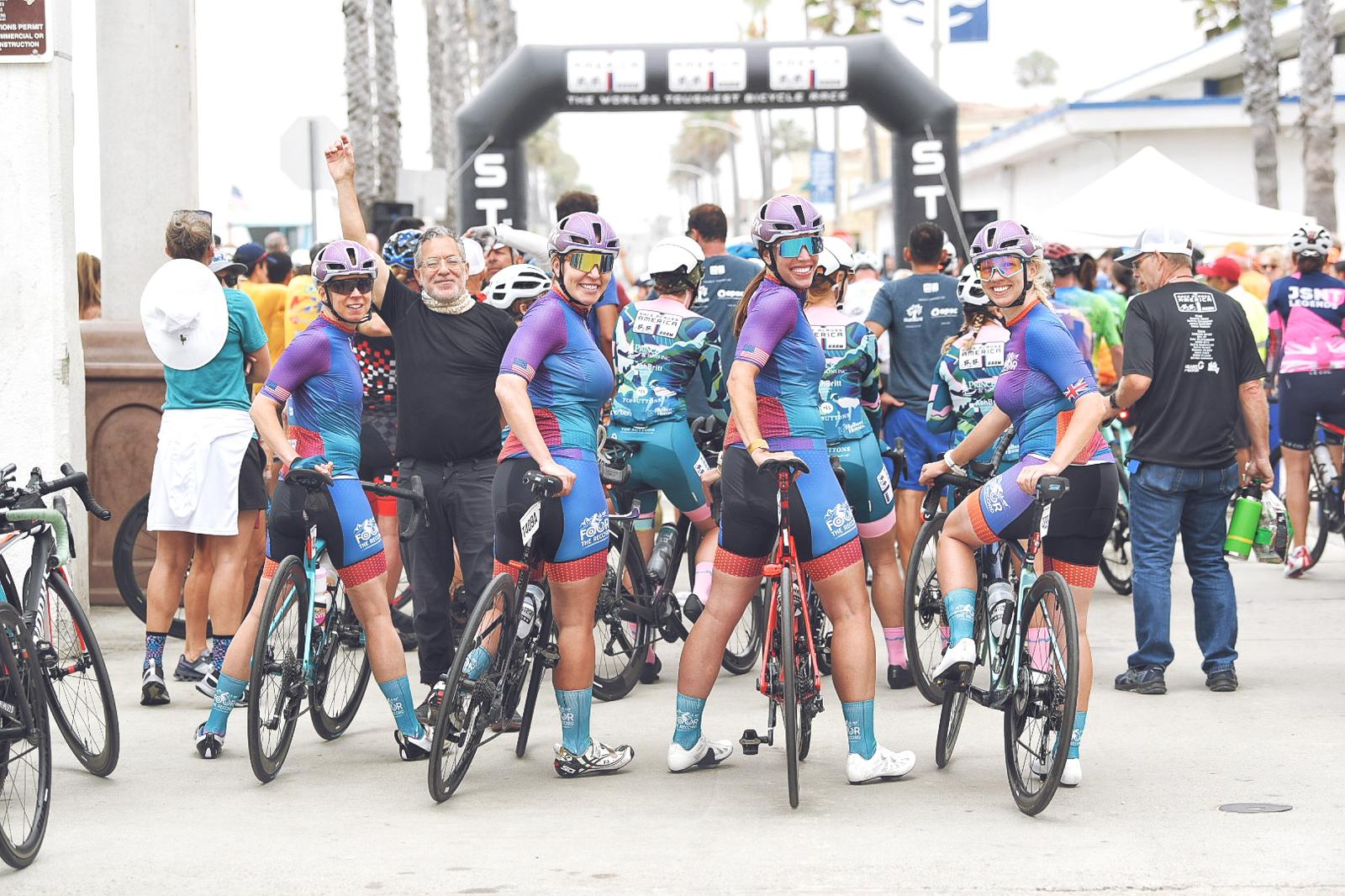
RAAM interview with Katie Aguilar

Trimarni


Name: Katie Aguilar
Age: 48F
Profession: Engineer
Where do you live? Atlanta, GA


1. What is RAAM and why did you want to participate in the event?

RAAM is Race Across America. It’s an annual race where participants race solo, or in teams of 2, 4, or 8 from Oceanside, CA to Atlantic City, NJ. It’s over 3000 miles of continuous riding, climbs 175,000+ feet, crosses 13 states and must be completed within 12 days (for solo riders) and 9 days (for teams). 

I have been interested in RAAM since my friend Dani Overbaugh participated in 2013. I love watching the event unfold. This year I was given the opportunity to be on a team and I couldn't turn it down. It seemed like a terrific test for me to test perceived boundaries. It seemed so exciting and challenging.
To me, RAAM was an incredible opportunity to see what I could do while racing daily, with short breaks between riders. I've never done an event like this before and I wasn't sure if I could handle the extreme nature of the event. 


2. What is your fitness/athletic background (as well as top successes in sport)?


I joke and say I’m an adult-onset athlete. I didn’t find endurance sports, or any sport really, until my mid to late 30s. I started with Team In Training. On the inaugural GA Ironteam, the coaches told me I was consistent, and should consider aiming for the Ironman World Championship in Kona, Hawaii (IMWC). This started a 7-year journey of gradually working my way up, finding my race, learning to trust my body and nutrition, and figuring how to embrace the discomfort. In 2017 - lucky IM #7 - I earned my first IMWC qualification. I’ve finished 17 Ironman races, including four Ironman World Championship finishes. I’ve also finished many 70.3 races and accepted my slot to two 70.3 World Championship races. I was the first female in the MidAtlantic 12-hour race in 2018, completing 246 miles.


3. Can you give an overview of the specifics/details of your participation in the event? 

We started in Oceanside, CA. and the clock stops when you cross the official finish near a stadium in Atlantic City, JN. Each team starts at a set time. Our team started at 12:13 pm Pacific Coast time. We started together as a group and then I set off for the first 21 miles, unsupported. For the rest of the race, you have a car near you at all times. Night time the car is 'direct follow' and day time is 'leap frog' support. 

Our team had an RV, 2 mini vans, and a support crew of 12 people. In each of the 2 mini vans (and RV) we had a driver and navigator. The support crew members were on 16 hour shifts with 8 hours to sleep/rest. My husband Carlos spent his time driving the RV, so I got to see him before and after each shift. We also had a house person who is a team member dedicated to preparing the food we (racers and crew) ate between sessions and preparing the crew snacks for while they were on shift.

Each member of the team was on allocated time intervals for riding. Our team had a schedule of each member riding for four hours and then four hours rest. On the four hours riding, I would do about 30 minutes of riding, or I was being shuttled ahead of my counterpart Dani while she rode. We’d exchange riders about every 30 minutes except in special situations such as climbs, a long descend, or extreme weather (ex. in Kansas it was extremely windy).

Dani and I rode 11 pm-3 am, 7 am-11 am, and 3 pm-7 pm eastern time for almost 7 days. All shifts were based on the Eastern time zone so the times were not changing as we progressed across the country. My other teammates Vicki and Caz did the 30/30 plan on the other four hour blocks.

In all, I rode about 120 miles a day, give or take. In total, I rode around 750 miles. We all rode about the same.


4. What was your overall fueling/hydration plan? Did you have a specific strategy for each ride?

I actually reached out to Marni because I didn’t know where to start with how to fuel for this type of stage event. In the past, I struggled with stopping in long rides because I’d bonk and for the short efforts of 30 minutes riding with a 30 minute break, I knew I needed to figure out how to fuel. Marni and I met and worked on some details and then I practiced, experimented, and found a regime that worked for me.

My coach gave me several sessions where I was able to experiment with fueling in similar scenarios to what I'd experience at RAAM. Marni and I worked together over several months and we first tried fluid calories only and then started to add more solid food while bringing down the liquid calories. We figured out that my goal was around 80 g of carbs per hour. We found that a ratio of 40% of my carbs from food and 60% of my carbs from fluid.  If I’d change anything, I’d use a timer to help with my timing of nutrition. Not only did I fuel on the bike but I also continued to fuel in the shuttle during my 30 min off, as if I was still riding throughout the 4 hour riding block.

After day 3 I started using ketones, per Marni’s suggestion, to help me think clearly and focus with the sleep deprivation and fatigue. I made an error early on and combined ketone with the caffeine at first which made me feel very strange so I learned not to make that mistake again. This was my only real nutrition issue throughout all 7 days. 

I also focused on what I ate between sessions. Marni and I had worked on how to best recharg my body in 4 hours so I was ready to ride again once it was my turn. At the start of my 4-hour off shift, I would eat something prepared by our house person. I also ate something before each session My go-tos were bagels, peanut butter and honey before a new session, and Ensure, fruit, and yogurt right after. I only drank caffeine before my 11 pm shift.


5. How did the logistics work on a team?


Our crew shifted from van to van and then to the RV and then rest. We all had assigned beds in the RV so there was no time lost between transitions. This means, when riding, I had 3 different crews: one for each time block. I enjoyed each crew and each offered what I needed at that time. 11pm-3am was Sarah and Zane. Sarah was pragmatic and wanted to be ready with time to spare. She was wonderful.

7-11a.m. was Zane and Colin. They made me feel relaxed so that I didn't have to worry about things out of my control. Colin was one of our 2 mechanics, and he got what I needed to be able to race and he was able to always figure things out. He fixed our tire that was slowly going flat after day 2. H checked our bikes, and would quick maintenance to prevent any issues. And he showed me what he did when we were waiting. I knew it’d all be fine, no matter what. And when parking the vans/RVs seemed difficult, Colin was able to direct us to some amazing spots (or get us out). He also made a big honk when a dog came out after me in Nevada, MS to safely scare it away. 

3pm-7 p.m. was Bobby and our crew chief William. I loved it when William would write on the window, tracking us. And Bobby would get my bike ready for me to ride in minimal time.

I also relied on the other crew members for timing when exchanging. Countless times Jason would motion to me to start riding so Dani and I could pass and have an efficient exchange.


6. What was your favorite state/route to ride?


I am not sure I had a favorite state but I had a favorite time to ride. I always felt my best and loved riding the 11 pm-3 am shift. It was always so quiet and all I had to do was focus and ride. Also, it was when Mother Nature showed her splendor: a strawberry moon, the Milky Way, amazing stars. The weather was cool and comfortable. Although, on the first night we had some winds which surprised me. And one time we passed sand dunes which caused sand to swirl around me. Again: Mother Nature was just full of surprises. Especially at night. I loved it.


7. What was the most difficult state/route to ride?

Kansas was a big challenge. The wind started picking up on our 7-11 am shift and I was riding my TT bike. For our 3-7 pm shift, the wind got stronger and I had to ride my road bike as the cross winds would have pushed me off my TT bike. Dani was able to ride her TT bike. We adjusted to 15 minute shifts so we could refuel between sessions because I was not taking my hands off the handle bars. Dani saw that and made the call to shorten our intervals. My hands and butt were planted hard on the bike. It was where I pedaled my hardest to keep momentum against the wind. And despite the crazy wind, I loved it. I was scared at times, pushing my comfort zone but I was able to do it. It was amazing.

For me, the 3-7 pm shift felt hard. It could have been the heat. 

8. Were you able to sleep between stages?

We had an RV that shuttled us to the next exchange and where the riders stayed for their 4 hours off. We stayed in the back bedroom on the bed with curtains drawn so we could sleep. RVs are not really made for sleeping while in motion. William warned me when I got in the car after my first ride that I’d awake at some point, flying and weightless. I did. Dani and I would lay back there laughing because we were getting bounced around. My husband drove the most and I told him it felt like we were barreling down the highway at 100 mph. Or doing donuts in a parking lot. He said he was lucky to get to 50 mph, and averaged around 45mph. And no donuts. After the first two days (and past the mountains), they were able to stop the RV for longer periods of time so we could get a little more restful sleep.

I managed to sleep 1.5-2 hours between blocks. So about 4.5-6 hrs per day. This was enough for me as I never felt sleep deprived.

There was a lot to do when you got in the RV: change, eat, get organized, and then sleep. And quickly the crew was waking you up to prepare you for your next shift. I did manage to shower about once per day. But it was a quick, chilly shower in the RV.


9. Besides fitness and endurance, what qualities/characteristics does one need to participate in an event like RAAM?


Our team of four ranged in personality and organizational skills. We each had various “important" things. But all four of us are goal-oriented, competitive athletes. To do RAAM, you have to want to challenge yourself mentally and physically in an endurance event that lasts several days. Which isn’t for everyone. Some people excel at short, hard and fast efforts/events. RAAM was interesting in that it was shorter efforts over a prolonged duration. My effort was around half ironman effort in my interval shifts. I loved asking my body to give, and then I would ask it for more.  You need to have the time to train and participate in a 7+ day event.

A supportive family/group of friends isn’t a quality, but it's a huge help. The training (and event) required a lot of time on the bike, not to mention travel to ride, maintaining your bike, prepping (nutrition), etc. Friends showing up for even parts of a training ride was priceless. I appreciated every friend that joined me for a couple of hours.

A supportive spouse or significant other is important. Carlos, my husband, was very supportive (enabling? 😁). He’d wait for me when I had long rides, followed me for night rides, and also joined our crew, and drove one of the mini vans from Atlanta to Oceanside. He made this all possible for me.

To do RAAM you will pull in a lot of favors as it takes a lot of resources: financial, crew, and equipment (even if you have been riding a long time). You will have to ask for help. It can be hard, but it was amazing to see how many people wanted to help out.


10. How did your team place? Would you do it again?


We were one of 2 all female quartets. We finished first in our division. Our goal was to beat the RAAM record of 19.27 mph set by Quattra Bavariae in 2017. We missed it at 18.7 mph. However, we did go through the epic certifications of crew to get the Guinness record for a four female team to cross America. No record existed. So, pending certification, we did achieve setting a standard and a Guinness record. I would love to see another all female team take inspiration and break both records.

I would do this event again in a heartbeat as a 2 or 4 person team. I’d love to try a 2 person team. I loved everything about it..the training and racing. I loved being on a team. It was my first time on a team where we worked for a single goal. We were four racers but we really were a team of 16. And it was an incredible experience.

'24 IM 70.3 Louisville race recap

Trimarni


Quick stats: 
Marni: 4:45.14, 1st overall female 
Swim: 29:07
T1: 4:15
Bike: 2:25:57
T2: 3:25
Run: 1:42.30


Karel: 4:33.27, 2nd AG (45-49)
Swim: 31:47
T1: 3:56
Bike: 2:23.20
T2: 3:14
Run: 1:31.10

Pre Race
We drove to Louisville on Thursday morning. Karel and I were able to get in a short 30 minute swim at Furman before we left around 9:30am. On the 9th, Karel started to feel sick after his morning swim. On Saturday, he went for an hour run and came back feeling awful. He tested positive for COVID shortly after. He did nothing on Sunday as he was exhausted, coughing, stuffy and low in energy. He did no exercise on Monday and Tuesday. On Tuesday, I started to feel run down and had to stop my bike trainer workout because I was feeling empty. I ended up with a head cold but thankfully I was able to fight the virus but I was left feeling stuffy. Thankfully, on Wednesday morning I felt a little better so I was able to get in a longish trainer ride and brick run in the morning and a short swim in the evening. Karel wanted to see how he felt so he went out for a ride on his tri bike and he felt pretty bad. A lot of that was because he hadn't exercised in four days but he was still feeling somewhat sick. With Karel feeling unwell, me feeling run down and both of us feeling really sad since it was three weeks without Campy, we weren't sure if we should go to Louisville to race. With this being a team race, we wanted to be there with/for our athletes but we weren't sure if either of us should race. Karel was undecided if he would race (he was leaning towards not racing) but I was feeling ok when I exercised, just very stuffy. We decided that we would take it one day at a time. When we arrived to our Airbnb in Louisville (1 mile from the race venue, by the run course), Karel and I did an out and back run on the course. Karel was coughing and felt horrible. We ran for 40 minutes. We got groceries at Kroger and then went to bed after dinner. On Friday, Karel was feeling a little better so he went out for a run. He ended up running 11.4 miles of the 70.3 run course and said he felt low in energy but didn't feel as bad as he did a few days prior. While he was running, I went for a swim at the Floyd YMCA (Indiana). My athlete/friend Claire suggested that I get a once-a-year free YMCA pass and reserve a lane (by calling) which worked out great for a 3000-yard workout. When I returned back to the Airbnb, Karel told me that he would train through 70.3 Louisville as he felt like he missed a lot of training due to his sickness, being in Norway and struggling with recovery after the Stone extreme triathlon. We had talked about this approach going into Louisville since he has Icon XTRI on September 6th. A little before 4pm, Karel and I rode over the Big Four Bridge and biked the Utica Pike Route (suggested by one of my nutrition athletes that lives in Prospect KY). It was somewhat quiet road by the water. The road was a bit bumpy but otherwise it was the perfect road to get into the aerobars and to spin out the legs. I rode for 80 minutes and Karel rode for 2 hours. The riding in Louisville wasn't great (not safe) so we were limited with where we were able to ride. Karel felt better toward the end of his ride. In the evening we had our team pizza party at Claire's Airbnb (which was next to our Airbnb). I purchsed pizza from The Post. The pizza was ok - not amazing but not bad. I really liked the big sizes for our group.
It was so great to be with our athletes. It was exactly what we needed. It gave us an opportunity to briefly forget about our grieving and our athletes gave us so much positive energy. 
On Saturday morning, I went for an almost 90 minute ride. I rode a little on the beginning/end of the bike course, checked out the end of the run course and then biked the run course in the park. After the ride, I went for a 17-minute run (13 minutes of feel good running off the bike and then another 1/2 mile to get me to/from the Butchertown Bakery to get Karel a croissant and pastry. As I was doing my pre race workout, Karel rode the bike course. I was a little nervous for him being out on the bike course since we heard the course was mostly on busy, narrow two lane roads and Karel said there was a lot of traffic on a Saturday morning. Karel rode 61 miles (he missed one turn because of cars on the road) and came home feeling tired. But he was happy that he was able to put together a few days of "training."  
I checked in my bike around 1pm and spent the rest of the day relaxing. I stuck to my normal pre-race foods/meals:  Bagel, waffles, eggs, milk, yogurt, pop tarts, Amy's No Chicken Noodle soup, basmati rice, pasta w/ marinara. Karel checked in his bike closer to 3pm. Karel and I prepared our bottles in the late afternoon and spent the early evening relaxing in bed. We both shut out the lights around 7:30pm to try to go to sleep. It was a somewhat restless night of sleep (typical pre-race) but it was nice knowing we had a 4:15am alarm (and not 2am like the extreme triathlons :). 

Race morning 
We woke up not feeling too excited to race. It was a strange feeling as we love racing but this past week was so exhuasting for us. We constantly felt this constant weight of sadness that we struggled to shake. Karel didn't feel nervous as he was using the race as a training day but I felt a bit of nerves because I did care about this race. This race was in my homestate and being so close to Lexington brought back a lot of memories and emotions thinking about my dad
Karel had his oatmeal and espresso and I had instant coffee and a cinnamon raisin bagel w/ peanut butter and maple syrup. We left our Airbnb around 5:30am, parked a few blocks away (on the street behind the big parking lot across the race expo, free street parking on Sunday) and then walked to the transition area. It made me happy to be in the transition area as I really enjoy the race day vibe and being around other athletes. Karel likes to be in and out and isn't one for small talk. I do all the talking :) We set up our transition areas and then walked the 1.2 miles to the swim start. We prefer walking when there is an option (instead of taking the bus) as it's a nice warm-up and it puts us in a better mindset when we can keep our bodies moving. When we arrived to the swim start area around 6:30am, we put on our ROKA swimskins, dropped off our morning clothes bags and then walked a little further down the paved path to the official swim start. There was one big corral for all the swim waves so we had to jump over the fence to get into the sub 30-minute swim start area near the front. I was looking forward to the swim whereas Karel was worried about the swim because of his previous sickness and feeling tight in his chest. He was going to take it very easy to start so that he wouldn't get his heart rate up too high. At 7am, the race started.

Swim
The swim was point to point with sighting buoys every 100 meters. What a nice treat compared to the 1, maybe 2 buoys that we get an extreme triathlon events. I really liked how we started the swim. Rather than jumping off a dock, we walked down a metal ramp into the water and could somewhat dive into the water at waist high. I wore clear ROKA goggles since it was a little cloudy. From the first few strokes, I could feel a bit of chop. It felt more like we were swimming upstream than downstream. After getting pased the first buoy, I was really excited about this swim. Non wetsuit and choppy - I felt like this was the perfect swim for me. Karel started a few seconds ahead of me and I passed him after the 2nd buoy. He looked good in the water which made me feel relieved that he was ok in the water. I didn't find the water quality bad but instead, I really liked this swim. It went by quickly and I used each buoy to count how far I had left as they were numbered. I made the left turn around the final red turn buoy toward the stairs to exit the water at Waterfront park. It was very choppy by the exit. I felt great getting out of the water and I had a few people tell me that I was in the top 10 of females. I saw my mom and she was cheering for me, which made me happy. Karel's mom stayed back at our Airbnb as she was worried that she would get too tired being on her feet all day. 

T1
It was a long run from the water exit, up the concrete ramp, over the stairs and into the grassy transition area. I sat down to put on my compression socks and shoes. I decided to tighten my boa on my Bont tri shoes in the transition area as I spent too much time fiddling with my shoes in Gulf Coast trying to tighten them as I was riding. I put on my Rudy project helmet (with visor on the top of the helmet as this helps it avoid fogging and easier to get on) and then grabbed my bike to start the 56 mile ride. 


Bike
I was really looking forward to this bike. I rode most of this course back in 2008 for IMKY but back then I was not a confidence (or strong) cyclist so the rolling hills felt like mountains to me back then. In addition to Karel's feedback from his ride on the course, I watched a Youtube video of the course (car driving the course), looked at maps and studied the mile markers and Karel's file from his ride to understand every mile/corner of the course. This really helped so that when I got on the bike, I felt like I was riding on a course that was familiar to me - even though I had not ridden the course since 2008. 
For nutrition I had 3 bottles on my bike, each with 70g INFINIT Fructose. I started with fruit punch in my first bottle and then had two bottles of grape flavor. I had a never second gel and Power bar gummies in my bento box on my frame in case I dropped a bottle but I didn't need to use them. I went through two full bottles and around 1/2 of the 3rd bottle. I felt great energy wise. I passed a few ladies in the first few miles and nearing the first climb (I think) was leading the women's race.
The first 10.5 miles were fast! I averaged 24.5 mph. We then hit our first longish climb and this started rollers for the next 10 miles. We made a right turn to start the "loop." I broke this loop into 4 sections. The first section was 4.75 miles and it was net uphill. My legs started to open up at this point. I didn't feel like I could push on the first climb but in this section, I started to feel so much better. I didn't try to ask my body to do more than it could do earlier on but rather, just rode within my abilities and listened to my body. The next section was 3.56 miles and although there was some climbing, it was a faster section. After the turn in La Grange, we had another 3.8 miles. This was another fast section. The last section was 3.95 miles and this finished the loop. I loved the rolling hills and it was a little cooler to start but warmed up nicely. Perfect riding temperature. I found myself around the same guys and made sure to stay draft legal behind them. It was hard at times because of the cat and mouse nature of this course that I would have to surge to pass on the uphills and then I was passed on the downhills. There was a official around my group throughout the entire bike ride (the motorcycle would ride past us, stop and then go again and pass us throughout the entire bike). Karel passed me as we were finishing the loop and I was able to keep him in my sights for most of the rest of the bike. I was really happy that he was riding well on the bike. He was tired from his sickness and training going into this race but also happy that he was ok enough to participate in the race. Karel and I love riding our bikes in new areas so we thought of this race as an opportunity to enjoy riding on different roads. Overall the traffic wasn't bad and the volunteers and police did a great job controlling traffic as my group was rolling through. I think the traffic picked up as the race went on. I do worry about the safety of this bike course because a good 13 miles of the course is on a two lane busy road which means there are cyclists in both directions which means cars are backed up for 3+ hours. The bike felt effortless for me. I was really happy that my legs showed up for this bike. I didn't feel good at Norseman two weeks ago and I reminded myself that I had a really great race at Chatty 70.3 in 2021, just two weeks after IM St. George. I finished the bike as the lead female. 

T2 
The dismount/mount to the bike was on the street and then we had a loooooong run on the grass into T2. My legs felt pretty good but I always worry about myself for the run. I never what type of "runner" will show up when I start the run. I did a flying dismount so I could run in my socks (thankfully the grass was dry). I put on my Saucony run shoes, slipped on my Naked Running band and put my two flasks into my running belt. I had 1 scoops Never Second C30 berry in each ten ounce flask (which is what I use for all of my runs). As I was entering the transition area, my mom told me I had a 7.5 min lead. I wasn't sure if this was accurate as sometimes the timing mats are off or because of the self seeded start, athletes further back don't trigger the timing mats until much later because they started later (but couldn't technically be ahead. That happened to me at Blue Ridge 70.3 a few years ago when I crossed the line first but came in 2nd by 0.2 seconds). 
I grabbed a grocery bag that had my ROKA sunglasses, visor, watch and Campy's collar in it. I put on those items as I was running out of transition. I ended up holding my watch in my right hand for several miles as I like to hold something when I run until I feel like I have my rhythm. 

Run 
I did some quick math as I was running and I felt like I could run low 1:40's for the half. I thought about the other ladies behind me and that meant someone would have to run at least 1:32 to beat me. Which is totally doable. I decided I wouldn't worry about who was behind me until I got to mile 7-8 because at that point, I figured if someone was going to pass me, it would come around that time. I was not feeling super confident in my run as I still had a 140.6 mile event in them from Norseman two weeks prior. Also with being sick and just emotionally drained, I didn't have a lot of self-belief in my run. Plus, it's been really hard to push myself in all three sports because when I am sad, I don't want to hurt myself anymore and running hard hurts. 

I really enjoyed this run course. This first 3 miles were flat and gently rolling. Then we went into Cherokee park. I had the best run guide with me - her name was Yvonne and she was awesome. She made sure no one got into my way and every mile she would get on her radio and tell the race staff that "the lead female is at mile....." She even offered to get me ice at one aid station but I didn't accept it as I didn't want to take "outside assistance." The park was beautiful and I was really looking forward to the hills. These were proper rolling hills. There were two short hills to start and then 3 longer hills of several minutes. The downhills were fun. The volunteers were incredible at the aid stations and I got a lot of cheers as the lead female. I grabbed ice at the aid stations as I was feeling a bit warm and I finished my two flasks by mile 10. I then sipped on coke and a few sips water for the rest of the run. There was one short section of gravel (which I loved) because of road construction early on in the run. 
I hit a low point around mile 9-10.5 in the run but was able to find my rhythm again. I had one guy pass me and tell me that there was no girls close behind me which comforted me in a way but also had me feeling nervous if someone who sneak up. I only had one effort in me and I just focused on running with good form - steady and fluid. The last mile was long and challenging as it was net uphill (after a quick turnaround) but I had mentally prepared myself for it. Karel said he felt good on the run but his paces were much slower than he is used to. He was happy he was able to finish the race. 
As I was nearing the finish, I couldn't believe what was able to happen. I was about about to cross the finish line as the overall female winner. At 42 years old, I feel stronger, fitter and healthier than ever before but I know these overall wins will be more and more difficult to achieve as the years go on. In the last mile, I took Campy's collar out of my race belt and I gave it a kiss. I held it tightly in my hand so that he could be with me to the finish line. When I crossed the finish line and held up the tape, I was filled with emotions with all that had been going on over the past few weeks. Campy passing away, racing Norseman XTRI, Karel getting very sick and just having an all around rough week going into this event. 

Karel was able to give me my medal at the finish and it felt really good to give him a hug. He placed 2nd age group (45-49). After we chatted with my mom, we walked on the run course back toward our Airbnb to cheer on our athletes. We were so proud of our athletes. This race will never be forgotten. 

Pics from Clare Grant/Courier Journal.


As I mentioned on social media....

"Life has been really really hard lately. Grieving is emotionally and physically exhausting. Over the past three weeks, we have been drowning in sadness. We feel lonely, lost and empty. But triathlon is saving us. It’s giving us purpose, structure and the opportunity to connect with our community.
It’s been two weeks since I completed XTRI Norseman in Norway, which required so much of my mental and physical energy. Karel got very sick when we returned home. We have been struggling with the absence of Campy. Returning to my home state of KY brought on so many emotions. It made me really miss my dad, who passed away from cancer in 2014.

Racing provided us with a needed distraction and a temporary break from our emotions. We went into this race with no expectations other than to find joy in the experience. To be honest, just finishing was our biggest goal.

Before the race, I kissed Campy’s collar and tucked it inside my running belt. Knowing that Campy’s collar was in T2 gave me purpose. I need to get to the run so I can be with him. And I needed to get to mile 12 of the run so that I could hold his collar and bring him with me to the finish line.
Perhaps I got lucky in Kentucky or it was meant to be. The race felt effortless. I was being carried to the finish line by Campy and my dad.

I took the lead in the women’s race early on in the bike and managed to cross the finish line as the first overall female. I couldn’t believe it. My mom was cheering me on and Karel was there waiting for me at the finish line (he placed 2nd in his age group). It was another tearful race finish. And it was extra special sharing the experience with so many of our athletes and team members.

Losing someone you love can change your world. Loss of a loved one can affect how you feel, how you act and how you think. There is no right or wrong way to grieve. We all have unique ways of expressing emotions.

Unlike sport, loss is a process, not an event. We will never forget Campy and it will take time to learn how to live without him."

Thank you for the support. 💓


'24 XTRI Norseman Race Report

Trimarni


Quick recap
Results
2.4 mile swim: 1:06.03 (3rd female out of the water)
T1: 6:43
111 mile bike (10, 819 feet): 6:43 (6:38 riding time, 9th female)
T2: 2:59
26 mile run (5,709 feet): 5:26.33 (9th female)
Total: 13:23.43

I got my period on race morning. I felt horrible. I jumped off the ferry around 4:45am into 57-degree glacier fed water. I wore a thermal wetsuit, neoprene cap, earplugs, booties and a swimsuit under my wetsuit. The swim started at 5am and was point to point, with one turn buoy, ~800 meters from the finish. With the help of Karel, I transitioned into my cycling gear. The temps were in the upper 40’s. I warmed up during the first 20-mile climb (~4000 feet elevation gain). The next three climbs occurred between 56 and 83 miles and ranged from 2.5-5.5 miles in length, around 6-12% grade. Karel and Honza leaped frogged along the course. There were designated areas for support crews to stop but cars were also allowed to stop anywhere to support athletes, so long as the car was entirely off the road. The final climb was steep and steady for ~5 miles but after the last feed area (24 miles from the finish), the climb continued for another 6 miles. The final 17 miles were net downhill, into headwind. Karel helped me transition into my run gear and I was on my way for 15 miles of gently rolling hills on pavement. Karel and Honza packed up my bike and bike gear and drove the car to various points along the run course to give me nutrition/water. At the base of Zombi hill, I changed shoes and Karel joined me for the rest of the run (mile 15 is when a support crew member can join the athlete for the rest of the race) started a shuffle up a constant grade of 10% for the next 4.2 miles (~2200 feet elevation gain). Once we got to the top of Zombie hill, we reached a check point tent. We made a quick stop and then continued to shuffle another 3 miles up to the mountain checkpoint. I was so excited to be within the 160 athletes allowed to go up the mountain and to finally see and reach that famous wooden gate at the entrance of Gaustatoppen. When we reached this point, Honza was there to give us our mandatory backpacks (and gear inside). He took the shuttle bus to this point as no cars were allowed past the top of Zombie hill. We made the 2-minute mandatory stop for the Norseman staff to check our backpacks and during this time I changed into my trail shoes. We then hiked our way up the rocky and steep Gaustatoppen mountain for another 3 miles and ~2200 feet. I crossed the finish line feeling exhausted, elated and accomplished. I received a blanket and warm tomato soup and bread after I crossed the finish line. After changing into warm clothes, I took the cable car to the bottom of the bottom and Karel and Honza hiked 3-miles back to the shuttle buses. The next day, I received one of 160 black Norseman shirts.


Race morning


As I was getting ready to lay down in bed around 7pm, I told Karel “I’m pretty sure I am going to get my period tomorrow morning.” Karel was very encouraging and said all the right things to keep me relaxed. After a restless night of sleep, my alarm went off at 2:15am and sure enough, I got my period. I felt horrible. I made my way to the kitchen to make coffee but I had to lay down as I was feeling lightheaded. Once I felt better, I ate a package of poptarts and a banana w/ smear of PB. I did some light foam rolling and finished packing the car around 3:15am (point to point race so we had to pack up the entire Airbnb into our car. Karel packed most of the car the night before the race). Karel rode my bike to the race start and Honza drove me in the car. We walked my bike to the transition area. My bike and helmet was inspected by the race staff and a volunteer walked me to my bike rack (#15). I set up my gear in the transition area and we walked to the ferry. I gave Karel a kiss good bye and I felt a sense of relief that the race was finally here. I was so nervous going into this race. I boarded the ferry and it was huge! There were bathrooms and plenty of space to sit on the ground. I could feel the nervous energy. It was still dark outside when the ferry left promptly at 4am. It took ~20 minutes for the ferry to get to the swim start. It didn’t feel like we moved anywhere. As the boat left, I started to put on my wetsuit and booties. I wore gloves to keep my hands warm. The cold water from the fjord started to spray into one side of the boat. I saw several athletes get wet to acclimate to the water but I was worried about getting cold after standing around so I used the water on the ground to wet the inside of my wetsuit around the neck. A voice came over the intercom system and shortly after, the edge of the ferry opened. It was starting to get a bit more light out so it wasn’t completely dark out. I was worried about how cold the water would be 2-miles out from the shore so I was very anxious to get in. I left my morning clothes bag inside the boat w/ my shoes and clothing inside. It was returned to Karel after the swim started when the boat arrived back to shore. When athletes were allowed to enter the water, I made my way to the edge. It was a high jump. My heart sank a bit. The volunteer gave me a squeeze, told me to hold my cap and goggles and directed me where to jump. 3, 2, 1…..jump!

I was so relieved to finally enter the water. I felt the weight of my nerves lift off of me. It took several minutes to swim the 350 yards to the “swim start” where the kayakers were waiting for us. I lined myself up on the left side, further away from the shore. With over 10 minutes to the start, we treaded water and there were several conversations going on between competitors. The mood was positive and there were several laughs. At 5am, the kayakers lifted their paddles and we were off.

For the first time in three XTRI events, I felt really good in the water. Although my hands and face were a little cold, I felt very comfortable. It was getting a little brighter and I was really enjoying swimming in the fresh, clean waters of Eidjford.
With only one buoy on the course, I followed other swimmers with hopes that everyone was going the same direction. It was rather easy to stay on course as we swam close to the shore. I was worried that the swim would feel long until I spotted the turn buoy so I kept my mind focused by counting my strokes. I wasn’t able to stay with the lead group but I could see them just ahead. There were a few swimmers right behind me (one that was annoyingly tapping my feet for most of the swim). I was surprised how quick the swim went by. When we got to the turn buoy and turned left around it, the final 800 meters went by really quickly. The volunteers helped me out of the water (the ground was rocky so I was thankful to have my booties on) and I met Karel in the transition area. Although my face and hands were cold, I wasn’t shivering too much. I exited third female and 16th overall. Although the swim times were slow (I didn’t wear a watch in the swim so I am not sure of the exact swim distance), I was happy with where I placed in the swim.


T1
I decided to wear a swimsuit over my sports bra so that I could put on a dry race kit. I was really worried about feeling cold to start the bike. The sports bra is always hard to put on wet so I had an emergency space blanket available if I wanted to stuff it down my sports bra. I opted to put a pack of “hot hands” down my sports bra to help warm me up. I sipped on hot tea that Karel brought me (I put warming oil on my body in the ferry before putting on my wetsuit which I think also helped), went pee in the bushes by transition and then put on my socks, shoes, helmet, etc.

Bike


We reverse drove the bike course as we went from Rjukan to Eidjford . I studied the bike course in great detail and I reviewed previous bike times. The bike course can be broken down into several segments.

-0-26 miles: Constant climb on primarily old roads (narrow roads, several tunnels), ~4100 feet elevation gain. No support is allowed for the first 24 miles.
-26-56 miles: Net downhill to the town of Geilo.
-56-59 miles: Climb (~5% grade)
-59-64 miles: Descend
-64-67 miles: Climb (~6% grade)
-67-70 miles: Descend (fast!)
-70-76 miles: Climb (~3% grade)
-76-83 miles: Descend
-83-93 miles: Climb (miles 83-87 ~7-10% grade)
-93-111 miles: Net downhill to Austbygde (T2) – no support allowed

For nutrition, I consumed 5 bottles, each with ~75g carbs from INFINIT Fructose. I had all of my nutrition in individual baggies so that it was easy for Karel to fill my bottles with powder and add water (which we bought from the store). I had a few sips of Ketones throughout the bike (yuck!) which helps with my clarity and focus during these extreme tri events. I nibbled on a Clif Bar throughout the bike. I peed several times (once on the side of the road and the rest while riding). I was very comfortable on the bike with my arm warmers and gloves. A few miles after leaving the town of Geilo, my right aero bar arm pad flew off (it got stuck to my elbow from the sugar from my sport drink). It was so uncomfortable to put my forearm on the hard carbon plate. I told Karel during the climb and shortly after, I stopped for a few minutes so he could fix it with a sock that he taped to the plate. We laughed about it as he was taping it. This stop, along with a pee stop, were my only stops. Karel would hand me my nutrition as I was riding (he would stand on the side of the road, text me to let me know where he was, I would see the text on my bike computer and he would hand me whatever I needed). Cars were not allowed to follow athletes or hand anything to athletes while the car was moving. I always had ½ bottle water and a bottle of sport drink on my bike. After he fixed my aero pad with a sock, I gave him my yellow vest (which we were required to wear until it was safe to remove), gloves and arm warmers as I was feeling warm. The temp got into the upper 50’s and it was cloudy and windy. I did not feel great on the bike but not terrible. It wasn’t my normal riding style. I passed several ladies in the first two hours of the bike (who passed me in transition) but they passed me back later on. This was atypical of me as I can usually get stronger as the bike goes on but I felt like I only had one effort and it was steady but not strong. I didn’t have any low moments and I never felt like the bike route was “too hard” or “too long.” It actually went by rather quickly and I didn’t find it too challenging. I just didn’t feel like myself – for a variety of reasons. I really enjoyed the downhills and surprisingly I felt the best in the aero position (which is strange because I don’t ride my tri bike a lot outside due to prior hip issues which I’ve been able to keep away since 2019 thanks to training on all types of bikes and not just my tri bike outside). The tri bike was the right bike for this course but I would have had more fun on my road bike for the climbs. There were a few tight fast switchbacks on the bike but the tri bike was fine for them.

T2


I entered T2 in the top ten for females. I was really worried about the run as the entire run was point to point but the first 15 miles were going to feel long to get to Zombie hill. I had an option to change my kit into running gear but I kept on my tri kit and put on my New Balance Fuel Cell running shoes. I wore my Naked hydration band and kept two flasks in my belt – 1 with ¾ scoop Never Second (~25g carbs) and 1 with plain water. Karel collected by bike and bike gear as I made my way across the grass and on to the road.

Run


The first few miles were a bit rough. It took me a good 20 minutes to find my form and rhythm. I had a quick bathroom break around 30 minutes into the run (in a field) and shortly after, I started to feel my stride. I told Karel “I found my flow!” Karel and Honza would drive ~2 miles ahead and wait for me and hand me whatever I needed. I was feeling a little warm so having plain water for cooling and sipping was helpful. I felt really good until mile 10 but then it got really hard. My right glute started to feel right tight and I was feeling tired. I stayed focused and kept myself moving until the base of zombie hill. Although it was really pretty to run by the water, I didn’t love the first 15 miles as it just felt long. At 15 miles, Karel met me at the base of Zombie hill. I changed into my Saucony shoes as they give me a bit more bounce for hills. I was feeling really stiff when I changed shoes but as soon as Karel and I started running, I felt so much better shuffling up Zombie hill. It actually felt better than running on the flat. My goal was to shuffle as long as possible and Karel was super encouraging and positive. I loved having him there with me. He made me laugh several times and it was so good to be with him. When I started Zombie hill there was a girl that was right behind me as I was changing my shoes but I was able to get ahead by shuffling up the hill. I am not a fast walker so by shuffling I was able to keep my pace under 15 min/miles which is much faster than walking 20+ min/miles. We’ve learned through each extreme tri that moving your legs as fast as you can, even if it’s a shuffle for a few steps is still faster than just walking.
Karel carried my flasks in his hydration belt and he also had his own nutrition along with a small backpack of more nutrition if we needed it. Honza drove past us after the first switchback and we told him we didn’t need anything. He was great with giving me cheers. It really helped to have two support crew members. Honza parked the car at the top of Zombie hill and took the shuttle to the base of the mountain. It took 1 hour and 3 minutes to go 4.37 miles at an average grade of ~10% (~2200 feet). We made a quick stop at the checkpoint and I was in the 50s overall (top 160 get a black shirt and can finish at the top of Gaustatoppen. It took us almost 40 minutes to go another 3 miles to the base of the mountain. 


At this point my legs were screaming at me. When we got to the last checkpoint at the base of the mountain, Honza gave us our backpacks and I changed into my trail shoes. Honza was able to follow us up the mountain. Support crew is not allowed to go ahead of the athlete (or pace in any way) so Karel stayed behind me and helped me navigate (he ran/hiked the mountain a few days prior which helped us become more familiar with the course). I kept myself moving up the mountain and never resorted to a causal walk. I was sitting in 9th place and my goal was top 10 female and I knew there were ladies close behind me. Nearing the last 100 meters, I grabbed Campy’s collar out of my backpack and started to tear up. It  had been 9 days since we said good bye and it was so hard to hold his collar in my hand. But I wanted to feel his presence and it was something I looked forward to the entire race. It was my reason for continuing during the really rough patches of the run.

I walked up the steps that I’ve seen in so many Norseman Youtube videos and crossed the finish line feeling accomplished and exhausted. I gave Karel a big hug and we both started crying. It was a very emotional finish as we both overcame so much to get to that finish line. A week prior, we didn’t even want to travel to Norway as the pain of losing Campy was so exhausting. I feel really proud of what I was able to do, even though it was incredibly hard – mentally and physically.


After crossing the finish line in 13 hours and 23 minutes, I was given a blanket and then a warm bowl of vegetarian tomato soup and bread (soooo good). We went inside the building and I changed into warm clothing. There was a long line for spectators to get down on the cable car so the race encouraged support crew to hike back down the mountain. Karel and Honza hiked the 3 miles back down the mountain and I took the cable car (athletes had priority which was good since the cable car was tiny!) It was fun to sit in the car with a few other guys and chat about our races.

When I exited the building, it was cold and rainy! The weather changed so quickly. We got super lucky with the weather all day. I didn’t consider the course to be hard (ICON was much more difficult) but with bad weather, it could be really extreme!

I took the shuttle to the host hotel and then walked a mile back to our Airbnb. Karel and Honza met me there when they returned to the car and drove back to the Airbnb.

The next day I received my black finisher shirt and took the group photo.


I am really proud of this shirt and I’ll never forget this incredible race experience. The race crew was extremely professional, helpful and supportive. The Norway community was amazing - there were so many people outside their houses cheering for the athletes. 


And a BIG thank you to the best support crew! 


Norseman Race Week

Trimarni

The past few days have felt rocky but everything is going smoothly. I say rocky because I have been feeling a rollercoaster of emotions this week. There's something about this race (and it's history) that makes me feel nerves like I've never felt before. And it's been two weeks since we said good bye to Campy.

Despite having completed 2 XTRI events and 19 Ironman events, this race requires a lot of respect and I don't want to assume that just because I have long-distance experience, that everything will go smoothly on race day. I know Karel (and Honza) are there to help me get to the finish line and they will give me great energy throughout the day.


Swim finish

The past few days have been all about getting the body ready for the race - priming the system. Aside from some rain and wind on Tuesday evening and Wednesday morning, the weather has been spectatular here - sunny and warm (in the 60's during the day!). 


Tuesday was my "big" day of training with a 75 min morning spin (with intervals) followed by a 28 min run. In the evening I tried out some different neoprene gear options so I wouldn't really call it a "swim" as I was just swimming in circles near the shore. 


On Wednesday, Karel went out for a long ride on the race course and he said it was very windy and cold when he got to the top of the first climb. I checked my Epic Ride Weather app to compare Wed to Sat (race day) and the wind should be much less on race day. 


While he was riding, I did a 1:07 ride by the quiet road near the water and my legs felt great. I did 40 min run off the bike and this was the first time since we arrived to Norway last Thursday that my legs felt fluid and rhythmic. 


In the evening from 7-8:45pm, we went to the local sports hall and watched a documentary series called "Human Endurance" that Norseman was showing from the 2023 race. 


Today we went to the social swim by the Old Yellow House. There is one buoy on the point to point swim course (~800 meters from the finish and our only turn buoy) which is where we swam today. There were lots of people at the social swim (and many others waiting to purchase Norseman gear at the shop inside the Yellow House). I wanted to be in the water for around 30 minutes to give myself a chance to feel what it may be like during the race and while the water was cool (upper 50's) I found myself very comfortable in the water. I wore my booties and neoprene cap, clear goggles and ROKA thermal wetsuit. I wanted to see what it felt like to wear my race kit under my wetsuit during the swim and then get out and stand on shore to see if I would be comfortable racing with a wet kit in air temp of low 50's and I was not comfortable. I quickly decided that I will put on a dry kit in T1.


Since arriving to Norway, every workout has been an opportunity to test gear and think about scenarios for race day. Although I have my routines and rituals leading up to my races, I am gaining a lot of confidence from these "practice" workouts. 


Around 1pm we drove to the host hotel to check in for the race. Since we walked to and from the social swim (~1 mile each way) we decided to drive to the check in. Parking was difficult as there were a lot of athletes in the town. We finally found a spot and stood in line for check in. Unlike the other extreme triathlon events we have done, it was nice to have check in on Thursday (and not just the day before the race) and a wide range of times to check in. 


Each athlete is required one support team member but they encourage another member as well. Thankfully, our friend Honza (who helped us out in Icon) came from Czech to help out Karel throughout my race. The primary support crew member (Karel) is able to access T1 with me after the swim and is allowed to run with me at any point after 25K (start of Zombie Hill). The primary support member is required to accompany the athlete up Guastatoppen mountain (if making the cut off). Honza is able to hand me nutrition throughout the race and he will also bring our required gear in our backpacks to 37K (enterance to the mountain) for me and Karel. Honza and Karel had to sign a waiver, along with myself for the race. We handed that in during check in. 

Prior to that, Karel and I had to show our mandatory gear in our backpacks: 
-Waterproof pants
-Waterproof jacket w/ hood 
-Base layer
-Hat, gloves
-Headlamp

After our gear was approved, I received a bag with all of my gear for the race. We then picked up my chip and GPS tracker. If you would like to follow the race, you can track the race live HERE. There will also be live coverage on the Norseman website. 


I spent Wednesday organizing and laying out my gear so that I didn't have too much to do going into the race. The epic weather app helps so much for these all day events, especially when the weather can impact what you wear/eat/drink, etc. After the check in, I added a few more things to my gear piles and tomorrow I'll go over my nutrition with Karel and Honza (although it's pretty simple). 


This evening we got take out pizza from Fjord & Mountain cafe and Kremmeri - it was good but not great. Certainly nothing compares to pizza from Italy. But I have to keep with my tradition of pizza two days before a long distance race. 


Tomorrow I have to take a headshot with my bib number and there is the mandatory athlete and support crew briefing at 4pm. After that, there's only one more (restless) night of sleep before a very early alarm and the 5am start of covering 140 miles and 17,000 feet elevation gain at the 2024 Norseman XTRI World Championship. 


Hello from Eidfjord - the Norseman race venue

Trimarni


Over the past three days in Rjukan, we saw every part of the run course, as well as T2 (transition from bike to run). With Norseman XTRI being a point to point race, it was really good to spend a few days at the race finish, getting to know the area. I booked two different dates for the same Airbnb in Rjuken (race finish) so that we could return to the same familiar Airbnb as when we arrived to Norway. The owner also allowed us to leave some of our stuff at the place, which was very kind. It seems like everyone knows the Norseman event so the owner was very understanding about our situation. Knowing that we will be super exhausted after the race on the 3rd, it's nice knowing where we will be sleeping that evening. 

I haven't been feeling the best since arriving to Norway. I assume all the mental exhaustion with Campy was wearing me down. Today I felt super tired, despite sleeping almost 9 hours. The sun sets very late here in Norway (after 10pm) which also makes it hard to wind down (or maybe it's because we are watching the Olympics on Peacock with our NordVPN and excited from all the events/sports). 

We packed up the car with our bikes and suitcases and started our 135 mile, 3.5 hour drive. I was really looking forward to this ride because it was the first time that we would be seeing the bike course. Even though we were driving the entire bike course in reverse, it was still really good to experience the climbs, descends, turns and scenery. And wow - the scenery is incredible!! The nature is so beautiful. Although this bike course is very hard with over 10,000 feet of elevation gain in 112 miles, it is spectacular. 

Bike course from Eidfjord to T2. 


Elevation of bike course to T2 to the run and then to the "black shirt" race finish on top of Gaustatoppen. 

We made two stops during our drive. The first stop was at SPAR in Geilo. With Eidfjord being a small town, we loaded up on groceries at a large SPAR grocery store. We then stopped at the Voringfossen waterfall. It was a short hike up to the scenic bridge to enjoy the waterfall below us. Karel got ice cream when we were there. 


We finished our drive through several tunnels - all of which we will bike through on race day (we aren't allowed to bike through tunnels until race day). 

Throughout our entire drive, I was able to recognize certain areas of the course from all the YouTube videos I've watched from the race over the years. 

If you'd like to learn more about the Norseman extreme triathlon history, you can read/hear more here. 

"I did spend some time trying to find this place in Norway, where we could have a fast, typical triathlon event, just like the others. So when it was totally impossible to find that place in Norway, it was quite easy to decide that we should do something completely the opposite of the normal fast, flat, comfortable, warm, nice triathlons! With that idea, it was actually quite easy to find a few alternatives. The best idea was to swim in the Hardangerfjord, because it is not too far north. I thought the water going further north than Hardangerfjord would be too cold. Since I live in the county of Telemark, a couple of hours south of Oslo, I really wanted the race to end at the top of a mountain and the most beautiful mountain in Norway is Mount Gaustatoppen, my home mountain."

When we entered the town of Eijford, we were greeted by a huge cruise ship. I quickly recognized the white host hotel. We couldn't believe how cute of a town it was. Our Airbnb is 0.8 miles from the host hotel and we arrived around 3:45pm (we left our first Airbnb a little after 10am). 

We unloaded our car, ate some food and worked a little before heading down to the public beach/water around 6pm. This was my first time experiencing the glacier fed water and I have been very nervous about the temperature. Although we swam close to shore, I was relieved that it wasn't too cold. But I was shocked to see so many kids and families bathing in the water in only their swimsuits! We clearly don't have Norwegian blood. The water felt like it was in the upper 50's and Karel and I both wore our thermal booties. I received a new thermal wetsuit from Roka and I felt great in the water. There were some warm pockets of water and some really cold pockets. I will continue to try out different neoprene gear options before the race so I am prepared for whatever the water temp will be at 5am on race day. We swam around 1300 meters (with some stops) and then walked back to our Airbnb for dinner and then we watched the Olympics. 
Today was the first day since we arrived that I haven't felt cold - and I could finally wear shorts! The weather was amazing in Eidfjord - in the 60's and sunny! 

There are several Norseman activites this week and we are looking forward to seeing more of this area before the race start on August 3rd. 

Here are some pics from our drive. 


Update from Norway for Norseman

Trimarni


The past few days have been rough. After we said good-bye to Campy, Karel and I had a really hard time getting back into our routine. Swimming was ok but it was hard to do intervals. I had a lot of trouble getting myself outside on the bike. The past 9 years I have walked Campy up and down our street a bazillion times so being on the street has been difficult for me as it reminds me of him. Running felt impossible. We were carrying around so much sadness and our house felt so empty. We had a constant tight feeling in our chest and randomly, each of us would start crying. But we know that exercise is important for our mental and physical health so we did the best that we could. 

On Wednesday July 24th I woke up around 5:30am and a little after 7am, I went for a 2350 yard swim followed by a 4 mile run. I felt like I was going through the motions. At 10:00am, we headed out to make our 3 hour drive to Atlanta. 

I pre-booked off site parking with Peachy airport parking and we parked in covered parking with international terminal drop-off/pick up. We arrived a little after 1pm and got into the shuttle shortly after. Surprisingly, we didn't have any traffic getting to the airport so our trip started off very smooth. 

After checking in and dropping off our suitcases and bike cases, we went through security and headed to the new Centurion Lounge. We spent the next 3 hours in the lounge, enjoying delicious food and getting a lot of work done. Although I love traveling, I was having a really hard time getting excited for our trip and my race. As hard as it has been to be at home without Campy, all I wanted was to be at home. Karel was also really struggling with sadness. 

I was nervous about all of the recent Delta issues and how it would impact our international flight but somehow, we had no issues or delays. We boarded our flight around 4:55pm, the flight left just before 6pm and we had a smooth 8-ish hour flight to Amsterdam. Karel and I both watched the movie Molly's Game, which was really good. I pre-ordered a lacto vegetarian meal and it was really good (the same dish I've had several times in the past - a tofu curry with carrots and rice). I was able to sleep for a few hours but Karel wasn't able to fall asleep - he just rested his eyes. 

We arrived to Amsterdam before 8am. We went through border control and then went to the Aspire lounge to wait for our next flight, which was leaving around noon. The lounge was nice, food was limited but it was still good to have some snacks and coffee. Karel slept the entire time we were in the lounge and I got a lot of work done. 

We walked to our gate to board our KLM city chopper plane and somehow we were upgraded to the only "business" class seats. It was just a normal seat at the front of the small plane but it was an unexpected surprise. We both slept during our 90 min flight. 

We arrived a bit late as we took off late from Amsterdam but we arrived to Oslo around 2:15pm. We picked up our bike bags (belt 10) and suitcases and made our way to pick up our rental car at Hertz. 
Once again, everything went smoothly and there was no line getting our Rav4 hybrid SUV. 


We picked up our car, loaded the bikes and bags (plenty of room) and Karel drove us to Rjukan for the first part of our 1.5 week trip in Norway. The drivers seem much more patient and considerate compared to Italy and we were surprised how many people speak English. Although the drive was around 3 hours, it was a really pretty. I wasn't sure what to expect in Norway but it reminded me a lot of Lake Placid, NY and Bend, Oregon. It was so green! We made a quick stop at the Spar grocery store in Rjukan (small store) to get a few things before making our way up "Zombie" hill - the 4+ mile climb with 4 hairpin turns which starts at mile 15 of our run course. This was our first time seeing some of the Norseman run course and it started to feel really real. 


We arrived to our Airbnb around 7:30pm (less than a mile from the host hotel in Rjuken) and the house was so much cuter than the pics. Amazingly, we did really well with traveling and didn't feel too exhausted throughout the day. But come 10pm, we were ready for bed. It's wild that there is still so much light outside at 10pm! We had a good night of sleep and Karel woke up around 5:30am (light outside) and I slept until 7am-ish. The weather was cool (in the 50's) which made for perfect sleeeping with the windows open. Our cabin is on the top of a hill so it is really peaceful outside without any noise. 

With Norseman being point to point and our first time in Norway, we decided to spend a few days near the run course so we could scope out all of the run course, T2, parking areas, and the final climb (T3). We can then drive the entire bike course (backwards) to take us to Eijford where we will spend the week there before the race start. We will then stay at the same Airbnb after the race until we leave Norway (I booked it for two different sets of dates and the owner said we can leave stuff at the place, including our bike cases, when we are in Eidjford). 


We took our time on Friday morning and around 9:30am we made our way down the mountain and went to the Rjukanbadet swimming complex. It was 13 USD per person (142 NOK). I swam 4200 meters and Karel swam around 3200. This was the first time that I didn't feel a tightness in my chest while working out. I actually felt really good in the water which was surprising after all of our traveling in the past 24 hours. After our swim workout, we enjoyed the hot tub. We made another stop at the Spar grocery before heading back up the mountain to our Airbnb. The Zombie hill is a kicker of a climb - averaging 10% for almost over 4 miles!


In the early evening, we went for a run around the area - which is a beautiful ski village. We ran on a rolling crushed gravel trail which serves as a cross country trail in the winter. I ran 3.8 miles and Karel ran 4.5 miles. I purchased NordVPN so that we can watch the Olympics on Peacock throughout our time in Norway. We watched some of the opening cermony before going to bed. 


On Saturday morning, we drove down the mountain and parked in a gravel parking lot by the road and went out on our bikes for a 51 mile (2:40 hr) bike with a little over 2300 feet elevation gain. We biked the 15 "flat" miles of the run course (which isn't entirely flat) and then biked around 10 miles up the final descend that goes into T2. I've watched so many videos of Norseman that I can quickly recognize familiar sights and roads from this iconic event. I felt good on the bike but didn't really push it. Karel wasn't feeling very good on the bike (he has his gravel bike with road tires) which made it even more difficult for him to stay on my wheel with me on my tri bike. 


After the ride we each went for a run. I didn't run on the course but rather, I took a side road and ran by the river. The scenery and nature is absolutely beautiful so while the course is ridiculously challenging with so much elevation gain, the sights are stunning. Karel ran for 40 min and I ran for 25 minutes. The rest of the day was all about relaxing and watching T100 and the Olympics (Time Trial cycling for women). 


On Sunday, I drove Karel to the start of the Gaustatoppen climb (which is the final 4.5 kilometers of the Norseman marathon). He ran/hiked to the top and then hiked down (it was really rocky so impossible to run down) and then ran back to our Airbnb for a total of ~13 miles in 3 hours (and close to 3000 feet elevation gain). I did a 8-mile run (1:07, ~400 feet elevation gain) by the Gaustablikk hotel - the first 5 miles on the road and the last 3 miles on the crushed gravel trail. I ran until I felt good (as my running hasn't felt good in the past week). 

I got a fresh sourdough bread loaf and 3 pastries at the bakery before driving back to the Airbnb. The rest of the day was all about resting and packing up our stuff at the Airbnb before we make our way to Eidjford, where we will be staying until August 3rd (race day!).

Grieving in Norway

Trimarni

 
Karel and I would like to thank everyone who has reached out via text, send us flowers or a card, emailed us or sent condolences on social media for our recent loss of Campy. As I write this, it has been 8 days since we said good bye and the pain is still in our hearts. The relationship we had with Campy was extremely special. He was a big part of our life and our identity and we no longer have that relationship. Because Campy had a slow decline with his dementia over the past two years, we have been grieving for some time now. Anticipatory grief and responsibility grief. And now the real hard type of grieving. Grieving is a normal process of loss and we are working through what life without Campy will look like. Karel and I are grieving in different ways as we both feel a strong sense of emptiness. Grief is strange as it feels like we are on a rollercoaster of emotions. 

Many people mentioned to us that it's good to stay busy and to try to stick with a routine. Well, alongside grieving the loss of Campy and experiencing this life-changing distruption to our daily routine, I've been trying to gather some mental and physical strength for my upcoming event in Norway - Norseman XTRI. 

Norseman is considered one of the world's toughest long distance triathlons. Taking place in the village of Eidjford and finishing outside of Rjukan, this point to point, 140-mile self-supported triathlon event with a total elevation gain of over 17,000 fee is the originator of extreme triathlons. The original Norseman was first held in 2003. 

The race begins at 5am with one of the most iconic triathlon starts - 250 athletes will make a 13 foot jump off a car ferry into the dark, cold, glacier fed waters of the Hardangerfjord. The water temperature is in the low 50's so a wide variety of neoprene, in addition to a thermal wetsuit, is highly encouraged. 
The 112 mile bike goes from Eidfjord to Austbygde and is a scenic and hilly route with over 10,000 feet of climbing. What makes this bike course even more difficult is the unpredictable weather, which usually involves cold, rain and wind. 
If time cuts are met, the run starts with ~15 miles of gently rolling hills toward Rjukan. Next comes the infamous climb and hairpins of "Zombie Hill." For the next seven miles, athletes will run, jog and walk up 3,000 feet at 8-10% grade. The first 160 athletes to reach Stavsro, on the top of this demanding climb at 22 miles into the marathon will be allowed to continue up to Mount Gaustatoppen for another 3 miles (and 2000 feet of climbing) to receive the coveted black Norseman finisher shirt. Everyone else will be turned away to finish the race at a different finish line to receive the white finisher shirt. The run course has over 6000 feet elevation gain.

The race will be held on August 3rd, 2024. More than 5000 people from over 100 countries applied for a spot via lottery or X-points. A select number of athletes have qualified for the XTRI World Championship Norseman at various XTRI events from around the world. 

I became intrigued by this event in 2020 while watching Youtube videos. Whereas the Ironman brand has the saying "Anything is possible," Norseman says "This is not for you." event intrigued me and scared me. I qualified for Norseman by placing 2nd overall female both a Canadaman XTRI in June and at ICON XTRI in September and I gathered some courage (with the support of Karel) and accepted my slot at Icon. I registered for the event in October and have been dedicating my entire season and training to this event. 

After a smooth and uneventful 24+ hours of travel from Atlanta to Oslo, I am writing this blog from our cute Airbnb cabin in Rjukan, Norway. 


Norseman will be the most extreme and difficult event that I have ever completed. Everytime I go to the Norseman website, I see the following...

"This is not for you. Nothing personal. But it’s not. This is for people with fight. Resilience. And minds tougher than their bodies…"

I am currently taking life day by day. 
Campy taught me a lot of life lessons during our 16+ years together. He taught me to love nature, seek adventure and to live life to the fullest. Norseman is all about resilience. When you are a resilient person, your thoughts, actions and behaviors help you bounce back when hardships and adversity occur. 

I'm going to need a lot from my body and mind on August 3rd. Most of all, I will be resilient. 

In loving memory of Campy

Trimarni


Campy “my love, buddy, sunshine” Sumbal
April 2007 – July 18th, 2024


Campy, our soul dog, passed away peacefully at his home on July 18th at 12:20pm. Prior to his passing, Campy had the perfect last day. The night before, we slept with Campy on the floor and he had one of his best sleeps in a very long time. When he woke up, Campy took a peaceful walk with Karel while the birds were chirping. He had a homemade breakfast of eggs, cheese and bread. A few hours later, he had his first ever Starbucks Pup Cup and then walked around Furman – enjoying the sunshine and smells. His last meal was his favorite – warm rotisserie chicken. With the compassionate care of Faithful Hearts Vet, Campy had his final breaths in my arms, while receiving kisses and words of love and gratitude from me and Karel.


Campy was found as a stray around 1.5 years of age. A series of events in early October 2008 led us to Petfinder.com in search for a rescue dog. We came across “Sparky” who was being fostered in Amelia Island, Florida and it was an instant connection. The foster parent told me that this was a very special dog, and she was right. It was a few weeks before we got married and we had adopted our first (and only) dog Campy. We bonded instantly with him. He quickly became our life and our new favorite responsibility. We had little money and no experience caring for a dog but Campy quickly showed us that all he needed was love – and an abundance of squeaky plush dog toys.  


I created a very special bond with Campy as I spent a lot of time alone at home, pursuing a dietetic degree while Karel was managing two Trek concept stores. Campy and I spent a tremendous amount of time together. I couldn’t get enough of his big personality, cute smile, golden hair, perfect nose, heart-melting face and long legs. Throughout his lifetime, Campy went with me everywhere. He was a constant source of comfort and companionship. It may sound cliché but he was my best friend. He helped me feel wanted and needed.


Campy showed us unconditional love and always greeted us with the same level of joy - always standing on his hind legs with a wagging tail, always overly excited to see us. He gave us purpose, structure and routine to every day. Every morning, we uncovered Campy from deep within the bed sheets and told him “good morning sunshine, it’s another lottery winning day.” Quickly we learned that we were the ones who won the lottery.


During his 16 years with us, Campy lived in two states – Jacksonville, Florida and Greenville, South Carolina. He lived in 3 different homes before spending his final nine years of life in his dream home – with plenty of windows to provide the perfect sunbeams for napping. We always promised Campy a fenced yard so he could pursue his favorite activities – chasing squirrels, barking at birds, running and sunbathing. In 2015 we finally made that wish come true.


Campy was opinionated and protective of his mommy. But a select few passed his smell test. For those who were let into his tribe he showed his incredibly loving, sweet, happy and funny personality. Campy instantly fell in love with his grandparents and Joey “the cheese lady.” And if you had the talent of a good butt rub or a real-food treat like ham or cheese, there was a better chance of forming a possible friendship with Campy. For those who didn’t make the cut, they got a big bark and sometimes a “love” bite. Campy thought he was an Alpha dog, often showing his confidence and assertiveness around big dogs, but he was a momma's boy and loved being held. For B-man, Ruby, Lady, Milo, Reagan and Pinto, Campy was proud to call these dogs his best friends.  Campy loved cats and truly enjoyed it when we brought in a new kitten or cat. Madison loved Campy because he found her in a bush outside in 2008 and Ella formed a close bond with Campy in his later years, giving her comfort, snuggles and warmth.  


A lover of couches, pillow and blankets, Campy rested hard so he could play hard. Campy collected hundreds of walking miles throughout his life. He absolutely loved going for walks. This grew into a strong love of being outside. He greatly enjoyed marking on every pole, mailbox and tree just to make sure everyone knew that “campy was here.” Campy loved to run, which became a tradition I called “Campy miles” – finishing every workout with at least a mile run with Campy. As soon as he heard the beep of my running watch, he would sprint in excitement until he ran out of energy. He also took part in group runs in Jacksonville, FL. He was stubborn and persistent, always wanting to lead the way, knowing that I would be there to carry him when he got tired. Overtime ‘Campy miles’ turned into jogs and then slow walks, but we continued this tradition throughout his entire life. Campy had an adventurous spirit and enjoyed traveling and discovering new places. Campy loved everything life had to offer – except being in water. The only water he enjoyed was a warm bath, followed by zoomies.   


Campy had a competitive spirit - just like his mom and dad. Campy was first paws across the line at Challenge Knoxville Half Distance in 2015. Currently, Campy continues to hold the record for fastest squeaker removal of a plush dog toy. Many dogs have attempted to break that record but it’s unlikely that record will ever be broken.


If you knew us, you knew Campy. Our bond was strongest when we were at sporting events. Campy traveled with us to many cycling and triathlon events.  He visited 16 states and his most frequently visited places include Panama City Beach and Haines City, Florida, Chattanooga, TN and Lake Placid, NY. If we couldn’t travel with Campy, he was spoiled at home by his grandmas or pet sitters. 


Campy’s favorite holiday was Thanksgiving, he didn’t mind dressing up for Halloween and his favorite season was summer. He loved being warm. Winter was sweater weather. He would spend hours in front of the fireplace. He had a wardrobe of sweaters and a collection of bow ties for special occasions.


Campy and I shared an indescribable bond. He was a constant for me through many ups and downs and through many different chapters of life. He was by my side during my most life-changing moments – when I got married, became a Registered Dietitian, wrote three books and grew my business. He was a great listener and somehow, I felt like he understood how to support me during my most stressful times in life. He was there for us during our greatest struggles, like the passing of our dad’s, Karel's broken hand and the difficult process of Karel obtaining his citizenship. Campy always knew how to make us laugh, smile or stop to appreciate the present moment. Karel loved his little buddy. Campy was the best at unconditional love. Navigating life’s challenges seemed doable because we always had Campy there as our proverbial handrail.


Campy showed us that rescue animals offer the most compassionate and caring type of love. He is the reason why we now have five rescue cats. Over the past few years, we have donated money to various animal shelters and organizations, and we will continue this tradition in honor of Campy.  


Campy excelled at sleeping. It was his absolute favorite hobby. 


Campy had great health for much of his life. He suffered from seizures in 2015 but it was controlled with medication. Campy survived one dog attack which resulted in several stitches, but he was incredibly brave throughout that process. Over the past three years, Campy lost his sight and hearing but that didn’t slow him down. Over the past two years, he braved a hard battle with canine cognitive decline which affected his brain, often making him confused, wobbly and anxious. His brain was slowing him down but his body remained strong. He simply loved living life with us. He thrived with a routine of eating, going on walks and being kissed and held. We are grateful for our vet, Dr. Haueisen for understanding Campy’s quirks and for helping to make his vet appointments as low stress as possible. She took such great care of Campy throughout much of his life, specifically in his senior years when the vet visits became more frequent. We were honored to care for Campy in his golden years. Although he required a lot of attention and energy for his aging needs and struggles, it was our greatest gift to make sure he was comfortable for his entire life.


Campy was preceded in death by Smudla and Felix. He is survived by his beloved furry siblings – Madison, Ella, Sylvi, Asher and Mia - all of whom, truly loved Campy. 


We packed a lot into his 17 years of life, and we never wasted a day. Campy taught us how to live a full life and in the moment. The passing of Campy left us with a broken heart which will never be fully repaired. We didn’t lose a dog, we lost our soul mate – an irreplaceable relationship and our constant source of security, structure, companionship, love, joy and comfort. Our whole world has suddenly changed and we now have to learn how to navigate it without our best friend. 


We are reassured knowing that Campy is now free from his discomfort and he can once again see, hear, bark and run as fast as his little legs can go.  


"Dogs have a way of finding the people who need them and filling an emptiness we didn’t ever know we had."
 – Thom Jones, short story writer


2023 Season Recap

Trimarni


Over the past few years, I've found that each season can be clearly defined by a theme or mantra. 

In 2022 it was seeking change. 
In 2021 it was don't give up, keep showing up. 
In 2020 it was never take anything for granted. 

When thinking about 2023, the year was all about a pursuit of self-development. 

Our racing season involved a lot of travel, ultra distance events and new locations. With so many different events, this could have brought on great fear, anxiety and worry, but instead, I felt great excitement for the unknown. 

2023 wasn't about specific outcomes, places or times but rather it was all about self-discovery. Every race was an opportunity to improve our self-awareness, skills and strengths. Without even realizing it, the entire season was an opportunity to help us discover our fullest potential. 

Unlike events/races in the past, our 2023 events had an uncertainty component to each of them. There was no guarantee that we would finish many of the events that we planned. The weather, extreme nature of the course and terrain or residual fatigue came with unsureness. Rather than selecting races that gave us a sense of control or predictability, we were selecting races that would challenge us in ways that we could truly discover our strengths while exposing our weaknesses. 

Athletes are passionate beings. They often chase (or pursue) strengths - or qualities that come naturally and enable them to thrive. When passion, ability and confidence collide, it's easy to feel joy. While it's good to pursue something that brings out the best in you, it's difficult to discover your strengths if you rarely expose your weaknesses. A life that revolves around familiarity makes it hard to achieve personal growth. 

When we embrace our weaknesses, we have an opportunity for learning and development. Embracing strengths and weaknesses fosters a strong sense of self-awareness. The pursuit of self-discovery is the greatest teacher in life. 


January


We started off the year with our first trip to South Africa. We loved the food, culture and people. We participated in the Xterra South Africa race (outside of Cape Town) and then flew a bit north for our first Safari. It was an incredible trip and we knew we needed to return the next year. 

1st trip to South Africa

Xterra South Africa
Karel - 1st AG
Marni - 4th overall female 

Our first Safari 

February 


It was cool to see how my mountain biking skills have improved over the past two years. Six hours on the ridge is a local race which involves completing as many laps as possible within 6 hours. 

6-hours on the ridge MTB (on my new MTB)
Karel - overall winner
Marni - First overall female 

March


The Whole Enchilada takes place at the Whitewater center in Charlotte, NC. The course is extremely technical, twisty and curvy. 

A quick trip to Charleston, SC (gravel biking) - it was great to see our friends Kathleen and Don! 

Whole Enchilada MTB
Karel - completed 
Marni - First overall female

Dad's 76th birthday

April 


April was busy! I had an unexpected DNF at the Saluda SEG race. We had a very successful early season tri camp (which is our favorite camp of the year) and participated in the 6-gap gravel race. It was a hard month learning about Campy's declining health. 

Saluda SEG race
Karel - 2nd AG
Marni - DNF 

Early Season Tri Camp

Bootlegger Gravel race - DNS, Campy's declining health

6-Gap Gravel 

May


We continued to enjoy off-road racing into May. Xterra racing is unpredictable and so much fun! 

Whitewater Off-road Triathlon 
Karel - 1st overall 
Marni - 1st overall female

Xterra Oak Mountain 
Karel - 2nd AG
Marni - 1st overall female

My 41st birthday 


June 


I experienced my first penalty in a triathlon race (or any race) but that didn't stop me from enjoying the incredible VBR race course and sharing the experience with our teammates. 


IM 70.3 Virginia's Blue Ridge (5-min penalty)
Karel - relay
Marni - 2nd AG

BWR NC 131-mile gravel race - my longest time on a bike (longest distance too!)
Karel - 6th AG
Marni - 2nd AG

Oregon Trail Gravel Grinder 5-stage race  - this was an incredible event for Karel and he had a really good time racing and camping. 
Karel - finished 

July 


I participated in my first XTRI event. It was a great "first" time extreme triathlon as it was a bit familiar to me but also very extreme. It was special to have Karel there with me as my "crew" and to share the experience with him. 

XTRI Canadaman 
Marni - 2nd overall female 

High Cascades 100 MTB event - We loved this event. Riding 100 miles on a mountain bike is no easy feat but we enjoyed the event and the incredible terrain around Bend. We absolutely loved our trip to Oregon! After the event, we watched our athletes participate at Oregon 70.3 which was a great event and race venue.
Karel - 3rd AG
Marni - 1st AG

August


Karel and I can't stop talking about our time in Breckenridge. Spending over a week at 9000+ feet was an incredible experience. We can't say enough great things about this event and the area. There are so many cycling paths and trails! 

Breck Epic 6-stage MTB event
Karel - 16th AG

September 


September was an incredible month. I survived my 2nd XTRI in Livigno, Italy and qualified for Norseman XTRI world championship. We held another triathlon camp in Greenville and Karel performend amazingly well at IM Chattanooga - and broke 9 hours for the first time in an Ironman! 
ICON XTRI 
Marni - 2nd overall female 

Endurance triathlon camp

Ironman Chattanooga (8:59!)
Karel - 1st AG

October 


Our little golden nugget turned 16. Campy is getting older and we know we don't have much time left with him so we are trying to make the most of every day. 

Paris Mountain 16K trail race
Karel - 1st AG
Marni - 1st AG

Campy's 16th birthday

November 

We really enjoyed our time in Cozumel. It was a really cool experience to be on the island and to share the experience with our athletes. 
My new Cervelo triathlon bike

Ironman Cozumel (spectating)

December 


We squeezed in one last race to finish off a great year of racing. We completed over 14 races in 12 months! Thank you body! 

Clash Daytona half distance
Karel - 2nd AG
Marni - 2nd overall female, 1st AG


The story of Mia

Trimarni


For several months this past winter, we noticed a furry cat (without a full tail) running around our neighborhood and hiding. The cat would often come into our backyard, slowly approach our screen porch (where our 4 cats like to hang out) and then run away. If I tried to get close to the cat, it would jump over our fence and would not let us near it. In March, more of the neighbors were asking about the cat, asking if the cat belonged to anyone in the neighborhood. The cat didn't look malnourished so we figured it had a home. I was very invested in this cat as I had seen it for several months. Karel didn't want me to get attached to it (or feed it) as our senior cat Madison has a heart issue and we don't want her to get stressed. 

Karel was in Europe for 2 weeks in early April and we were a few days away from Karel's mom returning home to Czech after spending almost 3 months with us. On April 4th, as I was walking Campy in the evening, I noticed the cat was eating a cracker in someone's front yard. Then on the 5th, the cat was across the street looking for food in a grill in a neighbors driveway. The way it was scavenging for food made me think that it didn't have a home. I would often see it hiding under cars. Anytime I would try to go near it, it would run away. I was able to get close one evening but the cat got scared and ran into the drain. As I was looking at the cat in the drain, the person at the house asked if this was my cat and I said no. He said the cat is very scared. 


I walked back home and got some cat food and walked back up to the drain. I sat on the ground and left the food for the cat and it jumped out the drain, at a few pieces and then jumped back into the drain. I could tell it was really hungry. I left a pile of food for the cat by the drain, hoping that it would trust me. 

The next day in the evening, I walked outside and yelled "kitty kitty" and to my surprise the cat ran to me. It remembered me! It had been hiding under cars throughout the neighborhood so it must have learned where I lived. The cat meowed as it came to me and I could tell it was really hungry. Even though it looked well fed, it was very skinny - all the fur was making it look plump. 


I brought out some wet cat food on a paper plate and the cat ate it up. I brought out a water bowl and some more dry food. The cat was very sweet and not overly scared like it was the past few days when I tried to get close to it. It even let me pick it up. 


Once I knew I had it's trust and it knew where I lived, I hoped that it would return the next evening. When I walked outside with Campy the next morning, the cat ran to me. It wasn't afraid of Campy. I was so happy to see "kitty." I gave it more food. In the evening, it came back and I made it bed inside a big storage container but it didn't want to sleep there. 

The next day I decided to make some flyers to see if I could find the owner of the cat. I printed out several flyers and hung them around our neighborhood and the surrounding street signs outside of our neighborhood. 

On the morning of the 7th I was hoping to see the kitty but it was not there. I was so worried. I had gotten attached to it and now it wasn't coming to me. During my morning run I couldn't stop thinking about it. After my run, I walked into our backyard and over our wooden fence into the forest and I yelled "kitty kitty." After a few minutes, I heard meowing. There was the kitty in the woods. It even pooped in front of me and covered it. At this point, I had enough with it being outside and I needed to bring it inside. 

I managed to get myself over our fence and grab the cat. It was ok with me holding it but when I got closer to the front door, it got very scared and tried to escape from my arms. I ran inside and brought the cat upstairs to our spare bedroom and the cat was so afraid. It didn't know what to do so it ran and hide. I brought in a litter box and some food and water and then shut the door. I didn't want our other cats to get stressed. 

While all of this was going on, I was less than an hour away from taking Karel's mom to Charlotte (2 hour drive each way) for her return flight to Czech. During this time, I was worried about what to say to Karel as I knew Karel wouldn't be excited that I rescued another cat. 

Thankfully, our friend and athlete Ruthanne came over to check on the kitty and it was very affectionate and playful while she was there. 


When I returned home from my 5+ hour trip, I was nervous to see the kitty - I wasn't sure if it was going to be stressed. After spending some time with Campy and our 4 other cats, I spent some time in the room with the kitty and I could tell that it was so happy. It could finally relax and get some sleep. I could feel the love and affection that it was giving me as a way of thanking me for bringing it inside.


I finally told Karel (via text) and we video chatted later that evening. He was worried about Madison but he also said that he thought it was very beautiful and sweet (he has a soft spot for cats in his heart). Karel didn't feel that we should keep the cat (we already have 4) and that we would need to find it a home. I was falling in love with this cat so I knew it would be really hard for me to give it away. 


A week later, I took it to our local vet and got some good/bad news. The cat is an American Bobtail (thus the short tail), it was a girl, it had a chip and an owner. Although I was incredibly sad about the situation, I was also happy that I could return this cat to the owner if it had been missing it. The vet tech called the owner that was attached to the number from the chip and no one answered. The person had their number marked as private so I was not able to call the number directly (only the vet). The vet left a message with my number, letting the person know that I had the cat. The cat's name was "sweetie pie" and it was chipped in 2022 - so the cat was at least 2 years old.


The next few days were a little stressful as I was wondering if I would get a call from the original owner. I also had flyers all throughout our area and was waiting for a call. Days went by and then a week or two. Karel returned home from his trip and he instantly fell in love with this cat. After almost three weeks, we named her Mia. 


Although Mia was enjoying her room, we knew the hard part was about to come. We needed to see if she could get along with our established pack. Although we wanted to keep Mia, we didn't know if our crew would accept her. Plus, with Campy being old, blind and deaf, we didn't want any tension in the house with the new cat and Campy (as he can't defend himself). I never gave up on Mia. I was confident that with some work, she could stay with us.


The next week was rough. It was a very slow processes of exchanging smells behind closed doors, introducing the cats slowly with treats and then gradual introductions with our pack of four. It's been very easy to bring in our latest cats (Asher, Sylvi and Ella) as they were all very young. But to bring in Mia - who is 2-3 years old and very confident was a lot of work. We had our doubts and there were some rough days with some of our cats showing their dominance (especially Ella and Asher) but overtime - with a lot of patience - we were able to feel comfortable with Mia in the house around our crew. It took a good month before everyone started to become more tolerable of one another and a good two months before we felt like our crew was accepting of Mia. Oddly enough, Madison (our senior with the heart issue who we thought would be most stressed) hasn't shown any interest in Mia. She doesn't seem bothered by her and Mia hasn't bothered her. It took a while for Mia to break some of her bad habits that she learned outside but she has become the sweetest, most playful and talkative cat. Mia is a good listener and she knows Campy is off limits. Asher did not like Mia when she came but now they play together. Ella is still sassy around Mia as Ella think she is the princess of the house but overall, it's all working out. 


We couldn't imagine life without Mia and we are so happy that we gave her a chance. Mia quickly made herself at home. We love our rescue animals because of the unconditional love that they show us. Mia is so much fun and she shows us every day that she is loving her new life with us. She loves watching birds and squirrels in the patio, talking to us, playing with toys on the stairs, sleeping by the front window and laying out the couch with us. She loves to be kissed and held. 


We love our furry family of six. 
Madison (16-17 years old), Ella (5), Sylvi (4), Asher (3) and Mia (3) and of course, Campy (17 years and 3 months) 


If you'd like to read the stories about our other rescues....

Campy
Madison
Ella 
Sylvi 
Asher
And a tribute to Smudla and Felix.

Conquer the summer heat

Trimarni


Your body is going to perform differently when it's 60 degrees outside than when it is 90 degrees. Although exercising in hot weather requires extra planning and caution to avoid health risks, it is possible to improve performance, enjoy your training sessions and not feel completely drained when training in the heat.

There's a good chance that you are not making good decisions when training in the heat and as a result, your performance and health is being compromised.

Running without a hydration belt, not planning stops accordingly on the bike, showing up to workouts dehydrated, not fueling properly (or eating enough) and not rehydrating properly after workouts will negatively impact your body's thermoregulatory process.

The human body is remarkable when it comes to exericising heat, so long as you take the necessary steps to acclimate gradually, pace yourself and look for opportunities to minimize dehydration and cool the skin.


Are self-imposed barriers holding you back?

Trimarni


There's a good chance that while driving on a road trip, you've been stuck in traffic, had to follow a detour or experienced a road closed sign. When something doesn't go as expected or takes a different turn, it can be inconvenient and frustrating. 

While these situations are out of your control, sometimes the obstacle in life is not something or someone else but rather, yourself. When it feels like something is holding you back, the most significant obstacle standing in the way of success and/or happiness may be yourself. 

We've all been stuck in a cycle of self-sabotage, self-destruction, procrastination and self-doubt. Although the causes can vary and can be very situational, a common reason for feeling stuck is trying to always live up to societal expectations. Rather than building your life with intent, defining what a successful life means to you and making decisions based on what truly brings you joy, a set of social expectations and societal norms are constantly shaping your attitudes, beliefs, goals and values. As a result, you may find that you are constantly being held back from pursuing the best version of yourself. 

Limiting beliefs are formed early in life based on our upbringing (ex. criticism from coaches, teachers or parents), experiences (ex. past failures, recognition, achievements) and societal expectations (ex. having a successful career, starting a family, being popular). These beliefs are ingrained assumptions about ourselves, others and the world that we live in and we are taught to believe that we must follow certain paths or hit certain milestones to be happy and successful. 

Overcoming limiting beliefs is critical for personal growth and quality of life. Self-imposed barriers can hold you back from taking a risk to change careers, move to a different state, escape from an unhealthy relationship or try something new. You can't explore your potential (and what you can bring to society and give to others) if you don't open yourself to new opportunities. 

If you feel like you are not getting the most out of your one and only life, it's time to look at some examples of how you may be living with self-imposed barriers.....

  • I'm not.......
  • I'm too.......
  • I don't.......
  • I can't......
By identifying your limiting beliefs, you can recognize patterns of fear, self-doubt or negativity. To understand if your limiting beliefs are valid, ask yourself if there is good evidence to support them. Can you challenge your limiting beliefs and replace negative talk with empowering thoughts and actions? 

Don't let anyone - or yourself - get in the way of what you want to get out of life. You are capable of so much more than you give yourself credit for.

For more articles, recipes, updates and tips, subscribe to our free weekly newsletter HERE.

The Stone Triathlon - Gear

Trimarni


Extreme triathlons are unique in that they require some slightly different gear and equipment to a standard long distance triathlon. And every extreme triathlon is different. 

Here are a few examples from our past three XTRI events.....
-At Canadaman, I was required to bring my own inflatable buoy (and light) for the swim. At Icon we were given a buoy (and light) that was returned to the organizers. At The Stone, Karel was able to keep his buoy (and glowstick). 
-At Canadaman, the terrain was primarily off-road. But I choose to change into trail shoes (and use my hiking poles) for the final few miles. At Icon, I wore road shoes for all of the run as most of the trails were lightly packed gravel and not too technical. I used hiking poles for the final few miles up the mountain. At The Stone, Karel needed hiking poles for most of the run. He wore road shoes for most of the run until he changed into his trail shoes for the final 2 miles up the mountain. 
-At Canadaman, I was choose to wear a one piece trisuit for the swim and bike and I changed into running gear for the run. At The Stone, Karel wore a one piece trisuit for the swim and the bike and changed into running gear for the run. At Icon, I did a complete change out of my swim gear and into dry clothing for the bike (it was 32 degrees out) and had several layers on that I removed as the bike went on. I also did a complete change into run gear before the run. 
-At Canadaman, I used a tri bike (I will also use my tri bike for Norseman). At Icon, I used my road bike w/ attached aerobars and at The Stone, Karel used his road bike with attached aerobars. 

Although we have only completed a few extreme triathlons, we have learned that there are several similarities in that every race offers a variety of weather conditions, cold water (and/or swimming in the dark), big climbs on the bike (a lot of elevation gain), and a mix of road and trail running. And every race requires a support crew as the events are primarily self-supported. 

To learn more about the gear that Karel used in The Stone Extreme Triathlon, check out these videos that I took before the event. 

THE SWIM


THE BIKE


THE RUN


THE RUN (Mandatory gear)


The Stone Triathlon - Race Recap

Trimarni


On June 29th, Karel completed his first Extreme Triathlon - The Stone.
His time of 14 hours and 40 minutes earned him 7th across the finish line. 
RESULTS


Quick stats:


  • 2am - wake up, eat oatmeal, drink coffee, get dressed.
  • 2:45am - walk to transition area.
  • 3:20am - board ferry to the other side of Lake Iseo.
  • 4am - 5:07am: 4270 yards swimming in 1:07 (from Gallinagra to Sulzano, across Lake Iseo).
  • 5:10am - 12:47pm: 109 miles of biking and 13,576 feet elevation gain covering Aprica, Mortirolo and Gavia pass in 7:25. Average speed 14.7mph.
  • 12:56 - 6:34: 21.8 miles of running and 7830 feet elevation gain, starting in Ponte di Legno and finishing at Passo Paridiso. Average pace, 15:48 min/mile. 
  • Karel started the race in the dark. The water was in the upper 60's and the air temperature was in the 60s to low 70's for most of the day. Karel was comfortable in his tri kit for the entire bike. Only when he descended from Gavia did he put on a jacket to keep himself warm before arriving to T2. It was warm and humid for most of the run. 


Race Morning
Our athlete Yannick joined us for this experience as he has been spending time in Europe training and racing. Having him with us with a big help for me as we could both support Karel. We all walked down with Karel to help him get ready in his wetsuit and after he boarded the ferry, we walked back up to our Airbnb (~1/2 mile away up a hill) and packed up our stuff in the car since we were checking out of our Airbnb to make our way to Ponte di Legno.


I brought Karel's bike stuff to the transition area around 4:30am and set it up so that Karel could have a quick and smooth transition. I anxiously waited for Karel to exit the water. There was only one buoy on the swim course (1000 meters from shore, near the island in the midlde of the lake). Otherwise, Karel only had a shining light (picture below) for sighting. Karel was able to see the light for all of the swim but somehow he got off course and ended up far away from the island. He was able to overcorrect and make his way to the shore. Karel said that swimming in the dark was very calming for him. He felt calm on the ferry. 


 I ran with Karel to the transition area, helped him transition from swim to bike and then he was off for the bike. I laid out Karel's gear, turned on his HR monitor, computer (with navigation) and rear light (I forgot to turn on his front light but he turned it on). 


For the next 7+ hours, Yannick and I drove behind or in front of Karel (rarely spending more than a few minutes with him in sight), asking him if he needed anything as we passed him. We would stop at various random places along the course to take pictures, cheer and to see if he needed anything. I was worried that I would be really tired in the car but surprisingly I was filled with adrenaline and excitement for Karel. I was most worried and nervous about getting lost (we did miss a few turns) or not being there when Karel needed us but Karel was very easy to take care of throughout the race. He didn't want to stop more than he needed to so the only times he would stop would be to pee (on the side of the road - there were not bathrooms, not even in the transition area). 


The scenery was beautiful and it was fun to be around some of the other athletes. We were around a French athlete (and his team) so we would all stop at similar places along the course. I had lots of snacks/food/drinks/water in the car but to be honest, it was hard for me to want to eat. My diet consisted of Fanta, bars and pretzels. I did make myself a PB sandwich and had some yogurt while Karel was on the run. We stopped for a coffee around 8am in one of the towns. 


We were not allowed to drive up Gavia (per the race organizers advice due to the small roads and to limit congestion) so after Karel passed through Ponte di Legno, we parked the car and waited for Karel for the next 90+ minutes. I wanted to give Karel another bottle before Gavia but he kept on riding. Karel told me he was fine. Throughout the race, Karel had issues drinking as his stomach was not emptying well. This caused him not to fuel and hydrate as well as he would have liked. He felt like he paced himself really well and the best part was not experiencing his typical race day cramps or extreme back pain throughout the race. 

The transition area was in the middle of the town of Ponte di Legno. It was a really cool set up with shops and restraurants around the square. I set up Karel's run gear in the transition area and after Karel arrived, he changed out of his tri kit and into his run gear (in the men's changing tent).


Karel had planned to do all of the run by himself and then I would join Karel for the final 2+ miles after T3. Howver, I had a last minute idea for Yannick to join Karel on the run because I knew Karel would benefit from having someone with him. I know how tired I was getting off the bike in my last two XTRI events and I really enjoyed and benefited from having Karel with me for the entire XTRI ICON run. Yannick is a great runner (professional triathlete) so I knew he would be a better fit than me for the early hours of the run. Yannick took my backpack with the mandatory gear and joined Karel for the first 13 miles of the run.


 I drove to the next town to meet up with them to see if they needed any nutrition and to give Karel his hiking poles as the terrain was very steep in places. Karel was struggling when I saw him as he had been dealing with extreme nausea after running a bit too hard up the hills when he started the run. When he stopped at the top of a hill, it hit him really hard - like a really bad hangover.


The run course was a mix of paved trail, roots, grass and road. It was extremely steep and hilly. During the run, Yannick called me to tell me that Karel wanted his hiking poles due to the steepness of the climbs. All athletes (and support crew) were required to wear their backpacks w/ mandatory gear for the entire run.


 I drove to a dirt parking area outside of town to wait for Karel around mile 13. I changed into my run gear and got myself ready in case Karel wanted me to join him for the next 8+ miles. When I saw Karel and Yannick, I asked Karel if he wanted me to run with him and he nodded his head "yes." This was very special to me to join Karel for the remainder of the race.


Karel was running on empty. He was tired and it was very hard for him to actually run. I understood the feeling so I stayed ahead of him and helped him stay on course so he didn't have spend extra energy on navigating himself. I tried to encourage him to run anytime the course was flat or went downhill. 

There was a lot of walking/hiking as the terrain was very steep and Karel was very tired, exhausted, sore and still feeling nauseous but I encouraged him to jog whenever there was a flatish area. When we reached T3, Yannick had our trail shoes ready for us (he drove the car there from Ponte di Legno). It was then time to tackle the final portion of the race. A climb up a Paradiso Pass - one of the steepest ski slopes in Italy.


After a mile of climbing up grass, gravel and then loose rocks, the terrain turned to snow.

 And then the weather suddenly turned and we were faced with thunder, rain and hail. We could barely make out the orange flags to help guide the way to the top. It took us 48 minutes to go 0.7 miles in the snow!

When it started raining/hailing, I encouraged Karel to stop and put on our rain jackets. At this point he was passed by an athlete (a guy from Czech) but Karel was trying his absolute best to get to the finish line and there was nothing more he could give. It was just one step forward at a time. At this point, Karel had been racing for over 13 hours - the longest continuous activity of his life!


 When we made the last turn up the mountain, I quickly hiked ahead of Karel and when I saw the finish line red carpet, I yelled to Karel "it's here! You are so close!!" I ran up the carpet to video Karel finishing.


 He was so exhausted and relieved when he crossed the finish line.


 We then went inside the ski lodge to change out of our wet clothes and into our dry clothes and then we enjoyed a warm meal.


On the day before the race, Karel expressed his excitement and nerves to do something for the first time. Although he was very nervous about the unknown, he was able to wake up on race day with a sense of calm.

This is our third extreme triathlon between both of us. Last year I completed XTRI Canadaman and XTRI Icon. We learned a lot from those events and it helped us in Karel's preparation for this event as well as our strategy throughout the event.


Extreme triathlons are unique in that they are primarily self-supported. Even though there can be a few aid-stations along the race course and there is a designated transition area for swim to bike and bike to run, there are several aspects to an extreme that make them very different to a standard full distance triathlon.
  • You need a support team/person that will keep you going and will keep you positive and will encourage you to never give up. As an athlete, your success depends on your team. Your crew plays a vital role in your performance and you can't complete the event without them.
  • Extreme triathlons are small. You may have 60-250 participants. Not everyone will finish. This provides a "family" feel. The organizers get to know all of the athletes (often by name) and the athletes and crew get to know other athletes and crew members. The overall vibe is extremely supportive.
  • Extreme triathlons require mandatary gear for the run, and there is usually a designated "T3" (transition three) area where the athlete needs a support team member to "run" with the athlete. Typically, the last few miles of the run are up a mountain, requiring hiking poles and a lot of walking.
  • There is always an element of extreme weather. It could be rain, snow, heat, wind or cold water. You have to be prepared for anything and everything. This includes gear, equipment and nutrition. 
  • Be prepared to get up early. Most extreme triathlons start between 4-5am which means a 2am wake up. 
  • There are going to be highs and lows throughout the day. You need experience to know how to manage through the very tough and uncomfortable moments. Unlike a standard full distance triathlon that requires careful pacing, in an extreme triathlon, sometimes you have to give your absolute best to get through a steep climb or hill - or to keep moving forward. 
  • In extreme triathlons, the overall male and female are celebrated (and sometimes top 3) but everyone who finishes is treated the same - everyone is given the same applause, recognition, and celebration. There are no age group results. This means that times don't matter. It's you vs. you vs. the elements. Karel said that he has never suffered, struggled and hurt so much before. This was the most difficult event that he has ever participated in. It gave him exactly what he wanted and more. He is very proud of himself and he still can't believe what his body allowed him to do.
We will soon be doing a video race recap of his day, which we will share on YouTube.

                                                 
Next up...I will be participating in XTRI Norseman (XTRI "World Championship") in Norway on August 3rd. Karel has two more extreme triathlons planned for 2024 - ICON and Patagonman. 

Off to Italy for The Stone Extreme Triathlon

Trimarni


On June 29th at 4am, Karel will be jumping into the water of Lake Iseo to start his first extreme triathlon. In 2023, Karel was all about off-road racing. He participated in Xterra, gravel and mountain bike events and completed two big stage races - The 5-day Oregon Gravel Grinder and the 6-day Breck Epic. Between his events, he supported me in my first two XTRI events (Canadaman and ICON).
After 17 Ironman distance triathlons, Karel was searching for a race that would get him excited for triathlon training. He wanted something different, unique and challenging. 

Shortly after I completed the XTRI ICON event in Livigno, Italy in September 2023, Karel registered for the event in 2024. Similar to myself, Karel didn't want ICON to be his first extreme tri event as the event is very extreme with the cold water, altitude and massive elevation gain on the bike. 

In doing some research, Karel came across an event called Stonebrixiaman (now called The Stone). Whereas ICON is part of the XTRI World Tour XTRI World Tour (as well as Norseman - the "World Championship" of XTRI which I will participate in in August), The Stone is part of the Extreme Tri Series.Extreme Tri Series.

When Karel was researching events, he was excited by the opportunity to bike up (and down) the famous Mortirolo and Gavia Pass.  He was also excited (not sure if that is the correct word) for the run which is primarily off-road. 

Although the distances are similar to an Ironman, Karel needed a race that made him feel all the emotions, similar to when he prepared for his first Ironman. 

With the extreme triathlon events, the athlete is supported by his/her/their crew. I will be supporting Karel throughout his race. This means I will help him in T1 (transition from swim to bike) and I will be drivig our rental car throughout Italy, leap-frogging Karel to keep him fueled and hydrated and to help him with anything that he needs. I will then help him transition from bike to run and support him as needed throughout the run. There are a few aid stations along the bike and run course but Karel will be primarily relying on me to help refill his bottles and keep his tummy (and brain) happy. Then, to finish the race, I will join Karel for the last 7.5K (4.6 miles) of hiking to finish at Passo Paradiso which is one of the most famous ski slopes in the alps. 

Karel will be arriving to the race (primarily) healthy but this hasn't been a smooth or easy journey for him. He continues to have issues with his back as well as his leg (which is due to the disc issue in his back). Karel has also had some unfortunate setbacks. In early April he had a severe cramp in both of his legs during a trail run. In late May he had a bike accident where he washed out from gravel on the road in a tight turn. A few days later, he slipped on the stairs and bruised (or fractured) his ribs. And then there has been the emotional journey with Campy nearing his final chapter with us. 

Through all of this, Karel has not complained. He continues to show up to life and he focuses on what he can do each day. He loves to train and be outside but with his crash (and a lot of road rash) and then the ribs, he had to do a lot of indoor walking and running. But that didn't stop him. He walked on the treadmill on an incline. When he was able to transition to run/walk, he stayed on the treadmill because that is here he could manage the pain. It wasn't until a few weeks ago when Karel could run outside again. As for swimming, he was out of the water for almost two weeks to let his wounds heal but his ribs have been very slow to heal - making it challenging to swim. He is finally able to swim without pain (now his ribs are more of a nuisance). He got back on his bike the next day (after the crash) and he has been able to keep up with most of his bike training. 

The past few weeks have been consistent and fairly smooth for Karel so now we just need to get to Italy and have him stay healthy until race day (one more week!). 

As for the event, here are some fun facts....

  • You can track Karel LIVE with this link (4am CET start)


  • Karel will be given bags for his gear. For the run, there is a mandatory gear list and the athlete (and supporter - me) will have our run bags checked before the race and before the final 7.5K of the run. 
    Run mandatory equipment:
    1.Technical waterproof windproof jacket for high mountain use (made of GORE-TEX or similar material)
    2.Long-sleeved thermal shirt
    3.Long trousers
    4.Thermal hat or thermal buff
    5.Headlamp
    6.Emergency blanket (e.g., aluminum foil blanket)
    7.Whistle
    8.Reusable cup for drinking at refreshment points (there will not be cups available)
    9.Water and food reserves
    10. Mobile phone
    11. GPS turned on for live tracking (provided by the organization) 


  • The swim is 3.8K (2.4 miles) from one side of the lake to the other. Karel will board a boat at 3:20am to be taken to the other side of Lake Iseo. All athletes will be giving a luminous buoy to wear around their waist for the swim.  There are two landmarks on the coast that indicate the exit point from the water: A beam of light projected towards the sky and a bell tower of the church in Sulzano. There will only be two buoys with flashing lights: a buoy 1000 meters from the finish, near Montisola and a buoy in front of the water exit point. 


  • The bike course is 175K (108 miles) and has an elevation gain of 4100 meters (13,450). The event starts at Lake Iseo and includes the Aprica Pass, Mortirolo Pass and Gavia Pass. The bike finishes in Ponte di Legno.


  • The 24.2 mile run course starts at Ponte di Legno (in the center of town) and finishes at Passo Paradiso (2600 meters or 8,530 feet). The run has a total elevation gain of 7200 feet (2200 meters) and is a mixture of road and trail but primarily trail. 
                                     

  • A nice assortment of food at the run course refreshment points. 
  • For reference of how long this race will take Karel to complete, the male 2023 winner went 14:03. 
  • Karel will be riding his Colnago with added aerobars. This was a process to find the best fit for Karel (and saddle).